Catalyst by Camber Creek

Catalyst by Camber Creek

di Camber Creek

This Grammy-Winning Orchestra Conductor Wants You to Stop Being Afraid of Classical Music

In this episode, we are going to do something extraordinary. We are going to demystify classical music with the help of a Grammy-winning maestro, because Catalyst listeners deserve only the best. James Blachly is an orchestra conductor. He loves the three Bs: Bach, Beethoven, and Brahms. But he's winning acclaim for reintroducing the world to outstanding composers whose scores might literally disintegrate if not for the excavation work he and his collaborators perform. And he's making it okay to dance like a maniac to the Rite of Spring. Any industry like classical music that is designed to consistently produce peak performance can feel imposing. Excellence requires a great deal of effort. But James reminds us that all that effort isn't worth anything unless it builds connections between people. 1:15 The surreal experience of winning a Grammy over Zoom 2:45 The M word 5:10 Elitism within classical music 6:00 James is proud to be a bridge into classical music and describes orchestral listening as one of the most profound shared human experiences. 11:30 What hearing a great orchestra in a great hall and attending a Major League Baseball game for the first time have in common 12:40 An orchestral performance is uniquely designed to produce peak human experiences on a regular basis 16:16 Jame’s upbringing. He did not grow up in a castle. 20:28 Experiential Orchestra lives up to its title 22:10 The Rite of Spring dance party 23:28 A lot of classical music was originally written as dance music, not for passive listening. 27:45 Imagining music from someone else’s ears 28:35 Historical concert practices differed dramatically from today’s expectations. There was food and conversation. Plus: the origin of the encore. 31:36 James’ Grammy-winning work expanding the classical canon. 39:05 Building and maintaining a career as an artist 41:00 Conductors get better with age. 43:53 How the Grammy changed James’ career

A Contribution to One of these is Probably Much Better than What You Give for Christmas and Birthdays

A 529 plan is one of the best financial tools that too few people are using. If you’ve heard of them, then you know they can help families save for children’s higher education. But did you know adults can use them too, that they can cover some K-12 expenses, study abroad, student loans, and support people with disabilities? These incredibly versatile accounts are, sadly, woefully underutilized. That’s in part because finding the best plan for your circumstances can be a pain. In true entrepreneurial fashion, Yosh Miller set out to change this. His company Hadley wants to make 529s as ubiquitous as 401ks. But as you will hear, the bureaucracy and perverse incentives he has to navigate are astounding. 1:14 Lionel is a 529 plan geek. 3:09 529s might be one of the most powerful yet misunderstood tools in the US tax code. 3:40 Yosh compares 529 plans to Roth IRAs: tax-free growth and tax-free withdrawals with broader eligibility. 5:04 They’re not just a college savings plan. 7:00 Hadley’s origin story 8:25 Yosh explains how state-by-state rules create confusion and why many Americans should shop across states for better plans. 11:50 From solving a personal problem to recognizing a systemic, nationwide issue 14:20 Yosh highlights the shocking inequity in 529 adoption, noting that the wealthiest Americans dominate participation. 23:00 A newly minted entrepreneur navigates big administrative hurdles 27:05 For Hadley, going through employers is the most efficient go-to-market strategy. 34:20 Yosh shares his guiding principle of “finding the friend in the room” to drive systemic change. 35:19 Lionel explains how a LinkedIn post about 529s led to discovering Hadley and connecting with Yosh 37:20 A specific example of how Lionel uses 529s 40:40 Recent policy changes allowing 529 funds to roll into Roth IRAs 42:00 The gift that keeps giving: expansions of 529 benefits across multiple federal administrations 42:40 Early investor skepticism of Hadley

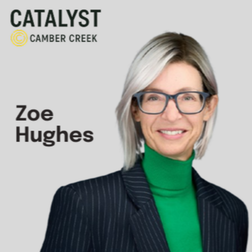
Zoe Hughes is Helping Leaders Managing Trillions of Dollars Trust Each Other with What's Working (and What's Not)

Picture this. You run a conference, a big one. The people who attend your conference represent organizations that collectively manage trillions of dollars in assets, money that supports retirees no less. They come to your event for insight into what they should and should not do, but they won't get much out of that experience unless they can trust each other with what's going well and what's going poorly across massive portfolios. You shape the environment where all of this happens. So what are you gonna do? How do you handle that? Fortunately, your name is Zoe Hughes. And you have earned a lot of people's trust. Zoe is CEO of the Pension Real Estate Association, or PREA for short. She is not an investment professional. Her early career was actually in journalism, which makes sense, because she studies people: how they learn, when and why they're willing to be vulnerable, and how to design spaces that put them at ease, especially when the stakes are high. Zoe spoke with Camber Creek Head of Platform Lionel Foster and Managing Partner Jake Fingert shortly after PREA’s most recent conference. 1:28 Why Zoe was initially reluctant to do this interview. 2:01 The Pension Real Estate Association's members have trillions of dollars in assets under management 3:40 Zoe’s unconventional path to becoming PREA CEO and her work as a journalist. 7:14 Zoe and PREA are in listening mode as PREA develops a new three-year strategy. 12:00 Why PREA encourages people to run at 6 a.m. during the main day of the conference. 14:00 The importance of multi-sensory learning. Expanding beyond panel-only formats. 21:41 How better connectivity builds trust. 25:00 Real versus performative vulnerability in professional settings. 26:20 How members can become more involved in PREA beyond conferences. 30:00 A behind-the-scenes look at organizing a PREA conference
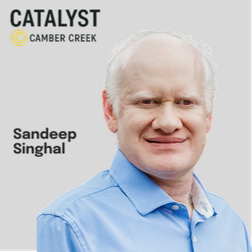
One of the Top Engineers at LinkedIn Insists on Working Like He's Still at a Startup

Sandeep Singhal is a computer engineer’s engineer. He’s held big positions at Microsoft, Google, Meta, and now LinkedIn. Since 2022, when the popularity of ChatGPT forced incumbent tech companies to prioritize artificial intelligence, Sandeep has specialized in AI infrastructure — the systems behind the systems that power important products. In this episode, Sandeep talks to Camber Creek Head of Platform Lionel Foster and Partner Alexandra Nicoletti about what it takes to succeed in big tech, why he remains so committed to helping and learning from startups, and who he thinks might become some of the best AI programmers. You’ll never guess what he says, but the answer will make you mad. 01:09 Sandeep fell in love with programming in junior high—typing code from magazines 3:34 His immediate reaction to trying ChatGPT the day it launched and the changes in Big Tech that followed 9:29 LLMs allow engineers to do more with less—using text-based models rather than massive, specialized data sets 9:52 How do product development and product management happen in the largest technology companies? 12:53 Big Tech has to maintain a startup mentality 14:29 AI-assisted coding tools like Copilot make rapid prototyping dramatically easier, accelerating both big-company innovation and startup development 15:11 The constant tension between execution speed and creating space for experimentation 18:20 Sandeep’s days as a founder 20:23 His current role running LinkedIn’s core infrastructure 23:50 Product vs. technology focus in early-stage startups 26:21 Building and maintaining the infrastructure that makes artificial intelligence applications possible 28:28 Sandeep’s favorite AI use cases: AI-assisted coding, workflow automation, and predictive capabilities. 31:09 AI’s predictive power for real estate underwriting 32:49 Sandeep the startup investor and mentor 36:54 The risks of AI 45:09 AI and the humanities 45:49 Why lawyers may become the best programmers

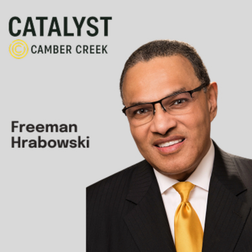
Marching With Martin Luther King Cemented Freeman Hrabowski's Commitment to Excellence and Equity

It is possible that Freeman Hrabowski has done more to improve training and access to STEM careers (science, technology, engineering, and math) than anyone else alive at the moment. As President of the University of Maryland, Baltimore County from 1992 to 2022, he co-founded the Meyerhoff Scholars Program, which created resources and a campus environment where underrepresented students could thrive in some of the toughest majors on campus. The techniques that helped future African-American scientists, doctors, and engineers were eventually mainstreamed at UMBC and helped thousands of students of all backgrounds. Inspired by his work, in 2022 the Howard Hughes Medical Institute launched the Freeman Hrabowski Scholars Program to support outstanding researchers, who have strong potential to become leaders in their fields. Access and high achievement. Dr. Hrabowski is a strident advocate for both and has spent his life supporting programs and leaders that combine the two. He came by this commitment honestly–and dangerously–when he was very young. Episode Guide 1:15 Growing up as a privileged Black child in segregated Birmingham, where high expectations from family, church, and teachers shaped his identity 3:40 Being inspired by Dr. Martin Luther King, Jr. How his early academic acceleration and love of learning intersected with the realities of segregation. 4:40 The church meeting where he first heard Dr. King call on children to join a children’s march to help integrate schools 6:47 Persuading his initially fearful parents to let him march 8:13 Getting trained in nonviolence tactics at age 12 9:26 Confronting Bull Connor 11:20 Five days in jail 12:55 Mentoring younger people began early 16:17 His parents’ community leadership 22:48 Negotiating with this parents to attend an elite program with white students 23:50 The Meyerhoff Scholars Program, finding and cultivating Black excellence in the sciences 30:00 He has mentored thousands 34:00 Hrabowski celebrates success stories like Dr. Kizzmekia Corbett, a Meyerhoff alumna who co-led development of the Moderna COVID-19 vaccine. 36:39 Evolving communication tools—TED Talks, social media, and digital platforms—and how Hrabowski thinks about reaching modern audiences. 38:00 Staying young means staying connected to younger generations, including his grandson 40:41 “The genius of the and versus the tyranny of the or.” 43:00 Hrabowski discusses neurodiversity, flexibility in teaching, and how universities must adapt to support all students while navigating cultural and political challenges. 45:51 The importance of subtlety, strategy, and “playing chess, not checkers” when advocating within complex systems 46:00 How he transitioned out of the UMBC presidency without losing his sense of identity 47:34 The Howard Hughes Medical Institute and the $1.5 billion Freeman Hrabowski Scholars Program 48:03 His leadership lessons: humility, self-care, and a commitment to helping others

Shawn Porat is Telling Your Fortune and Making a Lot of Money Doing It

Nearly everyone has had the pleasure of opening—and eating—a fortune cookie. Imagine you open one. One side says love will find you. That’s great. But the other encourages you to find that love at the movies with the latest romantic comedy coming to theaters. Or your fortune is a reminder about the importance of diligence in all your pursuits followed by a nudge to keep your language-learning streak on Duolingo going. These scenarios are not made up. This is happening now because of our guest Shawn Porat and his company OpenFortune. They’re putting very timely, sometimes irreverent, ads inside fortune cookies, working with big brands like Coca-Cola, Cars.com, and many, many others you’ve heard of. How does anyone think to even do that? How long did it take Shawn and team to broker the deals and build out the infrastructure? And what are the chances your next fortune will be one that Shawn’s company wrote? Episode Guide 1:40 “I write people’s futures” 3:00 The spark for the business was envy 3:50 The eight-year process of getting all the necessary deals in place 6:55 OpenFortune has advertising rights for 99% of all fortune cookies in the world. 7:20 The Capital One campaign that went viral 11:15 Funding the business with investors like Henry Silverman, Shaquille O’Neal, Sylvester Stallone, and Gary Vaynerchuk. 13:55 Why Shawn did not become a lawyer and his out-of-the-box thinking 20:50 Fortune cookies create a unique emotional moment that makes brand engagement more powerful. 22:40 Making sure people don’t get sick of OpenFortune’s ads 25:35 Becoming part of experiences like F1 races, Madison Square Garden events, and the US Open 26:40 Designing ads for fortune cookies is not simple. 27:55 Getting customer ad spend right 29:55 International expansion opportunities 36:55 Using storytelling and real examples — like people winning lotteries from lucky numbers — to make fortunes feel authentic in places outside the US, where the tradition is new

Trailer

Trailer
Why is Camber Creek launching a podcast? And what will you love about it?
4 di 4