BSPE Legal Marketing Podcast

BSPE Legal Marketing Podcast

di Viktoria Altman
Stagione 4

Pretrial In An Illinois Divorce - Russell D. Knight

From Law Office of Russell D. Knight — Pretrial In An Illinois Divorce explores what a pretrial conference means in the context of Illinois divorce proceedings and how parties can prepare to use it to their advantage. In this episode, we’ll break down the legal landscape of pretrial under Illinois law and the Chicago/Cook County rules, demystify the key steps and deadlines, and offer practical navigation tips for anyone facing this critical mid-divorce stage. We begin by explaining what a pretrial conference is in an Illinois divorce — how it signals that settlement hasn’t been reached and how the judge may use it to push the parties toward resolution. The discussion touches on statutory and court-rule foundations like 735 ILCS 5/2-1004, Supreme Court Rule 218, and Illinois Supreme Court Rules versus Cook County local rules. Next, we walk through how to prepare effectively for your pretrial: drafting a concise two-page pretrial memorandum, listing outstanding discovery items, summarizing your strongest arguments, and negotiating settlement terms at the pretrial itself. We also explain how and when binding pretrials can be agreed upon, and the risks involved when facts are disputed. Finally, we cover strategic considerations: when (or whether) to request a substitution of judge, how binding a pretrial may limit appeals, and how to anticipate post-pretrial steps like trial scheduling or further case management conferences. Whether you’re a divorcing spouse or a family law observer, you’ll gain clarity on the power and pitfalls of pretrial in Illinois divorces. Law Office of Russell D. Knight 1165 N Clark St #700, Chicago, IL 60610, United States (773) 334-6311 https://www.google.com/maps?cid=13056420905624162796
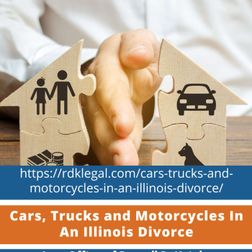
Cars, Trucks and Motorcycles In An Illinois Divorce - Russell D. Knight

From Law Office of Russell D. Knight - Cars, Trucks and Motorcycles In An Illinois Divorce discusses the complexities surrounding automobile ownership and division during divorce proceedings in Illinois. Delving into common scenarios like determining whether a vehicle is marital property, the podcast clarifies critical points, such as the presumption of marital ownership for assets purchased during marriage, even after separation, and highlights the rarity of automobiles actually being divided in court. Listeners gain clarity on common misconceptions regarding auto financing and secured debt in Illinois divorces. Specifically, the episode explains why most vehicles with outstanding loans typically hold little to no net value for division purposes. Through relatable examples, including discussions about refinancing vehicles post-divorce—a rare occurrence according to the firm's experience—the podcast sheds light on practical advice on handling debts and titles. The episode also addresses the complexity and impracticality of valuing vehicles, from standard cars assessed via Kelly Blue Book to specialty or collector’s items requiring expert appraisal or third-party sales. Knight offers clear recommendations, emphasizing negotiated settlements rather than court intervention, ensuring fair, equitable outcomes without unnecessary court expenses. Finally, the conversation broadens to related issues such as insurance obligations, who gets car access during divorce proceedings, buying new cars while the divorce is ongoing, and the delicate question of who covers teenagers' driving expenses. With a practical approach grounded in Illinois family law, Russell Knight Law Firm ensures listeners leave with concrete knowledge to navigate automobile-related divorce complexities. Law Office of Russell D. Knight 1165 N Clark St #700, Chicago, IL 60610, United States (773) 334-6311 https://www.google.com/maps?cid=13056420905624162796
Top-Rated New Jersey Cocaine Possession Lawyer - Adam M. Lustberg

From Lustberg Law Offices, LLC – Top-Rated New Jersey Cocaine Possession Lawyer dives into the high-stakes world of drug possession defense under New Jersey law. In this in-depth article, Lustberg Law Offices, LLC lays out the risks, statutes, and defense strategies relevant to those charged with cocaine possession in counties like Bergen, Hudson, Essex, and Passaic. The piece addresses statutory sections such as N.J.S.A. 2C:35-10, penalty grades, diversion programs, evidence suppression, and more. In the second segment, listeners will hear how Adam M. Lustberg, the criminal defense attorney behind the article, analyzes police procedure and constitutional protections. The podcast unpacks how search and seizure law interacts with real arrest scenarios in New Jersey, how one might challenge evidence in a cocaine case, and how a person’s Miranda rights or prior record can drastically influence the outcome of a charge. Next, the episode emphasizes alternatives to incarceration: the article explores diversion programs such as PTI (Pretrial Intervention) and Drug Court, including conditions for eligibility and how completion or failure of those programs can determine whether charges are dismissed or continue. The podcast may also present stories or hypothetical cases to illustrate how these programs have impacted individuals navigating the justice system. Finally, listeners are reminded that Lustberg Law Offices, LLC brings experience across multiple drug crime areas including marijuana, heroin, and prescription drug offenses. With cocaine possession charges carrying serious penalties, the podcast underscores the importance of a swift and knowledgeable legal response. This episode offers clarity, actionable steps, and reassurance to anyone facing drug-related charges in New Jersey. Lustberg Law Offices, LLC 1 University Plaza Dr #212, Hackensack, NJ 07601, United States (201) 880-5311 https://www.google.com/maps?cid=17248268094099978177

Who Has Custody Of A Child If There Is No Court Order In Illinois - Russell D. Knight

From Law Office of Russell D. Knight - Who Has Custody Of A Child If There Is No Court Order In Illinois explores essential insights into navigating parental rights and responsibilities during the early stages of divorce or separation in Illinois. This episode discusses critical Illinois statutes, such as 750 ILCS 46/603(b), 750 ILCS 46/301, and 750 ILCS 46/204(a), highlighting how parental rights differ significantly based on marital status and court orders. Listeners will gain a detailed understanding of the differences between married and unmarried parents, focusing particularly on the presumptive rights of mothers versus fathers when no custody orders exist. Important legal terms like "Voluntary Acknowledgment of Paternity" and the concept of adjudication are clarified, providing practical guidance for parents navigating these complex situations. The podcast delves into crucial matters such as temporary parenting time, the significance of co-parenting behaviors prior to court intervention, and the potential legal implications of withholding parenting time. It emphasizes the influential role of court-appointed Guardian Ad Litems or Child Representatives, detailing their investigative process and how their observations can significantly affect custody outcomes. Lastly, the episode addresses critical issues, including preventing a child from leaving Illinois, clarifying misconceptions around kidnapping and child abduction, and the severe legal consequences outlined in Illinois statutes, such as 720 ILCS 5/10-5(b)(7). This comprehensive discussion equips listeners with the essential legal insights needed to handle custody arrangements responsibly and effectively. Law Office of Russell D. Knight 1165 N Clark St #700, Chicago, IL 60610, United States (773) 334-6311 https://www.google.com/maps?cid=13056420905624162796
New York Criminal Possession of a Weapon (CPW) Defense Lawyer - Jason Bassett

From Law Offices of Jason Bassett, P.C. – New York Criminal Possession of a Weapon (CPW) Defense Lawyer, this podcast dives into what it really means to face CPW charges in New York and how defense law plays out in high‑stakes cases. We walk through how charges are categorized — from Fourth‑Degree CPW (NYPL § 265.01) to the most serious First‑Degree CPW (NYPL § 265.04) — and explain how penalties escalate with severity and prior history.You’ll hear case inferences around common triggers: weapons found in vehicles, domestic disputes, airport TSA incidents, and how “constructive possession” versus “actual possession” matters. The podcast also breaks down critical defense strategies: challenging illegal search and seizure, proving lack of knowledge or intent, raising doubt over possession arguments, or invoking lawful transport exceptions.We also explore how CPW charges can intersect with Criminal Use of a Firearm in the Commission of a Crime (NYPL § 265.08), possession with intent, and how enhanced sentencing or federal weapons laws can complicate your defense. You’ll get insight into how overlapping laws increase risk, especially for repeat offenders or cases with aggravated circumstances.Finally, the podcast introduces Jason Bassett’s professional background — from his time as an Assistant District Attorney in Queens, Principal Assistant County Attorney in Suffolk, and Special Assistant Attorney General for New York — and outlines how his experience shapes defense tactics. If you or someone you know is navigating CPW charges, this podcast offers clarity, legal context, and encouragement toward taking action. Law Offices of Jason Bassett, P.C. 320 Carleton Ave # 4200, Central Islip, NY 11722, United States (631) 259-6060 https://www.google.com/maps?cid=695024758410642184

How To Modify An Order Of Protection In Illinois - Russell D. Knight

From Law Office of Russell D. Knight – How To Modify An Order Of Protection In Illinois explores critical aspects of navigating Illinois’s complex legal framework surrounding orders of protection. This insightful discussion delves into the nuances of modifying emergency, interim, and plenary orders under the Domestic Violence Act, highlighting important precedents like In re Marriage of Fischer, In re Marriage of Gordon, and landmark rulings such as Wilson v. Jackson. In this episode, listeners gain clarity on the precise steps required when contesting or adjusting an emergency or interim order of protection. Emphasizing the practical importance of Supreme Court Rules 11 and 12, as well as statutory guidance outlined in 750 ILCS 60/224(d) and 750 ILCS 60/211, the podcast provides a clear roadmap for those facing unfair restrictions due to a lack of proper notice or substantial defenses such as self-defense. Furthermore, the podcast addresses the nuanced procedure for modifying plenary orders of protection, emphasizing that significant new facts or changes in law are required. Referencing cases like In re Marriage of Sanchez & Sanchez-Ortega and In re Marriage of Munger, listeners gain insights on crucial modifications related to visitation rights and child custody, grounded in the Illinois Marriage and Dissolution of Marriage Act. Finally, the episode examines how orders of protection intertwine with divorce and parentage cases under Cook County Court Rules 13.3, explaining why a divorce or parentage judge often ultimately holds significant power over modifying such orders. Essential cases, including Smithberg v. the Illinois Municipal Retirement Fund, demonstrate the court’s jurisdictional authority and its capacity to implement practical and equitable solutions for families navigating challenging circumstances. Law Office of Russell D. Knight 1165 N Clark St #700, Chicago, IL 60610, United States (773) 334-6311 https://www.google.com/maps?cid=13056420905624162796
Pick-Ups And Drop-Offs Of Children In An Illinois Divorce - Russell D. Knight

From Law Office of Russell D. Knight - Pick-Ups And Drop-Offs Of Children In An Illinois Divorce explores the intricate details parents must consider when coordinating parenting schedules post-divorce. This podcast delves into the specifics outlined by Illinois law, emphasizing the importance of precise transportation plans within parenting agreements to ensure clarity, minimize conflict, and prioritize the child's well-being. Listeners will learn about Illinois statutes such as 750 ILCS 5/600(f) and 750 ILCS 5/602.10(f)(2), which mandate detailed written parenting plans specifying when and how children transition between households. The discussion highlights best practices, including why the parent beginning parenting time should ideally handle pick-ups, as it reduces waiting and potential conflicts. Drawing from significant Illinois cases like In re Marriage of Marsh, In re Marriage of Burns and Lifferth, and In re Marriage of Altman and Block, this episode provides real-life examples and judicial insights into how lateness, logistical disagreements, and safety concerns are managed legally. Practical advice is offered for navigating situations involving third-party transportation or interactions at neutral locations, like police stations, when conflicts arise. Lastly, the podcast addresses critical scenarios involving orders of protection, referencing Illinois statutes such as 750 ILCS 60/215(b)(7), which clearly define parental responsibilities and limitations in contentious or high-risk exchanges. Listeners facing complicated co-parenting arrangements are encouraged to seek further guidance through experienced professionals at Law Office of Russell D. Knight. Law Office of Russell D. Knight 1165 N Clark St #700, Chicago, IL 60610, United States (773) 334-6311 https://www.google.com/maps?cid=13056420905624162796
Is Brake Checking Illegal in NY? - Samantha Kucher

From Kucher Law Group – Is Brake Checking Illegal in NY? explores the dangerous driving behavior known as brake checking and its legal implications under New York traffic laws. This episode delves into the risks associated with brake checking—where a driver suddenly and unnecessarily slams on the brakes, often in reaction to tailgating—and examines how this behavior can be classified as reckless driving under New York Vehicle and Traffic Law § 1212. Though not explicitly illegal by name, brake checking can lead to serious consequences, including accidents, injuries, and even criminal charges. Listeners will learn about the common scenarios in which brake checking occurs, from road rage incidents to misunderstandings in heavy traffic. The podcast highlights how such aggressive driving behaviors not only endanger the involved drivers but also increase the risk of chain-reaction collisions in New York’s dense traffic conditions. The discussion outlines the motivations behind brake checking—ranging from retaliation and dominance to insurance fraud—and underscores the importance of maintaining safe driving practices to avoid such hazardous situations. The episode also covers how victims of brake checking accidents can prove their case through various forms of evidence, including dashcam footage, witness statements, and police reports. Understanding how to document the scene and gather critical information immediately after an incident can significantly strengthen legal claims. The role of law enforcement and the value of official accident reports in establishing liability are also emphasized. To close, Kucher Law Group provides insights into the legal options available to victims, including timelines for filing claims and seeking compensation. The team of Brooklyn car accident lawyers offers dedicated legal support to ensure victims receive justice and the compensation they deserve. Tune in to learn more about your rights and how Kucher Law Group can help if you've been affected by brake checking in New York. Kucher Law Group 463 Pulaski St #1c, Brooklyn, NY 11221, United States (929) 563-6780 https://www.google.com/maps?cid=5716384493669715397

What are Grandparents’ Rights in New York? - Richard Shum

From Law Office of Richard Roman Shum, Esq. - What Are Grandparents' Rights in New York? explores how New York’s Domestic Relations Law § 72 allows grandparents to petition Family Court for visitation or, in certain circumstances, custody of a grandchild. In this episode, Richard Roman Shum discusses the legal framework governing grandparent visitation in New York, including the two-step process requiring grandparents to establish standing before a court evaluates whether visitation serves the child’s best interests. Listeners will learn how New York County Family Court and Manhattan Family Court analyze these petitions, including the legal impact of the U.S. Supreme Court decision in Troxel v. Granville (2000) and how the Fourteenth Amendment protects a parent’s right to make decisions about their child’s upbringing. The discussion breaks down key concepts such as the equitable circumstances test, the legal significance of a parent being deceased, divorced, or absent, and how courts weigh the strength of the grandparent-grandchild relationship. The episode also explains the important differences between visitation and custody petitions under DRL § 72 and DRL § 72(2), as well as related provisions under Family Court Act § 651(b). Richard Roman Shum outlines what qualifies as extraordinary circumstances, including parental abandonment, neglect, unfitness, or an extended disruption of custody. Listeners will gain insight into how cases move through New York County Family Court at 60 Lafayette Street in Manhattan and how jurisdiction issues can arise under the UCCJEA when families move between states. Finally, the podcast explores practical steps grandparents can take to build a strong case, from documenting consistent involvement in a child’s life to presenting supporting evidence and witness testimony. Drawing on his work representing families throughout Manhattan and New York City from the Law Office of Richard Roman Shum, Esq. on the Lower East Side, Richard Roman Shum shares guidance on navigating hearings, mediation, and legal filings while keeping the child’s best interests at the center of every decision. Law Office of Richard Roman Shum, Esq20 Clinton St FRNT 5D, New York, NY 10002, United States (646) 259-3416https://www.google.com/maps?cid=3597344583150276913

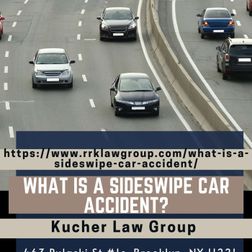
What is a Sideswipe Car Accident? - Samantha Kucher

From Kucher Law Group - What Is a Sideswipe Car Accident? breaks down how these collisions happen on Brooklyn roads, from same-direction sideswipes on multi-lane highways to opposite-direction crashes on narrower streets, and why a seemingly minor impact can quickly turn into a dangerous secondary collision. The episode explains how sideswipe accidents occur when vehicles traveling in the same or opposite direction make contact and why these crashes can lead to serious vehicle damage, whiplash, spinal injuries, traumatic brain injuries, fractures, lacerations, and psychological harm. Listeners will hear a practical discussion of the most common causes of sideswipe accidents in New York, including blind spot failures, distracted driving, unsafe lane changes, failure to signal, speeding, aggressive merging, impaired driving, and poor weather or road conditions. The podcast also explores how lateral impacts affect drivers and passengers differently than front-end or rear-end crashes, and why dense traffic in Brooklyn can make vigilance, lane discipline, and quick decision-making especially important. The episode also covers the legal side of a sideswipe claim under New York law, including lane-discipline duties under VTL § 1128, pure comparative negligence under CPLR Article 14-A, no-fault insurance, Personal Injury Protection, and the serious injury threshold under Insurance Law § 5102(d). It highlights the evidence that can help prove fault, such as police reports, witness statements, dashcam footage, security camera recordings, Event Data Recorder data, accident reconstruction analysis, and photos of vehicle damage, while also explaining key filing deadlines for personal injury lawsuits, property damage claims, PIP applications, and claims involving government entities. Kucher Law Group also introduces the attorneys behind the firm’s car accident practice, including Samantha Kucher, Michael Roitman, and Alex Rybakov, and explains how they help injured people in Brooklyn and Kings County protect their rights and pursue compensation. With guidance on what to do immediately after a crash, how to deal with insurance adjusters, and when to contact a Brooklyn car accident lawyer, this episode offers a clear resource for anyone dealing with the aftermath of a sideswipe accident in New York. Kucher Law Group463 Pulaski St #1c, Brooklyn, NY 11221, United States(929) 563-6780https://www.google.com/maps?cid=5716384493669715397
71 di 178