BSPE Legal Marketing Podcast

BSPE Legal Marketing Podcast

di Viktoria Altman
Stagione 4

Hardship vs. Conditional License in New York: Eligibility & Application - Jason Bassett

From Law Offices of Jason Bassett, P.C. – Hardship vs. Conditional License in New York: Eligibility & Application Steps explores the critical differences between these two limited driving privileges after a DWI arrest. This episode breaks down how the Hardship Privilege and Conditional License work, who qualifies, and the step-by-step process to regain essential driving rights. Whether it’s traveling for work, school, or medical care, listeners will gain a clear understanding of the legal paths available during a suspension period. The conversation begins with the court-issued Hardship Privilege, a time-sensitive option that can only be requested at arraignment. We discuss the “extreme hardship” standard under New York’s Vehicle and Traffic Law, the importance of gathering documentation such as employer letters, medical records, and public transit maps, and how a hardship hearing operates like a mini-trial. Listeners will learn why legal representation is vital when presenting evidence and why certain disqualifiers, such as chemical test refusals or prior DWI convictions, make some drivers ineligible. Next, we turn to the DMV-issued Conditional License, which provides broader driving privileges but requires participation in the Impaired Driver Program (IDP). The podcast outlines the enrollment process, program costs, and the risks of losing eligibility for failing to comply with DMV or IDP requirements. We also explore the two tiers of conditional licenses—pre-conviction and post-conviction—and the critical forms like MV-44CR and MV-2020 that drivers must complete and carry. Finally, we highlight the key differences between Hardship Privileges, Conditional Licenses, and even Restricted Use Licenses, clarifying how each applies in different situations. Through insights from Long Island DWI lawyer Jason Bassett, who brings over 21 years of legal experience as both a defense attorney and former prosecutor, this episode offers practical strategies for anyone navigating New York’s DWI consequences. Listeners will walk away empowered with knowledge to act quickly, meet legal requirements, and regain control after a DWI arrest. Law Offices of Jason Bassett, P.C. 320 Carleton Ave # 4200, Central Islip, NY 11722, United States (631) 259-6060 https://www.google.com/maps?cid=695024758410642184

Independent Vs. Controlled Expert Witnesses In An Illinois Divorce - Russell D. Knight

From Law Office of Russell D. Knight – Independent Vs. Controlled Expert Witnesses In An Illinois Divorce explores how the right kind of witness testimony can make or break a divorce case in Illinois. In this episode, host Russell Knight walks us through the critical differences between lay witnesses, independent expert witnesses and controlled expert witnesses — as defined under Illinois Supreme Court Rule 213(f) and Rule 213(g) — and why proper disclosure is absolutely vital in divorce trials. We examine how authentication under the Illinois Rules of Evidence, including Rule 901(a), and expert testimony under Rule 702 set the legal stage in family law proceedings. With references to Black’s Law Dictionary, 11th edition, and real-world examples of marital asset valuation and income imputation, you’ll gain a clear understanding of what courts expect from witness disclosures in a contested divorce. The discussion delves into how an independent expert witness differs from a controlled expert: the independent expert is not retained or employed by a party and their opinions need only be broadly disclosed, whereas a controlled expert must have detailed subject matter, conclusions, bases, qualifications, and reports disclosed ahead of time. We also cover what happens when disclosure requirements are not met — including when a witness might be barred from testifying. Finally, we offer practical insights for anyone navigating a divorce in Illinois: the importance of early case-management conferences, keeping discovery deadlines front of mind, and making sure your attorney knows how to properly categorize and identify each type of witness under Rule 213. Whether you’re dealing with asset division, parenting time disputes, or alimony, the strategic use of expert testimony can tip the balance — and this episode equips you with the knowledge to do just that. Law Office of Russell D. Knight 1165 N Clark St #700, Chicago, IL 60610, United States (773) 334-6311 https://www.google.com/maps?cid=13056420905624162796

Can Arson Lead to a Murder Charge in NJ? - Adam M. Lustberg

From Lustberg Law Offices, LLC - Can Arson Lead to a Murder Charge in NJ? examines how arson allegations in New Jersey can quickly escalate into felony murder charges when a fire results in the death of a non-participant. This episode breaks down N.J.S.A. 2C:11-3a(3), explaining how a building occupant, bystander, or firefighter can become the basis for a murder prosecution even when there was no intent to kill. Listeners will hear how felony murder applies during the commission of arson or immediate flight from the scene, and why the law does not require prosecutors to prove a planned fatal outcome. The podcast also explores how mental state shapes fire-related homicide charges under New Jersey law, including murder, aggravated manslaughter, and reckless manslaughter. Using examples like an occupied building, a commercial property fire for insurance money, and a firefighter injured in the blaze, the discussion shows how prosecutors evaluate purposeful, knowing, and reckless conduct. It also explains the difference between simple arson and aggravated arson under N.J.S.A. 2C:17-1, and how motives such as retaliation, insurance fraud, concealing another crime, or reckless behavior can influence charging decisions. Listeners will also get a practical overview of the penalties tied to arson and homicide offenses in NJ, from third-degree simple arson to first-degree felony murder, along with major sentencing consequences under the No Early Release Act. The episode highlights prison exposure, fines, parole restrictions, and the lasting impact of a conviction on housing, employment, firearm rights, and potential wrongful death claims. It also covers how the type of property involved, including apartment buildings, schools, places of worship, and commercial structures, can affect the seriousness of the case. Finally, Lustberg Law Offices, LLC spotlights the defense side of these high-stakes prosecutions, including challenges to fire origin evidence, forensic conclusions, causation, identity, and alleged involvement. The episode features Adam M. Lustberg, Esq., a Certified Criminal Trial Attorney serving Bergen County, Hackensack, and clients throughout New Jersey, and discusses how early investigation can help preserve critical evidence in cases involving arson, homicide, aggravated assault, firearms offenses, Superior Court, Municipal Court, and the Bergen County Justice Center. It is a timely guide for anyone trying to understand how New Jersey criminal law treats arson-related deaths and what defenses may be available. Lustberg Law Offices, LLC 1 University Plaza Dr #212, Hackensack, NJ 07601, United States (201) 880-5311 https://www.google.com/maps?cid=17248268094099978177

Central New York Revocable Trusts Lawyer - Davies Law Firm

From Davies Law Firm – Central New York Revocable Trusts Lawyer explores how revocable living trusts offer New York families a powerful alternative to traditional wills by building smarter, more flexible estate plans. It walks through what a revocable trust is, the roles of grantor, trustee, and beneficiary, and why choosing the right tools sooner can save your loved ones time and hassle. In the second paragraph, we dive into how the team of Frederick P. Davies and William P. Davies in Syracuse and the surrounding counties (Onondaga, Madison, Oneida, Cortland, Oswego, Cayuga) brings decades of estate planning experience to guide clients toward greater control, privacy, and certainty—especially when managing assets across states or for blended families. The third paragraph highlights the strategic benefits: avoiding the public and time-consuming probate process in Surrogate’s Court, shielding minor children and loved ones with special needs via a Supplemental Needs Trust, and ensuring your out-of-state property doesn’t trigger multiple ancillary probate proceedings. This episode will unpack how a revocable trust can serve as a living instrument—not just a document you sign once and forget—so your legacy stays aligned with your changing life. Finally, the description emphasizes why partnering with a local Syracuse-based firm matters: you get ongoing support, clear flat-fee pricing, and an attorney-client relationship built to last. Whether you’re starting with a will, transitioning to a trust, or navigating a complex family situation, this podcast will give you actionable insights and questions to ask as you build a legacy in New York. Davies Law Firm 210 E Fayette St, Syracuse, NY 13202, United States (315) 472-6511 https://www.google.com/maps?cid=11885144913064493862

What Are the Rules Under NY VTL § 1192.5 for Commercial Motor Vehicle Operators? - Rachel Kugel

From The Kugel Law Firm - What Are the Rules Under NY VTL § 1192.5 for Commercial Motor Vehicle Operators? explains how New York Vehicle and Traffic Law § 1192.5 (Updated Jan 2026) applies to commercial motor vehicle operators in Manhattan, New York City, and throughout New York, setting a strict 0.04% BAC threshold that can trigger charges even when there are no visible signs of impairment. Rachel Kugel, Esq. breaks down why commercial drivers are held to a lower limit than the 0.08% standard for non-commercial drivers, and how the per se framework makes the BAC number itself the key evidence. Using real-world Manhattan settings like the FDR Drive, the West Side Highway, and routes approaching the Lincoln Tunnel, the episode shows how a routine stop can quickly escalate into a case with major professional consequences. You’ll also learn what qualifies as a commercial motor vehicle under New York law, including tractor-trailers, buses, and other vehicles tied to CDL requirements based on GVWR 26,001+ pounds, GCWR 26,001+ pounds with a towed unit over 10,000 GVWR, vehicles designed to transport 16 or more passengers, and any vehicle requiring hazmat placards. The discussion connects these rules to enforcement realities in high-traffic areas like Times Square, Midtown Manhattan, and Hudson Yards, as well as scenarios involving inspections near the George Washington Bridge and post-accident testing after a collision in Midtown. Finally, the podcast covers the penalties and the two-track process commercial drivers face: criminal court exposure under VTL § 1193 and separate DMV consequences that can suspend or revoke a CDL, with federal disqualification rules under 49 CFR 383.51 raising the stakes for first offenses, hazmat-related cases, and repeat allegations. Rachel Kugel explains common defenses, including challenging Intoxilyzer or Datamaster accuracy and calibration, questioning the legality of the stop under the Fourth Amendment, and addressing medical issues like GERD or diabetes that can contribute to false positives, plus where the case may be handled at Manhattan Criminal Court at 100 Centre Street and how to reach the office in Harlem at 111 E 125th Street at (212) 372-7218. The Kugel Law Firm 111 E 125th St 2nd Fl, New York, NY 10035, United States (212) 372-7218 https://www.google.com/maps?cid=17189431107850367088

Pennsylvania Car-Accident Lawsuit Timeline - Luxenberg Garbett Kelly & George P.C.

From Luxenberg Garbett Kelly & George P.C. – Pennsylvania Car-Accident Lawsuit Timeline explores the time-sensitive journey faced by those injured in a crash in Pennsylvania. It begins by outlining the two critical timelines that govern a car-accident claim in the state: the statute of limitations and the resolution timeline. The episode walks listeners through how missing a deadline — for example filing a claim after a two-year window — can end your legal rights entirely. Next, it dives into the case timeline for a car-accident claim in Pennsylvania, unpacking the phases of the claim process: the immediate aftermath of the crash (reporting, medical care, gathering evidence), building the foundation (medical records, witness statements, reaching maximum medical improvement), negotiation with insurers, and if needed the litigation path and final resolution. It also explains how choices you make — like your insurance coverage whether Full Tort or Limited Tort — can affect how fast or slow your case moves. The discussion then turns to factors that influence how long the resolution takes: things like clear fault vs. disputed liability, serious complex injuries, uncooperative insurers or multiple defendants. The podcast highlights that while every case is unique, understanding the typical stages and variables gives victims more control and confidence when navigating the legal process. Finally, the episode emphasizes the importance of acting early and choosing experienced legal assistance. It highlights the law firm Luxenberg Garbett Kelly & George P.C. as a firm that serves car-accident victims across Western Pennsylvania and has extensive trial experience. Listeners are encouraged to stay proactive, document carefully, ask questions, and avoid making common mistakes that may slow their claim or reduce compensation. Luxenberg Garbett Kelly & George P.C. 315 N Mercer St, New Castle, PA 16101, United States (724) 658-8535 https://www.google.com/maps?cid=1349618312503922919

5 Legal Due Diligence Steps for Buying Investment Property in NYC - Peter Zinkovetsky

From Avenue Law Firm – 5 Legal Due Diligence Steps for Buying Investment Property in NYC breaks down the essential legal strategies every investor should know before purchasing property in one of the most complex real estate markets in the world. Whether you're eyeing a brownstone in Brooklyn, a condo in Manhattan, or a multi-family building in Queens, this episode dives into key legal checkpoints to help protect your investment and avoid post-closing pitfalls. Listeners will learn how to analyze purchase contracts, uncover hidden risks through title searches, and assess the financial health of condos and co-ops. We'll walk through how the NYC Department of Buildings (DOB), ACRIS, and tools like the DOB NOW and BIS systems can reveal violations, open permits, and ownership discrepancies that could derail a transaction. Understand how to leverage appraisal contingencies, negotiate seller concessions, and navigate board approvals with clarity. We also explore compliance essentials—from the Certificate of Occupancy to zoning restrictions and illegal renovations—and explain how zoning laws and air rights can impact both short-term plans and long-term value. Plus, we break down the implications of rent regulation laws, including rent stabilization rules, lease reviews, and the newly implemented Good Cause Eviction law. Real estate attorney Peter Zinkovetsky and team provide insights tailored for first-time buyers, seasoned investors, and international clients alike. At Avenue Law Firm, legal clarity isn’t just a service—it’s your competitive advantage in NYC’s fast-moving real estate market. Tune in to 5 Legal Due Diligence Steps for Buying Investment Property in NYC and discover how proper planning and legal foresight can make all the difference when building a successful investment portfolio in New York City. Avenue Law Firm 505 Park Ave Suite 202, New York, NY 10022, United States (212) 729-4090 https://www.google.com/maps?cid=14223199020890935024

The Commercial Real Estate Due Diligence Checklist for NYC Buyers - Peter Zinkovetsky

From Avenue Law Firm - The Commercial Real Estate Due Diligence Checklist for NYC Buyers walks buyers through the title, zoning, environmental, lease, financial, and compliance issues that can shape a commercial real estate purchase in Manhattan, New York City, and the five boroughs. This episode explores why due diligence matters before closing, how buyers can use the 30-to-90-day diligence period effectively, and why seller document delivery should be tied to the start of the review window.Listeners will hear how Peter Zinkovetsky and Avenue Law Firm approach key legal and transactional concerns, including title searches, ALTA surveys, Party Wall Agreements, Zoning Lot Development Agreements, air rights, and NYC Zoning Resolution requirements. The discussion also covers special district overlays such as the Special Midtown District, Special Hudson Yards District, and Special Lincoln Square District, along with the importance of verifying certificates of occupancy, open permits, and current property use.The episode also breaks down environmental and building-condition risks, including Phase I Environmental Site Assessments, Phase II Environmental Site Assessments, CERCLA liability, EPA All Appropriate Inquiries rules, ASTM E1527-21 standards, underground storage tanks, mold, soil conditions, and Property Condition Reports. NYC-specific compliance issues are also addressed, including DOB, FDNY, OATH/ECB violations, FISP/Local Law 11, QEWI inspections, Local Law 97, Local Law 87, Local Law 26, boiler registrations, elevator registrations, and potential retrofit costs.Finally, Avenue Law Firm explains how buyers can evaluate leases, rent rolls, tenant estoppel certificates, SNDA agreements, DHCR records, tax incentives, operating statements, transfer taxes, and mortgage recording taxes before committing to a transaction. With insight into ICAP, 421-a, 485-x, J-51, New York Real Property Tax Law, NYC Real Property Transfer Tax, and New York State real estate transfer tax, this episode gives commercial buyers a practical overview of what to review, what to question, and what risks to address before purchasing property in NYC. Avenue Law Firm 505 Park Ave #1201, New York, NY 10022, United States (212) 729-4090 https://www.google.com/maps?cid=14223199020890935024

Drowsy-Driving Accidents in New York: Why Fatigue Can Cost You Your Claim - Samantha Kucher

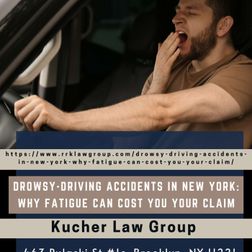
From Kucher Law Group – Drowsy-Driving Accidents in New York: Why Fatigue Can Cost You Your Claim dives into the hidden dangers of fatigue behind the wheel and how it can severely impact your car accident case. This episode explores how insurance companies may use your tiredness against you, even when another driver is primarily at fault, and why understanding the nuances of New York’s comparative negligence laws is critical to protecting your legal rights. We unpack the startling statistics from the Governor’s Traffic Safety Committee and the National Highway Traffic Safety Administration, revealing that thousands of drowsy-driving incidents go underreported each year. With insights from the AAA Foundation for Traffic Safety and the National Safety Council, the episode highlights fatigue as a recognized form of impairment—alongside drunk, drugged, and distracted driving. You'll also learn which groups are most at risk, from shift workers to young drivers and business travelers. The podcast also breaks down the difference between negligence and reckless driving under New York law, detailing how behaviors like microsleeps, highway hypnosis, or even sleep-deprivation-induced swerving could escalate a civil case or even lead to criminal charges. With Kucher Law Group’s seasoned attorneys—Samantha Kucher, Michael Roitman, and Alex Rybakov—leading the discussion, listeners gain actionable guidance on building a strong claim even when drowsiness plays a role. Finally, we share practical steps to take immediately after a crash, from preserving evidence to avoiding self-incriminating statements to insurance adjusters. If you've been injured in a drowsy driving accident, tune in to learn why quick legal action is essential and how Kucher Law Group can help safeguard your rights and pursue the compensation you deserve. Kucher Law Group 463 Pulaski St #1c, Brooklyn, NY 11221, United States (929) 563-6780 https://www.google.com/maps?cid=5716384493669715397

When School Isn’t Safe: Legal Options for Arkansas Students Harmed by Bullying or Negligence - Joseph Gates

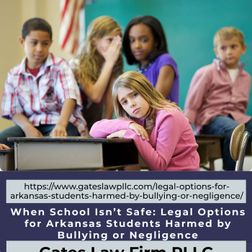
From Gates Law Firm PLLC – When School Isn’t Safe: Legal Options for Arkansas Students Harmed by Bullying or Negligence explores what families can do when school environments turn hostile due to bullying or administrative failure. This episode walks through the protections Arkansas law provides, the responsibilities schools have under Arkansas Code § 6-18-514, and how families can take meaningful steps when those obligations are ignored. We discuss the different forms of bullying recognized by Arkansas law—including written, verbal, physical, social, and cyberbullying—and how even off-campus harassment can fall under a school’s responsibility if it impacts a student’s ability to learn. You’ll also learn what schools are legally required to do once bullying is reported, from written documentation and prompt investigations to parent notifications and disciplinary actions. This is not just policy—it’s the law. Host Joseph Gates of Gates Law Firm PLLC shares insights on how to navigate the complicated reality of sovereign immunity and pursue claims when schools fail in their duty of care. We cover how to collect strong evidence, from digital communications and academic records to parental logs and medical documentation, and explain how these support negligence claims. This episode outlines how schools can still be held accountable—especially when liability insurance is in play. We also break down how Title IX, a powerful federal civil rights law, may offer additional protection when bullying is based on sex or gender. Whether through an OCR complaint or a federal lawsuit, Gates Law Firm PLLC can help you understand every legal avenue available. If your child has been harmed and the school didn’t act, this episode offers the clarity and direction families need to pursue justice and create safer learning environments. Gates Law Firm PLLC 2725 Cantrell Rd # 105, Little Rock, AR 72202, United States (501) 779-8091 https://www.google.com/maps?cid=4114337096292287489
63 di 178