BSPE Legal Marketing Podcast

BSPE Legal Marketing Podcast

di Viktoria Altman
Stagione 5

What Is Dissipation of Assets in Illinois? - Caesar & Bender, LLP

From Caesar & Bender, LLP - What Is Dissipation of Assets in Illinois? explores how dissipation of assets is defined under Illinois law and what it means for individuals navigating divorce in Chicago and throughout Cook County. The episode breaks down how the Illinois Marriage and Dissolution of Marriage Act (IMDMA), including 750 ILCS 5/503, shapes property division and explains when financial behavior crosses the line into dissipation during an irretrievable breakdown of a marriage. Listeners will gain clarity on what qualifies as dissipation, with references to key cases such as In re Marriage of Sobo, In re Marriage of Ferkel, and In re Marriage of Jones. The discussion walks through common examples like gambling losses, spending on an affair, destruction of marital property, and failure to maintain financial obligations, while also distinguishing these from legitimate expenses like living costs and good-faith business losses. The episode emphasizes how Illinois courts evaluate timing, intent, and financial impact when reviewing claims. The podcast also highlights the legal process behind raising and proving a dissipation claim, including strict notice requirements and evidentiary standards. It explains how documentation such as bank statements, credit card records, and forensic accounting reports can support a claim, and why deadlines tied to trial and discovery are critical. Listeners will better understand how courts calculate financial remedies and how dissipation findings can influence overall divorce outcomes and credibility in proceedings. Featuring insights tied to the work of co-founding partners Michael Ian Bender and Molly E. Caesar, the episode reflects the perspective of a team handling complex property division matters in Chicago. With backgrounds connected to the University of Illinois Chicago School of Law and DePaul University College of Law, the discussion provides a grounded look at how dissipation claims unfold in real cases and what steps individuals can take to protect their share of the marital estate. Caesar & Bender, LLP 150 N Michigan Ave #2130, Chicago, IL 60601, United States (312) 236-1500 https://www.google.com/maps?cid=10482794179944044586

What Is NY VTL 1194(2)(a), Implied Consent Law in New York? - Rachel Kugel

From The Kugel Law Firm - What Is NY VTL 1194(2)(a), Implied Consent Law in New York? explores how New York’s Vehicle and Traffic Law § 1194(2)(a) shapes the rights and responsibilities of drivers facing Driving While Intoxicated (DWI) charges. This podcast explains implied consent, clarifying how operating a motor vehicle on a public road in New York constitutes agreement to submit to a chemical test of breath, blood, urine, or saliva after a lawful arrest. It also examines how VTL § 1192 and VTL § 1194 work together and why lawful arrest, probable cause, and timing are central to these cases. The episode breaks down when implied consent applies and what law enforcement must establish, including reasonable suspicion and probable cause. It distinguishes between roadside breath tests and post-arrest chemical testing conducted at a police station or medical facility. The discussion also highlights how procedural issues, such as an unlawful stop or improper arrest, can affect both the admissibility of chemical test results and the validity of refusal penalties. Listeners will gain insight into the consequences of refusing a chemical test in New York, including DMV administrative penalties such as license suspension, revocation periods, civil fines, and Driver Responsibility Assessments. The podcast explains how refusal cases proceed separately from criminal DWI charges and how refusal evidence may be used in court under VTL 1194(2)(f). It also explores how prosecutors may argue refusal as consciousness of guilt, while defense strategies may challenge whether proper warnings were given or whether the arrest was lawful. Featuring Manhattan DWI attorney Rachel Kugel, the episode also examines DMV refusal hearings and the role of the hearing officer in evaluating key procedural issues. It incorporates insights connected to organizations such as the National College of DWI Defense, the DUI Defense Lawyers Association, Avvo Lawyernomics, the New Jersey Bar Association, and Super Lawyers, providing a detailed look at how legal strategy and timely action can influence the outcome of a DWI case in Manhattan and New York City. The Kugel Law Firm 111 E 125th St 2nd Fl, New York, NY 10035, United States (212) 372-7218 https://www.google.com/maps?cid=17189431107850367088

Gun Permit Denial Appeal in New Jersey - Adam M. Lustberg

From Lustberg Law Offices, LLC - Gun Permit Denial Appeal in New Jersey explains how denied firearm permit applicants can challenge decisions involving FPID cards, handgun purchase permits, and carry permits in New Jersey Superior Court. This episode discusses Adam Lustberg, Bergen County, Hackensack, the New Jersey State Police, local police chiefs, county prosecutors, and the 30-day appeal deadline under N.J.S.A. 2C:58-3. It also covers common denial reasons such as criminal convictions, restraining orders, mental health commitments, substance use concerns, false application information, and the public health, safety, or welfare clause. Listeners will learn how de novo hearings work, what evidence may strengthen an appeal, and why documentation such as expungement orders, dismissed case records, mental health evaluations, character references, and firearms safety course records can matter. The episode also highlights In re Osworth, Bergen County Superior Court, and the role of the Appellate Division. The discussion also explores how New York State Rifle & Pistol Association, Inc. v. Bruen and New Jersey Attorney General Directive 2022-07 changed carry permit law, while leaving many statutory disqualifiers in place. For those facing a gun permit denial in Bergen County, Hudson County, Passaic County, Essex County, or across New Jersey, Lustberg Law Offices, LLC offers guidance from its Hackensack office at One University Plaza Dr, Suite 212. Lustberg Law Offices, LLC 1 University Plaza Dr #212, Hackensack, NJ 07601, United States (201) 880-5311 https://www.google.com/maps?cid=17248268094099978177

Affidavit of Completeness In Illinois Divorce Discovery - Russell D. Knight

From Law Office of Russell D. Knight - Affidavit of Completeness In Illinois Divorce Discovery explains how evidence, disclosure, and procedural rules shape the outcome of divorce cases across Chicago and the broader Illinois court system. Grounded in Illinois Supreme Court Rule 201 and Rule 214, the discussion walks through how parties obtain documents, what “possession and control” really means under cases like Central Nat’l Bank v. Baime and Wiebusch v. Taylor, and why discovery is essential when one spouse holds critical financial or personal records. The episode explores the mechanics of a Notice To Produce and the legal obligations tied to it, including compliance requirements under Illinois Supreme Court Rule 214 and Cook County Court Rule 13.4(g)(iv). It highlights how an Affidavit of Completeness (also called an affidavit of compliance) serves as a sworn statement confirming that all accessible documents have been disclosed. Listeners will also hear how courts, including rulings like Village Realty, Inc. v. Carlino, enforce these requirements and why including or requesting a proper affidavit can prevent prolonged disputes. Attention then turns to what happens when documents are missing or disputed. Drawing on Illinois Supreme Court Rule 214(c) and Rule 201(k), the podcast explains the role of depositions, “examination in open court,” and the importance of attorney conferences in resolving discovery conflicts. Cases such as Cirrincione v. Westminster Gardens Ltd. Partnership and Brandt v. John S. Tilley Ladders Co. illustrate how courts expect parties to act reasonably before seeking sanctions, while also emphasizing practical strategies like subpoenas when cooperation breaks down. Finally, the episode addresses the serious consequences of dishonesty in discovery, including sanctions under Illinois Supreme Court Rule 137 and penalties outlined in 735 ILCS 5/2-1005(f) and 735 ILCS 5/1-109. Featuring insights tied to the work of Russell D. Knight, Esq.—a Chicago divorce attorney published by the Illinois State Bar Association and cited by NBC News, Newsweek, Inc., and Parents—this discussion underscores how accuracy, transparency, and preparation can define the trajectory of an Illinois divorce case. Law Office of Russell D. Knight 1165 N Clark St #700, Chicago, IL 60610, United States (773) 334-6311 https://www.google.com/maps?cid=13056420905624162796

Back Pain from a Slip and Fall - Samantha Kucher

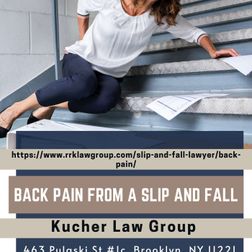
From Kucher Law Group - Back Pain from a Slip and Fall explains how a slip and fall in Brooklyn can lead to painful injuries ranging from muscle sprains and strains to herniated discs, fractured vertebrae, spinal cord trauma, coccyx fractures, and sacroiliac joint dysfunction. This episode looks at how hazards like cracked sidewalks, wet grocery store floors, icy steps, loose handrails, and poorly maintained stairwells across Brooklyn and Kings County can leave injury victims facing delayed symptoms, difficult recoveries, and mounting medical concerns. The conversation explores why back pain does not always appear immediately after a fall, breaking down how adrenaline, endorphins, and inflammation can mask the true extent of an injury for 24 to 72 hours. It also examines how these injuries affect daily life, from bending, lifting, walking, and sleeping to missing work, losing income, and dealing with emotional strain. Listeners will hear how injuries such as herniated or bulging discs, fractured vertebrae, and spinal cord damage can require everything from rest, ice, NSAIDs, physical therapy, and chiropractic care to epidural steroid injections, surgery, and long-term rehabilitation. This episode also covers the legal side of a Brooklyn slip and fall claim under New York premises liability law, including how property owners and occupiers may be held responsible when dangerous conditions are left unaddressed. It highlights pure comparative negligence under CPLR Section 1411, sidewalk liability under New York City Administrative Code Section 7-210, and filing deadlines under CPLR Section 214, while explaining the compensation that may be available for medical bills, MRI scans, lost wages, reduced earning capacity, pain and suffering, emotional distress, and loss of enjoyment of life. Listeners will also be introduced to Samantha Kucher and the team at Kucher Law Group, including Michael Roitman and Alex Rybakov, and learn how the firm supports slip and fall victims throughout Brooklyn neighborhoods like Bushwick, Williamsburg, Bedford-Stuyvesant, Park Slope, Crown Heights, Flatbush, Bay Ridge, Sunset Park, Bensonhurst, Brighton Beach, Coney Island, Red Hook, Carroll Gardens, Prospect Heights, and Fort Greene. With guidance on what to do after a fall, how to document the scene, when to seek medical care, and why early legal action matters, this episode offers a practical look at protecting your health and your rights after a serious fall in New York. Kucher Law Group 463 Pulaski St #1c, Brooklyn, NY 11221, United States (929) 563-6780 https://www.google.com/maps?cid=5716384493669715397

Can I File for Workers' Comp If I Have Two Jobs in PA? - Luxenberg Garbett Kelly & George P.C.

From Luxenberg Garbett Kelly & George P.C. - Workers' Comp With Two Jobs in Pennsylvania explores how concurrent employment impacts workers' compensation claims under the Pennsylvania Workers' Compensation Act. This episode breaks down how Section 309 shapes average weekly wage calculations and why earnings from multiple jobs can significantly affect benefit outcomes for injured workers across Pennsylvania. Listeners will gain insight into how concurrent employment works in real scenarios, including guidance informed by data from the U.S. Bureau of Labor Statistics and practical examples from Lawrence County, Allegheny County, Butler County, and throughout Western Pennsylvania. The discussion highlights how wage loss benefits, medical coverage, and other compensation types are influenced when workers hold more than one job at the time of injury. The episode also features perspectives connected to attorneys Lawrence M. Kelly and Joseph A. George, whose work in New Castle and broader Pennsylvania communities reflects deep involvement with organizations such as the Pennsylvania Bar Association, Pennsylvania Association for Justice, Western Pennsylvania Trial Lawyers Association, and the American Bar Association. Their backgrounds, including ties to the University of Akron School of Law and admissions to the U.S. District Court for the Western District of Pennsylvania and the U.S. Court of Appeals for the Third Circuit, provide context for understanding the legal framework discussed. Finally, the podcast walks through practical steps workers can take to protect their claims, including submitting LIBC-494 forms, documenting wages, and addressing insurer challenges. It also touches on recognition from organizations like Martindale-Hubbell, Pennsylvania Super Lawyer, the American Bar Foundation, and the National Association of Distinguished Counsel, reinforcing the importance of informed legal guidance when navigating complex workers’ compensation cases involving multiple employers. Luxenberg Garbett Kelly & George P.C. 315 N Mercer St, New Castle, PA 16101 (724) 658-8535 https://www.google.com/maps?cid=1349618312503922919

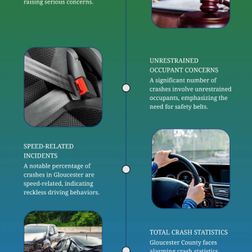
Gloucester County, Virginia Car Accident Statistics (2026): Route 17 Crash Data, Middle Peninsula Trends, and Safety Analysis - GibsonSingleton Virginia Injury Attorneys

From GibsonSingleton Virginia Injury Attorneys - Gloucester County, Virginia Car Accident Statistics (2026): Route 17 Crash Data, Middle Peninsula Trends, and Safety Analysis examines the rising number of crashes, fatalities, and safety risks shaping travel in Gloucester County and across the Middle Peninsula. This episode looks closely at Gloucester County’s 400 crashes and 8 traffic fatalities in 2024, the county’s elevated fatality rate compared with Virginia statewide averages, and the dangerous patterns tied to Route 17, Woods Cross Road, and other high-risk intersections. The discussion explores the local and regional numbers behind these collisions, including speed-related crashes, alcohol-related crashes, unrestrained occupant trends, and the broader traffic picture in Mathews, Middlesex, King and Queen, King William, and Essex. Listeners will hear how Gloucester County compares with Virginia as a whole, why rural areas often face worse outcomes, and how factors like distracted driving, seat belt non-use, and impaired driving continue to affect crash severity. The episode also covers the infrastructure response now underway, including VDOT safety improvements at Route 17 and Woods Cross Road, Route 17 and Guinea Road, the widening project from Lafayette Heights Drive to Tidemill Road, the Dragon Run Bridge replacement, and ongoing corridor studies involving Hospital Drive, McFadden Way, Belroi Road, Short Lane, and Featherbed Lane. It also explains how pedestrian and cyclist safety, EMS response times, Riverside Walter Reed Hospital access, and distance from VCU Medical Center can all influence what happens after a serious crash in Gloucester County. Finally, GibsonSingleton Virginia Injury Attorneys highlights the legal and practical realities facing injured people and families in Gloucester, Hayes, and the surrounding Middle Peninsula. Featuring insight connected to Ken Gibson and John Singleton, this podcast outlines recent Virginia insurance law changes, uninsured motorist reforms, and the legal options available after Route 17 crashes, truck accidents, wrongful death cases, rear-end collisions, and intersection accidents. GibsonSingleton Virginia Injury Attorneys 4073 George Washington Memorial Hwy, Hayes, VA 23072, United States (804) 413-6777 https://www.google.com/maps?cid=16748039254555405766
Injuries in Boston Nursing Homes - Colucci, Colucci & Marcus, P.C.

From Colucci, Colucci & Marcus, P.C. - Injuries in Boston Nursing Homes explores how preventable harm in Massachusetts long-term care facilities raises serious concerns about neglect, safety failures, and legal accountability. This episode unpacks the realities families face when loved ones suffer falls, fractures, bedsores, medication errors, and other injuries in Boston nursing homes, and why these incidents are often tied to understaffing and inadequate training. Drawing on insights from the Massachusetts Department of Public Health and data from the Massachusetts Health Care Facility Reporting System (HCFRS), the discussion highlights a nearly 25% rise in fall-related injuries between 2018 and 2022. Dino Colucci shares perspective from decades of handling nursing home negligence claims, explaining how these injuries frequently lead to complications like traumatic brain injuries, infections, and long-term immobility. The episode also examines how conditions such as dementia increase fall risks and why proper care planning is critical. Listeners will gain a clear understanding of the legal protections available under Massachusetts law, including M.G.L. c. 111, § 70E, M.G.L. c. 93A, and the Federal Nursing Home Reform Act. The conversation breaks down how violations involving patient rights, improper medication practices, or failure to report abuse can form the basis of legal claims. It also explains the role of agencies like the Executive Office of Elder Affairs and the importance of compliance with regulations such as 105 CMR 150.000. The episode concludes with practical guidance for families in Boston, Milton, Quincy, Cambridge, and surrounding communities on what steps to take if nursing home abuse or neglect is suspected. From documenting injuries and requesting medical records to understanding the three-year statute of limitations under G.L. c. 260, § 2A and the 182-day notice requirement under M.G.L. c. 231, § 60L, this discussion provides a roadmap for protecting loved ones and pursuing accountability when care standards are not met. Colucci, Colucci & Marcus, P.C. 424 Adams St #101, Milton, MA 02186, United States (617) 698-6000 https://www.google.com/maps?cid=6757336485323234120

What Are the Automatic Orders Under DRL § 236(B)(2) and How Do They Apply During Mediation? - Ryan Besinque

From The Law Office of Ryan Besinque - What Are the Automatic Orders Under DRL § 236(B)(2) and How Do They Apply During Mediation? explores how New York’s automatic orders protect assets, insurance coverage, retirement accounts, and the marital estate during a pending divorce. This episode explains how DRL § 236(B)(2)(b) and 22 NYCRR § 202.16-a apply in matrimonial actions, including when the plaintiff is bound upon filing and the defendant is bound upon service. Listeners will learn what conduct is restricted under the automatic orders, including property transfers, unreasonable debts, changes to life insurance beneficiaries, retirement account withdrawals, and changes to health, dental, automobile, homeowners, or renters insurance. The discussion also covers notice obligations involving tax liens, foreclosure, bankruptcy, litigation, and any lifting of a bankruptcy stay that could affect the marital estate. Manhattan divorce mediation attorney Ryan Besinque, Esq., founder of The Law Office of Ryan Besinque, explains how these rules apply during divorce mediation in New York City. The episode highlights how mediation, collaborative law, and traditional litigation remain subject to the same statutory restrictions once a divorce action has been filed in New York County Supreme Court or another applicable court. The episode also reviews how automatic orders may be modified by written agreement or court order, what happens if a spouse violates them, and how contempt of court under Judiciary Law § 753 may lead to fines, attorney fees, adverse inferences, or other remedies. Serving clients in Manhattan, Brooklyn, Queens, the Bronx, and Staten Island from 115 West 25th Street, The Law Office of Ryan Besinque can be reached at (929) 251-4477 for guidance on divorce mediation, asset protection, and automatic order compliance. The Law Office of Ryan Besinque 115 W 25th St 4th floor, New York, NY 10001, United States (929) 251-4477 https://www.google.com/maps?cid=3422990479581259264

How to Fund a Living Trust in New York - Davies Law Firm

From Davies Law Firm - How to Fund a Living Trust in New York explores the critical steps required to ensure your estate plan actually works under New York law, including why simply signing a trust document is not enough. Centered in Syracuse and serving Onondaga County, this episode walks through how a living trust must be actively funded to avoid probate in the New York Surrogate's Court and align with the Estates, Powers and Trusts Law (EPTL) Section 7-1.18. Listeners will gain practical insight from Frederick P. Davies and William P. Davies as they explain how to transfer real estate, bank accounts, brokerage accounts, and other assets into a revocable trust. The discussion covers key requirements under New York Real Property Law Section 291, including recording deeds with the Onondaga County Clerk’s Office on Montgomery Street, and completing forms like TP-584 and RP-5217. The episode also highlights how financial institutions, credit unions, and brokerage firms handle trust retitling, and what to expect when working with institutions across Central New York. The conversation also breaks down how life insurance policies, IRAs, 401(k) plans, pensions, and annuities interact with a living trust, including the impact of beneficiary designations and rules under the SECURE Act. You’ll hear how the Internal Revenue Service (IRS) treats grantor trusts, why capital gains taxes are typically not triggered, and how tools like a pour-over will function within the New York Surrogate's Court system to catch unfunded assets. Drawing on decades of experience, including Frederick P. Davies’ background with the U.S. Navy, Air Force Judge Advocate General’s School, and affiliations with the American Bar Association, New York State Bar Association, and Estate Planning Council of Central New York, this episode emphasizes ongoing trust maintenance. From avoiding probate and ancillary probate to coordinating with the Central New York Community Foundation and reviewing assets after major life events, Davies Law Firm provides a clear, structured guide to keeping your living trust estate plan fully funded and effective. Davies Law Firm 210 E Fayette St, Syracuse, NY 13202, United States (315) 472-6511 https://www.google.com/maps?cid=11885144913064493862
30 di 178