Bootie and Bossy Eat, Drink, Knit

Bootie and Bossy Eat, Drink, Knit

di Bootie and Bossy
Stagione 1

We will always love Dolly Parton

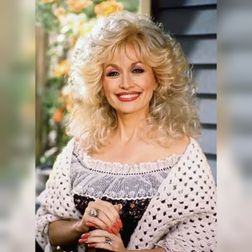
In this time of doom and discord, there's one bright, pink sparkling light that can bring us all together: Dolly Parton. When she died on August 25th, we lost a great spirit, and the whole world mourned her passing with flags hanging at half staff in every American embassy throughout the globe. So we felt it was only fitting to dedicate this episode to all the things we love about Dolly Parton. What does she have to do with eating, drinking and knitting, you ask? Full disclosure: she was not a knitter as far as we know, though the lovely white hand-crocheted shawl she's wearing here attests to her appreciation of the handmade. But she and her sister Rachel Parton George did collaborate on a best-selling cookbook, Good Lookin’ Cookin’: A Year of Meals—a Lifetime of Family, Friends and Food. Make her Country Ham and Biscuits, and let that flaky warmth melt in your mouth while you listen to the five songs that best capture Dolly's spirit. "9 to 5" is the anthem for all working women. When we learned she wrote "I Will Always Love You" to explain to Porter Wagoner why she had to leave his show and strike out on her own, we loved it even more. But it's how she champions embracing who you are that we find the most inspirational. A moment alone, singing in an old abandoned church, surrounded by crude "dirty pictures," Dolly describes her own spiritual awakening: “I didn't hear it like a voice, it came to me as a feeling that was as strong as a voice, though, and I felt like I found God that day. And I felt like I knew who I was that day . . . In this place of confusing images . . . I found God, music and sex. My fascination was complete. I sang with a strengthened conviction that only God could have understood the joy of the truth I found there. It is with me to this day. I found God, and I had found Dolly Parton.” (Quoted from the wonderful podcast, Dolly Parton's America, episode 9) Dolly's revelation that God loves her for being herself gave her the faith and confidence to embrace everyone--men and women, young and old, from the cowboy to the drag queen. This is why Nelson Mandela asked the guards to play "Jolene" in prison. For Dolly, when you accept who you are, you find the Godly within, and that's always worth fighting for. So thank you for all you gave to us, Dolly--the great embrace of your music and your divine spirit. We will always love you.

We're back and Mom's OK!

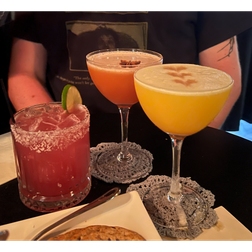
Okay, it's been a while since our last episode, but don't worry--we were not fighting. There were no fisticuffs. Most importantly, Mom's okay! But it was a grueling couple of months for all of us as Mom fought her way back from a significant health setback. Who knew that you could get a burst fracture in two vertebrae from violent coughing? Put this in the category of things we would rather not learn through experience. And when life gives you burst vertebrae, we recommend a good drink and talking about a great book, in this case Roz Chast's graphic memoir, Can't We Talk About Something More Pleasant? Simply put, everyone needs to read this book. Whether you are a child caring for an aging parent, or a middle-aged parent contemplating the fate of your child wading through decades of your accumulated "treasures," or a child who thinks his parents are bad now (just wait!), this book is for you. It is poignant, funny and profound, and says out loud many of the things you might have been thinking but could not find the words for, or perhaps did not feel you could say out loud. As Chast describes her realization so aptly, "The piles of newspapers, magazines, and junk mail had grown larger . . . and they themselves had grown frailer. I could see that they were slowly leaving the sphere of TV commercial old age--Spry! Totally Independent! Just like a normal adult, but with silver hair!--and moving into the part of old age that was scarier, harder to talk about, and not a part of this culture. Something was coming down the pike (p. 20). Chast's book gives us a way to starting talking about the thing we can't name that's coming down the pike. While we would love to include the fantastic drawings she has created to accompany the profound truth that she distills into a caption, we suspect her work is copyrighted. So instead here's a pic of the drinks we got at Skein & Tipple, our favorite speakeasy/yarn store in Clinton, on Whidbey Island in Washington (note the crocheted coasters--simply divine). Inspired by their Hornet Murder libation, we offer up this drink recipe with deep gratitude for all the people who helped us through this, and most of all for Mom, for being okay. We love you, Mom.

Pippa Latour, a Portrait in "Cool and Lonely Courage"

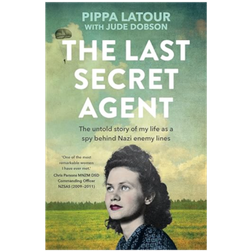
We are back for our second installment on knitting and espionage with Pippa Latour's memoir, The Last Secret Agent: My Life as a Spy Behind Nazi Lines. First a disclaimer: knitting stands out only as the most normal, ordinary thing in the extraordinary life of Pippa Latour, and it plays a critical, albeit small, part in her life as an Special Operations Executive (SOE) agent. Pippa Latour is above all a survivor--when she died in 2023 at the age of 102, she literally was the last surviving secret agent who served during World War II. What's perhaps most surprising is how her life before the war perfectly prepared her for being a spy. With a French father and English mother, she grew up in Africa speaking many languages (Swahili, French and English). She was also used to hardship, loss and violence--her father died when she was four months old, killed in an uprising against Western doctors lead by local healers. Her mother died when she was four. Raised by various relatives and friends of her parents, she was shuttled from one home to another, so she constantly had to adapt to new situations. She was used to living in the bush and sleeping outside in a hammock. She knew how to shoot a gun and pilot a plane before her spy training. Those years playing with monkeys in the trees meant she killed it on the ropes courses too. All this prepared her to parachute behind enemy lines, adopt the cover of a 14-year-old French girl selling goat-milk soap for her "grandparents," while she gathered intelligence and transmitted it by Morse code through radios hidden in 27 locations across her territory in France. Yeah. She did that. Most radio transmitters survived six weeks behind enemy lines. Not Pippa Latour. Major Selwyn Jepson was the British commander who advocated for recruiting women as spies because "Women have a greater capacity for cool and lonely courage than men, who usually want a mate with them. Men don't work alone; their lives tend to be always in company with other men. Women are mostly on their own" (p. 66). We decided a World War II era cocktail would be a great accompaniment to discussing Pippa's story, so try the delicious "Three Dots and a Dash," which is "V" in Morse code for Victory. It is because of the sacrifices of so many and the "cool and lonely courage" of women like Pippa Latour that we enjoy the lives we have today, and we are profoundly inspired and deeply grateful.

The Great Catering Adventure

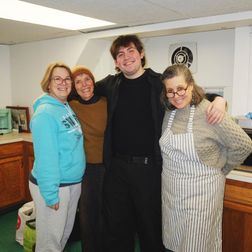
“Great catering adventure” or act of insanity? It was probably closer to the latter when Bossy offered to cater her son’s film shoot for his senior project on a freezing weekend in February in Philadelphia. Thank God for the help and support of so many people, including sisters-in-law Leslie and Gail and great friends, like Betsy Grenier, who survived the adventure and was willing to talk with us about it in this episode. Talking about trauma always helps. So what was the scope of this catering caper? Five meals for 30 starving college students spread out over two days at the Chamounix Mansion in Fairmont Park. Yep. We did that. And here's the thing about agreeing to do crazy big things: there is a weird sense of triumph that comes at the end because being part of a big creative project is truly amazing. When it was over, it felt like a dream--Betsy said "a bad dream"--but a dream nonetheless. All parents want their kids to find their passion and purpose, and living on the edge and bearing witness to that was, well, every parent's dream. But it definitely takes a village to make dreams happen, and this was more proof of that (as if we needed it). Our village was all the cast and crew members to what Betsy dubbed our "Just Hired Craft Services Company" toiling away in the basement kitchen. The menu featured many Bootie and Bossy recipes from the Pumpkin bread and Granola to homemade marshmallows and garlic aioli, all available on our website and easily found using the oh-so-convenient search bar (ah-hem). Try out the delicious Spinach Mushroom Brunch Bake, which was a big hit for breakfast on the second day—thank you, Gail, for supplying Chris Brez's recipe from The Hawkin School's Best Recipes (2002). Here's what we learned: next time you have the chance to do something big and crazy, do it! You will be glad that you did.

What do Knitting and Espionage have in Common?

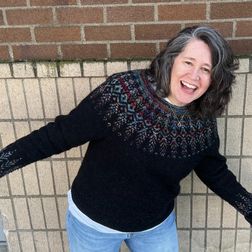
Knitting and espionage? What could they possibly share? A lot, as we learned from reading Jenny O’Brien’s new romance novel, The Resistance Knitting Club, which was inspired by the true story of how knitting was used by women working for the British Special Operations (SOE) during World War II. With its two stitches, knit and purl, knitting is a binary system, which makes it a great stand-in for Morse code. Even more, it was knitting’s very ordinariness that made it a great spy cover. This is the sad irony of knitting’s superpower in the espionage war context: as women’s work, it has a long history of being overlooked and ignored, so a woman sitting in a corner, quietly recording conversations in knits and purls, could not possibly be of consequence. So knitting has a new potential in wartime because as women’s work, it’s never been important. Le sigh. O’Brien’s novel made us want to read the biography of Pippa Latour, a real World War II spy, so stay tuned for the second part of what we have now decided is a “series” on knitting and espionage. Oye the weather. We are both tired of it, between the “Spring Tease” or “Fool’s Spring” followed by snow and the “Atmospheric River” in Seattle and the still-18-degree-mornings in Massachusetts. The only consolation is having fabulous sweaters to wear, like Bootie’s birthday Goldwing—doesn’t she look great? And a good meal—check out our adaptation of Ina Garten’s Baked Farro and Butternut Squash with our “Bootie and Bossy Imperatives for Cooking Sanity”: one pot! And use that whole bag of Farro because what are you going to do with the ½ cup that’s left? Now there’s some good advice. You’re welcome!

We Salute the Knitlympians

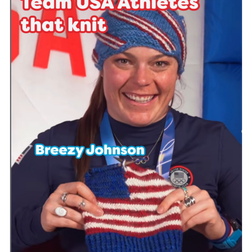
Breezy Johnson. Maddie Mastro. Deerdra Irwin. Margie Freed. Lucinda Anderson. Maxime Germain. Jaelin Kauf. Jessie Diggins. Julia Kern. Greta Myers. Ben Ogden. Sure, these are all members of the US Olympic Team who competed in the recent games in Cortina, Italy, but did you know that they are also Knitlympians? They belong to an even more elite circle of athletes who are also accomplished knitters--in fact, judging by their Instagram feeds, they are almost as proud of their knitting as they are of their medals and Olympic performances. We love this. From Breezy Johnson designing and knitting a headband the night before each race to Maxime Germain's scratchy sweater with colorwork and crochet along the hem, all have found in knitting the space for cultivating a relaxed, alert focus that enhances their performance on the slopes and the ice. Knitting has long been compared to yoga and meditation, but do you have a beanie or sweater to wear after doing yoga or meditating? You do not. We rest our knitting case. But there are other surprising points of comparison between Olympic sports and knitting: they are both equally important, excellent, time consuming, expensive, and, at times, heartbreaking and frustrating. Snowboarder Maddie Mastro summed it up nicely when she filmed herself knitting in the car on the way to Cortina: "Did not finish the beanie, but DID make it to the Olympics!" Maddie Mastro We like how making it to the Olympics comes second after the status report on the beanie. We know you'll get it done, Maddie. Speaking of getting it done, we are thinking more about the Melt-the-Ice hats we featured in our recent bonus episode and the symbol of the Phrygian hat on the seal of the U.S. Senate. We are thinking some senators need a hat of thanks, and perhaps others need to be reminded of what that red hat on the seal symbolizes. So we invite our listeners to send a hat to your senator, or maybe a red hat broach. We'll put up a template of a letter on our website bootieandbossy.com that you can send along with it. Maybe Jaelin Kauf, Knitlympian and producer of 50 beanies for her supporters, will help. So whip up some of Keeley Richardson's fabulous King Arthur's Everyday Olive Oil cake with a few drops of Fiori di Sicilia, grab your pointed sticks and join us in sending a message to our senators about what that red hat on their seal actually means.

A Dream Afternoon with Keeley Richardson

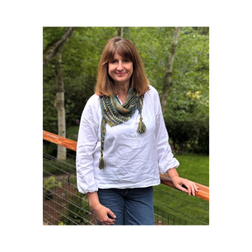
What is Keeley Richardson's idea of a "dream afternoon"? The founder of the online blog and magazine Puget Sound Woolpack does not hesitate: "You guys know this: sitting and knitting and eating cake, I mean, that is probably my dream afternoon. And if only I could spend every afternoon doing that, I would be very happy." We say, "Yes, please! Sign us up!" We could also spend all afternoon listening to Keeley's lovely British accent. We loved learning more about Keeley's fiber life, which started when she was about six growing up in Birmingham, the midlands region of the UK, in a fiber family with her mum, nan and aunt teaching her everything from knitting and embroidery to sewing: "Back then, we didn't call it 'the fiber arts'--that's a new phrase--it was just something we all did in our household." Her teddy bears were the first recipients of her efforts as they proudly sported long thin scarves. Crafts were also taught in schools, and when she noticed that her three young sons weren't coming home with the kinds of craft projects she remembered, she started a business teaching kids to knit and sew as a creative lunchtime club in schools. By the time she left the UK, 600 kids were enrolled in the program across three counties. When she and her family relocated to the Seattle area in 2017, she began connecting with people in the local fiber community. Starting the online blog/magazine Puget Sound Woolpack seemed like a natural next step for putting her background in marketing, writing and teaching the fiber arts to work: "The Woolpack isn't just about me . . . it is a platform for local businesses, for local yarn stores, for local wool producers, for dyers--it's a space for them to talk about what they do, their background, what motivates them, and what inspires them. The Woolpack isn't designed to be something that says, 'you should buy this.' It's about the people behind all of the things that we know and love. And I hope that comes across. That would be the intention." The Woolpack's feature "Fiber Heroes" tells those fascinating behind-the-scenes stories of the people behind the things, while "Yarn Adventures" focuses on local events and things to do. "The Yarn Test Kitchen" offers one-skein projects featuring yarn from local indie dyers as well as simple, favorite recipes for a good bake for the dream afternoon. We can't wait to try the "Everyday Olive Oil Cake" she recommended. And we also can't wait to connect with Keeley at Rhinebeck again, and with her guidance--she has tried them all!--try out some of the other fiber events in the area, such as A Woolen Affair, Indie Untangled and CAKEpalooza. So, while Rhinebeck is still months away, it's never too early to start thinking and dreaming about it, and our conversation with Keeley Richardson in this episode is a great place to start!

Got Red Wool?

Bonus
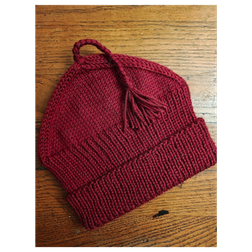
There's a quiet but powerful movement afoot in the knitting community. It started at Needle & Skein, a full-service yarn store in Saint Louis Park, Minnesota. Wanting to do something to protest the presence of ICE in his state, Paul Neary decided to look back in time for inspiration, and he found it in 1940s Norway. As Neary explains in his "Melt The Ice Hat" pattern, "In the 1940s, Norwegians made and wore red pointed hats with a tassel as a form of visual protest against the Nazi occupation of their country. Within two years, the Nazis made these protest hats illegal and punishable by law to wear, make or distribute. As purveyors of traditional craft, we felt it appropriate to revisit this design." Paul Neary, "Melt the Ice Hat," available on Ravelry and through Needle & Skein (needleandskein.com) "We felt it appropriate to revisit this design." We love the understatement. All proceeds from the sale of the pattern ($5) go to Minnesota Immigration Aid organizations. Over $650,000 has been raised, and the pattern has been sold in 43 countries. The movement might have started in a quiet corner of a Minnesota yarn store, but it's big now, and it's growing. This is what happens when you have a lot of people ready to take a stand and put their pointed sticks to work. In fact, the red cap's association with liberty has a much longer history, going back to Ancient Greece where former Phrygian slaves wore red pointed caps to signify their emancipation. Romans picked up the association and bestowed red caps on freed slaves as part of their manumission ceremony. In the American Revolution, Paul Revere carved a liberty cap on a stone obelisk in the Boston Common, and local towns often placed a red liberty cap on a pole or tree to signify their allegiance to the resistance. The tradition was continued during the French Revolution with Lady Liberty sporting a red cap and her followers donning the famous "bonnet rouge." Early draft designs of the Statue of Liberty even showed her with a red cap instead of a crown. Perhaps most surprising is the Seal of the U.S. Senate--take a close look, and oh, what's that you see? Could it be a little red liberty cap at the top? The irony. So we are buying red yarn and knitting "Melt the Ice" hats these days. We want to be part of the red liberty cap history, because, well, it's our history. Join us.

Will Bootie and Bossy Go on Game of Wool?

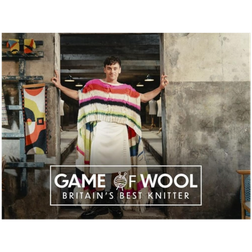
First we want to say that we love that there is a British show about knitting. Period. Full stop. And we love that Tom Daley is the host--he is warm, funny and good humored about testing the knitted deck chairs the contestants make with his well-sculpted butt. But knitters that we are, would Bootie and Bossy go on the show? Let's be clear: NO ONE IS ASKING US. We also don't live in the UK. But the answer is still a definite "No." For one, we would never subject anyone--even an Olympic swimmer with a flawless body--to wearing a swimsuit we had designed and knitted. "Game of Wool: Britain's Best Knitter" is a bit of a misnomer--we are reminded Mike Meyers's famous character of Linda Richman on Saturday Night Live who might have said, "I am feeling verklempted. I'll give you a topic: 'The show is neither a game, nor about wool or knitting.' Discuss amongst yourselves." There's a lot of crochet in this knitting show, which is kind of like mixing coffee and tea, as any fiber artist with an ounce of reverence for the two crafts will tell you. Plenty of accomplished knitters follow patterns as written with great creativity in selecting the material and colors, but the show often expected serious design skills, which left some some contestants in the dust from the start. And the time constraint of 12 hours meant contestants had to use bulky wool with needles the size of shotguns. As one contestant, Holger, remarked: "Asking me to express myself in chunky yarn is like asking a vegetarian to express themselves with only something like steak." Later he would say, "The method I am using is pure and utter desperation." Holger Auffenberg, "Game of Wool: Britain's Best Knitter," Episode 1. Here's the thing: we loved the contestants sporting their own handknits, and we wanted to know more about them. Where was the camera crew following them back to their homes so we could meet their kids and parents and learn more about what inspired them? As one of the judges Di Gilpin said, "Knitting generally is all about telling a story." What a great premise! How about following it? Tell us the stories behind Tom Daley's outfits! So we want another season where they get it right and tell more stories about the contestants, the judges, and knitting with something other than bulky yarn. The craft of knitting deserves this. We promise to watch the second season, but in the meantime, we will be busy eating Oreo Cookie Truffles because Valentine's Day is just around the corner, so we have to leave healthy behind (that phase lasted long, didn't it?!). This is the perfect homemade treat for your Valentine or Galentine or Palentine, or just for yourself--try it!

Your Stash: Inspiration or Albatross?

So it's the New Year. Hooray. And maybe like us you opened up that closet to put back the decorations and thought, "Do we need all of this? What's in these boxes anyway?" Perhaps your thoughts have now turned to your stash--not your drug stash, or a stash of stolen goods, the word's original meaning when it first entered English usage in 1914. We're talking about your yarn stash. Is it a source of inspiration to you, or an albatross? We are here to help. In typical Bootie and Bossy fashion, we decided the best way to tackle this was first to read about it, and then to talk about it, because you don't want to be too hasty and spring into action too quickly here. So we read A Stash of One's Own: Knitters on Loving, Living with, and Letting Go of Yarn, a wonderful collection of essays edited by Clara Parkes. Because a yarn stash is not just a pile of random string, as Parkes explains, "Yarn holds energy (literally twist), but it also holds energy in the form of memories . . . Every knitter will be able to pick up skein from her stash--any skein--and tell you a complete and compelling story about it" (p. 109). This might be why Stephanie Pearl-McPhee cannot get rid of the ball of yarn her daughters gifted her, even though it’s so pink and shiny it looks exactly like “what you’d get if Barbie and My Little Pony dropped acid and tried to come up with a colorway” (p. 32). As much as your yarn stash is a kind of fiber scrapbook—especially that vacation yarn that’s “all larded up with sentiment and emotion and meaning to the point where you weep slightly when recalling the now defunct yarn shop where you bought it" (Ann Shayne, p. 46)—it’s also connects you to the future. At its core, a stash is a repository of hope, as Anna Maltz explains: "There is a deep optimism in how much we acquire and keep around, and in our belief that we can make and learn from that vast quantity in a single lifetime. Anna Maltz, “Moving Yarn/Portable Stories,” in A Stash of One’s Own, p. 79. For Debbie Stoller, having a stash is also an empowering feminist act: "[A] yarn stash makes a pretty large statement to the world that a woman is planning to spend hours—nay, years—of her life engaging in something that doesn’t promise to make her skinnier or look younger or give her a tighter butt. Something that won’t make her a better mother, or a better wife . . . It announces to the world that she has decided to do something just for herself in pursuit of only one thing: pleasure.” Debbie Stoller, "A Stash of One's Own: Yarn as a Feminist Issue," A Stash of One's Own, p. 180. If your stash inspires and empowers you, great—keep doing what you are doing. If it starts to feel like an albatross, then there’s help for that too. As knitter and social worker Sue Shankle explains, “People have a hard enough time understanding themselves. Expecting others to ‘get’ you (or your love of beautiful yarn) is not always realistic. That’s why you need a posse. People who understand it all, no explanation necessary” (91-2). So make a nice, warm batch of healthy Instant Pot Curry with Chickpeas, Spinach and Tomatoes, and as you contemplate your stash, know that it’s much more than just yarn in a bin—it’s your past and your future, your statement to the world of how you want to spend your time, and we understand that because we are your posse!
1 di 8