Black etc podcast

Black etc podcast

di Ian Yusef

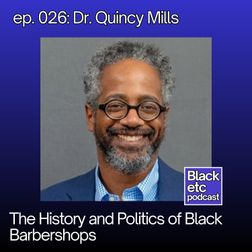
The History and Politics of Black Barbershops (w/ Dr. Quincy Mills)

My guest for this episode is Dr. Quincy T. Mills, who is an Associate Professor of History at the University of Maryland in addition to serving as the Associate Dean for Academic Affairs for Graduate Education in the College of Arts and Humanities and the Director of the Frederick Douglass Center for Leadership Through the Humanities. We first discuss the archival research and ethnography Dr. Mills did in a Black barbershop on the Southside of Chicago to support both Dr. Melissa Harris-Perry's book on the subject and eventually his own. We then get into the surprising history of wealth and prestige post-emancipation Black barbers accumulated as groomers of the White political and business elite before focusing on the shift toward the barbershops as working class Black spaces. We also explore the popular stereotype of Black barbershops as sites of unconventional (and outlandish) opinion and the role the spaces play in discussions of Black men's political thought. Finally we look at the changing nature of Black barbershops and the extent to which they welcome various people in the community based on class, age, gender, and sexuality. Dr. Quincy T. Mills' U of MD faculty page: https://history.umd.edu/directory/quincy-mills Dr. Mills' book: Cutting Along the Color Line: Black Barbers and Barber Shops in America Dr. Melissa Harris-Perry's book: Barbershops, Bibles, and BET: Everyday Talk and Black Political Thought Full episode notes here: https://blacketcpod.com/episodes/026-quincy-mills

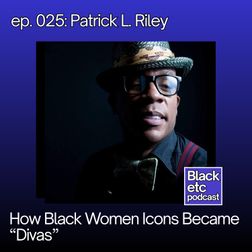
How Black Women Icons Became "Divas" (w/ Patrick L. Riley)

My guest for this episode is award winning independent producer, writer, critic, and Diana Ross superfan Patrick L. Riley. His book, That's What Friends Are For: On The Women Who Inspired Me, provides a nice jumping off point for us to discuss the history of the term "diva" as it is used for Black women. Mr. Riley breaks down the early 20th Century use of the word for the Black women blues and jazz singers dubbed "the dark divas." He then details the revival of the term for celebrated Black women of music, film, stage, and business, from the late 70s through the modern day. We ground most of the discussion in Mr. Riley's personal experience as a fan of said divas, with a particular emphasis on Diana Ross, and we get into why the divas have such a passionate following among (Black) gay men. Facebook: https://www.facebook.com/patrick.l.riley/ Instagram: https://www.instagram.com/patrick.riley/ Book: That's What Friends Are For: On The Women Who Inspired Me Full episode notes here: https://blacketcpod.com/episodes/025-patrick-riley

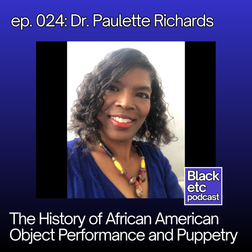
The History of African American Object Performance and Puppetry (w/ Dr. Paulette Richards)

Dr. Paulette Richards is a celebrated artist, educator, performer, and author who studies the meaning of puppets, masks, and other performing objects in the African diaspora. She joins me for this episode on the roots and history of puppetry and object performance in Black America. Dr. Richards offers her thoughts on why puppets made by enslaved people of African descent have not been found (yet), and how the broader category of object performance is exemplified in the African American culture through the relationship to material items such as church fans and musical instruments. Finally, we discuss the echoes of African ritual culture in Black American object performance and the history of Black puppetry in the U.S., from the early 20th Century through the modern day. Dr. Paulette Richards' website: https://www.paulette-richards.com/ Full episode notes here: https://blacketcpod.com/episodes/024-paulette-richards

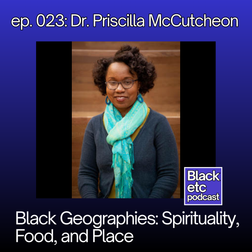
Black Geographies: Spirituality, Food, and Place (w/ Dr. Priscilla McCutcheon)

The guest for this episode is geographer and scholar Dr. Priscilla McCutcheon, who is an Associate Professor of Geography at the University of Kentucky. We discuss the concept of Black geographies and how it shows up in her research on the food work of radical Black religious organizations like the Nation of Islam and the Pan-African Orthodox Christian Church as well as in her archival work studying Fannie Lou Hamer and her connection to the National Council of Negro Women and other more mainstream Black funders. We dedicate a portion of the episode to talking about "the pork wars," which is my term for the tension in Black communities surrounding whether or not to eat pigs, with all the religious, cultural, regional, and class differences that come to bear on those arguments. Finally, Dr. McCutcheon offers her take on how modern technologies like social media complicate the public / counterpublic framework of Black political analysis. Dr. Priscilla McCutcheon’s University of Kentucky faculty page: https://geography.as.uky.edu/users/pmc243 Full episode notes here: http://blacketcpod.com/episodes/023-priscilla-mccutcheon

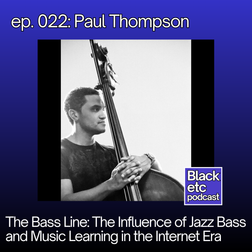
The Bass Line: The Influence of Jazz Bass and Music Learning in the Internet Era (w/ Paul Thompson)

My guest is accomplished jazz bassist, professor, and public music educator Paul Thompson. We discuss the influence of jazz bass on other genres, the regional differences in jazz styles, and the vibrancy of Pittsburgh’s Black community. The bulk of the conversation, however, centers on music teaching and learning. We not only touch on Mr. Thompson’s decision to educate the public about music and bass online; we also delve into his controversial, viral social media post about the breakdown of the jazz apprenticeship model and the resulting generation gap. Finally, we briefly discuss the role the bass plays in the music of the late hip hop producer James “Jaydee/J Dilla” Yancey. Paul Thompson’s website: http://paulthompson.us YouTube: http://youtube.com/@pdbass Instagram: http://instagram.com/pdbass74 Twitter: twitter.com/pdbass74 Full episode notes here: http://blacketcpod.com/episodes/022-paul-thompson

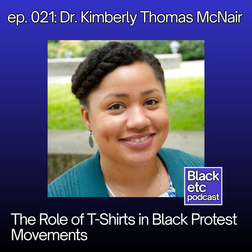
The Role of T-Shirts in Black Protest Movements (w/ Dr. Kimberly Thomas McNair)

The guest for this episode is Dr. Kimberly Thomas McNair, Lecturer in the Department of African and African American Studies at Stanford University. One of Dr McNair's major research projects is exploring the political significance of t-shirts in Black protest movements. Our discussion centers on how class and gender inform what figures are depicted on t-shirts and the ideological implications of those choices. Furthermore, we discuss the generational parallels and divides with respect to "tastefulness" of depicting Black historical and political figures on t-shirts as well as the insights Dr. McNair gained from interviewing former Black Panthers about their t-shirt printing and distribution efforts. Finally, Dr. McNair draws a link between Black political t-shirts and the R.I.P. t-shirts that originated with youth gang culture. Dr. McNair's LinkedIn: https://linkedin.com/in/kimberly-thomas-mcnair-phd-9b27ab17/ Instagram Page: https://instagram.com/profkayteemac her Stanford Faculty page: https://aaas.stanford.edu/people/kimberly-thomas-mcnair Full episode notes here: http://blacketcpod.com/episodes/021-kimberly-mcnair

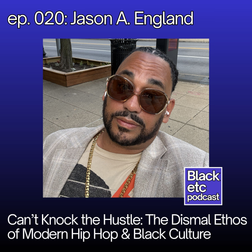
Can’t Knock the Hustle: The Dismal Ethos of Modern Hip Hop and Black Culture (w/ Jason A. England)

Esplicito
My guest for this episode is Jason A. England, acclaimed writer, cultural critic, and English professor. We use Jason's controversial piece lamenting the state of popular hip hop as an entry point into a broader conversation about the damaging effect the "can't knock the hustle" ethos has had on the music as well as Black culture writ large. We discuss the illusory appeal of representation, inclusion, and symbolic politics for Black folks, including segments on the warped individualism cultivated by social media and the unfortunate popularity of consumption as resistance. Jason's Defector article: "50 Years Later, Is There Anything Left of Hip Hop?” Full episode notes here: blacketcpod.com/episodes/020-jason-england

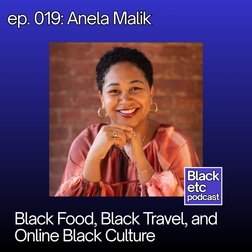
Black Food, Black Travel, and Online Black Culture (w/ Anela Malik)

Esplicito
My guest for this episode is Anela Malik, who is a writer, speaker, food and travel enthusiast, and social media influencer. She is the author of the book American Soul: The Black History of Food in the United States and the host of the Black food and travel series Our Block. We discuss the difference between online and real-life Black culture, the importance of maintaining integrity as a social media content creator against the backdrop of Black capitalist hustle culture, the thriving Black food scene in DC, and her experience traveling the world as a Black American woman. Anela Malik's website: anelamalik.com Her social media handle on multiple platforms is @theanelamalik the book: American Soul: The Black History of Food in the United States the Our Block tv series Full episode notes here: blacketcpod.com/episodes/019-anela-malik

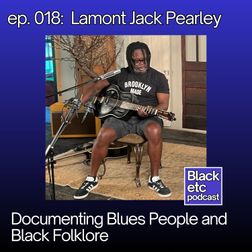
Documenting Blues People and Black Folklore (w/ Lamont Jack Pearley)

My guest for this episode is Lamont Jack Pearley, Executive Director and founder of Jack Dappa Blues Heritage Preservation Foundation & the African American Folklorist Magazine. He is an applied folklorist, an African American music historian, a traditional country blues artist himself, and an inductee into the New York Blues Hall of Fame. We discuss a host of topics, including the meaning of applied folklorist, the relationship between folklorists & archivists, and the reason he founded The African American Folklorist Magazine I also chat a great deal with Mr. Pearley about the blues: Why the genre is such a potent lens for Black culture, hip hop songs that function as blues songs, and how being a blues artist informs his scholarly work. Lamont Jack Pearley's website: lamontjackpearley.com Jack Dappa Blues Heritage Preservation Foundation: jackdappabluesradio.tv The African American Folklorist Magazine: theafricanamericanfolklorist.com Full episode notes here: blacketcpod.com/episodes/018-lamont-jack-pearley

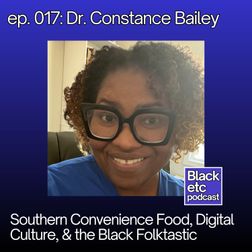
Southern Convenience Food, Digital Culture, and the Black Folktastic (w/ Dr. Constance Bailey)

My guest for this episode is Dr. Constance Bailey, Assistant Professor of African American Literature and Folklore at Georgia State University and Digital Media Editor at the American Folklore Society. She has multiple books in the works, including the upcoming Get It While It's Hot: Gas Station, Roadside, and Convenience Cuisine in the U.S. South and The No Limit Reader: Music, Place, and Space in the Gulf South. Dr. Bailey and I discuss the distinctions between "soul food" and "Southern food," the persistence of gas station and roadside food spots in the South, Black memes, the importance of preserving Black digital culture, as well as the Black "folktastic", which she defines as the fantasy elements in Black folklore. Dr. Bailey's website: constancebailey.com Instagram account: @constancetheeakademic Full episode notes here: blacketcpod.com/episodes/017-constance-bailey
1 di 3