
Note sull'episodio
What happens when influence is exercised without restraint and conspiracy replaces evidence?
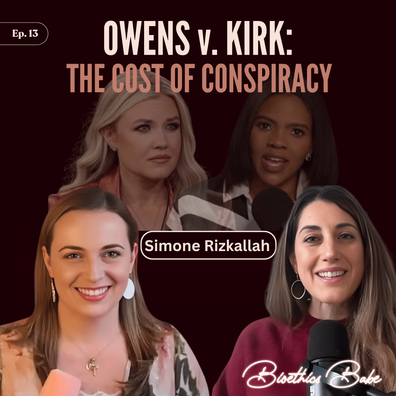
In today’s episode of Bioethics Babe, I’m joined by Simone Rizkalla, Catholic educator, speaker, writer, and host of the Beyond Rome podcast to examine the controversy surrounding Candace Owens and Erika Kirk, not as internet drama, but as a serious ethical case study.
This conversation explores the cost of conspiracy thinking, the moral responsibilities that come with large platforms, and how misinformation, reputational harm, and reckless speculation threaten human dignity, truth, and community trust in the digital age.
We ask hard questions:
- Are influencers ethically obligated to verify claims before amplifying them?
- When does “just asking questions” cross into moral harm?
- How does conspiracy thinking damage individuals, communities, and our shared ability to reason?
- What does Christian moral theology say about truth-telling, scandal, and bearing false witness online?
- Can influence itself become unethical when it’s used carelessly or abusively?
This episode goes beyond the culture war to examine the bioethics of influence, the psychology of conspiracy narratives, and what justice, accountability, and repentance look like when harm is done publicly.
If you care about truth, integrity, and ethical leadership in media, this conversation matters.
📚For Episode Resources, please visit the episode page: https://bioethicsbabe.com/candace-owens-v-erika-kirk-the-cost-of-conspiracy-and-the-ethics-of-influence-with-simone-rizkallah-ep-13/.
For more information, the latest episodes, and additional resources, visit www.bioethicsbabe.com.
Thank you for tuning in!
XOXO,
Bioethics Babe
👉 Subscribe for more deep-dive discussions at the intersection of human dignity, science, ethics, and medicine.
Follow BB on social media:
YouTube: https://www.youtube.com/@BioethicsBabe
Facebook: https://www.facebook.com/profile.php?id=61576554667052
Instagram: https://www.instagram.com/bioethicsbabe