Awesomeness Abounds

Awesomeness Abounds

di Michelle Feole
Stagione 1
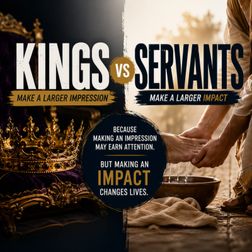
The Larger Impact
What matters more: making an impression or making an impact? In this episode, we explore a powerful idea that challenges the way many of us think about success, leadership, and influence: "Kings make a larger impression, but servants make a larger impact." We live in a culture that often celebrates titles, recognition, and visibility. But when we look closely at the people who truly change organizations, families, and lives, we often find something different. The greatest impact is frequently made by people working behind the scenes, faithfully serving, solving problems, and doing meaningful work when nobody is watching. Listen in as we discuss why service is not a lesser role, why faithfulness often matters more than recognition, and how some of the most influential people in our lives never sought the spotlight. We also explore the importance of trusting God's process, even when the role you've been given looks different from the one you imagined. Because making an impression may earn attention. But making an impact changes lives. 💡 What You'll Learn: • The difference between making an impression and making an impact • Why servant leadership creates lasting influence • How faithfulness matters more than titles and recognition • Why behind-the-scenes work often produces the greatest results • How trusting God's process can lead to unexpected purpose and impact 🛠️ Action Step: Ask yourself these three questions: • Where can I serve? • What needs to be done? • How can I make an impact with what I've been given? Then identify one opportunity this week to serve someone without expecting recognition in return. 📌 Perfect For: • Leaders and aspiring leaders • Faith-driven professionals • Team builders and mentors • Anyone wrestling with purpose, recognition, or influence • People who want to create meaningful impact rather than simply gain visibility
Press All the Buttons
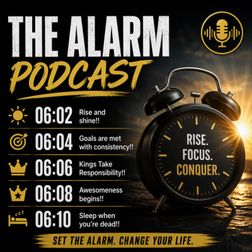
What if one of the most powerful tools for personal growth is something you see every single morning? In this episode, we explore how a simple feature on an alarm clock became an unexpected lesson about motivation, identity, and intentional living. What started as curiosity and a habit of "pressing all the buttons" led to a discovery that transformed an ordinary morning routine into a daily source of encouragement and perspective. Through a series of personalized alarm names, we uncover how small reminders can reinforce values, shape habits, and help us become the people we're trying to be. Because while many of us are waiting for a major breakthrough, real growth often happens through small, consistent actions repeated over time. Listen in as we discuss the power of curiosity, the importance of personal reminders, and why meaningful change is often hidden inside ordinary moments. 💡 What You'll Learn: • Why curiosity can lead to unexpected personal growth • How small environmental cues influence mindset and behavior • The connection between consistency and long-term success • Why identity-driven reminders are more powerful than motivation alone • Practical ways to make everyday routines more meaningful 🛠️ Action Step: Choose one recurring part of your day and attach a meaningful reminder to it. Name an alarm, create a phone wallpaper, place a note on your desk, or add a message somewhere you'll see regularly. Make it personal, memorable, and aligned with who you want to become. 📌 Perfect For: • Leaders looking to build better habits • Professionals pursuing personal growth • Anyone interested in mindset and self-improvement • People seeking practical motivation strategies • Curious learners who enjoy finding lessons in everyday life
Face the Wall
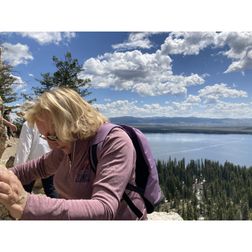
What does real bravery actually look like? In this episode, we explore a powerful lesson from an unexpected source: a hiker who was terrified of heights. While hiking to Inspiration Point in Grand Teton National Park, she faced one of her biggest fears every step of the way. She wasn't fearless. She wasn't confident. She simply kept moving forward. Her story challenges the way most of us think about courage. We often associate bravery with extraordinary achievements or dramatic moments. But more often, true bravery shows up in ordinary situations when we choose action despite discomfort, uncertainty, or fear. Listen in as we unpack why courage isn't the absence of fear but the willingness to move through it. Because sometimes the most courageous people aren't the ones who make it look easy. They're the ones who keep going even when every step feels difficult. 💡 What You'll Learn: • Why bravery and fear often exist at the same time • How courage can look ordinary rather than extraordinary • The hidden struggles people overcome to reach meaningful goals • Why others often see the destination but not the journey • Practical ways to move forward when fear is holding you back 🛠️ Action Step: Identify one thing you've been avoiding because it makes you uncomfortable. Commit to taking a single step toward it this week. You don't need to conquer the fear. You just need to keep moving. 📌 Perfect For: • Leaders facing difficult decisions • Professionals navigating uncertainty • Entrepreneurs taking risks • Individuals working through fear or self-doubt • Anyone ready to grow beyond their comfort zone
Get Your Money’s Worth Out of the Boots
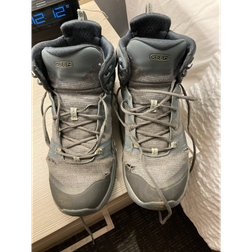
What if the scratches, scars, and worn-out places in your life are actually evidence that you're living it the way it was meant to be lived? In this episode, we explore an unexpected life lesson that came from an old pair of hiking boots. After years of adventures, difficult trails, and miles of exploration, the boots were torn, scratched, and full of holes. Before throwing them away, one simple photograph sparked a powerful realization: a meaningful life isn't one that stays perfectly preserved. It's one that's been used. Listen in as we discuss why so many people spend their lives waiting for the perfect moment, protecting themselves from failure, discomfort, and risk, only to discover that avoiding scratches often means avoiding growth. Because a life well-lived will inevitably show signs of wear, and that's not something to fear. It's something to embrace. 💡 What You'll Learn: Why growth always comes with a few scratches and scars The danger of waiting for the "perfect" time How fear of failure can keep us sitting on the shelf Why meaningful experiences often require risk and discomfort How to view life's challenges as evidence of participation, not defeat 🛠️ Action Step: Identify one thing you've been postponing because you're waiting until you feel more ready. Then take one small action toward it this week. Make the call, sign up, ask the question, or take the first step down the trail. Progress rarely begins with certainty. It begins with movement. 📌 Perfect For: Anyone feeling stuck or hesitant to take the next step Leaders striving to live and lead with courage Professionals waiting for the "right time" to pursue a goal People navigating change, uncertainty, or personal growth Anyone who wants to create a life filled with stories instead of regrets Because we're not here simply to survive the journey with everything intact. We're here to live it. And a life well-lived will always show a little wear.
The Moments That Stop You
What if the moments that shape us most are the ones we never planned for? In this episode, we explore a simple experience from a trip to Boston that became a lasting reminder about attention, presence, and the unexpected moments that stay with us. While the famous landmarks, historic sites, and planned activities made the trip memorable, one unplanned encounter stood above the rest: standing beneath a massive American flag near Boston Harbor and simply watching it move in the wind. Years later, that unexpected moment remains one of the strongest memories from the entire trip. Listen in as we discuss how life often offers meaningful experiences outside of our carefully crafted plans, and why some of our favorite memories come from moments we almost walked past. 💡 What You'll Learn: Why the most meaningful moments are often unplanned The value of slowing down and paying attention How curiosity can lead to deeper experiences Why not every meaningful moment needs an explanation The connection between presence and lasting memories 🛠️ Action Step: This week, when something unexpectedly captures your attention, resist the urge to rush past it. Pause. Observe. Stay a little longer. Ask yourself why it resonates with you and allow yourself to fully experience the moment. 📌 Perfect For: Leaders seeking greater presence and perspective Busy professionals who feel constantly rushed Travelers and lifelong learners Anyone looking to find more meaning in everyday life People who want to create memories instead of simply checking boxes Because sometimes the moments that stay with us aren't the ones we planned. They're the ones we stumbled into.
The Audacious Goal Loop
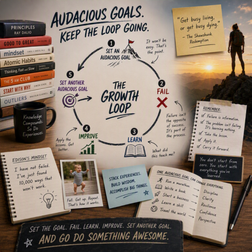
What if failure isn't the thing standing between you and success, but the thing helping you get there? In this episode, we explore a powerful idea inspired by Ray Dalio's Principles: the cycle of setting ambitious goals, failing, learning, improving, and trying again. While most people try to avoid failure, some of the most successful individuals understand that failure is often the mechanism through which growth occurs. Through stories, examples, and practical observations, we examine why ambitious goals almost always involve setbacks and why those setbacks can become valuable sources of information. The goal isn't to fail for the sake of failing. The goal is to learn, adapt, and carry those lessons forward into the next challenge. Whether you're pursuing career goals, personal development, fitness milestones, educational achievements, or business opportunities, this episode offers a framework for approaching challenges with curiosity rather than fear. 💡 What You'll Learn: Why failure is a normal part of accomplishing ambitious goals The difference between failure as a verdict and failure as feedback How successful people use setbacks as learning opportunities Why asking "Why didn't this work?" accelerates growth How lessons from one challenge can transfer to future challenges Why confidence is often built through overcoming failure, not avoiding it 🛠️ Action Step: Identify one goal you've been avoiding because you're afraid you might fail. Break it into a first step and commit to taking action this week. If things don't go perfectly, write down one lesson you learned and one adjustment you'll make before trying again. 📌 Perfect For: Professionals pursuing ambitious career goals Entrepreneurs and business owners Engineers and problem-solvers Students and lifelong learners Leaders helping others grow through challenges Anyone who wants to develop greater resilience and confidence Because the people who accomplish remarkable things aren't always the ones who avoid failure. They're often the ones who learn the most from it. Set the goal. Fail. Learn. Improve. Then go do something awesome.
Vacation Is Earned Three Times
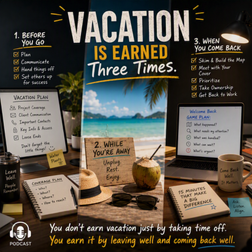
What if the way you take a vacation reveals more about your character than the work you do every day? In this episode, we explore a simple but powerful lesson learned early in a professional career: Vacation is earned three times. First when you earn the time off, then when you prepare others before you leave, and finally when you return and take ownership of getting back up to speed. What begins as a discussion about PTO, project handoffs, and overflowing inboxes becomes a broader conversation about responsibility, communication, preparation, and consideration for the people around us. Because some of the most valuable professional lessons have very little to do with technical skills and everything to do with how we work with others. Whether you're managing projects, leading teams, or simply trying to create less stress before and after time away, this episode offers practical strategies and timeless principles for handling transitions well. 💡 What You'll Learn: Why "vacation is earned three times" is a valuable professional mindset How preparation before time off reduces stress for everyone involved The importance of effective project handoffs and communication A simple system for managing the flood of information when you return Why responsibility doesn't end when you leave the office How small habits reveal larger character traits 🛠️ Action Step: Before your next vacation, make a simple transition plan. Identify who is covering key responsibilities, communicate important information, and document anything others may need while you're away. When you return, spend time understanding what happened before jumping into reaction mode. 📌 Perfect For: Project managers and coordinators Engineers, architects, and technical professionals Team leaders and supervisors Anyone responsible for multiple ongoing priorities Professionals looking to improve communication and accountability Because taking time off is important. But the real test isn't just how you leave. It's how you prepare others before you go and how you return when you come back.
4th Grade Math for the Win
What if the thing you're struggling with today becomes the foundation of your future success? In this episode, we explore a personal story about being behind in math as a fourth grader and how that experience eventually led to studying mechanical engineering, working as a mechanical designer, and even earning recognition in a published mathematics textbook. Many people assume that being behind means they're not capable. But there's a critical difference between not knowing something yet and not being able to learn it. Through stories of family support, great teachers, and the power of curiosity, this episode examines why our current abilities don't define our future potential. Whether you're a student, parent, mentor, leader, or professional learning something new, this conversation serves as a reminder that growth often starts with struggling, and success often begins with persistence. 💡 What You'll Learn: The difference between being behind and being incapable How encouragement can change someone's trajectory Why curiosity is one of the most valuable learning tools The importance of asking questions and seeking help How small moments of mentorship create lasting impact Why your current limitations don't determine your future opportunities 🛠️ Action Step: Think about one skill, subject, or responsibility you've been telling yourself you're "not good at." Replace that thought with: "I haven't learned this yet." Then identify one small step you can take this week to improve, whether that's reading a book, taking a class, watching a tutorial, or asking someone for help. 📌 Perfect For: Students and lifelong learners Parents, teachers, and mentors Engineers and technical professionals Leaders developing new talent Anyone feeling behind or discouraged while learning something new Because today's struggles are not always signs of future failure. Sometimes they're simply the beginning of a journey you can't see yet. Stay curious. Keep learning. And don't confuse where you are with who you can become.
Big Bertha and the Gift of Confidence
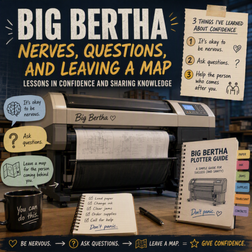
What makes confidence grow faster: experience, or having someone show you the way? In this episode, we explore an unexpected teacher: a giant office plotter named Big Bertha. What started as an intimidating piece of equipment became a lesson in learning, asking questions, documenting knowledge, and helping others succeed. Many of us face our own version of Big Bertha: a new role, a complicated system, unfamiliar software, or a responsibility that feels overwhelming when we first encounter it. This episode examines how confidence is built, not through pretending to know everything, but through curiosity, practice, and support from others. Most importantly, we'll discuss why sharing knowledge and creating documentation isn't just about efficiency. It's about helping the next person feel capable, prepared, and confident. 💡 What You'll Learn: Why nervousness is often a sign that you care How asking questions accelerates learning and confidence The value of finding mentors and subject matter experts Why documentation is one of the most powerful leadership tools How knowledge sharing strengthens teams and organizations The importance of leaving a better path for those who come after you 🛠️ Action Step: Identify one process, task, or responsibility you've learned the hard way. Create a simple guide, checklist, screenshot walkthrough, or quick training session to help the next person learn it faster and with more confidence. 📌 Perfect For: Engineers and technical professionals New employees and early-career professionals Team leaders and managers Mentors and trainers Anyone facing a new challenge that feels intimidating Because sometimes the greatest thing you can pass along isn't knowledge alone. It's the confidence to use it.
When the Map Is In Russian
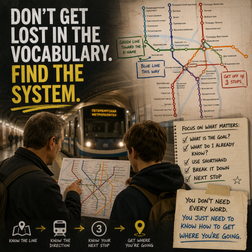
What do you do when you're surrounded by unfamiliar words, unfamiliar processes, and unfamiliar expectations? In this episode, we explore a simple lesson learned while navigating subway systems in Washington, D.C., New York City, and eventually Saint Petersburg, Russia. The experience revealed an important truth: you don't always need to understand every word before you can start making progress. Often, success comes from understanding the system underneath the vocabulary. Whether you're starting a new job, entering a new industry, taking on new responsibilities, or learning a completely new skill, the challenge is often the same. The terminology changes, but the underlying principles are usually more familiar than we think. Listen in as we discuss why focusing on systems instead of vocabulary can help you overcome overwhelm, build confidence, and move forward even when everything feels unfamiliar. 💡 What You'll Learn: • Why unfamiliar terminology often creates unnecessary fear • How understanding systems accelerates learning • The importance of building on skills you already possess • Practical ways to simplify complex challenges • Why progress doesn't require perfect understanding 🛠️ Action Step: Think about a challenge you're currently facing. Instead of focusing on everything you don't understand, identify the underlying system. Ask yourself: What is the goal? What steps are required to get there? What skills do I already have that can help? Focus on the next stop, not the entire map. 📌 Perfect For: • Professionals starting a new role • Students and lifelong learners • Leaders navigating unfamiliar challenges • Anyone feeling overwhelmed by complexity • People looking to build confidence in new situations At the end of the day, you don't have to know every word on the map. You just have to know how to get where you're going.
1 di 23