Authentic Leadership Podcast

Authentic Leadership Podcast

di Ivan Yeo
Stagione 1

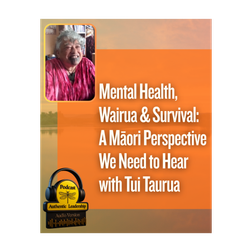
Mental Health, Wairua & Survival: A Māori Perspective We Need to Hear
What happens when the system meant to help you cannot fully see you? In this deeply moving episode of the Authentic Leadership Podcast, I sit down with Tui Taurua, a respected Māori lived experience leader, advocate, speaker, and master’s student in Wairua, to explore her extraordinary journey through trauma, mental distress, recovery, and healing. Tui shares openly about childhood trauma, psychiatric hospitalisation, suicide attempts, hearing voices, and the long journey of finding healing beyond the limitations of Western systems. Through reconnecting with Mātauranga Māori, Wairua, whakapapa, physical movement, storytelling, and lived experience, Tui found a way not just to survive — but to thrive. We talk about: ✨ The power of Wairua and spiritual healing ✨ Why lived experience matters in mental health ✨ Māori perspectives on wellbeing and recovery ✨ Trauma, identity, and reclaiming belonging ✨ The limitations of Western biomedical approaches ✨ Why peer support and cultural connection matter This is an honest, emotional, and deeply human conversation about pain, resilience, and finding your way home to yourself.

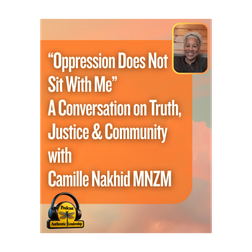
“Oppression Does Not Sit With Me” A Conversation on Truth, Justice & Community | Camille Nakhid MNZM
In this episode, I reconnect with someone who deeply shaped my thinking — my former lecturer and now Professor, Camille. What unfolds is an honest, courageous, and deeply human conversation about identity, justice, truth, and what it means to remain authentic in systems that often ask us to conform. Camille shares her journey from chemistry to social science, the influence of her mother, challenging Western-centric thinking in academia, and why communities should not have to seek validation to exist. This conversation touched me personally — especially as someone who has worked in community and mental health spaces and often struggled with systems that ask people to justify their humanity. If you have ever questioned systems, felt unseen, or wanted to understand authentic leadership through courage and integrity, this episode is for you. 4th Conference on Carribbean Research Methodologies 2027 https://www.caribbeanmethodology.org/ Affirming Methodologies Research and Education in the Caribbean https://www.routledge.com/Affirming-Methodologies-Research-and-Education-in-the-Caribbean/Nakhid-Nakhid-Chatoor-Santana-Wilson-Scott/p/book/9781032053080

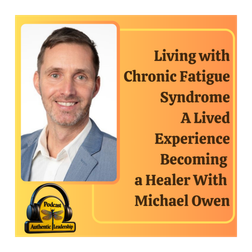
Living with Chronic Fatigue Syndrome: A Lived Experience Becoming a Healer
This episode of the Authentic Leadership Podcast explores the deeply personal and transformative journey of Michael Owen—a therapist whose work is shaped by lived experience, adversity, and spiritual discovery. From an early life marked by instability, separation, and a sense of being an outsider, Michael shares how chronic illness became a turning point rather than an endpoint. Living with chronic fatigue syndrome for over three decades, he describes a life of constant recalibration—learning how to restore energy, listen to the body, and rebuild from within. Through encounters with energy healing, meditation, and embodied practices, Michael’s path gradually unfolded into the work he does today. His approach is not based on theory alone, but on lived understanding—how the body holds tension, how emotions move, and how healing requires both awareness and presence. This conversation moves beyond conventional ideas of wellbeing, offering a perspective where healing is not about fixing, but about learning to sit with, sense, and reconnect to what is already within. It is a story of resilience, depth, and the quiet, ongoing process of coming back to oneself. MICHAEL OWEN~SHEN® THERAPIST/REALIZATION PROCESS TEACHER www.emotionalwellbeing.co.nz

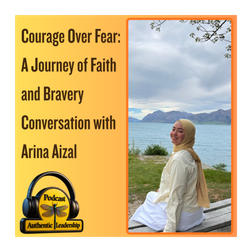
Courage Over Fear: A Journey of Faith and Bravery with Arina Aizal
In this episode of the Authentic Leadership Podcast, I sit down with Arina Aizal to explore her journey of identity, culture, and finding her voice. From growing up between Malaysia and New Zealand to navigating the challenges of language, belonging, and cultural expectations, Arina shares how these early experiences shaped who she is today. She opens up about a pivotal turning point during the Christchurch mosque shootings—a moment that challenged her sense of safety and identity, and ultimately led her to step forward and share her voice publicly. We also dive into her leadership journey at university, where she became an international student advocate during COVID—supporting others through uncertainty while learning that even leaders don’t always have the answers. Through it all, Arina reflects on growth, boundaries, and the powerful shift from seeking validation to living in alignment with her values. Today, she works in radio and community spaces, helping others find and share their voices—especially within multicultural communities. This is a conversation about courage, culture, and what it truly means to lead authentically. Poscast Hosted by Arina Aizal The Arinality https://oar.org.nz/shows/the-arinality/ Connecting Cultures Features https://oar.org.nz/shows/connecting-cultures-features/ Muslim Chaplaincy Conversations https://oar.org.nz/shows/muslim-chaplaincy-conversations/ Vibe Check on Youth Zone https://accessradio.org/programme-page/0d258d34-8d23-4f1c-b252-d99ee15e7363

From Silence to Strength: A Refugee Story of Growth Conversation With Fahima Muse
At the heart of the episode is the experience of growing up between cultures—where nothing is explicitly taught, yet everything must be navigated. Fahima describes holding “one foot in her home culture and one foot in New Zealand,” not as a concept, but as a lived reality she had to figure out without guidance. There is no manual for this. As a child arriving in New Zealand from Somalia, she entered a school environment where she was visibly different—yet lacked the language, support, or cultural understanding to make sense of that difference. What she experienced wasn’t always obvious discrimination, but something more subtle and complex: - being present, but not fully seen - being included, but not truly belonging - feeling different, without knowing how to articulate why This created an internal world where silence became a form of survival. Without the tools to express what she was experiencing, she adapted by observing, withdrawing, and navigating quietly. __________________________________________________________________

Living Inside Out: From Lived Experience to System Change — The Story of a Quiet Hero
This story follows a journey that begins in silence—shaped by hardship, responsibility, and experiences that were never given space to be spoken. Growing up in an environment where survival came before self, much was carried internally. What could not be expressed outwardly became an inner world that deepened over time. Rather than being defined by these experiences, they became a source of understanding. Moving through the mental health system, and later stepping beyond it, this path unfolds into one of contribution—helping to build peer-led spaces, shaping services, and influencing systems through lived experience rather than theory. There is no loud declaration in this journey, no need for recognition. The impact happens quietly—through presence, through creating spaces where others feel seen, and through shifting how people understand themselves and each other. At its heart, this is a story of living from the inside out—where what was once carried alone becomes something that transforms not only a life, but the systems around it.

Between Two Worlds: Finding Identity and Belonging As A 2nd-Generation Asian in New Zealand
This Podcast explores the lived experience of growing up between cultures as a second-generation Asian in New Zealand. It reveals the tension of navigating different cultural expectations—balancing expression and restraint, belonging and difference—while trying to make sense of identity. Alongside these challenges, it touches on mental health struggles that are often unspoken or misunderstood, both within families and communities. Seeking support becomes a personal journey, not only of understanding emotions but also of bridging the generational gap through communication and education. At its core, it reflects the process of accepting complexity—learning that identity need not fit into a single category but can exist across multiple worlds, shaped by both culture and personal experience.

Turning Pain Into Fire Wendy Su on the Overlooked 1.5 Generation in New Zealand (Full Version)
This episode takes you through a powerful journey of identity, culture, and personal transformation — unfolding across study, lived experience, and reflection. We begin with a search for direction, where academic curiosity leads to a deeper focus on cultural psychology and emotional regulation. What starts as research soon becomes something more personal — a mirror into identity, heritage, and the complexity of living between cultures. As the conversation develops, it reveals how emotional understanding is not always natural or immediate. There is a tension between feeling and recognising emotions, shaped by upbringing, cultural expectations, and lived experiences. This is further explored through frameworks such as Confucianism, which offer context for behaviours, values, and ways of relating. Alongside academic growth comes self-doubt, pressure, and the challenge of balancing study, work, and life. Yet within that pressure, there is also transformation — a gradual shift in confidence, awareness, and self-understanding. The conversation then moves into deeper, more personal territory. It explores the immigrant experience — the unspoken expectations to succeed, the early responsibilities taken on as a child, and the weight of carrying both family sacrifice and personal ambition. These experiences lead to burnout, emotional strain, and moments of breaking, but also to seeking help and beginning the healing process. There is a turning point in how the past is understood. Through conversations with parents, a new perspective forms — one that recognises both pain and growth. Change is seen not only within oneself, but across generations. At its core, this episode is about navigating multiple worlds — cultural, emotional, and personal — while slowly shaping an identity that is your own. It is about learning, unlearning, and transforming past experiences into something that can be carried forward with clarity and strength. A journey of becoming — still unfolding.

Between Two Worlds: The Unspoken Challenges of 1.5 Asian Migrants in New Zealand — with Wendy Su
What does it really mean to grow up as a 1.5 Asian migrant in New Zealand? In this episode of the Authentic Leadership Podcast, Wendy Su shares her deeply personal journey navigating identity, responsibility, and the unspoken pressures many Asian migrants carry but rarely talk about. From the invisible “contract to succeed” that many immigrant children inherit, to taking on adult responsibilities at a young age, Wendy opens up about the hidden realities behind the “model minority” narrative. This is a conversation about sacrifice, burnout, family, love, and the courage to define your own path. We explore: The unspoken pressure to succeed as an immigrant child Growing up between cultures and identities Early responsibility, burnout, and emotional impact Family expectations, sacrifice, and healing Setting boundaries while still holding love Redefining success on your own terms This episode speaks to anyone who has ever felt the weight of expectation, navigated cultural identity, or tried to honour both family and self at once.

A Fight to Be My Authentic Self: A Journey of Finding Who Ivan Is

Shelwin flips the script and interviews Ivan, the creator of the Authentic Leadership Podcast, drawing out the life story behind the voice. Ivan shares his origins (born in Singapore, raised in Malaysia, later moving to New Zealand at 28) and the pressure of growing up gay in a culture where homosexuality is criminalised. He describes an unstable childhood shaped by his father’s hidden criminal life, frequent moving, fear, and periods of being left alone while his mother worked tirelessly to keep the family afloat. Arriving in New Zealand becomes a turning point: Ivan encounters an open gay community for the first time, studies social science, and begins confronting internalised shame, loneliness, depression, and heavy drinking—until survival forces a change. He then steps into pioneering peer support work in Auckland, helping define what peer support and recovery can look like, especially across cultures, while advocating for Asian communities in mental health, suicide prevention, and gambling harm spaces. The conversation returns repeatedly to identity: Ivan’s relationship with his mother’s sacrifice, the complicated grief and love around his father, the later decision to forgive, and the surprising reconnection through daily messages and phone calls. Ivan also reflects on burnout—how passion and responsibility can quietly outgrow capacity—and on stepping away from work, which opened a deeper question: “Who is Ivan outside of what he does?” The episode closes in a tender, ongoing chapter: letting go of old structures, reclaiming creativity, and moving toward a freer, more aligned life.
3 di 7