Authentic Leadership Podcast

Authentic Leadership Podcast

di Ivan Yeo
Stagione 1

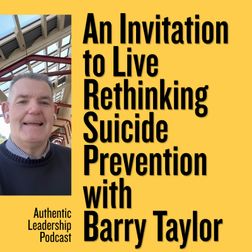
An Invitation to Live: Rethinking Suicide Prevention | Barry Taylor
For nearly four decades, health sociologist Barry Taylor has worked at the forefront of suicide prevention and mental wellbeing in New Zealand and Australia. His work has spanned youth suicide prevention, postvention, community mobilisation, workforce development and mental-health support for LGBTIQ+ communities. However, Barry’s understanding of suicide changed profoundly through his own experience of chronic depression, anxiety and suicidal thoughts. In this deeply personal conversation, Barry challenges approaches focused only on risk factors and checklists. Instead, he asks: “If the universe sent you an invitation today to live, what would need to be written on it for you to accept?” Barry explores the importance of compassionate conversations, coping, connection, purpose and meaning. He explains his four foundations for suicide-prevention work—comfort, confidence, competence and compassion—and why people sometimes need others to become custodians of hope when they cannot hold hope for themselves. This is a conversation about seeing the person behind the distress, listening without immediately trying to fix them and inviting people not only to live, but ultimately to thrive. At the end, Barry shares the message he would give his younger self: “You are loved. You are cherished. You don’t have to be perfect.” Hosted by Ivan Yeo for Authenticity Studio™. Content note: This episode includes discussions of suicide, suicidal thoughts, depression, anxiety, trauma and mental distress.

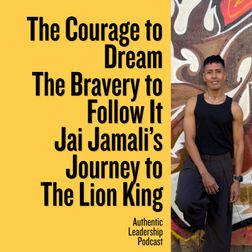
The Courage to Dream, the Bravery to Follow It: Jai Jamali’s Journey to The Lion King
At just 16, Jai Jamali left Singapore alone after receiving a dance scholarship in Wellington—beginning a journey that would eventually take him to the Australian stage in major productions including The Lion King, Grease and Chicago. In this episode of the Authentic Leadership Podcast, Jai shares how he paid for his own dance classes, trained through long, demanding days, faced competitive auditions, and built a professional career through determination, versatility, and a deep love of dance. Now a dance teacher, personal trainer and group fitness instructor, Jai reflects on moving from performing to helping others discover what their bodies can achieve. He also speaks about identity, being different, trusting the future and remaining true to who you are. His message is simple: there are no shortcuts to your dreams. If you do not try, you will never know what is possible.

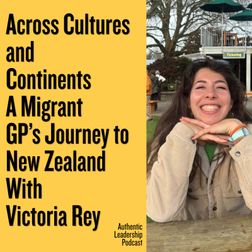
Across Cultures and Continents: A Migrant GP’s Journey to New Zealand with Victoria Rey
Born in France to French and Mexican parents, Victoria grew up across Nigeria, Kenya, and Madagascar before studying medicine in Belgium and eventually moving to Aotearoa New Zealand. In this conversation, Victoria reflects on life as a third-culture child, the meaning of home and the family relationships that grounded her through constant change. She shares moving memories of her grandparents and how their love and influence remain present in her life. Victoria also speaks honestly about becoming a GP, the pressures healthcare professionals face, and the importance of understanding the person behind an illness. For her, medicine is not simply about diagnosing a condition—it is about listening to what matters most to each patient and recognising how culture shapes people’s experiences of health and disease. Now working in South Auckland, Victoria reflects on adapting to New Zealand’s healthcare system, finding belonging in a multicultural city and beginning another chapter far from everything familiar. This is a conversation about migration, family, medicine, identity and discovering that home is not always one particular place—it can be wherever the people who understand us are found.

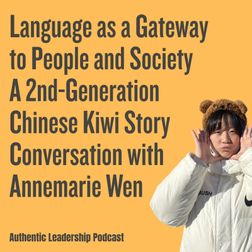
Language as a Gateway to People and Society: A 2nd-Generation Chinese Kiwi Story with Annemarie Wen
In this thoughtful conversation, Ivan speaks with 20-year-old Annemarie Wen about growing up as a second-generation Chinese New Zealander between Mandarin and English. Annemarie shares that Mandarin was initially her strongest language, but English gradually took over at school. With her parents' encouragement, she later reclaimed her Chinese and became fluent in both languages. Yet this created an unusual experience: Chinese speakers sometimes assumed she could not speak Mandarin, while local New Zealanders sometimes questioned whether she could speak English. From primary school, ESOL and kapa haka to Chinese cultural groups, university friendships and travelling through China, Annemarie reflects on how language shapes identity, confidence, friendship and belonging. She also speaks about experiencing discrimination as a child—recognising that something felt wrong before she had the words to explain it. Her story reveals that learning a language was never simply about vocabulary. It was about understanding people, entering different social worlds and removing the barriers that prevent connection. Ultimately, this is a conversation about holding two languages, moving between cultures and discovering that being connected to both worlds can become a unique strength.

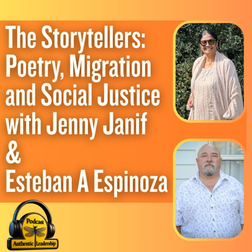
The Storytellers: Poetry, Migration and Social Justice with Jenny Janif MNZM & Esteban A Espinoza
What happens to the stories of people whose lives are never recorded? In this deeply moving conversation, Jenny Janif and Esteban Espinoza explore how poetry and storytelling can preserve history, honour those who came before us and give voice to experiences that might otherwise disappear. Jenny reflects on her multicultural upbringing in Fiji, her family’s history of indenture and blackbirding, and her move to Aotearoa after Fiji’s 1987 coup. She also discusses Fiji Indian identity and using creative expression to confront racism, colourism, inequality and social injustice. Esteban traces his creative journey back to Chile’s 1973 military coup, when his family was separated, and poetry became a way to express, resist and heal. He shares why he writes about people whose suffering and lives may never otherwise be remembered, and how his mother’s community activism has shaped his work. Together, they reflect on migration, identity, oral tradition, ancestral wisdom and our responsibility to pass these stories to future generations. As Esteban reminds us, podcasts are a new form of storytelling—helping preserve the voices, memories and human experiences that time might otherwise take away.

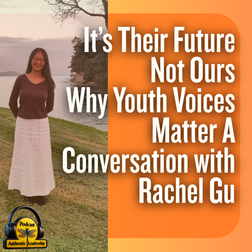
It’s Their Future, Not Ours: Why Youth Voices Matter | A Conversation with Rachel Gu
What does it mean to give young people a genuine voice—not simply invite them into the room? In this episode of the Authentic Leadership Podcast, Ivan speaks with Rachel, a first-year University of Auckland student, youth intern at Auckland North Community and Development (ANCAD), and member of an Auckland Council youth advisory panel. Born in Beijing, Rachel spent part of her childhood in Vanuatu before moving to New Zealand at nine. She reflects on how growing up across different countries, cultures and languages shaped her ability to connect with people and inspired her passion for youth engagement. Together, Ivan and Rachel explore the issues affecting young people today, including isolation, mental wellbeing, climate change, civic participation and the gap between available opportunities and the young people who could benefit from them. Rachel also discusses the experience of 1.5-generation migrants and why young ethnic voices need greater representation in community leadership and local decision-making. The conversation challenges organisations to move beyond tokenism by creating reciprocal relationships in which young people are genuinely heard, valued and given meaningful opportunities to contribute. Rachel’s message to her younger self—and to other young people—is simple: make your decision, learn from every experience and do not live with regret. As she beautifully expresses it, we must be willing to “live the questions.”

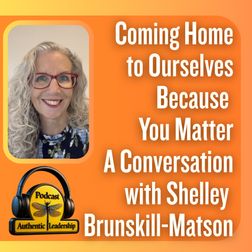
Coming Home to Ourselves: Because You Matter — A Conversation with Shelley Brunskill-Matson
In this deeply moving episode, Ivan speaks with Shelley Brunskill-Matson about grief, suicide loss, purpose and our fundamental human need to know that we matter. Shelley was only 12 years old when her father, Tony, died by suicide. Decades later, that experience became part of a much larger mission: helping children, young people and families affected by suicide loss receive the care and support they genuinely need. Shelley shares what she learned through her PhD research with bereaved tamariki aged six to thirteen. Her central finding was powerful: children experience care as truly supportive when it reinforces that they matter. They need to be seen, heard, offered choices and recognised as active participants in their own grief—not simply have adults decide what is best for them. She also discusses the creation of Tony’s Place, its guardianship of the WAVES suicide-bereavement programme, and the development of MySpace, a new programme designed specifically for bereaved children. The conversation then opens into Shelley’s own new chapter following burnout and the sudden deaths of two close friends. She reflects on trusting herself, refusing to fit inside one box and finding the courage to pursue the work that has quietly been calling her. Ultimately, this is a conversation about turning grief into purpose, listening without assuming, and recognising how much it means when another person makes us feel truly seen and heard. Because whether we are six, thirty-six or eighty-six, we all need to know that we matter. Content note: This episode contains conversations about suicide loss and grief.

Choosing an Authentic Life: Yoga, Reiki, Travel and Spiritual Awakening With Katie Sterbens
What happens when your inner voice becomes too loud to ignore? Katie left behind New York’s corporate fashion world to follow a very different path—one shaped by yoga, Reiki, Akashic Records, spiritual exploration and travel. Her journey took her from Peru and Hawaii to India, Bali and eventually New Zealand, where she discovered a community and way of living that allowed her to embrace who she truly is. In this heartfelt conversation, Katie shares how she became a 500-hour yoga teacher, Reiki Master and Akashic Records reader. She explains what the Akashic Records are, how Reiki works within her practice, and why listening to our intuition can open doors we never imagined. We also explore the courage required to choose an unconventional life when the people around us may not understand. Katie speaks honestly about burnout, family expectations, loneliness, failure and learning to trust herself—even when following her calling meant going against everything she had been taught. This conversation becomes especially personal as I share how Katie’s yoga classes offered me a place of grounding and comfort during one of the most difficult transitions of my life. Katie’s message to her younger self—and to anyone trying to follow their own path—is beautifully simple: “Don’t give up. Keep going, keep trying, keep failing, and have more fun with it. It always works out.”

Grassroots Leadership: What Real Community Change Looks Like | Eva Chen MNZM
Some people build organisations. Others build communities. For more than two decades, Eva Chen MNZM has quietly stood alongside migrant and refugee families across Aotearoa New Zealand, creating spaces where people feel seen, supported and connected. In this conversation, Eva shares the untold stories behind Wellbeing Charitable Trust—from supporting new migrant mothers experiencing postnatal depression and family violence, to advocating for culturally appropriate services, coordinating emergency responses during natural disasters, and helping families through the COVID-19 pandemic. What makes Eva's story remarkable is not simply what she has achieved, but how she has achieved it. She reminds us that meaningful change rarely begins with large budgets or grand strategies. It begins by listening to one family, responding to one need, and earning the trust of a community. Throughout our conversation, we explore: • Building Wellbeing Charitable Trust from the ground up • Supporting Chinese migrant parents and families • The hidden realities of family violence in migrant communities • Why trust is the most valuable resource in community work • Grassroots leadership and advocacy • Cultural dignity during emergencies and disasters • Community mobilisation during COVID-19 • Why lasting social change happens through relationships, not systems alone Perhaps the greatest lesson from Eva is this: Communities are not built by organisations. They are built by ordinary people who choose to care for one another.

Dance, Freedom and the Courage to Choose Yourself | Charline’s Story

At 27, following the end of a long-term relationship, Charline found herself back at her father’s home in France, asking a life-changing question: What am I going to do now? Her answer took her to the other side of the world. Leaving behind the familiarity of her small hometown, Charline travelled alone to Aotearoa New Zealand—despite the fear, uncertainty and challenge of communicating in English. What began as a working holiday became a much deeper journey of finding herself, reclaiming her freedom and learning to put her own happiness first. In this heartfelt conversation, Charline speaks about losing herself in relationships, protecting her energy, challenging the expectations placed upon women and discovering the confidence to live on her own terms. She also reflects on the influence of her grandmothers, the unexpected kindness she encountered while travelling and the freedom she experiences through dance. Her message is simple but powerful: do not wait until fear disappears. Take the opportunity, follow what calls you and allow yourself to change. “If you’re scared, just go.”
1 di 7