Discover Arad: a Hidden Gem of Central Europe

Discover Arad: a Hidden Gem of Central Europe

di Gabriel Roman, Puskel Péter, Ujj János, Király András, Lehoczky Attila, Muntean Tibor, Matekovits M
Stagione 1

Arad Society Between World Wars

The provided text, an excerpt from "Arad Social life, entertainment, leisure in the interwar period" by Puskel Péter, translated into English by Gabriel Roman, analyzes the profound disruption of social life in Arad following World War I and the Treaty of Trianon. The initial "paralysis" of social order was caused by the war's consequences, including inflation, the Spanish flu, and the breakdown of family structures. Furthermore, the political and administrative transition to Romanian rule resulted in personnel shortages, legal confusion, and a systematic shift away from Hungarian influence in public offices, education, and cultural life. Despite these immense challenges—such as factory relocations, currency changes, and major floods—the city eventually saw a slow return to a semblance of bourgeois social life characterized by the establishment of professional associations, the enduring popularity of cultural venues, sports clubs, and the vibrant social scene on the Mureș River. Download the Romanian version of the book "The name stays Arad!" and other titles from the digital library for free here: https://www.arad.zone/biblioteca-digitala/biblioteca-digitala-copy

Thirty Years of Hungarian Theater in Arad (1918-1948)

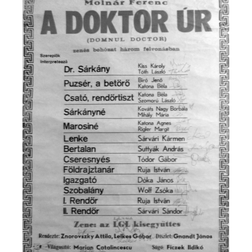
The provided excerpts, taken from "30 years of theater in Arad" by Ujj János, translated into English by Gabriel Roman, chronicle the challenging history of Hungarian minority theater in Transylvania and specifically Arad between the world wars and into the early communist era. The text details the Romanian authorities' initial policy of "tolerance," which quickly devolved into mandatory censorship and a lack of state support compared to Romanian theaters, despite political promises. It describes three periods in the theater's history, marked by decline and attempts at self-organization, highlighting the struggles with concession fees, censorship, and police harassment, including incidents where performances were shut down. Furthermore, the source provides numerous examples of the Arad theater's repertoire, focusing on popular entertainment like operettas and comedies, while also acknowledging the staging of classics and noting prominent actors and cultural figures associated with the city. Ultimately, the narrative concludes with the suspension of the Hungarian section of the People's Theater in Arad in 1948 as the Communist Party tightened its control over all cultural activities. Download the Romanian version of the book "The name stays Arad!" and other titles from the digital library for free here: https://www.arad.zone/biblioteca-digitala/biblioteca-digitala-copy

Arad Churches Between 1919 and 1948

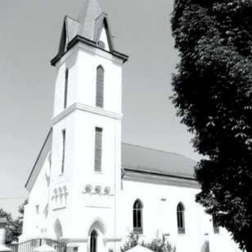
This text written by Ujj János, translated into English by Gabriel Roman (chapter in the book "The name stays Arad!") provides a historical overview of the diverse religious landscape in the Arad region, primarily focusing on the period between World War I (1919) and the rise of Communism (1948), following the region's transfer to Romania. It details the challenges faced by Roman Catholic dioceses, including the arbitrary division of territory and the expropriation of church lands by the Romanian state. The source also chronicles the development of other denominations in Arad, such as the Reformed Church, the Evangelical Lutheran Church, and the Jewish community, noting their struggles, organizational shifts, and cultural contributions, particularly those involving the Hungarian language. Furthermore, it examines the growth and persecution of the Baptist Church and the privileged but later restricted status of the Orthodox Church and the eventual forced dissolution of the Greek Catholic Church by the communist regime. Download the Romanian version of the book "The name stays Arad!" and other titles from the digital library for free here: https://www.arad.zone/biblioteca-digitala/biblioteca-digitala-copy

Arad's Minorities, Economy and Life in the Interwar period

The provided text, an excerpt from "Living in minority," written by Muntean Tibor, translated into English by Gabriel Roman (chapter in the book "The name stays Arad!") offers a critical examination of the economic and social conditions in the city of Arad and the annexed territories of Transylvania and Banat following their integration into Romania between the World Wars. The author questions whether the region's economy truly improved and if the inhabitants' standard of living was better or worse than before 1914, while also highlighting the inherent biases and inconsistencies in available historical data, particularly statistics and newspaper reports. The analysis explores various facets of life, including the economic struggles of local industries and banks, the demographic changes and ethnic tensions between Romanian and minority populations, and the state's varying policies toward industry and finance. Ultimately, the text suggests that Arad experienced a period of slower growth and neglect compared to competitor cities, leading to a perception of "missed opportunity" in Romania’s economic history. Download the Romanian version of the book "The name stays Arad!" and other titles from the digital library for free here: https://www.arad.zone/biblioteca-digitala/biblioteca-digitala-copy

Life and Labor in Communist Arad

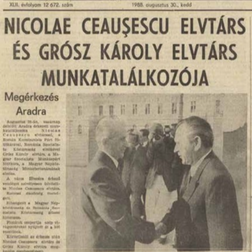
This chapter named "Communism in Arad" written by Muntean Tibor and translated by Gabriel Roman from the book entitled "In the Labyrinth of Hope", explores the socio-economic and cultural landscape of Arad, Romania, under communist rule. It discusses demographic shifts, particularly the impact of urbanization and national policies on ethnic Hungarian populations, and provides historical context for events like the changing perception of Hungarian identity and memorials. The text also offers a detailed analysis of industrial development in Arad, highlighting the rise and eventual decline of major factories in various sectors and examining the challenges faced by workers. Overall, it paints a picture of a society undergoing significant transformation due to a totalitarian ideology, with personal anecdotes and statistical data illustrating the complex realities of the era. Full story here: https://www.arad.zone/blog-ar/comunismul-%C3%AEn-arad

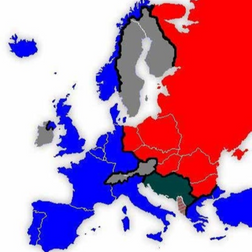
Eastern Europe's Post-War Communist Transformation

This chapter written by Lehoczky Attila and translated by Gabriel Roman from the book nemad "In the Labyrinth of Hope" provides a detailed historical overview of Central Europe and Romania between 1944 and 1949, focusing on the post-World War II transformation of power. It examines the division of Europe into democratic and state socialist blocs, emphasizing the Soviet Union's multi-stage takeover of Eastern European countries like Poland, Czechoslovakia, and Hungary. The text further explores Romania's unique transition from fascism to state socialism, including the challenges faced by the Hungarian population within its borders during this period. Finally, it highlights the establishment of the Hungarian People's Alliance as a key organization for Hungarians in Romania amidst the shifting political landscape. Full story here: https://www.arad.zone/blog-ar/la-r%C4%83scruce-de-drumuri-o-perspectiv%C4%83-asupra-istoriei-regiunii-%C8%99i-a-maghiarilor-din-rom%C3%A2nia-%C3%AEntre-1944-%C8%99i-1949

The region and the city of Arad during the change of sovereignty: A Turbulent Transition (1918-1919)

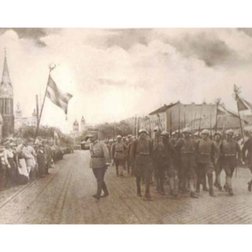
This academic text written by Lehoczky Attila, in English by Gabriel Roman (chapter in the book named “The name remains Arad!) chronicles the significant political and social transformations experienced by the Arad region following World War I. It details Hungary's internal struggles, including the fall of Charles IV, the rise and collapse of the Károlyi government, and the subsequent establishment of the Hungarian Soviet Republic. The document further describes the complex interplay of international forces, such as the Allied intervention and the Romanian occupation of Arad, alongside the local impact on the city's administration, culture, and media. Ultimately, it illustrates Arad's transition from Hungarian to Romanian sovereignty and the resulting changes by late 1919.

Arad: Life in the Collapsing Austro-Hungarian Monarchy

This chapter written by Király András; in English by Gabriel Roman from the book entitled "The name remains Arad! " offers a detailed historical account of Central Europe, specifically focusing on the city of Arad during the final years of World War I and its immediate aftermath. The text traces the decline of the Austro-Hungarian Monarchy, highlighting the rise of nationalist movements and their impact on the region. It provides a chronological narrative of political changes, economic struggles, and daily life in Arad as it transitioned from Hungarian to Romanian control, including local government reactions, social conditions, and urban development plans amidst the upheaval. The document also presents diverse perspectives on key figures and events, such as Mihály Károlyi's controversial leadership and the Treaty of Trianon, emphasizing the city's unique position as a contested territory. Full story here: https://www.arad.zone/blog-ar/aradul-%C3%AEn-ultima-perioad%C4%83-a-monarhiei-austro-ungare-%C8%99i-%C3%AEn-anul-1919

It is not enough to know our history, we must also make it known to those around us, especially to fellow citizens of other nationalities

Nu este suficient să ne cunoaștem istoria, trebuie să o facem cunoscută și celor din jur, în special concetățenilor de altă naționalitate – susține Gabriel Roman, care de opt ani traduce în limba română și engleză publicații de istorie locală apărute în limba maghiară legate de Arad și le publică pe blogul său și în cărți. După cum spune, este motivat de patriotismul local, respectul pentru patrimoniul arhitectural și spiritual al orașului, precum și de mult-menționatul-dar de fapt pe cale de dispariție în Arad-multiculturalism, sau mai precis, interculturalism. Interviu pentru Radio Timișoara realizat de Pataky Lehel Zsolt (în limba maghiară). It is not enough to know our history, we must also make it known to those around us, especially to fellow citizens of other nationalities, says Gabriel Roman, who for eight years has been translating local history publications about Arad from Hungarian into Romanian and English and publishing them on his blogs and in books. As he says, he is motivated by local patriotism, respect for the architectural and spiritual heritage of the city, as well as by the much-mentioned but actually disappearing multiculturalism, or more precisely, interculturalism in Arad. Interview for Radio Timișoara conducted by Pataky Lehel Zsolt (in Hungarian).
Salacz Gyula: Reformist Mayor of Arad

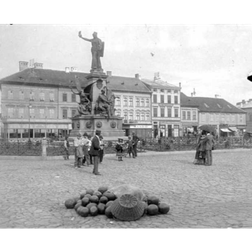
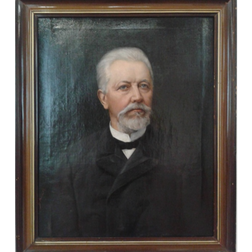
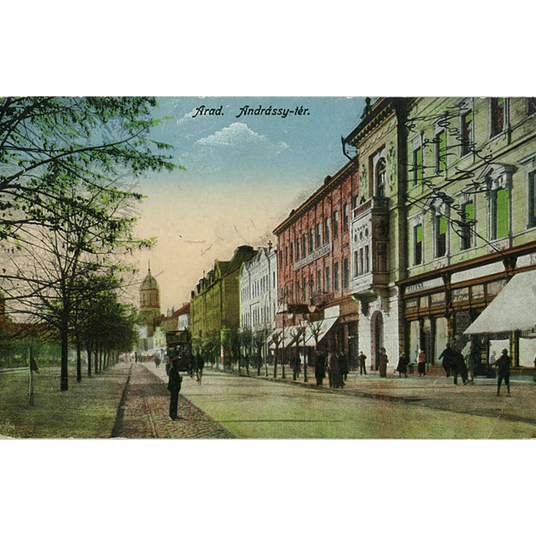
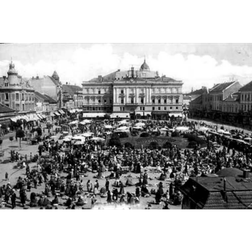
This micro-monograph translated into English by Gabriel Roman explores the impact of Salacz Gyula, Arad's longest-serving mayor from 1875 to 1901, on the modernization and development of the city, highlighting his commitment to prioritizing the community's interests. It discusses the challenges he inherited, such as outdated infrastructure and public debt, and details his reforms and achievements in areas like urban planning, education, culture, and industrial growth, emphasizing his reliance on competence and collaboration. The text also touches upon Arad's historical context, including its multi-ethnic character and revolutionary past, and showcases the lasting legacy of Salacz, as recognized by later generations and reflected in city landmarks. Ultimately, the document presents Salacz as a model of dedicated public service who significantly shaped Arad's transition into a prominent Central European city. Entire monograph here: https://www.arad.zone/blog-ar/interesele-urbei-%C3%AEnainte-de-toate-salacz-gyula-primarul-reformist-al-aradului
2 di 5