
Erna Podcast: Unfiltered Conversations

Erna Podcast: Unfiltered Conversations

di Erna JUlien

Finding Your Balance: Tips for Emotional Resilience

This excerpt from "Pasted Text" focuses on emotional resilience, offering readers helpful advice and tips on how to find a healthy balance in their lives. The title, "Finding Your Balance," suggests that achieving emotional resilience requires a mindful approach to navigating the ups and downs of life. This suggests that the piece likely explores various strategies for coping with stress, managing emotions, and maintaining well-being.

Stress Less, Live More: Practical Strategies for Everyday Calm

"Stress Less, Live More: Practical Strategies for Everyday Calm" is a guide offering practical strategies to reduce stress and improve overall well-being. This resource likely presents actionable tips and techniques to manage daily stressors and promote a calmer, more balanced lifestyle. It aims to equip readers with the tools and knowledge to navigate the challenges of modern life and cultivate a sense of inner peace.

Self-Care Sanctuary: Building Your Personal Wellness Toolkit

The text excerpt, "Self-Care Sanctuary: Building Your Personal Wellness Toolkit," focuses on the importance of self-care and provides a guide for creating a personalized toolkit to support well-being. The excerpt emphasizes building a sanctuary for oneself, suggesting that self-care is a proactive and intentional process. It encourages individuals to assemble a collection of practices, tools, and resources that can be accessed and utilized to maintain a healthy and balanced lifestyle.

Beyond the Stigma: Conversations on Mental Health Awareness

"Beyond the Stigma: Conversations on Mental Health Awareness." This article focuses on discussions surrounding mental health awareness, likely aiming to break down stigmas surrounding these issues and promote open conversations about mental health. The article may include insights from experts or personal stories to shed light on the importance of recognizing and addressing mental health concerns.

Mindful Moments: Cultivating Peace in a Chaotic World
Mindful Moments: Cultivating Peace in a Chaotic World is a guide to developing mindfulness practices and achieving inner peace in a busy world. This text explores techniques for cultivating mindfulness, which can help individuals navigate stress, enhance focus, and create a sense of calm in the midst of life's challenges.

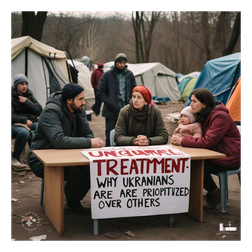
Unequal Treatment: Why Ukrainians Are Prioritized Over Others?
Possible Explanations for Unequal Treatment of Refugees The sources offer several potential reasons why Ukrainian refugees might be receiving more favorable treatment from the U.S. government compared to refugees from Cuba, Haiti, Nicaragua, and Venezuela: Geopolitical Interests: The sources suggest that Ukraine's strategic importance to the West in the context of its war with Russia is a key factor. Aiding Ukraine serves U.S. foreign policy goals and strengthens Western alliances. Latin American and Caribbean countries may not hold the same geopolitical leverage. Race and Culture: The sources raise the possibility that race and culture play a role in the differing treatment. Ukrainians are predominantly white and European, with cultural similarities to the U.S. and Western Europe. This contrasts with the predominantly Black and Latino backgrounds of refugees from Haiti, Cuba, Nicaragua, and Venezuela. The sources question whether these differences contribute to the disparity in treatment. Media Coverage and Public Perception: The war in Ukraine has received extensive coverage in Western media, potentially shaping public opinion and influencing U.S. government policies. The sources highlight the visual impact of "images of destruction" and "stories of resilience" in Ukraine. By contrast, the humanitarian crises in Haiti, Nicaragua, Cuba, and Venezuela might be less prominent in public consciousness. The sources argue that regardless of the reasons, the disparity in treatment raises ethical questions about the fairness and equality of U.S. immigration policies. The sources urge policymakers to adopt a more equitable approach that prioritizes justice and offers all refugees a fair chance, regardless of their origin.

Justice for All: Immigrants' Rights and the Fight for Equality.
The podcast script discusses the differences in how the U.S. treats refugees from different countries. While the U.S. has instituted a lottery system to fairly distribute the 30,000 temporary visas it provides each month to Cubans, Haitians, Nicaraguans, and Venezuelans, the script questions whether this is actually equitable. The script contrasts the lottery system for these groups with the U.S. response to the Russia-Ukraine conflict, which it characterizes as “expedited and far more generous”. The script then questions if this difference in treatment is due to geopolitical interests or racial bias, pointing out that the U.S. has a history of supporting certain nations for strategic reasons and noting that most Ukrainian refugees are white, while Cubans, Haitians, Nicaraguans, and Venezuelans come from predominantly Black and Latino backgrounds. The script draws a parallel between this unequal treatment and the treatment of Cubans and Haitians in the 20th century, when Cubans fleeing communism were readily accepted as political refugees, while Haitians fleeing poverty and dictatorship were turned away. In closing, the script argues that true immigration reform must prioritize equality and justice for all, and the U.S. must be a refuge for those in need regardless of race or nationality.

Equal Voices: Challenging Discrimination in Immigration Policies
Equal Voices: A Look at Potential Discrimination in U.S. Immigration Policies The sources highlight the potential for discrimination in U.S. immigration policies, particularly in the context of recent changes to processes for Cubans, Haitians, Nicaraguans, and Venezuelans (CHNV). The U.S. government has implemented a new review process for these groups, with a monthly cap of 30,000 noncitizens eligible for parole. This process involves randomly selecting about half of the applications and reviewing the other half on a first-in, first-out basis. This approach, while potentially aiming for fairness, has raised concerns about equity compared to the support and protections offered to Ukrainian nationals amidst the ongoing conflict with Russia. Critics argue that the selective policies for CHNV nationals, in contrast to the treatment of Ukrainians, raise concerns about discrimination based on nationality and potentially race. This argument stems from the observation that Ukrainians have received expedited and generous treatment despite similar humanitarian needs. This disparity is viewed within the historical context of U.S. foreign policy, which has often prioritized certain nations based on geopolitical interests, sometimes sidelining those from regions like Latin America and the Caribbean. The sources further highlight the role of cultural and racial dynamics in this perceived discrimination. Critics point out that the predominantly Black and Latino CHNV nationals face stricter barriers and more complex application processes compared to their Ukrainian counterparts. This observation fuels the argument that racial and cultural biases may be influencing immigration policies. Adding to this discussion is the difference in public perception and media attention surrounding the Ukrainian and CHNV crises. The sources note that the narrative surrounding Ukraine's plight has garnered significant public empathy, which may not be as prevalent for the crises in Haiti, Cuba, Nicaragua, and Venezuela. This disparity in narrative framing potentially contributes to unequal treatment in immigration policies. The call for equitable immigration policies emphasizes the need for a unified humanitarian approach that transcends nationality and race. This approach advocates for prioritizing human rights and dignity, irrespective of an individual's origin, to foster a more just and inclusive immigration system.

From Revolution to Resilience: The Story of Haiti
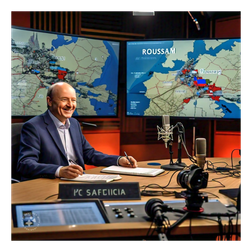
This proposed title for a podcast episode, "From Revolution to Resilience: The Story of Haiti," encapsulates the historical journey of Haiti, from its revolutionary beginnings to its ongoing struggle for stability and prosperity. The suggested outline emphasizes Haiti's resilience in the face of numerous challenges, including political turmoil, economic hardships, and natural disasters.

From Tsars to the Modern Era: The Evolution of Russia

This outline for the podcast episode From Tsars to the Modern Era: The Evolution of Russia covers the history of Russia from the 1800s to the modern era. 19th Century Russia Napoleonic Wars and the Decembrists: Russia's participation in the Napoleonic Wars and the Decembrists' push for reform in 1825 laid the groundwork for future social change. Emancipation of the Serfs (1861): Tsar Alexander II’s reforms aimed at modernizing Russia, but ultimately led to social unrest and the rise of revolutionary movements. The Russian Revolution (1917) The abdication of Tsar Nicholas II and the Bolshevik Revolution led to the establishment of the Soviet Union. Soviet Era Stalin’s Leadership: The podcast will cover Stalin's totalitarian regime, his economic policies, and the impact of World War II. Cold War Dynamics: The Cold War arose from geopolitical tensions between the Soviet Union and the West. Post-Soviet Russia Collapse of the USSR (1991): The podcast will analyze the transition to a market economy and the challenges faced by Russia during the Yeltsin era. Putin’s Era: The podcast will examine Putin's rise to power, domestic policies, and Russia's current global stance.
5 di 12