A Climber’s Mind with Mat Wright

A Climber’s Mind with Mat Wright

di Mat Wright
Stagione 1

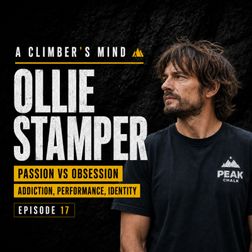
Passion, Obsession & Addiction in Climbing - Ollie Stamper
Esplicito
When does a passion for climbing become something less healthy? In Episode 17 of A Climber’s Mind, Mat is joined by Ollie “Stamper” Stamper, a former addiction counsellor with a fascinating perspective on the relationship between addiction, recovery and climbing. Climbing can provide purpose, structure, community, identity and an incredibly powerful source of reward. For many people, those things can have an enormously positive effect on their lives. But what happens when that relationship becomes more complicated? Mat and Stamper explore the difference between passion, obsession and addiction, and how some of the same traits that can drive high performance can also begin working against us. They discuss addictive traits, reward cycles, perfectionism, emotional regulation, grades and performance, as well as what can happen when climbing becomes someone's primary way of coping with difficult emotions. They also explore climbing's potential role in recovery, what happens when injury or circumstances suddenly remove climbing from someone's life, and how we can pursue something incredibly seriously without allowing it to define our entire identity. This isn't an attempt to diagnose climbers or label extreme commitment as addiction. Instead, it's an open conversation about understanding our relationship with climbing and recognising when something that normally adds to our lives may begin taking something away. Topics include: addiction and recovery, passion vs obsession, climbing performance, reward cycles, perfectionism, identity, self-worth, mental health, injury and developing a healthier relationship with performance. This episode discusses addiction, recovery and mental health. The conversation is for general discussion and should not be considered medical or mental-health advice.

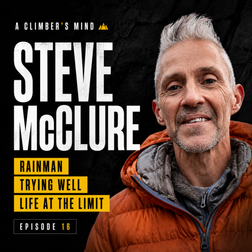
Steve McClure: Rainman, Trying Well & Life at the Limit
Esplicito
In this episode of A Climber’s Mind, I’m joined by Steve McClure - one of Britain’s most accomplished and influential climbers. Steve takes us inside the long process behind the first ascent of Rainman, Britain’s first 9b. We explore what it really means to project at your absolute limit, how he continued learning from the route over many years, and why success depends on far more than simply trying harder. We also discuss the difference between trying hard and learning to try well: managing effort, refining movement, making better decisions and finding a way to perform when the opportunity finally arrives. Beyond the climbing itself, Steve shares his thoughts on sustaining ambition alongside family life, work and the everyday responsibilities that sit behind a long-term project. We talk about how his relationship with climbing has evolved, what keeps him motivated, and how to pursue extraordinary goals without allowing them to consume everything else. Steve has been a huge inspiration throughout my own climbing career, so it was surreal to have this conversation with him - not only as one of Britain’s greatest climbers, but also as a friend. Thanks for listening. I hope you enjoy the conversation.

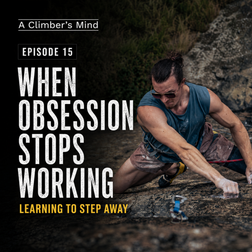
When Obsession Stops Working

I’ve always believed that obsession can be one of the most powerful tools in hard climbing. Visualising daily, thinking deeply about a project, and keeping it alive in your mind can create clarity, direction and belief. But this week, a conversation with my friend John made me question whether obsession is always useful. John told me that with his own project, Sufferance, he reached a point where he had to mentally distance himself from it completely. He stopped visualising, stepped away, and almost forgot the route existed for a month. As soon as he suggested I might need to do the same with Free at Last, something clicked. In this episode, I talk through the difference between commitment and attachment, why caring deeply can sometimes turn into pressure, and why stepping away from a project isn’t the same as giving up. Sometimes the thing that helped you progress can become the thing that keeps you stuck. Maybe the answer isn’t always to stay more obsessed. Maybe sometimes, you climb better when you let something go for a while.

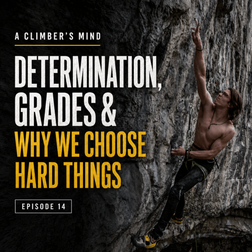
Determination, Grades & Why We Choose Hard Things
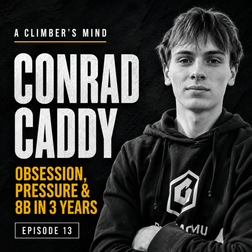
In this solo episode, I reflect on the last few weeks of A Climber’s Mind - including why there’s been a short break from the podcast, what I took from my recent conversation with Conrad Caddy, and how my North Wales trip made me think more deeply about determination, grades, pressure and priorities. The episode starts with an honest update on why the podcast had to take a back seat for a couple of weeks. Between a climbing trip and some personal life stresses, I needed to make space for the things that had to come first - which, in many ways, connects directly to the themes of this episode. I then look back on my conversation with Conrad Caddy, who climbed 8B within around three years of climbing. That conversation made me reflect on my own early years, because I also reached 8B within roughly my first three years. More than the grade itself, what interested me was the mindset underneath it: determination, obsession, pressure, identity, and what actually drives someone to keep showing up for something difficult. From there, I explore the question: why do some people seem to have huge determination, while others don’t? I don’t think determination is just discipline or talent. I think it’s built from meaning, belief, feedback, identity, emotional tolerance and life circumstances. It can come from love, curiosity and purpose - but it can also come from insecurity, comparison and the need to prove yourself. I also talk about my relationship with grades, which has been both motivating and volatile. Grades can be a brilliant tool for measuring progress, choosing challenges and focusing ambition - but they can become dangerous when they turn into measures of self-worth. My current view is that grades are useful servants, but terrible masters. The episode also includes reflections from my recent trip to North Wales, where I climbed Prisoners of the Sun at Rhoscolyn. That experience made me think about hard trad climbing, clear decision-making, and how the best headspace on serious routes is often quiet rather than dramatic. For me, the lesson was about separating commitment from attachment: still caring deeply, but trying not to lose myself every time the outcome is uncertain. Finally, I look ahead to a potential upcoming conversation with Steve McClure. If confirmed, I’m incredibly excited to speak to Steve about projecting, Rainman, Rainshadow, long-term motivation, and what draws someone to invest so much into one piece of rock over so many years. This episode is really about one central question: What makes us keep choosing hard things? Determination is powerful, but it needs direction. Grades are useful, but they need perspective. Ambition is valuable, but it has to sit inside a life that can actually support it.

Conrad Caddy: Obsession, Pressure and Climbing 8B in 3 Years
In this episode, I’m joined by Conrad Caddy to explore the deeper story behind his rapid progression in climbing, including his recent ascent of Superman 8B after only around three years in the sport. Rather than reducing the conversation to talent, strength or genetics, we dig into what that kind of progression actually feels like from the inside: obsession, pressure, identity, movement learning, failure, social media, and the emotional cost of improving quickly. We also talk about how Conrad approaches hard moves, micro-beta, frustration, consistency, and what climbers can learn from his process without simply trying to copy the outcome.

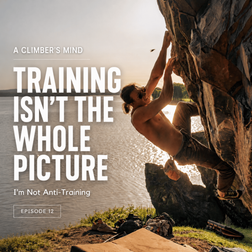
I'm Not Anti-Training

In this episode, I reflect on my recent conversation with Mike Boyd and use it as a starting point to clarify something important about my coaching philosophy. I think some climbers may have interpreted my message as being against physical training - but that isn’t the point at all. Physical training is absolutely crucial if you want to peak. At some point, you have to raise the ceiling, get stronger, and build the physical qualities required for the climbs you want to do. But for many climbers, physical capacity isn’t the only thing holding them back - and often, it isn’t the biggest thing either. A lot of climbers are already leaving huge amounts of performance on the table through poor tactics, rushed projecting, fear, pressure, lack of clarity, poor recovery, lifestyle stress, emotional attachment to outcomes, and an inability to properly express the ability they already have. So this episode is not anti-training. It’s anti-blind training. It’s about understanding the full picture before deciding what the next intervention should be. Sometimes the answer is physical training. Sometimes it’s tactics. Sometimes it’s technique. Sometimes it’s mindset. Sometimes it’s rest, recovery, or a better relationship with the process. As always, diagnosis comes first. Then the right intervention at the right time.

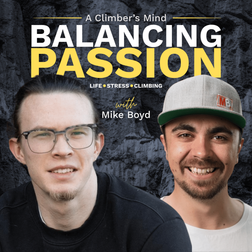
Mike Boyd: Fatherhood, Stress & Climbing Performance
Esplicito
In this episode of A Climber’s Mind, I sit down with Mike Boyd for a very honest conversation about climbing, having a newborn baby, career pressure, identity, stress, relationships, money, and what performance looks like when life changes dramatically. We use the conversation almost like a live coaching/diagnostic session. Mike initially felt like endurance might be one of the main things holding his climbing back, but as we dug deeper, the bigger bottleneck seemed to be stress, life load, and the effect this can have on the nervous system. One of the biggest themes in this episode is that a physical symptom does not always mean a physical cause. You might feel pumped, tense or inefficient on the wall, but the deeper issue might be stress, pressure, poor recovery, fear, identity, or simply the reality of trying to perform while life is demanding more from you. This is a conversation about balancing passion with real life, managing ambition, and learning to diagnose what is actually limiting your performance. New episodes every Wednesday.

Climbing Feels Different Now

Over the last couple of months, a lot has changed in my life. I’ve been balancing the start of this podcast alongside a fairly structured training phase, whilst also trying to organise my life and coaching in a much more deliberate way. In the process, I’ve realised how much low-level pressure and friction I’d been carrying around for years without fully noticing it. In this episode, I speak more openly about where I’m currently at psychologically with climbing, performance, identity and motivation. I talk about: why climbing feels different to me right now the relationship between attention and performance how organisation changed my mindset more than I expected insecurity, pressure and emotional attachment to climbing why I no longer feel threatened by stronger climbers and where I want to take the podcast moving forwards This episode is also a transition point for the podcast itself. The first 10 episodes were a chance for me to explore ideas, learn how to record/edit and slowly find my voice. The next phase will involve more collaborative and exploratory conversations with other climbers - looking deeper into the psychology, identity, fear, obsession and motivations behind performance. I’m really excited to see where it goes from here.

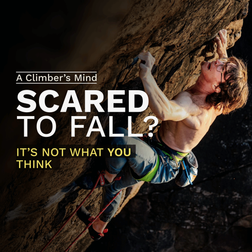
Fear of Falling Isn’t the Problem

Fear of falling is often treated like a bravery problem. Most climbers think they just need to commit harder, take more practice falls, or become mentally tougher. But in many cases, fear isn’t actually the problem. It’s the symptom. In this episode, I break down why fear of falling is often rooted in poor clarity rather than a lack of courage - and why uncertainty, poor decision-making, bad experiences, ego, and a lack of familiarity can all contribute to fear responses on the wall. I also share my own experiences with fear of falling, from struggling to commit on limestone sport routes in the Peak District… to eventually onsighting serious routes like Dalriada on Ben Arthur. Topics covered include: Why fear is often a symptom of poor clarity Rational vs “irrational” fear How uncertainty affects climbing performance Why projecting can help build confidence The difference between onsighting and redpointing Fear of falling vs fear of failure The importance of good belayers and safe catches Ego, identity, and performance pressure Fight or flight responses in climbing Why confidence is familiarity built over time How to systematically expand your comfort zone Fear isn’t something you need to remove. You just need to understand it. If you enjoy the episode, I’d massively appreciate it if you shared it with a friend, left a rating, or posted it on your Instagram story and tagged me. Thank you for listening. Mat Wright A Climber’s Mind

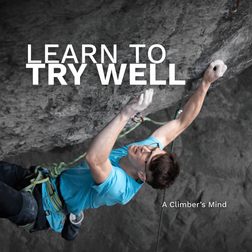
The Real Secret to Climbing Your Best (Learn to Try Well)

Most climbers think progress comes from doing more. More sessions. More effort. More training. But the real difference between good climbers and elite climbers isn’t effort. It’s how that effort is applied. In this episode, I break down: Why trying hard isn’t enough What it actually means to “try well” How mental and physical noise limits your performance A simple execution framework you can apply immediately And the lessons I learned from projecting Rhapsody If you’ve ever felt like you’re putting in the work but not getting the results… This episode will help you understand why. And more importantly - what to do about it. If you found this useful, I’d really appreciate you sharing it with someone who might benefit. And if you’re looking for a more structured, diagnosis-led approach to your climbing… You can find more about my coaching here: 👉 matwrightcoaching.com Topics covered: Climbing performance, projecting, mindset, execution, technique, training, focus Photo Credit: Marsha Balaeva
1 di 2