
Traversing the Strange World

Traversing the Strange World

di Isaiah Danberry
Stagione 1

With Rico Cortes, Discussions about The Pharisees
In today's episode, Peace solo interviews Rico Cortes, from Wisdom inTorah ministries. A teacher of God's Word, he answers questions about the Pharisees in his discussion with Peace today.

Exploring the Belief in The Bible with Jim DeFrancisco, PHD
In today's episode, the hosts explore detailed topics of idioms and contradictions in the Bible with Jim DeFrancisco, PHD. They delve into topics of inquiry and look at the actual meanings of original texts.

With Pastor Don, Discussions about the Bible and Jesus
In today's episode, the hosts interview Pastor Don Smith from the Talk About It podcast, and lead Pastor of Firm Foundation Ministries in Centreville, Michigan! They ask questions about the Bible, possible contradictions in it, and discuss their differing beliefs about God and Jesus.

The Renaissance Mind: How to Begin Again
IA
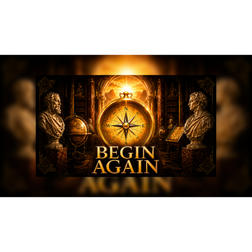
What does it mean to begin again? In this episode of Traversing the Strange World, we step into the Renaissance—not simply as a period in history, but as a philosophy of rebirth. Through Renaissance humanism, the work of Giovanni Pico della Mirandola, and the ideal of the Renaissance man, we explore what it means to recover what is beautiful from the past without becoming trapped by dogmatism. We ask what traditions are worth carrying forward, what ideas deserve to be left behind, and how reason, beauty, courage, curiosity, and human flourishing can help us rebuild after deconstruction. Along the way, we explore masculinity, the tension between the old and the new, the rise of Enlightenment thought, and Joseph Campbell’s Hero’s Journey—the movement from the known, into the unknown, and back again carrying something new. At the heart of it all is one question: What if adventure itself is spiritual? Perhaps a renaissance begins when we stop merely preserving what we inherited, step beyond the familiar, allow the unknown to change us, and return ready to create something more beautiful than what came before.

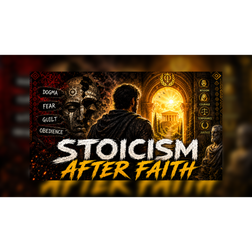
Stoicism After Faith: Finding Meaning and Inner Strength After Religious Deconstruction
What happens when the certainty of fundamentalist religion collapses, but the need for meaning, morality, and direction remains? In this episode of Traversing the Strange World, we journey into ancient Stoicism and explore how it can serve as a philosophical anchor after religious deconstruction. From Zeno and the Painted Porch to the Stoic teachings on virtue, emotion, responsibility, and human flourishing, we uncover a philosophy far deeper than the modern command to simply “control your reactions.” Stoicism offers wisdom without blind belief, courage without certainty, discipline without self-hatred, and morality without fear of divine punishment. We examine the four Stoic virtues—wisdom, courage, moderation, and justice—and challenge the popular idea that Stoicism means becoming cold, detached, or emotionally numb. For anyone rebuilding their worldview after fundamentalism, this episode explores how Stoicism can provide inner strength, emotional resilience, ethical direction, and a meaningful path forward—without becoming another unquestionable system. The old map may be gone. Stoicism may offer a compass.

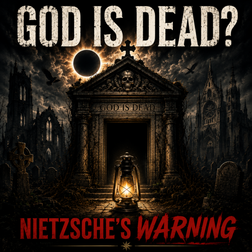
Nietzsche’s Warning: What “God Is Dead” Really Means

What did Nietzsche really mean when he said, “God is dead”? In this Thursday Journal episode of Traversing the Strange World, we explore Nietzsche’s famous warning from The Gay Science and the story of the madman with the lantern. This is not simply an episode about atheism or disbelief. It is about the collapse of inherited meaning, the danger of nihilism, and what happens to the human soul when the old sacred center no longer holds. We look at Nietzsche’s idea of the death of God, the crisis of morality and purpose, the last man, self-overcoming, deconstruction, and the question of whether the death of an old image of God might open the door to a deeper search. By the end, we turn toward the Hermetic idea that the divine may be rediscovered through the honest study of the universe — the sun, the moon, the stars, consciousness, and the mystery of existence itself. Maybe what dies is not God. Maybe what dies is the idol. And maybe what remains is the mystery.

When Life Changes: 5 Ancient Mantras for Enduring the Season
Seasons of change can be difficult to endure. A relationship shifts. A plan falls apart. An old version of yourself no longer fits. Suddenly, life asks you to keep walking without the certainty you wish you had. In this episode of Monday Mornings with Peace, we reflect on five mantras for enduring seasons of change, drawing from Heraclitus, Epictetus, Ecclesiastes, Nietzsche, and Lao Tzu. This is a meditation on impermanence, discipline, patience, self-overcoming, and learning how to bend without breaking. For anyone in a season of transition, uncertainty, grief, growth, or becoming — may these words help steady the breath and strengthen the spirit.

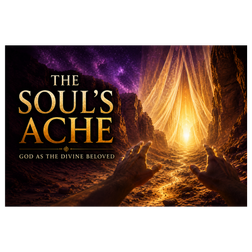
Why Nothing Fully Satisfies Us | God as the Divine Beloved
There is a longing beneath all longing. We chase it through love, beauty, success, pleasure, memory, and meaning — but even when we get what we thought we wanted, the ache often remains. In this Thursday Journal, we explore God as the Divine Beloved through the lens of Sufi mysticism. This is not God merely as ruler, judge, creator, or distant mystery, but God as the One the soul longs to return to. Through themes of desire, grief, lost love, false beloveds, spiritual remembrance, and the death of the false self, this episode reflects on the sacred ache at the center of human life. Maybe the things we long for are not always wrong. Maybe they are too small for what the soul is truly seeking. Because the soul does not merely want to be loved. The soul wants to return to Love itself. Thursday Journal: Notes from the Strange World is a reflective audio journal exploring God, meaning, myth, philosophy, mysticism, and the strange experience of being human.

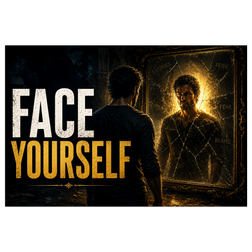
Face Yourself | 5 Mantras for Accountability

Self-ownership begins when we stop running from the mirror. In this episode of Monday Mornings with Peace, we explore 5 powerful mantras for accountability, self-reflection, and personal growth, rooted in the wisdom of philosophical and spiritual thinkers like Socrates, Jesus, Saint Augustine, Proverbs, and the Dhammapada. This episode is for anyone who feels ready to take responsibility for their life without falling into shame. Not everything is your fault — but your healing, your choices, your discipline, your habits, your flaws, your mistakes, and your response are still yours to own. Through these five reflections, we ask: What part of this is mine to own? What flaw am I protecting? What mistake am I avoiding? What pattern do I keep repeating? What truth about myself have I been running from? Accountability is not self-hatred. It is honest sight. It is the courage to examine yourself, confront your blind spots, stop hiding what needs to be healed, and do the inner work no one else can do for you. If you are trying to grow, change, become more disciplined, take ownership of your life, or become a better version of yourself, this episode is a reminder: You do not become free by avoiding the truth. You become free by facing it.
9 di 9