
Traversing the Strange World

Traversing the Strange World

di Isaiah Danberry
Stagione 5

Take Your Power Back: A Nietzschean Mantra for Dealing With a Narcissist
What happens when another person’s approval, criticism, silence, or manipulation begins controlling your inner world? In this episode of Monday Mornings with Peace, we explore narcissism through the myth of Narcissus and Echo, modern psychology, and Nietzsche’s philosophy of power and self-overcoming. We examine why some people depend on admiration, control, comparison, and emotional reactions to feel powerful—and how our need to be understood can keep us trapped in that exchange. Today’s mantra is: “My attention is my power. I will not surrender it by needing you to see my worth.” This is not an episode about defeating or humiliating a narcissist. It is about reclaiming your attention, protecting yourself with compassion, setting boundaries, and refusing to let another person determine who you become. We also confront the narcissistic side that exists within all of us—the ego that craves recognition, protects its image, and fears shame. True strength is not making someone else feel powerless. It is becoming someone who no longer needs to.

Before Heaven: Ecclesiastes, Ancient Religion, and the Examined Life

Before religion became centered on escaping this world, many ancient traditions were focused on learning how to live within it. In this episode of the Thursday Journal, we explore animism, ancient pagan religion, early Hebrew culture, and the philosophy of Ecclesiastes. These traditions were deeply connected to land, harvest, rest, justice, mortality, and the recurring cycles of nature. Ecclesiastes confronts the impermanence of life directly. Generations come and go. Wealth, pleasure, wisdom, and achievement all pass away like vapor. Yet its message is not that life is meaningless—it is that life cannot be permanently possessed. What if spirituality is not primarily about preparing to leave this world? What if it is about learning to notice our patterns, recognize the season we are in, receive ordinary joy, and become conscious enough to truly inhabit the life before us? This episode offers a deconstructed spiritual philosophy rooted in ancient wisdom, mortality, and one enduring principle: The spiritual life is the examined life.
Stagione 4

The Shadow, the Mask, and the Self: 4 Jungian Mantras for Becoming Whole

What if the parts of yourself you resist are not enemies, but pieces of a larger self asking to be understood? In this episode of Monday Mornings with Peace, we explore four mantras inspired by Carl Jung and Jungian psychology. Through inner conflict, the shadow, psychological projection, the persona, and individuation, these reflections offer a practical path toward greater self-awareness and wholeness. For the moments when you feel divided, triggered by others, trapped behind a social mask, or uncertain about who you are becoming, these mantras invite you to pause, look inward, and listen more deeply. Hold the conflict. Examine the shadow. Loosen the mask. Become more completely yourself.

4 Stoic Mantras for Dealing With Difficult People
IA
How do you deal with difficult people without allowing their behavior to control your peace? In this episode of Monday Mornings with Peace, we explore four Stoic mantras for handling conflict, anger, disrespect, manipulation, and emotionally draining people with greater calm and self-command. Drawing from Marcus Aurelius and Epictetus, this episode examines one of Stoicism’s central teachings: you may not control another person’s character, but you can still govern your response. These four mantras will help you protect your peace, remain firm without becoming cruel, understand the mistaken judgments behind harmful behavior, and refuse to become like the person who has wounded you. This is not about tolerating mistreatment. It is about setting boundaries, confronting difficult behavior, and walking away when necessary—without surrendering your dignity or inner stability. For anyone dealing with toxic relationships, workplace conflict, family tension, resentment, or emotional exhaustion, this episode offers practical Stoic wisdom for remaining grounded in the presence of difficult people.

Forgotten Gods: How Christianity Absorbed the Ancient World
Christianity did not spread into an empty world. It entered a world of Roman temples, pagan gods, sacred groves, seasonal festivals, household rituals, mystery cults, persecution, empire, and forgotten traditions. In this Thursday Journal, we explore how Christianity went from a persecuted movement to an imperial force — and how it absorbed, reshaped, renamed, and sometimes buried pieces of the ancient world along the way. From temples becoming churches, to local gods fading into saints, to older holidays being reinterpreted through Christian meaning, this episode looks at the strange and complicated history of how Christianity became historical, layered, and powerful. This is not about proving Christianity false. It is about asking what happens when sacred ideas move through human history. Because if the examined life matters, then the examined faith matters too.

No Mud, No Lotus: A Buddhist Mantra for Pain
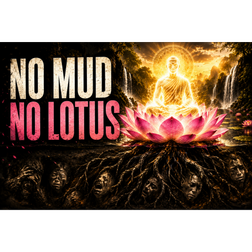
In this episode of Traversing the Strange World, we sit with one simple Buddhist mantra: No Mud, No Lotus. The lotus does not rise from clean and perfect conditions. It grows from the mud. In the same way, some of our deepest growth begins in the places we would rather avoid — grief, heartbreak, shame, fear, failure, confusion, and pain. This episode explores the Buddhist wisdom behind suffering, the symbolism of the lotus, and how pain can become the raw material for growth without romanticizing suffering. We also reflect on practical ways to move through pain constructively, including mindfulness and ideas connected to cognitive behavioral therapy. This is a reflection on learning how to face the mud of life without becoming the mud. Pain is real. The darkness is real. But so is the lotus. No Mud, No Lotus.

Gnostic Christianity: The Forgotten Belief in Two Gods
IA
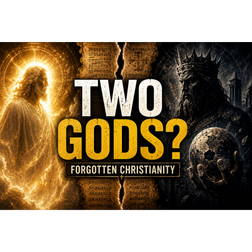
What if one forgotten branch of early Christianity believed the Bible revealed not one God, but two? In this episode of Traversing the Strange World, we explore Gnostic Christianity—a strange and fascinating movement that believed the creator of the material world, often called the Demiurge, was not the highest God revealed by Jesus. To many Gnostics, Jesus came not simply to forgive sins, but to awaken humanity to a hidden truth: that a divine spark lives within us, trapped inside a world of illusion, matter, and spiritual ignorance. We dive into the Gnostic creation story, the difference between the Demiurge and the hidden God, the role of secret knowledge, and why these beliefs were eventually rejected by the growing orthodox Church. This is a journey into lost Christianity, forbidden ideas, hidden gods, and one of the strangest questions in religious history: What if Jesus came to reveal a God beyond the creator of this world?

3 Stoic Mantras for Humility in an Age of Ego
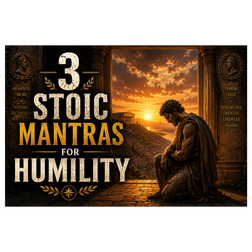
In this episode of Monday Mornings with Peace, we explore 3 Stoic mantras for humility through the wisdom of Epictetus and Marcus Aurelius. Stoicism is often misunderstood as coldness or emotional detachment, but at its core, it is a philosophy of self-mastery, character, discipline, and clear vision. And one of the most important parts of that vision is humility. Not weakness. Not self-hatred. Not making yourself small. But the ability to stay teachable, let truth correct your ego, and remember what truly matters before life passes by. In this episode, we reflect on three Stoic mantras: I cannot grow where I refuse to be taught. Truth is greater than my ego. Remember death, and return to what matters. Through Epictetus, Marcus Aurelius, and the Stoic practice of memento mori, this episode is about humility as strength — the kind of humility that helps us become wiser, calmer, and less enslaved to pride. Because the goal is not to appear wise. The goal is to become wise. #Stoicism #Humility #MarcusAurelius #Epictetus #MementoMori #AncientWisdom #PersonalGrowth

How Christianity Became Christianity

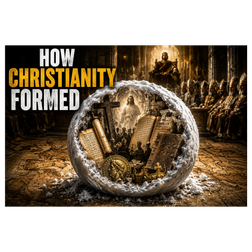
Christianity did not begin as a finished world religion. It began as a Jewish movement around Jesus of Nazareth in the world of first-century Palestine — shaped by Roman occupation, apocalyptic hope, resurrection belief, Paul’s mission to the Gentiles, early Christian diversity, and eventually the rise of bishops, doctrine, and councils. In this Thursday Journal, we continue dissecting the snowball: looking at how one of history’s most influential traditions gathered layers over time. From Jesus and the Kingdom of God, to James and Paul, to rival Christian sects, proto-orthodoxy, Constantine, and the Council of Nicaea, this episode explores how Christianity became the religion the world would come to know. This is not an attack on Christianity. It is an attempt to understand it historically — to ask what the tradition is made of before we decide how to carry it, question it, love it, or leave it.

Fall Seven Times, Rise Eight

In this episode of Monday Mornings with Peace, we focus on one mantra: Fall seven times. Rise eight. Through Friedrich Nietzsche’s philosophy of self-overcoming, we reflect on what it means to get back up after failure, shame, weakness, or the feeling that you have fallen back into an older version of yourself. The fall does not have to become your identity. Sometimes it reveals the next part of you that must be strengthened, disciplined, and overcome. This is an episode about rising again — not perfectly, not loudly, but honestly.
3 di 9