White Coat Club

White Coat Club

por Moon Prep
Temporada 4
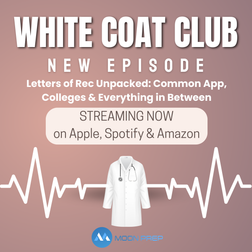
Letters of Rec Unpacked: Common App, Colleges & Everything in Between
Letters of recommendation can feel like one of the most confusing parts of the college application process. Who should you ask? When should you ask? What should you give your recommender? And once the letter is written, how do you actually get it to each college? In this episode, we’re breaking down everything students need to know about letters of recommendation, from choosing the right recommenders to making sure their letters successfully reach colleges. We’ll cover: Who to ask and what makes a strong recommender When and how to ask for a letter What information and materials you should provide your recommender Teacher vs. counselor vs. outside recommenders How many letters different colleges and programs require Where to find each college’s recommendation requirements How to add and manage recommenders in the Common App How the process differs for Coalition, UC, ApplyTexas, school-specific applications, and application portals Whether you can choose which letters are sent to each college What recommenders see and how they know when their letter is needed What happens when your school uses a third-party letter service Whether BS/MD programs have different recommendation requirements How to make the process as easy and convenient as possible for your recommender How to confirm that your letters have been received What to do when a college allows or requests letters outside the application platform And, of course, how many letters is too many? We’ll also answer the questions we’re hearing most often from students—and share practical tips to help you avoid common mistakes. Bottom line: Your letters of recommendation should be one less thing to stress about during senior year. We’ll show you how to approach the process thoughtfully, strategically, and respectfully—from “Will you write me a letter?” all the way to “Your letter has been received.”
How to Get Research (and How to Succeed During)
Research is one of the most valuable experiences for students interested in medicine, BS/MD programs, and other healthcare careers—but finding opportunities can feel overwhelming, especially for high school students who don't know where to start. In this episode, Nicole and Muskan break down the different types of research available to students, how to find opportunities, and what it takes to become a valuable member of a research team. They discuss everything from summer research programs and independent projects to reaching out to professors and physicians for mentorship opportunities. They also share practical advice on preparing for your first day in a lab or research setting, building professional relationships, taking initiative, and turning a research experience into meaningful growth. Whether you're hoping to strengthen your college applications, explore a future in medicine, or simply learn more about scientific discovery, this episode will help you navigate the world of research with confidence. In this episode, you'll learn: Why research is valuable for future healthcare professionals Different types of research experiences available to students Summer programs that offer research opportunities How to contact professors and potential mentors What to do before your first day in a lab or research setting How to stand out as a student researcher Ways to reflect on and maximize your experience
How to Get Shadowing Experience (and What to Do Once You're There)
Shadowing is one of the most valuable experiences for students considering careers in healthcare—but many students aren't sure where to start or how to make the most of the opportunity once they get it. In this episode, Nicole and Muskan break down why shadowing matters, especially for students interested in BS/MD programs, pre-med pathways, and other healthcare careers. They discuss practical strategies for finding shadowing opportunities, including leveraging family connections, reaching out to physicians' offices, exploring hospital volunteer programs, and using LinkedIn professionally. They also share tips on what students should do before, during, and after a shadowing experience to leave a positive impression and gain meaningful insights into patient care, physician communication, and the realities of healthcare. Whether you're just beginning your healthcare journey or looking to strengthen your college applications, this episode will help you approach shadowing with confidence and purpose. In this episode, you'll learn: Why shadowing is important for aspiring healthcare professionals How shadowing can strengthen BS/MD and pre-med applications Creative ways to find shadowing opportunities Common mistakes students make when reaching out to physicians What to expect on your first day of shadowing How to maximize your learning and build professional relationships
Insights to Case Western & the Pre-Professional Scholars Program
What does it really take to earn a spot in one of the nation's most competitive BS/MD programs? In this episode, we take an inside look at the Pre-Professional Scholars Program (PPSP) at Case Western Reserve University through the firsthand experience of Muskan, who matriculated through the program and is currently in her third year of medical school at Case Western. We begin by exploring what makes PPSP such a sought-after pathway for aspiring physicians. With access to a top-tier medical education, world-class healthcare systems, and countless clinical and research opportunities throughout Northeast Ohio, the program attracts some of the strongest pre-med students in the country. We discuss the academic profile of successful applicants, including the rigorous coursework, high GPAs, and standardized test scores that are common among accepted students. But academics alone aren't enough. We dive into the leadership experiences, service commitments, clinical exposure, and research involvement that help applicants stand out in an increasingly competitive pool. More importantly, we examine how depth of involvement often matters more than simply checking boxes. Drawing from personal experiences and conversations with admissions representatives, we share insider insights into what PPSP values most. Learn why meaningful clinical experiences and healthcare immersion can be just as important—if not more important—than research alone, and how students can demonstrate a genuine understanding of the medical profession before applying. We also provide practical advice for interview day, including how to approach virtual interviews, group activities, and informal sessions with current students. From professionalism and teamwork to articulating your motivations for medicine, you'll learn what admissions committees are looking for and how to prepare effectively. Beyond admissions, we discuss what life is actually like as a PPSP student. Contrary to what many applicants assume, there is no single path or major that PPSP students must follow. Students pursue a wide variety of academic interests, extracurricular activities, and career explorations while remaining fully integrated into the undergraduate community. We also cover the program's flexibility, including opportunities for approved gap years, master's degrees, employment experiences, and other unique pathways before beginning medical school. Finally, we explore the transition to medical school, including matriculation requirements, the recently added MCAT benchmark, and what makes the Case Western medical school experience unique. From its pass/fail curriculum and supportive culture to outstanding research opportunities and residency placements, we discuss why so many students view PPSP as one of the premier combined medical programs in the country. Whether you're considering applying to PPSP, researching BS/MD programs, or wondering if Case Western could be a good fit for your pre-med journey, this episode provides an honest, firsthand look at one of the most respected combined programs in the nation.
AI vs Real Essays
Artificial intelligence is becoming an increasingly common tool in education, but where should it fit into the college application process? In this episode, we explore the growing role of AI in admissions and discuss the critical difference between using AI as a helpful resource and allowing it to replace your authentic voice. We begin with an important disclaimer: AI-generated essays should never be submitted as your own work in a college application. Admissions officers are looking for genuine student stories, experiences, and perspectives—not content created by a chatbot. While AI can be a useful tool for brainstorming, organizing ideas, and answering questions about the writing process, it should never become the author of your application. We discuss some of the most common ways students use AI today, including generating essay topics, creating outlines, learning writing techniques, checking grammar, and researching colleges, scholarships, and academic opportunities. Used appropriately, AI can function much like a writing guide, reference book, or organizational assistant. However, it cannot replace the personal reflection, creativity, and authenticity that make a college essay memorable. We also explore why overreliance on AI often leads to weaker applications. At Moon Prep, counselors can frequently identify essays that were heavily generated by AI because of recurring patterns, unnatural phrasing, and language that doesn't match a student's voice. Admissions offices are becoming increasingly familiar with these trends as well, regularly discussing common phrases, vocabulary, and writing styles that appear across AI-generated content. Throughout the episode, we share practical guidelines for using AI responsibly. Learn when it can help, when it can hurt, and how to ensure that your essays remain uniquely yours. We compare AI-generated writing to the guidance students receive from counselors, teachers, and books: resources that provide direction without replacing the student's own work. Most importantly, we discuss why authenticity matters more than ever. In a competitive admissions environment where many students have similar grades, test scores, and extracurricular activities, essays often become the most personal and distinctive part of an application. Your story, your voice, and your perspective are what admissions committees want to hear—and no AI tool can tell that story better than you can. Whether you're beginning your college essays or wondering how AI fits into the application process, this episode will help you navigate the balance between leveraging technology and preserving what makes your application truly stand out.
Reflections from the 2025-2026 Admissions Cycle
The 2025–2026 admissions cycle brought record-breaking application numbers, growing waitlists, increased deferrals, and valuable lessons for future applicants. In this episode, we reflect on key trends from this year's admissions landscape and discuss what students can learn from those outcomes as they prepare for their own college journey. We dive into the numbers behind one of the most competitive cycles yet, including the University of California system receiving more than 252,000 applications and Common App reporting 1.4 million first-year applicants. We also discuss the rise in waitlists, deferrals, and spring semester admissions programs at universities such as Case Western Reserve and Ohio State. We explore what we observed among successful applicants, including the role of standardized testing, academic rigor, extracurricular involvement, and essays. While strong test scores can open doors—especially for BS/MD programs and highly selective universities—we share examples of students who found success through test-optional pathways. We also discuss why course rigor, intellectual curiosity, and thoughtful academic planning often matter more than chasing the highest possible GPA. You'll hear how the strongest applicants built cohesive application narratives by connecting their research, volunteer work, leadership experiences, and personal interests. From Alzheimer's research paired with nursing home volunteering to cardiovascular health initiatives tied to cultural identity, we'll discuss how students can create authentic and compelling applications that stand out. We also cover the importance of starting essays early, maintaining strong senior-year grades, building a balanced college list, and resisting the pressure to follow what everyone else is doing. Most importantly, we discuss why students should pursue activities and opportunities that genuinely matter to them rather than simply checking boxes for admissions. Whether you're just beginning the college admissions process or preparing your final applications, this episode offers practical insights and takeaways from one of the most competitive admissions cycles on record.
What NOT To Wait On When Submitting Applications
In this episode, we break down the biggest mistake students make during application season: waiting too long to start the pieces they could have completed earlier. From essays and letters of recommendation to resumes, transcripts, testing, and application timelines, we cover the key tasks students should tackle before deadlines start piling up. We discuss why personal statements and “Why Medicine?” or “Why Major?” essays should be drafted well before senior year gets busy, how preparing activity descriptions early can reduce stress later on, and why asking for letters of recommendation in advance is one of the smartest things students can do. We also talk through organizing deadlines, gathering Common App demographic information, planning an application strategy, and avoiding the chaos that comes with taking the SAT or ACT at the last possible moment. Whether you are applying to college, BS/MD programs, or medical school pathways, this episode is packed with practical advice to help you stay ahead, reduce stress, and submit stronger applications with confidence.
When Plan A Doesn’t Happen: Transfers, Gap Years & Post-Bacc Paths
In the college and medical school admissions process, not getting your first choice can feel devastating — but it does not mean your goals are out of reach. In this episode, we discuss the many pathways students can take when things do not go according to plan A. Nicole & Muskan explore what students can do if they do not gain admission to a BS/MD program, how transferring colleges can sometimes be the right fit, and why it is important to fully invest in the opportunities in front of you while still keeping future options open. For students navigating the medical school admissions process, we also break down what to do after an unsuccessful application cycle. From evaluating GPA, MCAT scores, clinical exposure, and overall application strategy to considering post-bacc programs, gap years, research opportunities, master’s programs, and expanding your school list, we cover the many ways students can strengthen their path forward. Most importantly, this episode is a reminder that every student’s journey looks different. Success rarely follows one perfect roadmap, and sometimes the detours lead to the best opportunities of all.
Searching for Life in the Universe with Dr. Ryan
What does it really take to get involved in scientific research as a student — even with no prior coding or research experience? In this episode, we sit down with Dr. Ryan, an Adjunct Professor of Physics at Purdue University Fort Wayne and a world-renowned expert in computational astrophysics, to discuss how students can break into real scientific research earlier than they think. From studying galaxy formation on some of the world’s most powerful supercomputers to contributing to a James Webb Space Telescope proposal, Dr. Ryan shares how curiosity—not prior experience—is often the most important ingredient for success in research. We discuss: How Dr. Ryan first became interested in space and physics Common misconceptions people have about astrophysics Why students don’t need prior coding experience to contribute to meaningful research What makes real research different from a traditional classroom experience How students can discover research interests before college Why early research experience can be transformative for college admissions and future careers Dr. Ryan also shares stories from mentoring students ranging from middle schoolers to adults in their 70s—and explains why he believes research should be accessible to anyone willing to learn. Whether you’re a student interested in STEM, a parent navigating opportunities for your child, or simply someone fascinated by the universe, this episode offers an inspiring look into the world of astrophysics, mentorship, and scientific discovery. Want to research with Dr. Ryan this summer? Learn more here at RisingResearchers.com
Start Early, Stand Out: Why Research Changes Everything
In this episode, we sit down with research expert and MD/PhD candidate Loren to explore why research is one of the most powerful experiences a high school student can pursue. Currently completing her PhD in public health at the University of North Carolina at Chapel Hill, Loren shares her journey from her first college lab experience at Florida Atlantic University to earning a Master’s in Global Health at Duke University—and ultimately into the world of physician-scientist training. We break down what research actually looks like for students, the different types of research (from wet labs to data analysis), and how early exposure can shape not only college applications—but long-term career paths. Loren also gives an inside look at the Rising Researchers program and how students can get involved this summer to gain real, hands-on research experience. If you’ve ever wondered whether research is “worth it” in high school—this episode will give you your answer. Interested in learning more about Rising Researchers? Visit https://risingresearchers.com/
1 de 8