The Early American Brass Band Podcast

The Early American Brass Band Podcast

por Chris Troiano, Stephen Cannistraci
Temporada 1

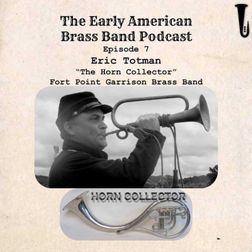
7 - Interview with Eric Totman: The Horn Collector

Episode 7 is our conversation with Eric Totman, aka “The Horn Collector.” Eric has amassed a large collection of primarily brass instruments from the 19th century, and has many unique and rare items. We talk about these, other odd instruments he has such as Besson Cornophones and Antoniophones, and how he acquired them. Eric also talks about his experiences playing with the Fort Point Garrison Brass Band in California. Music in this episode comes from Our Musical Past from The Library of Congress, and California Grand March from the Fort Point Garrison Brass Band’s album of the same name. If you like the show, the best way you can support us is by becoming a patron at https://www.patreon.com/eabbpodcast. We appreciate any support you feel compelled to give! Episode Structure: 0:00 - 2:26 - Introduction 2:26 - 8:10 - Interview with Eric Totman, his musical beginnings and education experiences 8:10 - 11:49 - How Eric got started collecting instruments 11:49 - 15:06 - Eric’s current collection and the Horn Collector “nickname” 15:06 - 20:52 - Eric’s Schriber collection 20:52 - 38:38 - Other over the shoulder horns and oddities: Besson Cornophones, one of the first double bell euphoniums, double bell alto horns, over the shoulder slide trombone, ophicleide, keyed bugles, Antoniophones 38:38 - 42:17 - Civil War reenacting, and other 19th century Brass Band reenacting experiences 42:17 - 47:28 - American Historical Brass Band Society, early brass band community building 47:28 - 59:27 - Fort Point Garrison Brass Band, importance of historical accuracy 59:27 - 1:02:06 - Eric’s Great-Great Grandfather’s involvement in Civil War music 1:02:06 - 1:07:40 - Reasons for reenacting, current state of the Early Brass Band community 1:07:40 - 1:08:59 - Where you can find Eric Totman and his collection 1:08:59 - 1:11:13 - YouTube and website updates 1:11:13 - 1:12:40 - Featured Album: The California Grand March - The Fort Point Garrison Brass Band

6 - Interview with Jari Villanueva: Federal City Brass Band and the History of Taps

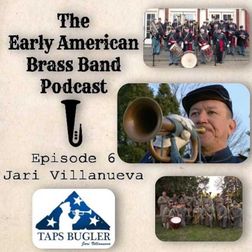
Episode 6 is a fantastic interview with Jari Villanueva, former trumpeter with the United States Air Force Band. Jari is heavily involved in all things related to 19th century American Brass Band, most notably with researching the history of Taps, and performing and arranging for the Federal City Brass Band. We talk at length about both of those things in this episode, with many interesting and funny stories from Jari’s career. You can find Jari at www.jvmusic.net and https://tapsbugler.com, among other places. For in-depth notes on this episode, be sure to visit www.eabbpodcast.com and click on “Show Notes.” If you like the show, the best way you can support us is by becoming a patron at https://www.patreon.com/eabbpodcast. We appreciate any support you feel compelled to give! Episode Structure: 0:00 - 2:44 - Introduction 2:44 - 9:30 - Jari’s background, musical career before and during his time in the United States Air Force Band 9:30 - 11:47 - Bugling with the USAFB 11:47 - 15:20 - The beginning of Jari’s interest in Civil War history, Civil War music 15:20 - 19:06 - Jari’s bugle from the History Channel segment on Taps, clarion vs. bugles vs. trumpets during the Civil War, the French influence on the Civil War 19:06 - 22:15 - Early military musicians 22:15 - 37:21 - History of Taps and other bugle calls 37:21 - 44:10 - How Taps began to be used in military funerals and other civil functions 44:10 - 50:30 - Jari’s interest and involvement with reenacting, formation and goals of the Federal City Brass Band 50:30 - 53:30 - The Federal City Brass Band’s uniforms and how they differ from other reenactment band’s uniforms 53:30 - 1:01:53 - The instruments and mouthpieces the Federal City Brass Band uses, some stories about the band and reenacting 1:01:53 - 1:06:27 - Federal City Brass Band’s impression of the 26th North Carolina Band 1:06:27 - 1:10:30 - Importance of brass bands during the Civil War and the 19th century 1:10:30 - 1:17:50 - Federal City Brass Band repertoire and Jari’s arranging practices 1:17:50 - 1:26:07 - Audience reaction to 19th century brass band repertoire and uniforms, and the importance of historical context 1:26:07 - 1:34:38 - Where you can find Jari, his music, and more about his research 1:34:38 - 1:37:06 - Featured Album: Hurrah for the Union - Federal City Brass Band

5 - Interview with Dr. Michael O’Connor: Coates Brass Band, Newberry’s Victorian Cornet Band

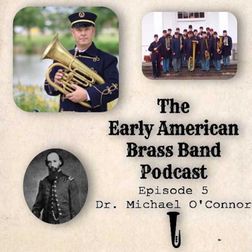
Episode 5 is a wide ranging conversation with Dr. Michael O’Connor, Associate Professor of Music at Palm Beach Atlantic University. Dr. O’Connor is the director of The Coates Brass Band, and a founding member of Newberry’s Victorian Cornet Band and the Washington Cornett and Sackbut Ensemble. We discuss his musical background, research of Civil War-era music, the performing groups he helped found, and the life and music of Thomas Coates. If you like the show, the best way you can support us is by becoming a patron at https://www.patreon.com/eabbpodcast. We appreciate any support you feel compelled to give! Episode Structure: 0:00 - 1:38 - Introduction 1:38 - 9:12 - Interview with Dr. O’Connor - Biographical and career information 9:12 - 14:10 - Washington Cornett and Sackbut Ensemble, Newberry’s Victorian Cornet Band 14:10 - 21:15 - College teaching career, Palm Beach Atlantic University 21:15 - 28:50 - Detail on Newberry’s Victorian Cornet Band: formation, the music they play, instruments used 28:50 - 35:41 - Thomas Coates, The Coates Brass Band, recording projects with The Coates Brass Band and Newberry’s Victorian Cornet Band 35:41 - 37:58 - How written music was obtained and distributed during the 19th century 37:58 - 40:50 - Use of woodwinds in 19th century brass bands 40:50 - 43:52 - The music of Thomas Coates 43:52 - 45:26 - Musical Excerpt: Cottage By The Sea Quickstep, Thomas Coates, performed by The Coates Brass Band 45:26 - 51:00 - The music of Thomas Coates and his musical legacy 51:00 - 1:01:20 - The Coates Brass Band and Newberry’s Victorian Cornet Band instruments and uniforms, reenacting 1:01:20 - 1:12:51 - Playing on period mouthpieces, and Dr. O’Connor’s instrument collection 1:12:51 - 1:15:21 - Conclusion, where you can find Dr. O’Connor online 1:15:21 - 1:17:39 - Featured Album: The Coates Brass Band - Quickstep: Brass Band Music of the American Civil War

4 - Interview with Dr. Kirby Jolly: The Old Bethpage Village Brass Band

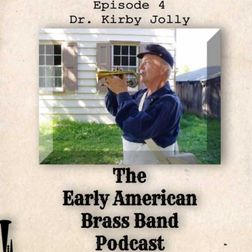
In Episode 4, we talk with Dr. Kirby Jolly about his time with the Old Bethpage Village Brass Band, how it has evolved over the years, and his view of the mission of the band. Dr. Jolly tells us some stories about his time performing with the Goldman Band. His wealth of experience with 19th century brass band music is vast, and we enjoyed the opportunity to pick his brain! If you like the show, the best way you can support us is by becoming a patron at https://www.patreon.com/eabbpodcast. We appreciate any support you feel compelled to give! Episode Structure: 0:00 - Introduction 1:30 - Corrections 2:50 - Interview with Dr. Kirby Jolly; Musical background and his time in Syracuse, NY 6:55 - Dr. Jolly’s Experience with the Goldman Band 11:17 - Dr. Jolly’s association with the Old Bethpage Village Brass Band, history and operation of the Old Bethpage Village 21:50 - About the OBVBB instruments 25:50 - About the OBVBB repertoire 28:10 - About the OBVBB uniforms 31:10 - About OBVBB performances 33:00 - The OBVBB’s mission 37:15 - The OBVBB performance frequency and variety 38:35 - About the Ken Burn’s documentary soundtrack 40:10 - Other OBVBB recordings and notable performances 45:08 - Civil War music reenacting environment 50:10 - Final remark from Dr. Kirby Jolly 53:25 - Closing 55:05 - Featured Album

3 - Interview with Dr. Mark Jenkins: Marine Band During The Civil War

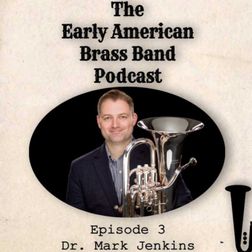
Episode 3 is our social distancing mega-episode! Join us for a wide ranging, insightful interview with Dr. Mark Jenkins of The President’s Own United States Marine Band. We discuss Dr. Jenkins’ research, the history of the Marine Band, their relationship to the Lincoln administration, and a healthy dose of low brass instrument history. This episode's featured album is The American Brass Band Journal - Empire Brass Quintet & Friends (2005). If you like the show, the best way you can support us is by becoming a patron at https://www.patreon.com/eabbpodcast. We appreciate any support you feel compelled to give! Episode Structure: 0:00 - 1:34 - Introduction 1:34 - 5:15 - Corrections/Listener emails 5:15 - 10:17 - Interview with Dr. Mark Jenkins. Brief Biography, topics of Dr. Jenkins’ research 10:17 - 12:40 - Research resources for projects focusing on the 19th century 12:40 - 14:45 - Early euphonium and euphonium related instrumentalists in the Marine Band 14:15 - 16:53 - Dissertations on Francis Scala, and the collection of his works donated to the Library of Congress 16:53 - 27:15 - Early history of the Marine Band, and how it relates to all brass bands in America. Influence of immigration on the band scene in the United States 27:15 - 35:44 - Early predecessors to the euphonium in the Marine Band, and the people who played them. Marine Band apprenticeship program that lasted until the very early 1900’s 35:44 - 46:24 - Evolution of the euphonium. The Distin family legacy, and their relationship with Adolph Sax. 46:24 - 1:01:45 - Rise and fall of the double bell euphonium, and it’s legacy in the United States. Modern compensating euphonium, and why it replaced the double bell euphonium 1:01:45 - 1:06:20 - Italian euphonium players, and their influence on euphonium players in America 1:06:20 - 1:15:10 - Ole May’s performing and personal life 1:15:10 - 1:27:18 - Marine Band’s relationship with Abraham Lincoln 1:27:18 - 1:29:50 - Brief explanation of the Marine Band’s uniforms, and function of field musicians during the Civil War 1:29:50 - 1:33:35 - Marine Band after the Civil War during the time many military associated bands were being decommissioned 1:33:35 - 1:41:32 - Size and instrumentation of the Marine Band throughout the years 1:41:32 - 1:47:25 - Story about how William H. Santelmann made his way into the Marine Band 1:47:25 - 1:52:03 - Marine Band’s involvement in inauguration ceremonies, music composed by Scala 1:52:03 - 2:01:41 - History of Hail to the Chief, other military honors, Dr. Jenkins’ experiences with Presidential inauguration ceremonies 2:01:41 - 2:18:12 - Comments on band culture in the United States after Sousa’s death, development of military bands into how we see them today 2:18:12 - 2:19:13 - Conclusion 2:19:13 - 2:21:25 - Featured Album: The American Brass Band Journal - Empire Brass Quintet & Friends (2005)

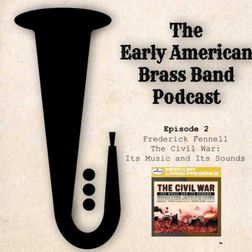
2 - Frederick Fennell: The Civil War: Its Music and Its Sounds

This episode focuses on Frederick Fennell and the Eastman Wind Ensemble's landmark 1960 recording The Civil War: Its Music and Its Sounds. We discuss Fennell's inspiration for the album, the musicians on the album, the instruments used for the recording, as well as the music on the album. If you like the show, the best way you can support us is by becoming a patron at https://www.patreon.com/eabbpodcast. We appreciate any support you feel compelled to give! Episode Structure: 0:00 – 2:20 – Introduction 2:20 – 8:42 – Background on the Eastman School of Music and Frederick Fennell 8:42 – 11:43 – Origins and background of the Eastman Wind Ensemble 11:43 – 16:10 – Fennell’s inspiration for The Civil War: It’s Music and It’s Sounds 16:10 – 20:33 – Recording dates and recording process for the album 20:33 – 23:35 – Initial and subsequent releases 23:40 – 29:00 – Musicians on the album Stephen was incorrect about Roger Bobo playing on the Jaws soundtrack. Tommy Johnson played tuba for that movie. Roger Bobo played tuba on the soundtracks for: Close Encounters of the Third Kind, Indiana Jones and the Temple of Doom, Meet the Applegates, Baby: Secret of the Lost Legend, The COlor Purple, and Robin Hood. 29:00 – 42:06 – Instruments used on the album 42:06 – 51: 46 – Music on the album 51:46 – 56:06 – Interesting facts and other Civil War music recordings with which Frederick Fennell was involved 56:06 – 58:14 – Featured album: The Civil War: It’s Music and It’s Sounds, Episode 3 teaser 58:14 – 58:34 – Outro music

1 - Introduction

Our first episode is a broad overview of brass bands in America before, during, and immediately after the Civil War. We cover a general history of brass bands in America before, during, and after the Civil War, focusing on the instruments and music they played, duties during the Civil War, and their history after the war concluded. If you like the show, the best way you can support us is by becoming a patron at https://www.patreon.com/eabbpodcast. We appreciate any support you feel compelled to give! Episode Structure 00:00-3:30 - Introduction 3:30-5:10 - About Chris Troiano 5:10-6:50 - About Stephen Cannistraci 6:50-11:55 - About the Perseverance Band and its Civil War Connection 11:55-15:20 - Military Music Prior to the Civil War 15:20-26:50 - The Development of Brass Instruments 26:50-48:45 - Brass Bands During the Civil War 48:45-59:22 - Brass Bands After the Civil War 59:22-1:01:06 - Final Thoughts on the Podcast 1:01:06-End - Featured Album: Ken Burns’ “The Civil War” Soundtrack
6 de 6