The Early American Brass Band Podcast

The Early American Brass Band Podcast

por Chris Troiano, Stephen Cannistraci
Temporada 1

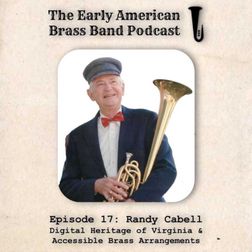
17 - Interview with Randy Cabell: Digital Heritage of Virginia, and Accessible Brass Arrangements

Episode 17 is our conversation with Randy Cabell. We talk about Randy’s extensive arranging projects under the umbrella of the Digital Heritage of Virginia, his efforts to make music from the 19th century accessible to players today, and the history of the 19th Virginia Heavy Artillery Band. Their band books are the only band books from a Virginia regiment to survive. Show notes for this episode are available at https://eabbpodcast.com/show-notes-2/. Music in this episode comes from Our Musical Past from the Library of Congress and The 8th GM Regiment Band. You can get in touch with us on social media, and by emailing us at eabb.podcast@gmail.com. If you like the show, the best way you can support us is by becoming a patron at https://www.patreon.com/eabbpodcast. We appreciate any support you feel compelled to give! Episode Structure: 2:27 - Announcement about obtaining Randy's arrangements 3:29 - Randy's musical background 9:07 - How Randy got interested in Civil War brass band music 11:16 - Helping bands acquire reproduction instruments, ways to keep interest in 19th century brass band music alive 17:40 - Robb Stewart's reproduction instruments 18:26 - Randy's personal instruments and bands he's played with 19:47 - Randy's arranging projects 21:41 - 19th VA Heavy Artillery Band, “The Brass Band Journal For the Rest Of Us”, “Patriotic Songs and Airs of The CSA” 23:43 - 19th VA Band books 25:05 - Music from Jamestown project 26:19 - 19th VA band history 30:29 - How Randy decided what music from the 19th VA band books to arrange 34:36 - Some members of the 19th VA Band 36:31 - Challenges Randy came across when re-creating the 19th VA Band books 39:21 - Recording the band books 44:15 - Efforts to make arrangements accessible by including substitute parts, "The Brass Band Journal for the Rest of Us" 55:30 - How the American brass band tradition differs from the British brass band tradition 57:25 - Wrap-up 58:22 - Featured Album: “Dear Mother I've Come Home to Die Quickstep”, Crestmark Military Band

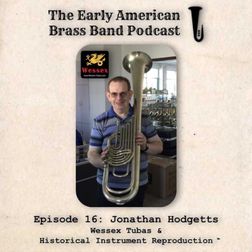
16 - Jonathan Hodgetts: Wessex Tubas and Historical Instrument Reproduction

Episode 16 is our discussion with Jonathan Hodgetts, founder and owner of Wessex Tubas. This was our first international interview, and we can’t thank him enough for taking the time to speak with us. We cover how and why he started Wessex, what their instrument designing process is like, and how they got into reproducing historical instruments such as the ophicleide and their brand new Over-the-Shoulder Eb Bass. Show notes for this episode are available at https://eabbpodcast.com/show-notes-2/. Music in this episode comes from Our Musical Past from the Library of Congress and The 8th GM Regiment Band. You can get in touch with us on social media, and by emailing us at eabb.podcast@gmail.com. If you like the show, the best way you can support us is by becoming a patron at https://www.patreon.com/eabbpodcast. We appreciate any support you feel compelled to give! Episode Structure: 3:15 - Jonathan's musical background 6:00 - British style brass bands 8:39 - Orchestral and wind band playing 12:42 - Founding of Wessex Tubas and initial instrument production 18:09 - Expanding production, distribution, tweaking instrument designs 20:35 - How Wessex got into producing historical instruments 23:34 - Why Jonathan thinks historical instruments should be accessible to players 25:06 - Timeline from design to product 29:12 - Considerations before Wessex decides to design and produce an instrument 33:46 - Wessex's OTS Eb Bass, how they decided to make it, the horn it was modeled after, and "quality of life" design improvements 40:31 - Playing the new Wessex OTS Eb Bass 41:53 - More on the OTS Eb Bass 45:30 - Thoughts on reproducing historical instruments 54:15 - Where you can find more information about Wessex, their OTS Eb Bass, and their other instruments 56:19 - Show notes, social media, and our featured album for this episode: The Origin of the Species, The Wallace Collection

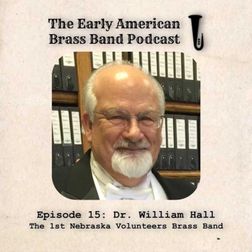
15 - Interview with Dr. William Hall: The 1st Nebraska Volunteers Brass Band

Episode 15 is our conversation with Dr. William Hall, Leader of The 1st Nebraska Volunteers Brass Band. We cover a lot of ground in this episode, talking about Bill's PhD research, how the band formed, Nebraska's role in the Civil War, and how the band operates today. You can find more information about Bill and the band at https://1stnebraskaband.wordpress.com/. Show notes for this episode are available at https://eabbpodcast.com/show-notes-2/. Music in this episode comes from Our Musical Past from the Library of Congress, The 8th GM Regiment Band, and The 1st Nebraska Volunteers Brass Band. You can get in touch with us on social media, and by emailing us at eabb.podcast@gmail.com. If you like the show, the best way you can support us is by becoming a patron at https://www.patreon.com/eabbpodcast. We appreciate any support you feel compelled to give! Episode Structure: 3:30 - Bill's musical and educational background 9:10 - Dr. Hall's PhD research 16:15 - How Bill got involved with 19th century American brass bands 19:12 - History of the first Bill played with in Fremont Nebraska 20:52 - Instrumentation challenges the Freemont band faced 21:37 - What led to Bill forming the 1st Nebraska Volunteers Band 24:28 - Where the 1st Nebraska Volunteers Brass Band got their instruments and uniforms 25:21 - Nebraska's role during the Civil War 27:46 - The 1st Nebraska Band's life during the Civil War 31:03 - What The 1st Nebraska Volunteer Brass Band looked like during the Civil War 33:36 - Uniforms and instruments of today's 1st Nebraska Volunteer Brass Band 40:36 - Music on the 1st Nebraska Volunteers Brass Band recording project 45:04 - The obligatory period vs. modern mouthpiece question 48:41 - Relationship with the Liberty Band of Iowa 50:33 - Moravian Music Foundation resources 52:17 - Upright bell vs. OTS instrument practicality 54:29 - Notable performances of the 1st Nebraska Volunteer Brass Band 1:01:01 - Audience reaction to Civil War music and portrayal 1:05:30 - Where you can find more information on Bill and the 1st Nebraska Volunteer Brass Band 1:07:45 - Wrap up - come hang out with us on social media! Especially Twitter! 1:09:05 - Featured Album: 1st Nebraska Volunteers Brass Band Soundcloud page

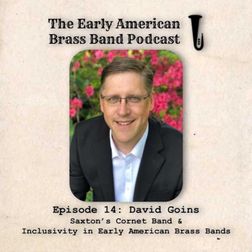
14 - Interview with David Goins: Saxton’s Cornet Band and Inclusivity in Early American Brass Bands

Episode 14 is our discussion with David Goins of Saxton’s Cornet Band from Lexington, KY. We talk about how David got involved with Saxton’s, the history of the band, and the recent changes they made within their organization to be inclusive and represent the early part of the larger history of band music in the United States. This is an important conversation that is long overdue in the music field, and we appreciate David taking the time to have it with us. We plan on discussing this topic further with future guests. Show notes for this episode are available at https://eabbpodcast.com/show-notes-2/. Music in this episode comes from Our Musical Past from the Library of Congress and The 8th GM Regiment Band. You can get in touch with us on social media, and by emailing us at eabb.podcast@gmail.com. If you like the show, the best way you can support us is by becoming a patron at https://www.patreon.com/eabbpodcast. We appreciate any support you feel compelled to give! Episode Structure: 0:00 - 2:42 - Introduction 2:42 - 6:58 - Interview with David Goins: musical and educational background 6:58 - 10:26 - How David got involved with Saxton's Cornet Band 10:26 - 15:23 - History of Saxton's Cornet Band 15:23 - 18:46 - Instruments used by Saxton's Cornet Band 18:46 - 21:01 - Musicians and configurations of Saxton's Cornet Band 21:01 - 22:52 - Saxton's Cornet Band recordings 22:52 - 28:25 - Henry Saxton Jr. and the historical connection to the recording venue for some Saxton's Cornet Band albums 28:25 - 33:11 - Different types of concerts given by Saxton's Cornet Band 33:11 - 38:27 - How the mission of Saxton's Cornet Band has changed over the years, and what the most recent change means for the future of the band 38:27 - 45:44 - New changes to Saxton's Cornet Band 45:44 - 47:46 - Thoughts on reenacting as a general hobby, and living history 47:46 - 52:46 - Thoughts on playing Dixie in historical performance presentation settings 52:46 - 53:47 - Thoughts on the future of 19th century period brass band organizations moving forward 53:47 - 57:50 - 19th century brass bands at the college level 57:50 - 1:02:39 - Resurrecting music that hasn't been played in a long time, playing music arranged from piano scores 1:02:39 - 1:05:17 - David's involvement with the Lexington Brass Band 1:05:17 - 1:06:11 - Where you can find more about David, Saxton's Cornet Band, and the Lexington Brass Band 1:06:11 - 1:07:48 - Featured Album: High Bridge Brass

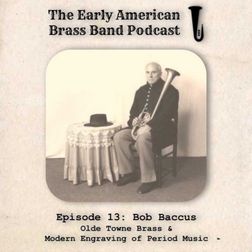
13 - Interview with Bob Baccus: Olde Towne Brass and Modern Engraving of Period Music

Episode 13 is our conversion with Bob Baccus, founder of the Olde Towne Brass based in Huntsville, Alabama. Bob is very active in the early American brass band community and has undertaken a massive project making modern engraved copies of period brass band music, helping countless bands expand their repertoire. We talk with him about this project as well as the history and goals of the Olde Towne Brass. Music in this episode comes from Our Musical Past from the Library of Congress, The 8th GM Regiment Band, and the Olde Towne Brass. If you like the show, the best way you can support us is by becoming a patron at https://www.patreon.com/eabbpodcast. We appreciate any support you feel compelled to give! Episode Structure: 0:00 - 3:03 - Introduction 3:03 - 6:02 - Interview with Bob Baccus, musical background and how he got involved with early American brass bands 6:02 - 7:50 - Information about the Olde Towne Brass 7:50 - 11:10 - Notable performances, reenacting experiences 11:10 - 17:13 - Instruments the Olde Towne Brass uses 17:17 - 19:45 - Research that goes into each Olde Towne Brass performance 19:45 - 22:15 - Reenacting logistics, gigs at national parks 22:15 - 26:07 - Modern vs. period mouthpieces 26:07 - 33:26 - National Civil War Band Festival, Frederick Fennell conducting the Olde Towne Brass 33:26 - 37:35 - How Bob and Terry Cornett engrave and arrange period brass music 37:35 - 40:33 - How Bob got started on his digitizing project 40:33 - 43:42 - Early American brass bands at the college level 43:42 - 45:55 - Olde Towne Brass recordings 45:55 - 55:30 - Goals of Olde Towne Brass performances 55:30 - 57:23 - Where you can find more about the Olde Towne Band, their published music, and their recordings 57:23 - 59:28 - Website and social media announcements 59:28 - 1:01:34 - Featured Album: Yankee Bands in Dixie's Land

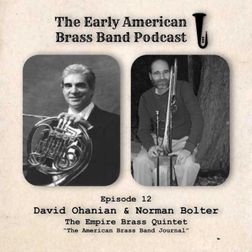
12 – Interview with David Ohanian and Norman Bolter: Empire Brass Quintet, “The American Brass Band Journal” Albums

Episode 12 is a great conversation with David Ohanian (French horn) and Norman Bolter (trombone), both former members of the Empire Brass Quintet. We talk about their two albums of 19th century brass band music - The American Brass Band Journal, and The American Brass Band Journal Revisited - the recording and origins of these albums. Both Norman and David offer their thoughts on a range of other topics, including brass playing today, and performing on period instruments vs. modern instruments. Music in this episode comes from Our Musical Past from the Library of Congress, and The 8th GM Regiment Band. If you like the show, the best way you can support us is by becoming a patron at https://www.patreon.com/eabbpodcast. We appreciate any support you feel compelled to give! Episode Structure: 0:00 - 1:50 - Introduction 1:50 - 4:23 - Brass Band Journal and Stratton Military Band Journal information 4:23 - 11:03 - Interview with David Ohanian and Norman Bolter. How the Empire Brass Quintet got started, and how these projects developed 11:03 - 13:40 - Period instruments vs. modern instruments for these albums 13:40 - 15:37 - Brass music from before the 19th century 15:37 - 19:27 - Structure of the two albums 19:27 - 24:05 - How additional musicians were chosen for the recordings and how Frederick Fennell got involved with the Revisited album 24:05 -27:52 - Norman's experiences recording these albums, and Rolf Smedvig's influence on Empire projects. Story from Tanglewood 27:52 - 31:10 - Reception of the albums and playing the Brass Band Journal music live 31:10 - 37:15 - More stories from recording sessions from both Norman and David 37:15 - 45:42 - Working with Frederick Fennell on the Revisited album 45:42 - 49:48 - Clarifying the history of the Empire Brass Quintet 49:48 - 52:39 - CD re-release information 52:39 - 56:24 - Thoughts on the album today 56:24 - 1:04:07 - Thoughts on period instruments and performances of music from the 19th century. 1:04:07 - 1:10:35 - General thoughts on brass playing 1:10:35 - 1:13:06 - Wrap up, where you can find David and Norman. 1:13:06 - 1:14:41 - Featured Album: The American Brass Band Journal, The American Brass Band Journal Revisited, The Empire Brass Quintet

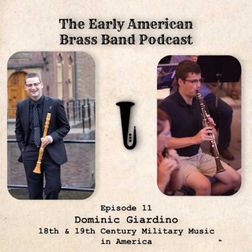
11 - Interview with Dominic Giardino: 18th and 19th Century Military Music in America

*The thoughts expressed in this Podcast are the personal opinions of Dominic Giardino and do not necessarily reflect the views of Colonial Williamsburg.* Episode 11 is a great conversation with Dominic Giardino. We talk about how Dominic got interested in historical performance, founding The Battery B 1st US Artillery Brass Band, working with friend of the show Michael O’Connor, and his research into early military music in America. Dominic is extremely well-researched and an active freelance historical musician and historical interpreter at the Colonial Williamsburg Foundation. Music in this episode comes from Our Musical Past from the Library of Congress, The 8th GM Regiment Band, and an excerpt from Dominic’s solo performance of Fantasia "Somnambula" - E. Cavallini, arr. by G.F. Carney with Newberry’s Victorian Cornet Band from their upcoming album. If you like the show, the best way you can support us is by becoming a patron at https://www.patreon.com/eabbpodcast. We appreciate any support you feel compelled to give! Episode Structure: 0:00 - 3:54 - Introduction, excerpt of Dominic playing, social media and website announcements 3:54 - 5:10 - Interview with Dominic Giardino, musical background and education 5:10 - 8:42 - How Dominic's MM from Koninklijk Conservatorium Den Haag in the Netherlands was structured, types of clarinets studied 8:42 - 16:06 - Meeting Michael O'Connor, forming the Battery B 1st US Artillery Brass Band, equipment challenges 16:06 - 18:38 - Battery B 1st US Artillery Brass Band uniforms and performances 18:38 - 25:01 - What inspired Dominic to apply for a Fulbright grant and pursue a MM in the Netherlands 25:01 - 29:23 - Early music at the college level, early music scene in the United States 29:23 - 31:36 - Historical music programs of study in the United States 31:36 - 38:09 - Dominic's current job at Colonial Williamsburg 38:09 - 51:05 - Dominic's research into 18th century military bands in the United States 51:05 - 1:06:03 - Choosing repertoire, importance of contextualizing the music you perform and acknowledging the surrounding history 1:06:03 - 1:07:59 - Where you can hear Dominic play, Music Box Concerts podcast 1:07:59 - 1:09:28 - Wrap-up, social media and website announcements 1:09:28 - 1:10:58 - Featured Album: Cheer Boys Cheer!, The American Brass Quintet

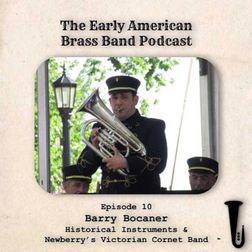
10 - Interview with Barry Bocaner: Historical Instruments and Newberry’s Victorian Cornet Band

Episode 10 is a conversation with our good friend and colleague Barry Bocaner. We talk about Barry’s introduction into historically informed performance, performing and soloing with Newberry’s Victorian Cornet Band, as well as his adventures learning about early brass instruments while traveling to instrument museums across the world. Music in this episode comes from Our Musical Past from the Library of Congress, The 8th GM Regiment Band, and Thomas Coates: The Father of Band Music in America, by Newberry’s Victorian Cornet Band. If you like the show, the best way you can support us is by becoming a patron at https://www.patreon.com/eabbpodcast. We appreciate any support you feel compelled to give! Episode Structure: 0:00 - 4:03 - Introduction, website announcements 4:03 - 11:47 - Interview with Barry Bocaner, musical upbringing and education 11:47 - 21:18 - How Barry got into historically informed performance, early early music gigs 21:18 - 32:33 - How Barry got involved with Newberry’s Victorian Cornet Band, soloing with the band, discussion of “early music performance” culture in the United States, historically informed performance challenges 32:33 - 40:54 - The instruments Barry uses when performing with Newberry’s Victorian Cornet Band and The Coates Brass Band: The 47th PA Vol. Infantry Regt. Band 40:54 - 47:36 - Trading instruments with Michael O’Connor, how Barry began acquiring period musical instruments 47:36 - 52:04 - philosophy on purchasing these instruments, purchasing to restore and play 52:04 - 54:34 - Thoughts on early 19th century brass players 54:34 - 1:04:03 - Barry’s travels to instrument museums across the world 1:04:03 - 1:12:48 - Brief history of the Boston Musical Instrument Company 1:12:48 - 1:14:42 - Where you can hear Barry playing, projects Barry is involved in 1:14:42 - 1:15:30 - Wrap-up, social media announcements 1:15:30 - 1:16:51 - Featured Album: Thomas Coates: The Father of Band Music in America, Newberry’s Victorian Cornet Band.

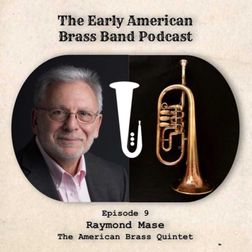
9 - Interview with Raymond Mase: American Brass Quintet Albums of Civil War Brass Band Music

Episode 9 is our interview with Raymond Mase, professor of trumpet at the Juilliard School and former trumpet with The American Brass Quintet. In the episode we discuss how The American Brass Quintet came to record The Yankee Brass Band: Music from Mid-Nineteenth Century America (1981), A Storm in The Land: Music of the 26th N.C. Regimental Band, CSA (2002), and Cheer, Boys, Cheer!: Music of the 26th N.C. Regimental Band, CSA Volume 2 (2006). Raymond also tells us some stories about recording these albums, and offers his opinion on a variety of topics related to brass performance and professional chamber music. Music in this episode comes from Our Musical Past from the Library of Congress, and The 8th GM Regiment Band. If you like the show, the best way you can support us is by becoming a patron at https://www.patreon.com/eabbpodcast. We appreciate any support you feel compelled to give! Episode Structure: 0:00 - 3:30 - Introduction, YouTube exclusive content, Addressing Gettysburg, The Digital Digest - History Tunes 3:30 - 7:57 - Interview with Raymond Mase, musical background and early musical experiences 7:57 - 10:40 - Time and experiences at The New England Conservatory, interest in a wide variety of music 10:40 - 17:39 - Auditioning for The American Brass Quintet, playing in a professional chamber music ensemble, culture within The American Brass Quintet 17:39 - 23:55 - The Yankee Brass Band album origins, where the music came from, and instruments used 23:55 - 26:10 - Other thoughts about the Civil War Music albums, historical authenticity considerations 26:10 - 31:46 - Other players on the albums, considerations for the Moravian albums, recording process 31:46 - 37:17 - Stories about Bob Sheldon 37:17 - 40:57 - Raymond's Boston Eb cornet, other instruments on the albums 40:57 - 46:10 - Origins of the Moravian albums, recording, and instruments 46:10 - 51:44 - Concluding thoughts on the albums, American Brass Quintet, Ken Burns Civil War documentary soundtrack 51:44 - 1:07:14 - Thoughts on repertoire, difference between "performing to get gigs" and performing music that aligns with your mission, and general musical culture 1:07:14 - 1:08:58 - Where you can find Raymond, his music, and his arrangements 1:08:58 - 1:10:20 - YouTube and social media announcements, show notes, and how you can get in touch with us 1:10:20 - 1:11:30 - Featured Album: A Storm in The Land, The American Brass Quintet

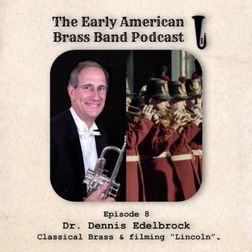
8 - Interview with Dennis Edelbrock: Honor to Our Soldiers and Filming the Movie Lincoln

Episode 8 is our interview with Dr. Dennis Edelbrock, former trumpet with The United States Army Band “Pershing’s Own,” and current professor of trumpet at George Mason University. This great conversation covers the Classical Brass album Honor to Our Soldiers, filming the movie Lincoln and so much more. We also discuss Dr. Edelbrock’s time with The Pershing’s Own Brass Quintet and Herald Trumpets, with a lot of history you won’t want to miss! Music in this episode comes from Our Musical Past from The Library of Congress, The United States Army Band “Pershing’s Own” Herald Trumpets, and Honor to Our Soldiers by Classical Brass. If you like the show, the best way you can support us is by becoming a patron at https://www.patreon.com/eabbpodcast. We appreciate any support you feel compelled to give! Episode Structure: 0:00 - 3:21 - Introduction, Addressing Gettysburg Podcast, History Tunes 3:21 - 6:46 - Early musical life, college education, audition for The United States Army Band "Pershing's Own" 6:46 - 9:39 - Ceremonial duties and formation of The United States Army Band Herald Trumpets 9:30 - 10:19 - Musical example: Hail Columbia, performed by The United States Army Band Herald Trumpets 10:19 - 14:38 - Salute to A New Beginning, by Dennis Edelbrock composition origins, Herald Trumpet with President Reagan 14:38 - 15:15 - Musical example: Salute to A New Beginning, by Dennis Edelbrock 15:15 - 16:44 - More Herald Trumpet stories 16:44 - 19:52 - Classical Brass Honor to Our Soldiers album project origins 19:52 - 29:00 - The music on the album 29:00 - 37:10 - The instruments used on the album, other performances that came after the album's release 37:10 - 41:48 - How Dr. Edelbrock got involved with the movie Lincoln 41:48 - 51:07 - Filming the movie, attention to detail in set, instruments, and costumes 51:07 - 54:37- Other qualifications to get on the band for Lincoln, and other elements of filming 54:37 - 56:40 - Importance of professionalism 56:40 - 57:43 - The most important aspect of filming: the food 57:43 - 1:02:28 - Meeting Steven Spielberg at the Tomb of The Unknown Soldier after Saving Private Ryan and at Gettysburg, other 19th century brass band performances 1:02:28 - 1:06:00 - Information about George Mason's trumpet studio and the National Trumpet Competition 1:06:00 - 1:07:50 - Featured Album: Honor to Our Soldiers, Classical Brass
5 de 6