Tales From the Trail by MatchPlay

Tales From the Trail by MatchPlay

por Scot Cooper
Temporada 1

88. Men's Soccer Coaches: Mt. St. Mary's Univ/George Mason Univ/Virginia Commonwealth Univ/Christopher Newport Univ

Hi I’m Scot Cooper and welcome to the Tales From the Trail podcast by MatchPlay. In this episode Justin Chezem of Christopher Newport University men’s soccer and I welcome Brett Teach, head coach of Mount St. Mary’s University men’s soccer, Michael Callahan, men’s soccer assistant coach at George Mason University, and Lucas Paulini, assistant at Virginia Commonwealth University men’s soccer. They were kind enough to all come on the podcast together to share their thoughts on recruiting, college soccer, and reflect on their time together at VCU. There’s a ton of useful information as is always the case when coaches are given the opportunity to chat about what they do. Summary The conversation covers topics such as the potential of the program, transitioning to new roles, recruiting challenges, managing the current roster, building a strong culture, progress and development, recruiting strategies, creating a winning environment, coaching experience and background, transitioning to college soccer, managing player development, retaining players and communication, roster size and spring training, and player development and roles. The conversation explores the importance of asking impressive questions as a recruit, understanding the program's style of play, the player's role and improvement, the significance of first impressions, and the value of ID camps. Takeaways Recruits should ask questions that demonstrate their knowledge of the program and show genuine interest. Understanding the program's style of play is crucial for recruits to determine if it aligns with their own playing style. Recruits should inquire about how the program can help them improve as players and reach their full potential. First impressions, including questions and social media presence, can greatly impact a recruit's chances of being recruited. ID camps can be valuable for recruits to showcase their skills and get a feel for the program's environment, but it's important to prioritize club games and choose camps wisely. Chapters 00:00 Introduction and Roles 00:52 Potential of the Program 02:36 Transitioning to New Roles 03:35 Recruiting Challenges 04:04 Managing the Current Roster 06:31 Taking Over a New Program 08:42 Building a Strong Culture 12:24 Progress and Development 18:44 Recruiting Strategies 20:45 Creating a Winning Environment 25:17 Coaching Experience and Background 27:11 Coaching in the Development Academy 28:46 Transitioning to College Soccer 33:21 Managing Player Development 40:24 Retaining Players and Communication 43:48 Roster Size and Spring Training 50:56 Player Development and Roles 55:53 Impressive Questions from Recruits 59:15 Understanding the Program's Style of Play 01:02:14 Understanding the Player's Role and Improvement 01:05:14 The Importance of First Impressions 01:06:20 The Value of ID Camps

87. SALT Founder - Rafael de la Vega

Hi I’m Scot Cooper and welcome to the Tales from the Trail podcast by MatchPlay. In this episode I welcome Rafael de la Vega, founder of SALT, which is solving the smelly cleat problem. Their innovative cleat bag prevents odors from permeating into your bag, car, home, and anywhere else you keep your cleats. Rafael’s entrepreneurial story is inspirational, it was great to meet him and discuss his origin story, his products, and where he is taking SALT in the future. Summary Rafael de la Vega, co-founder of SALT, shares his journey from growing up in Bolivia, where soccer is a passion, to starting a company that addresses the problem of smelly cleats. He discusses his love for soccer and how he developed a passion for entrepreneurship. Rafael explains the technology behind SALT's cleat bags and their plans for future products. He also encourages others to pursue their ideas in the soccer industry, as the sport continues to grow in popularity. The conversation explores the current market conditions and encourages individuals to seize opportunities in a growing market. It emphasizes the importance of taking action and starting even if one doesn't feel fully ready. The speakers discuss finding joy in the process and how it leads to mastery. They also highlight the significance of staying motivated and positive, especially during challenging times. Takeaways Soccer is a passion in Bolivia, and Rafael experienced the sport as a cultural phenomenon. Rafael combined his love for soccer and entrepreneurship to start SALT, a company that addresses the problem of smelly cleats. SALT's cleat bags use carbon and silver technology to absorb and block odors, providing a solution for soccer players and parents. The soccer market in the US is growing, and there are opportunities for innovation and involvement beyond playing or coaching. Rafael emphasizes the importance of passion, perseverance, and collaboration in building a successful company. This is a great time to jump into the market and pursue ideas or opportunities. Starting small and taking steps gradually can lead to success. Finding joy in the daily process is crucial for long-term success and mastery. Staying motivated and positive is essential, especially during difficult times. Chapters 00:00 Introduction and Soccer in Bolivia 03:00 Passion for Soccer and Moving to the US 06:10 Combining Soccer and Entrepreneurship 09:18 Taking a Gap Year and Starting SALT 15:13 Restarting SALT and Breaking into the Market 20:37 The Growth of Soccer in the US and Future Plans 25:16 The SALT Product and Technology 29:54 Target Market and Branding 36:26 Naming the Company and Product 38:45 Closing Remarks 39:11 Seizing Opportunities in a Growing Market 40:32 The Importance of Taking Action 41:45 Finding Joy in the Process 42:02 Staying Motivated and Positive

86. Mason McKnight/Student-Athlete/Randolph-Macon College & Chris Norris/Head Coach/William & Mary Men's Soccer

Hi I’m Scot Cooper and welcome to the Tales From the Trail Podcast. In this episode I’m joined by Chris Norris, head coach of men’s soccer at the College of William and Mary. We welcome one of his former youth players, Mason McKnight. Mason discusses his recruiting story and how he arrived at the decision to attend Lycoming College. His first semester and season at Lycoming left him wanting a different college experience. As a result, Mason chose to transfer to Randolph-Macon College. This is an important discussion for anyone making the decision to attend college- it brings focus to finding the right fit when in the recruiting process. Summary The conversation explores Mason McKnight's experience with the college soccer recruiting process, his decision to attend Lycoming College, and his subsequent transfer to Randolph-Macon College. Mason discusses the importance of camps, physical and mental preparation, and the value of adaptability. He highlights the significance of team culture and the impact it had on his decision to transfer. The conversation also touches on the transfer process and the role of the transfer portal in finding a better fit. Overall, the discussion emphasizes the importance of finding the right fit academically, athletically, and socially in the college recruiting process. In this conversation, Mason McKnight discusses the importance of observing local teams and the value of a tight-knit team. He shares his experience of seeing the William & Mary team play and how it influenced his decision-making process. The conversation concludes with a reflection on Mason's story as a positive example for prospective student athletes. Chapters 00:00 Introduction and Background 04:15 Starting the Recruiting Process 07:46 Coach's Perspective on the Recruiting Process 11:11 Preparing Physically and Mentally 14:18 The Importance of Camps 16:24 The Value of Adaptability 18:29 Choosing Lycoming College 22:10 The Soccer Experience at Lycoming 31:46 Reasons for Transferring 40:09 Investigating Team Culture 46:02 The Transfer Process 48:12 The Importance of Fit and the Transfer Portal 50:42 The Importance of Observing Local Teams 51:44 The Value of a Tight-Knit Team 52:16 Mason's Story as a Positive Example

85. Mindset Monday #12 - Eric Manuel of Expert Mindset Coaching

Eric Manuel of Expert Mindset coaching continues the discussion on Mental Toughness

84. Chris Albiston USMNT Beach Soccer, Josh West, Villanova Asst., & Chris Norris, W&M Head Coach

In this episode I’m joined by three fantastic guests. Chris Norris is the head coach of William & Mary men’s soccer and with him are 2 of his former players, Josh West and Chris Albiston. Josh West is an assistant coach of men’s soccer at Villanova University and brings great insight to the current college soccer landscape. Chris Albiston graduated from William and Mary and went on to law school and is currently a practicing attorney. What is relevant to this podcast is that he is also a prominent player on the US Men’s National Sand Soccer team. Chris competes around the world and discusses how he got there and provides a great example of one of the many routes to continue playing at a high level. Make sure you check out US Sand Soccer matches, they’re available on youtube and are usually from places that have palm trees.

83. Kelvin Jones, Columbus Crew Academy, USMNT U17 Assistant & Justin Chezem, Christopher Newport University, Men's Soccer

In this episode, Justin Chezem, head coach of Christopher Newport University men’s soccer and I welcome Kelvin Jones. Kelvin is the UPSL Head Coach, Crew 2 Assistant Coach, and Assistant Director of Player Development for the Columbus Crew. Additionally, he was the assistant coach for the US Men’s National Team U17 side that played in the recent U17 World Cup in Indonesia. We discussed the recruiting process, finding the right fit, player development, and his experience at the U17 World Cup. It was great to catch up with Kelvin and we’re looking forward to having him on again! Summary In this conversation, Kelvin Jones and Justin Chezem discuss various topics related to soccer, including memories of legacy trips, Kelvin's role at the club, the draft process, college soccer, and the transfer portal. They also talk about the factors involved in choosing a college and the challenges and realities of recruiting. They highlight the changing landscape of recruiting and the impact of COVID on the process. The conversation covers various topics related to the future of soccer, player recruitment for academies, youth players advocating for themselves, upcoming plans and demos, injuries and the end of playing days, Kelvin's experience at the World Cup, and his future involvement with the national team. Takeaways The draft process in soccer can vary depending on the organization, with some teams using their picks to acquire talent and others focusing on developing their own players. College soccer offers a pathway for players to continue their development and potentially move on to professional careers. When choosing a college, it's important to consider the balance between soccer, academics, and the social environment. The recruiting process for college soccer has changed significantly, with more talent and more events to navigate. The COVID-19 pandemic has had a major impact on recruiting, with some players facing challenges in finding the right college fit. The landscape of soccer is constantly changing, and the future of the sport is uncertain. There may be changes in league structures and year-round training processes. Player recruitment for academies involves casting a wide net and varies depending on the age group. It can range from local scouting to national scouting. Youth players can actively advocate for themselves by reaching out to academy coaches through various channels such as email, social media, and recruitment websites. As a coach, it is important to prioritize player safety and avoid unnecessary physical exertion during training sessions. Kelvin's experience at the World Cup was unique and difficult to put into words. It provided valuable learning opportunities and a different coaching environment. Future involvement with the national team is uncertain, but Kelvin remains open to opportunities and values the connections he has made in US soccer. Chapters 00:00 Memories of Legacy Trips 01:46 Kelvin's Role at the Club 04:59 The Draft Process 08:23 College Soccer and the Transfer Portal 11:55 Navigating the College Decision 17:28 Factors in Choosing a College 23:24 Different Timelines for College Decisions 27:41 Recruiting Challenges and Realities 32:44 The Changing Landscape of Recruiting 37:24 The Impact of COVID on Recruiting 39:31 The Future of Soccer 41:05 Player Recruitment for Academies 43:19 Youth Players Advocating for Themselves 45:48 Upcoming Plans and Demos 49:35 Injuries and the End of Playing Days 53:23 Kelvin's Experience at the World Cup 01:00:17 Future Involvement with the National Team

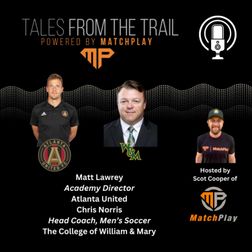
82. Matt Lawrey, Atlanta United Academy Director and Chris Norris, William & Mary, Men's Soccer Head Coach

In this episode I welcome Matt Lawrey, the academy director of Atlanta United and Chris Norris, the head coach of men’s soccer at the College of William & Mary. This is a wide ranging conversation that explores the MLS Academy process, the development of a professional mindset whether headed to the pros or to play for a college program. All of the aspects discussed are the same at the MLS academy level onto any aspiring athlete. Summary The conversation explores the role of an Academy Director at an MLS club, the collaboration among MLS Academy Directors, the recruitment process for MLS Next teams, and the identification of talent at a young age. It also discusses the evolution of youth soccer in the US, the opportunities for players outside of MLS Next, and the pathways out of MLS academies. The conversation highlights the importance of developing a professional mindset and the strategies used to ingrain discipline and professionalism in players. It concludes with a discussion on player interaction and improvement. The conversation explores various aspects of identifying and nurturing young athletes, including their internal drive, the importance of the U15 year, preparing for playing in front of crowds, and the college angle. Takeaways MLS Academy Directors collaborate and share ideas to improve youth soccer development in the US. Identifying talent at a young age requires assessing a player's impact on the game and their ability to stop goals, start attacks, create goals, or score goals. The college pathway is an important option for players who may not make it to the professional level at a young age. Developing a professional mindset involves being ambitious, driven, self-motivated, resilient, and having a passion for the game. Creating a culture of discipline and professionalism is essential for player development and success. Identifying internal drive in young athletes is crucial for their development as athletes and individuals. The U15 year is a critical period for young athletes, as it tests their resilience and determination. Preparing young athletes for playing in front of crowds involves exposing them to high-pressure situations and international tournaments. The college angle is an important consideration for young athletes, as it offers opportunities for further development and exposure. Chapters 00:00 Introduction and Background 03:36 Role of an Academy Director at an MLS Club 06:52 Collaboration Among MLS Academy Directors 08:33 Recruiting Players for MLS Next Teams 09:03 Identifying Talent at a Young Age 10:54 Developing Players Mentally 13:22 Evolution of Youth Soccer in the US 15:23 Opportunities for Players Outside of MLS Next 18:06 Transitioning to College Soccer 20:41 Pathways Out of MLS Academies 23:02 Comparison Between College Soccer and Pro Academies 25:46 Developing a Professional Mindset 28:05 Caleb Wiley's Work Ethic and Success 29:17 Players Who Haven't Reached Their Potential 33:43 U-19 Team and College Pathway 37:14 Recruiting Players from MLS Next 39:15 Professional Mindset and Identifying Players 42:10 Developing Discipline and Professionalism 45:27 Player Interaction and Improvement 46:47 Identifying Internal Drive in Young Athletes 50:20 The Importance of U15 Year 51:20 Preparing for Playing in Front of Crowds 53:47 College Angle

81. Student Athletes- Michael Meese, Trinity & Augie Cooper, William & Mary w/ Justin Chezem, Head Coach, Men's Soccer Christopher Newport Univ

In this episode, Justin Chezem and I welcome back Michael Meese, student-athlete at Trinity University and Augie Cooper, student-athlete at the College of William & Mary. We discuss some of the successes and challenges they faced during the season and what they have coming up in the next year. I’m sure a lot of what they have to say will resonate with most student-athletes. Thank you to Cheese, Michael, and Augie for the great conversation. Summary The conversation covers topics such as best goals, favorite goals, memorable games, study abroad experiences, spring semester plans, season recaps, accountability, approaching the end of their college careers, passing on wisdom to younger players, and preparing freshmen for college soccer. The conversation covers various topics related to soccer and team culture. The guests share advice they received from coaches, emphasizing the importance of continuous learning and having fun in the game. They discuss team building activities and the impact of hugs and high fives on team dynamics. The conversation also highlights the responsibility of players to boost team culture and create a positive environment. The guests reflect on the experiences of alumni and the lasting legacy of their time in college soccer. Finally, they discuss their future plans and the possibility of taking time off to travel. Takeaways Reflecting on memorable goals and games can bring back positive memories and motivate players to continue working hard. Study abroad experiences can provide valuable personal and cultural growth, as well as opportunities to play soccer in different countries. Spring semester is a time for players to focus on improving their fitness, skills, and specific areas of their game. Accountability is important for personal growth and development as a player. Seniors should approach their final season with hunger and drive, setting goals and passing on their wisdom to younger players. Freshmen should be prepared to work hard, lose their ego, and be open to learning from older players and coaches. Chapters 00:00 Best Goals 01:03 Favorite Goals 02:00 Memorable Game 03:25 Sam Weber Stories 05:41 Study Abroad 06:46 Spring Semester 17:21 Season Recap 18:45 Accountability 22:38 Spring Plans 24:13 Approaching the End 27:33 Passing on Wisdom 28:03 Preparing Freshmen 31:27 Senior Mentality 32:44 Wisdom Passed Down 32:56 Soccer-related Wisdom and Youth Arts Practice 33:09 Advice from Coaches 34:15 Having Fun in Soccer 36:13 Team Building Activities 38:22 Hugs and High Fives 40:26 Creating a Positive Team Culture 43:04 Responsibility to Boost Team Culture 45:27 Alumni Experience and Legacy 46:31 Importance of Non-Soccer Conversations 50:22 Future Plans and Career Aspirations 52:53 Taking Time Off and Traveling


80. Mindset Monday #11 with Eric Manuel of Expert Mindset Coaching

In this episode of Mindset Monday Eric discusses the ins and outs of developing mental toughness. Summary In this conversation, Scot Cooper and Eric Manuel discuss the concept of mental toughness. Eric explains that mental toughness is an umbrella term that encompasses various aspects such as resilience, coping with stressors, and bouncing back after losses. He introduces the Four Cs model of mental toughness, which includes confidence, commitment, challenge, and control. Each C is important and interconnected, and individuals should focus on improving the area that needs the most improvement. Eric emphasizes the importance of daily practice in building mental toughness, suggesting that individuals should do something challenging every day to develop confidence, commitment, control, and resilience. The conversation concludes with the idea that mental toughness is a long-term journey that requires consistency and commitment. Takeaways Mental toughness is an umbrella term that includes resilience, coping with stressors, and bouncing back after losses. The Four Cs model of mental toughness includes confidence, commitment, challenge, and control, and each C is important and interconnected. Individuals should focus on improving the area of mental toughness that needs the most improvement. Daily practice of mental toughness, such as doing something challenging every day, helps develop confidence, commitment, control, and resilience. Chapters 00:00 Introduction and Definition of Mental Toughness 01:08 The Four Cs Model of Mental Toughness 03:08 Importance of Each C in Mental Toughness 04:20 Building Confidence 07:58 Commitment and Dedication 10:31 Control of Thoughts and Emotions 13:26 Resilience and Bouncing Back 16:05 Daily Practice of Mental Toughness 20:53 Starting Small and Long-Term Commitment 23:05 Benefits of Challenging Yourself 27:24 Conclusion

79. Jimmy Conrad - 2009 MLS Humanitarian Award Winner

Hi I’m Scot Cooper and welcome to the Tales From the Trail Podcast by MatchPlay. In this episode I welcome Jimmy Conrad. Among Jimmy’s many nicknames are Conradinho and Your Favorite US Men’s National Team ex-player. Jimmy’s shares his experiences growing up in an environment that created grit and resilience, fighting to live out his dream of playing for UCLA and winning a national championship. He went on to grind his way into the MLS and eventually on to the national team where he played in the 2006 World Cup. He now hosts the popular podcast on the CBS Golazo Network, Call It What You Want with Jesse Marsch and Charlie Davies. Jimmy is a fantastic guest, was very generous and I look forward to having him on again soon. Summary In this conversation, Conradinho discusses his experience coaching soccer and the importance of high school soccer. He shares his personal journey and how he overcame challenges to become a professional player. Conradinho emphasizes the importance of mentality and commitment to improvement. He also discusses the need for players to embrace mistakes and learn from them. Finally, he shares his thoughts on coaching girls versus boys and the importance of treating all players equally. In this conversation, Jimmy Conrad shares his experiences as a soccer player and coach. He emphasizes the importance of maintaining emotional stability as a coach and setting clear expectations for players. Jimmy also discusses the challenges he faced in his soccer career, including not being drafted and dealing with difficult coaches. He shares stories of perseverance and the lessons he learned along the way. Jimmy talks about his journey from college to the World Cup and the impact he made off the field, including his involvement in community initiatives. He concludes by highlighting the importance of continuous learning and letting go of entitlement. Takeaways High school soccer provides a unique social and competitive experience that cannot be replicated in club or college soccer. Commitment and a growth mindset are crucial for personal and professional development in soccer. Embracing mistakes and learning from them is essential for improvement. Coaching girls and boys requires understanding individual personalities and needs while maintaining consistent expectations. Maintaining emotional stability as a coach is crucial for creating a positive and consistent environment for players. Challenges and setbacks in a soccer career can be opportunities for growth and self-improvement. Building strong relationships with coaches requires understanding their expectations and finding ways to meet them. Perseverance and a strong work ethic can lead to unexpected opportunities and achievements. Making a difference off the field through community initiatives can be a rewarding and impactful experience. Continuous learning and letting go of entitlement are important for personal and professional growth. Chapters 00:00 Introduction and Coaching Soccer 03:42 The Importance of High School Soccer 08:41 Personal Journey and Overcoming Challenges 17:42 Mentality and Commitment to Improvement 25:16 Teaching Kids to Embrace Mistakes 31:56 Coaching Girls vs Boys 39:28 Maintaining Emotional Stability as a Coach 41:15 Navigating the Challenges of a Soccer Career 45:37 Lessons Learned from Challenging Experiences 49:19 Managing Relationships with Coaches 56:35 From College to the World Cup 01:08:18 Making a Difference Off the Field 01:13:46 The Importance of Learning and Letting Go
7 de 15