Tales From the Trail by MatchPlay

Tales From the Trail by MatchPlay

por Scot Cooper
Temporada 1

98. Pat McStay - ECNL Heritage Project

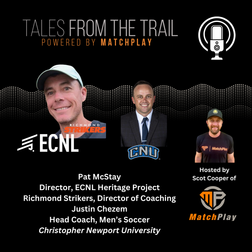
Hi I’m Scot Cooper and this is the Tales From the Trail podcast by MatchPlay.  In this episode, Justin Chezem, head coach of Christopher Newport University men’s soccer and I welcome Pat McStay of the ECNL’s Heritage Project and the Richmond Strikers.  Along with his duties at the Strikers, Pat has taken on the role of developing the Heritage Project which connects youth soccer players in the U.S. with the countries of their heritage to potentially play for those countries’ national teams. Pat describes it as: With the overwhelming success of the 2023 Women's World Cup, featuring dozens of ECNL alumni, the ECNL has decided to launch The Heritage Project. The project's underlying motive is to provide additional pathways and opportunities for players currently playing in the ECNL (and alum) who may have ties to other countries based on parents and/or grandparents' place of birth or other factors (heritage players). The project's overall goal is to help connect high level players with Federations they may not have access to otherwise. It will be an extensive, time consuming journey, but both the ECNL and partnering Federations feel that this could be a very important part of their scouting future. Summary Pat McStay discusses the Heritage Project, a program in partnership with the ECNL that aims to connect youth soccer players in the United States with their heritage countries' national teams. The project seeks to provide an alternative pathway for players who may not be selected for the US youth national teams but have eligibility for other countries. Pat explains the process of identifying eligible players, reaching out to federations, and facilitating connections between clubs and national teams. He emphasizes the importance of spreading awareness about the project and encourages support from the soccer community. Takeaways The Heritage Project aims to connect youth soccer players in the US with their heritage countries' national teams. The project provides an alternative pathway for players who may not be selected for the US youth national teams. The process involves identifying eligible players, reaching out to federations, and facilitating connections between clubs and national teams. Spreading awareness about the project is crucial for its success and support from the soccer community is encouraged. Chapters 00:00 Introduction and Personal Background 03:10 The Heritage Project 08:28 Connecting Clubs and Federations 13:40 Eligibility and Evaluation Process 18:29 Success Stories and Closing the Gap 21:14 Reaching Out and Getting Involved 25:26 Focus on Women's Soccer 27:31 Expanding Beyond ECNL 30:54 How to Support the Project 32:43 Closing Remarks

97. Jack Rasmussen - Founder, Caddix Cleats

Hi I’m Scot Cooper and this is the Tales From the Trail podcast by MatchPlay.  In this episode I welcome Jack Rasmussen, the Founder of the Caddix Cleat Company.  This innovative to cleat utilizes small movements in the studs to prevent non-contact injuries.  Jack and his dad took an idea and made it a product through research, trial and error, and ingenuity.  This is a fascinating product that is available for pre-order on February 14th.  Check it out! Summary In this conversation, Jack Rasmussen discusses his journey in developing innovative cleats for injury prevention in sports, particularly focusing on women's soccer. He shares how the cleats work by allowing for a small degree of flexion to reduce rotational load and prevent non-contact ACL, MCL, and high ankle sprain injuries. The need for cleat innovation is emphasized, as traditional cleats do not provide the necessary flexibility to prevent injuries. Jack explains the testing process and the positive feedback received from professional athletes. He also discusses the marketing strategy, product design, and the upcoming pre-sale and delivery of the cleats. Takeaways Innovative cleats with a small degree of flexion can help reduce rotational load and prevent non-contact ACL, MCL, and high ankle sprain injuries. There is a need for cleat innovation, as traditional cleats do not provide the necessary flexibility to prevent injuries. Testing with professional athletes has shown positive results, with no negative feedback regarding stability or mobility. The focus is on women's soccer, as they have a higher risk of ACL injuries, and there is a lack of differentiation in cleats for women's sports. Chapters 00:00 Introduction and Background 02:06 How the Cleats Work 03:00 The Need for Cleat Innovation 04:08 Testing and Feedback 06:35 Focus on Women's Soccer 07:27 The Journey to Becoming a Shoe Company 09:15 Celebrating the Product's Development 10:35 Marketing and Product Information 13:41 Designing Cleats for Women 15:47 Exploring Different Colors and Designs 16:42 Pre-Sale and Delivery 18:10 Emotions and Excitement

96. Brian Plotkin - Head Coach, Men's Soccer, U.S. Military Academy at West Point

 Summary Justin Chezem, head coach of Christopher Newport University men’s soccer and I Brian Plotkin, head coach men’s soccer coach at West Point, discuss the unique recruiting process and player development at the United States Military Academy. He highlights the importance of finding players who are not only talented in soccer but also have the right mindset for the challenges of West Point. Brian shares success stories of former players and emphasizes the pride and esprit de corps that cadets experience at West Point. He also discusses the relationship between athletics and ROTC and the recruiting timeline for the academy. Brian concludes by sharing his own soccer journey and the differences in the recruiting process today. Brian Plotkin discusses his playing career, transition to coaching, and the impact of his mentors. He shares how he blends the coaching methods of Indiana and Notre Dame, and the importance of lifelong friendships in the coaching world. Brian also highlights the development of cadets at West Point and the emphasis on mental health and support. He discusses the future of the Army's culture and offers advice for recruits. Finally, Brian talks about upcoming recruiting trips and his plans for the future. Takeaways Recruiting at West Point focuses on finding players with the right mindset for the challenges of the academy. Success at West Point goes beyond soccer and includes personal development, leadership skills, and service to the country. The relationship between athletics and ROTC is harmonious, with both programs emphasizing discipline, accountability, and competitiveness. The recruiting process at West Point involves educating potential recruits about the unique aspects of the academy and providing opportunities for visits and interactions with current players. The Army-Navy game and the Army-Navy Cup are highly anticipated events that showcase the pride and camaraderie of the cadets. The influence of mentors and the impact they have on a coach's career. Blending coaching methods from different programs to create a successful coaching style. The development of cadets at West Point and the emphasis on mental health and support. The future of the Army's culture and the role of college athletics in developing future leaders. Advice for recruits on making decisions and trusting themselves. Chapters 00:00 Introduction and Bears Fan Discussion 01:17 Recruiting and Player Development 04:15 Success Stories of Former Players 06:38 Recruiting Process and Daily Routine 09:10 Understanding the Demands of West Point 12:24 Recruiting in Obscure Places and Potential Military ID Camps 15:18 Pride and Esprit de Corps at West Point 17:19 Impressive Qualities of West Point Cadets 20:49 Importance of the Prep School 23:07 Relationship Between Athletics and ROTC 26:36 Recruiting Process and Timeline 30:54 Army-Navy Game and Army-Navy Cup 36:27 Brian Plotkin's Soccer Journey 37:59 Brian Plotkin's Playing Career and Transition to Coaching 39:55 Mentors and Lessons Learned 41:50 Blending the Indiana and Notre Dame Coaching Methods 43:12 Lifelong Friendships and Growth as Coaches 46:49 Developing Cadets at West Point 47:17 Mental Health and Support at West Point 50:18 The Future of the Army's Culture 51:34 Advice for Recruits 52:12 Recruiting Trips and Future Plans
95. Black Players for Change Executive Director - Allen Hopkins, Jr.

Hi I’m Scot Cooper and this is the Tales From the Trail Podcast by MatchPlay.  In this episode I welcome Allen Hopkins, Jr.  Allen had a long career through college and professional soccer.  He went on to be a sports broadcaster, which is a great story he shares and now is the Executive Director of Black Players for Change, which is comprised of Black MLS players, staff, and coaches  BPC is a positive bridge between sport, life and soccer, it’s a universal language that can be used to advance and advocate for Equality.  BPC spearheads impactful programs that transcend the game that are designed to tackle racial inequality head-on. The collective strength of BPC leverages the influence and visibility of Black soccer players to drive meaningful change contributing to a more equitable and fair environment in the world of sports. This was an enjoyable and enlightening conversation; Allen’s positivity is contagious!   Allen discusses his background and soccer journey, the growth of MLS, and the formation and priorities of Black Players for Change. He emphasizes the importance of legacy projects and increasing access to the game, particularly in underserved communities. Allen also highlights the need for representation and opportunities for black coaches in the soccer industry. In this conversation, Allen discusses his role in supporting coaches and job seekers in the soccer industry. Allen also talks about the importance of being a good teammate and collaborator, and how he strives to create a strong team at the Black Players Coalition (BPC). He emphasizes the need for athlete activism and the support BPC receives from organizations like Players Coalition. Allen highlights the unique challenges and opportunities for soccer in America and the importance of connecting with other black athletes and civil rights leaders. He concludes by discussing the importance of knowing your value and finding the right fit, and expressing gratitude for meaningful dialogue. Legacy projects and planting trees for shade you'll never sit under are important in making a lasting impact. Increasing access to soccer in underserved communities is crucial for growing the game. Representation and opportunities for black coaches and executives in the soccer industry are essential for equality and diversity. Collaboration, communication, and transparency are key in creating meaningful change. Supporting coaches and job seekers in the soccer industry is an important role that Allen takes on. Being a good teammate and collaborator is crucial in creating a strong team at the Black Players Coalition. Athlete activism is a powerful tool for creating change, and BPC seeks to support and empower athletes in their activism. Soccer in America faces unique challenges and opportunities, and there is much to learn from other leagues and organizations. Connecting with other black athletes and civil rights leaders is important for creating meaningful change in the soccer industry. Knowing your value and finding the right fit is essential for personal and professional fulfillment. 00:00 Introduction and Legacy Projects 02:01 Allen's Background and Soccer Journey 09:26 Covering MLS and the Growth of the League 14:48 Black Players for Change and its Connection to MLS 25:14 Developing the Youth Game and Increasing Access 30:44 Formation of Black Players for Change 36:28 Priorities as Executive Director 44:02 Addressing Issues in the Black Soccer Community 46:14 Representation and Opportunities for Black Coaches 49:53 Supporting Coaches and Job Seekers 51:29 Learning from Other Leagues 53:46 Supporting Athlete Activism 55:09 Understanding the Magnitude of the Fight 56:41 Knowing Your Value and Finding the Right Fit 57:02 Gratitude and Meaningful Dialogue

94. Steve Swanson - University of Virginia Women's Soccer Head Coach

Hi I’m Scot Cooper and this is the Tales From the Trail Podcast by MatchPlay.  In this episode, Justin Chezem, head coach of men’s soccer at Christopher Newport University and I welcome Steve Swanson, the long time head coach of the University of Virginia women’s soccer program.  Steve discussed his time with the women’s national team, being a part of two World Cup wins, developing great players and teams at UVA, and how recruiting and college athletics is changing.  Great visit from a top caliber coach and person!  Thank you Coach Swanson! Summary The conversation covers various topics including past games, facility renovations, conference alignments, player development, recruiting, national team experiences, and the impact of the transfer portal and NIL. The conversation with Steve Swanson explores the changing landscape of recruiting in women's soccer. It discusses the various challenges and opportunities in recruiting, including the emergence of new player pools such as international players, transfers, and players with extra years of eligibility due to COVID. The conversation also highlights the importance of matching players to university values and the need for financial planning and timing in the recruiting process. Overall, the recruiting process is constantly evolving and requires adaptability and a deep understanding of the dynamics involved. Takeaways Facility renovations at UVA are underway, with a $70 million Olympic sports building and a 94,000 square foot football performance building being built. The women's game has changed over the years, with a focus on handling the ball under pressure and making quick decisions in tighter areas. When recruiting players, coaches look for intrinsic qualities such as motivation, love for the game, and competitiveness. Players who have a genuine love for the school they are being recruited by can bring a special value to the team. Coaching at the national team level requires adapting to different playing styles and the evolution of the game. The transfer portal and NIL are impacting college sports, but the full extent of their impact on Olympic sports is yet to be seen. Recruiting in women's soccer has evolved, with new player pools such as international players, transfers, and players with extra years of eligibility due to COVID. Matching players to university values is crucial in the recruiting process. Financial planning and timing play a significant role in recruiting, as coaches need to be prepared for potential opportunities. The recruiting process is constantly evolving and requires adaptability and a deep understanding of the dynamics involved. Chapters 00:00 Recalling a Game Against ODU 03:24 Facility Renovations at UVA 04:02 Uncertainty in Conference Alignments 07:16 The Importance of Developing Players 08:09 What Coaches Look for in Players 11:02 Adapting to Changes in the Women's Game 16:28 Recruiting Local Players 20:13 The Value of Players Who Love the School 27:10 Playing and Coaching at the National Team Level 31:20 Different Styles of International Soccer 40:45 Developing Players in the National Team Program 44:26 Impact of Transfer Portal and NIL 45:04 Changing Landscape of Recruiting 46:31 Recruiting Challenges and Opportunities 47:26 Matching Players to University Values 48:53 Financial Planning and Timing 49:18 Constantly Evolving Recruiting Process 49:47 Unpredictability of Recruiting 51:24 Enjoyment of Soccer Conversations

93. Mindset Monday #14 - Mental Toughness Requires Consistency

Eric Manuel of www.expertmindsetcoaching.com discusses developing mental toughness through consistency.

92. Will Smith - LEAD Academies & Charter Oak Advisory with Chris Norris, Head Coach William & Mary Men's Soccer

Hi, I’m Scot Cooper and welcome to the Tales From the Trail podcast by MatchPlay. In this episode Chris Norris, the head coach of the College of William and Mary men’s soccer program and I welcome one of his former players, Will Smith. As you will hear, Will made the most of his opportunity as a student-athlete on the field, on campus, and abroad. Among many other highlights, he went on to co-found a residential youth soccer academy in Liberia called LEAD MFA. There’s more to the story obviously, thank you for listening to hear the rest. Thank you to Will and Coach Norris for being great guests. Check out the links to the LEAD network: www.leadedu.org www.monroviafa.com www.leadmorocco.com Summary Will Smith shares his journey as a college soccer player at William & Mary, discussing his recruitment process, the challenges he faced, and the impact of his leadership. He highlights the importance of self-belief, resilience, and personal growth throughout his career. Will also reflects on the role of other sports, such as golf, in shaping his mindset and skills. He discusses memorable moments, including defeating the number one ranked team and the lessons he learned from his experiences. Will concludes by sharing his research project in Liberia and the transition to life after college. Will Smith shares his journey of discovering the potential of soccer in Liberia and starting a leadership academy. He talks about his experiences playing with George Weah and the transformative power of soccer in the country. Will also discusses the challenges and successes of expanding the academy to Morocco. He then transitions to his current role at Charter Oak Advisory, where he helps design and implement impact programs for various organizations. Will concludes by discussing the possibility of future academies and his commitment to creating positive change. Takeaways Self-belief and resilience are crucial for success in college sports. Playing multiple sports can provide valuable skills and perspectives. Leadership styles should be personalized to meet the needs of individuals. Maintaining momentum and addressing challenges are key to achieving success. College sports can provide valuable lessons and skills for future endeavors. Soccer has the transformative potential to empower young people and create positive change in communities. Building strong relationships and partnerships with local individuals and organizations is crucial for success in international development work. Curiosity, resilience, and the ability to overcome adversity are valuable skills learned through sports that can be applied to other areas of life. Empowering others and giving them the opportunity to lead is essential for sustainable and impactful initiatives. Understanding the cultural context and adapting programs accordingly is key when working in different countries and communities. Chapters 00:00 Introduction and Background 02:02 Assessing Will's Potential as a Player 08:40 Choosing William & Mary and the College Soccer Experience 19:01 Developing Self-Belief and Leadership Skills 24:46 Highlights of Will's College Soccer Career 41:11 Research Project in Liberia and Transitioning to Life After College 46:00 Discovering the Potential of Soccer in Liberia 51:31 Starting the Leadership Academy in Liberia 58:21 Expanding to Morocco 01:14:42 Transitioning to Charter Oak Advisory 01:17:22 Future Plans and Expansion

91. Ryan Martin - Head Coach, Loudoun United of the USL

Hi, I’m Scot Cooper and welcome to the Tales From the Trail podcast by MatchPlay. In this episode Justin Chezem, head coach of Christopher Newport University men’s soccer and I welcome Ryan Martin, the head coach of USL side, Loudoun United. Ryan has worked with great soccer minds and that developed his coaching style. He discusses lessons he learned from his influences, how he evaluates players and the path from college to professional soccer. His perspective is valuable for anyone looking to advance to the next level. Thank you Coach Martin! https://www.loudoununitedfc.com/technical/ Summary Ryan discusses his background in soccer, including his playing career and transition into coaching. He shares his experiences at different coaching positions, including Wake Forest University and DC United. Ryan also talks about how he creates the roster for Loudoun United and the importance of the college landscape in developing professional players. He discusses the challenges and potential benefits of a year-round college soccer calendar. Lastly, Ryan reflects on playing for his father and the lessons he learned from him, including the importance of prioritizing the person over the player. The conversation covers the impact of coaching, attributes of youth players, lessons from mentors, evaluating college programs, and investing in oneself. Takeaways Coaching is about making a difference in a player's life and helping them grow as a person and player. Successful youth players have a strong work ethic, love for the game, and resilience in the face of adversity. Mentors play a crucial role in shaping a coach's approach and style, emphasizing attention to detail and player development. When evaluating college programs, players should consider the team's style of play, the coach's approach to player development, and how they fit into the program's culture. Investing in oneself as a player and person is essential for long-term success, regardless of the chosen path. Chapters 00:00 Introduction and Background 07:28 Different Coaching Experiences 14:57 Creating the Loudoun United Roster 20:59 The College Calendar and its Impact on Professional Soccer 30:17 Playing for Ryan's Father 34:52 Lessons Learned from Ryan's Father 42:08 The Impact of Coaching 45:00 Attributes of Youth Players 48:25 Lessons from Mentors 53:17 Evaluating College Programs 54:30 Investing in Yourself

90. Mindset Monday #13

Eric Manuel of www.expertmindsetcoaching.com discusses the importance of challenging yourself as a habit to develop mental toughness for life and sport.

89. Nacho Lerech of CSA Becas

Hi I’m Scot Cooper and welcome to the Tales From the Trail Podcast by MatchPlay. In this episode I welcome Nacho Lerech of CSA Becas International. Nacho discusses his journey from Argentina playing for a large club, Boca Juniors, to finding his way to college in the United States. He finished at the University of Vermont and began working for CSA Becas where he helps international students find a home at universities in the U.S. in addition to continuing his playing career in Europe. Nacho was a pleasure to have on the podcast, his enthusiasm for what he’s doing is contagious! Summary Ignacio Lerech, a representative from College of Sports of America Becas Internacional https://csabecasinternacional.com/#!/-inicio/, discusses the company's role in connecting student athletes with universities in the United States. He explains the process of finding the right school and the factors that students consider, such as sports, academics, and location. Ignacio also highlights the opportunities available to student athletes after college, including professional sports and work visas. He shares his personal experience playing youth soccer in Argentina and transitioning to the US. Ignacio emphasizes the benefits of college sports, including the high level of competition and the support provided by universities. Takeaways College of Sports of America connects student athletes with universities in the US, helping them find the right school and navigate the application process. Factors such as sports, academics, and location are considered when choosing a school. After college, student athletes have opportunities to pursue professional sports or work in their field of study. Playing youth soccer in Argentina is highly competitive, and transitioning to the US can be a valuable experience for personal and athletic growth. College sports in the US offer a high level of competition, excellent facilities, and support for student athletes. Chapters 00:00 Introduction and Company Overview 02:21 Process of Connecting Athletes with Universities 04:20 Factors in Choosing the Right School 06:17 Divisions and Leagues for International Students 07:44 Support for Student Athletes Throughout College 09:28 Motivation for International Students to Pursue College Sports in the US 16:52 Pathways After College for Student Athletes 20:36 Playing Youth Soccer in Argentina 26:37 Transitioning to the US and Adapting to a New Environment 34:24 Connecting with College of Sports of America 39:40 Benefits of College Sports in the US
6 de 15