
Notas del episodio
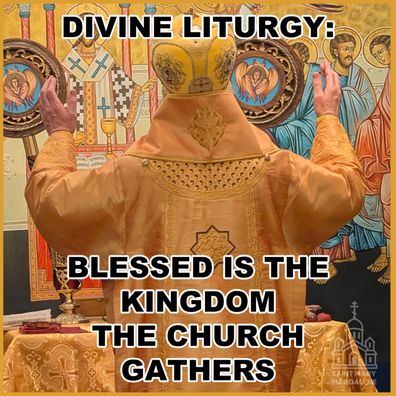
Why does the Orthodox Divine Liturgy begin with the words, “Blessed is the Kingdom of the Father, and of the Son, and of the Holy Spirit”? Those opening words tell us where the Liturgy is going before anything else happens. The Church gathers to worship the Holy Trinity and participate in the Kingdom of God. In this class, Fr. Stephen Osburn begins walking through the Divine Liturgy itself and explains what its opening moments teach us about Orthodox Christianity and the Christian life.
The class begins with the people who serve the Divine Liturgy: the bishop, priest, deacon, subdeacon, reader, altar servers, choir, and faithful. A hierarchical Liturgy with the bishop is not a different or more elaborate version of the Divine Liturgy. Instead, more of the structure that is normally compressed in parish worship becomes visible. The bishop reveals the connection of the local parish to the larger Church, while the different liturgical ministries show that worship is the work of the whole Church. The faithful are not an audience, and the choir is not performing for them.
The class then turns to “Blessed is the Kingdom” and the Great Litany. The Kingdom of God is not simply somewhere Christians hope to go after death, but the reign and presence of God that has already entered human history and will be revealed in its fullness. The Church immediately begins praying for peace, salvation, the Church, civil authorities, communities, travelers, the sick, the suffering, good weather, food, and the needs of the world. Even the repeated response “Lord, have mercy” teaches us something important about prayer. We entrust our needs to God’s compassion, forgiveness, healing, protection, and loving-kindness rather than demanding that He answer according to our plans.
Finally, the opening prayers remind us that the Church includes more than the people physically standing inside the building. We commemorate the Theotokos and all the saints before commending ourselves, each other, and “all our life” unto Christ our God. That final phrase gives us a picture of the whole spiritual life: not simply Sunday morning, but our work, family, relationships, suffering, joys, decisions, desires, and future offered to God. The opening of the Divine Liturgy is therefore not something to hurry through while waiting for the important part. It already teaches us what it means to live as Christians and invites us to enter more deeply into the worship and life of the Orthodox Church.