Rethink Your Understanding

Rethink Your Understanding

por Phil Clark
Temporada 2

Bets, Budgets, and Reframing Software Delivery as Continuous Discovery
In this episode, our AI hosts dive into an article advocating for a radical reevaluation of software delivery commitments, shifting away from rigid, project-based models and “precise” estimates toward a probabilistic, continuous-discovery mindset. Drawing on Vasco Duarte’s insights and the Three Ways outlined in The DevOps Handbook, they explore treating development as a series of adaptive bets, budgeting for change, using experiments as real-time status reports, and empowering end-to-end team ownership to achieve true agility and align work with value streams. Link to the article: Bets, Budgets, and Reframing Software Delivery as Continuous Discovery, originally published June 07, 2025. Connect with me on LinkedIn

When Team Structure Collides with Role Alignment
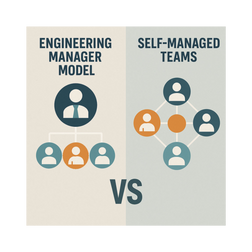
This episode explores the complexities of merging two distinct engineering organizational models after an acquisition. It highlights the friction that arises when one part of the organization uses small, self-managed, cross-functional teams with distributed leadership, while the other adheres to a traditional Engineering Manager (EM) model where a single manager oversees people, delivery, and agile practices. The core challenge lies in unifying job titles and responsibilities without disrupting high-performing teams or ignoring the cultural and architectural context that shaped their original effectiveness. True alignment requires prioritizing fit over rigid familiarity and considering a hybrid approach that respects existing strengths and avoids sacrificing autonomy and psychological safety for superficial consistency. Link to the article: When Team Structure Collides with Role Alignment, originally published May 26, 2025. Connect with me on LinkedIn

We Have Metrics, Now What?

This episode addresses a common pitfall in software delivery management: using system-level metrics, such as Flow Metrics, to evaluate individual performance. The AI hosts cover how this practice, while logical to some leaders, can damage trust, produce misleading data, and hinder real improvement. The conversation covers using metrics as a tool to help teams improve, focusing on context, collaboration, and actionable steps. The main takeaway is clear: metrics should promote overall improvement, not serve as personal performance scores. Link to the article: We Have Metrics. Now What?, originally published May 11, 2025. Connect with me on LinkedIn

A Self-Guided Performance Assessment for Agile Delivery Teams
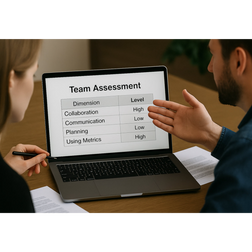
In this episode, The AI hosts explore why teams—unlike individuals—rarely get a performance review, and why that needs to change. Based on my latest article, you'll hear a practical framework designed for Agile and DevOps teams to reflect on how they work, not just what they deliver. We’ll walk through 10 team health dimensions—from collaboration to delivery integrity—and how your team can use them as conversation starters, not scorecards. If you're ready to look beyond metrics like DORA, Flow, and Developer Experience to ask deeper questions about team behavior, this one's for you. Link to the article: A Self-Guided Performance Assessment for Agile Delivery Teams, originally published May 03, 2025. Connect with me on LinkedIn

How Value Stream Management and Product Operating Models Complement Each Other
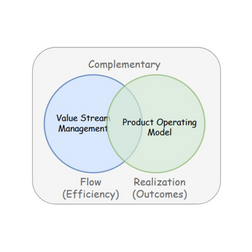
In this episode, the AI hosts explore my latest article on evolving our approach to Value Stream Management (VSM) — which we originally adopted to bring greater visibility to our Agile, Lean, and DevOps efforts. But while preparing for a conversation with an industry leader about the Product Operating Model (POM), I had a realization: we weren’t just managing flow — we were also structuring teams around outcomes. This episode dives into how VSM and POM, often seen as separate frameworks, are actually complementary disciplines. VSM optimizes how work flows; POM ensures that work is aligned to customer and business outcomes. When combined, they create a powerful operating model focused on both efficiency and purpose. Backed by industry research, we explore why high-performing organizations are embracing this convergence — and what it means for the future of software delivery. Link to the article: How Value Stream Management and Product Operating Models Complement Each Other, originally published April 27, 2025. Connect with me on LinkedIn

From Scrum Master to Agile Delivery Manager: Evolution in the Age of Flow

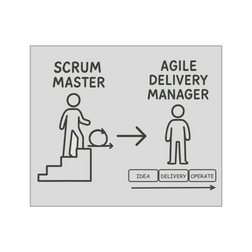
This episode covers a recent shift from the title of Scrum Master to Agile Delivery Manager (ADM). The AI hosts discuss how a change for the role of Scrum Master to Agile Delivery Manager represents a natural progression driven by an expanded need for delivery leadership, the adoption of Flow Metrics and Value Stream Management, and a move towards alternative practices from Scrum to Kanban or other custom Agile practices. The ADM role goes beyond a traditional Scrum Master, covering delivery metrics, team collaboration, and workflow optimization without being limited to specific tasks. This reflects the growing complexity of modern delivery and the need for a role dedicated to boosting team performance and delivery efficiency beyond standard Agile frameworks. Link to the article: From Scrum Master to Agile Delivery Manager: Evolution in the Age of Flow, originally published April 14, 2025. Connect with me on LinkedIn

Beyond Frameworks: The Real Weight of Leading Transformation at Scale
This episode, "Beyond Frameworks," reflects on the challenges of leading large-scale Agile and DevOps transformations, even within successful organizations. It argues that despite adopting new structures and frameworks, persistent friction arises from diverging leadership philosophies and a superficial sense of alignment, leading to transformation fatigue. The AI hosts share my personal experiences and insights from over a decade, highlighting that real transformation takes ongoing effort, fresh thinking, and a commitment to maintaining a shared mindset—especially during leadership changes. The conversation connects with another article that underscores the necessity of genuine leadership trust for team autonomy to succeed, suggesting that erosion of this trust contributes to ongoing friction. Link to the article: Beyond Frameworks: The Real Weight of Leading Transformation at Scale, originally published April 14, 2025. Connect with me on LinkedIn

From Feature Factory to Purpose-Driven Development
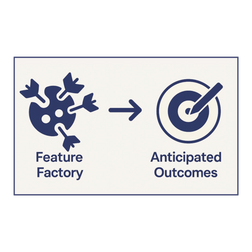
In today’s episode, we explore the idea of documenting anticipated outcomes and introduce Purpose-Driven Development (PDD), which focuses on defining expected outcomes for every software project. This approach helps ensure alignment with business goals and moves away from a "feature factory" mindset that prioritizes output over value. The AI hosts discuss my recent story about resistance to this idea, pointing out that it often comes from a lack of understanding or alignment. To track progress, they also discuss my introduction of the Feature Factory Ratio (FFR), which measures the percentage of initiatives or epics without clear outcomes. The conversation highlights that having a clear purpose and strong strategic alignment is essential for modern software leadership. This requires teams and leaders to adjust both their mindset and practices. Link to the article: From Feature Factory to Purpose-Driven Development: Why Anticipated Outcomes Are Non-Negotiable, originally published April 12, 2025. Connect with me on LinkedIn

Mindsets That Shape Software Delivery Team Structures

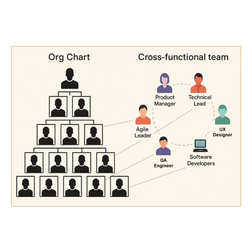
This episode dives into various team models within technology organizations, focusing on a comparison between the traditional Engineering Manager (EM) model—where a single manager handles both technical direction and people management—and autonomous cross-functional teams, inspired by frameworks like Team Topologies. I make the case for the latter, highlighting the intentional separation of people management from delivery responsibilities. This approach promotes greater autonomy, distributed leadership, and psychological safety, enabling teams to thrive in a more empowered and collaborative environment. The AI hosts dive into my perspectives, exploring the strengths and weaknesses of each model, including the challenges posed by "unicorn" EM roles and the critical role of trust in autonomous teams. The discussion ultimately underscores the importance of being intentional about the mindset an organization adopts to scale, regardless of the structural framework chosen. Link to the article: Mindsets That Shape Software Delivery Team Structures, originally published March 29, 2025. Connect with me on LinkedIn

Why Cutting Agile Leadership Hurts Teams More Than It Saves

In this episode, we examine the growing trend of cutting Agile leadership roles like Scrum Masters. While often viewed as a cost-saving move, I argue this approach harms team effectiveness and productivity. The AI host shares my experience evolving the role into an Agile Delivery Manager focused on flow metrics and value stream management, contrasting it with a parent company's decision to distribute these tasks. We discuss the hidden costs of removing such roles, including added burden on managers, reduced flow efficiency, and weakened team culture. The takeaway? Agile leadership is essential for balanced delivery, continuous improvement, and long-term team health. Link to the article: Why Cutting Agile Leadership Hurts Teams More Than It Saves, originally published March 21, 2025. Connect with me on LinkedIn
4 de 8