
The Pet Parent Podcast
por Total Pet Parent

Why Pets Fight Over Food and Resources: Understanding Multi-Animal Pack Dynamics

Why Pets Fight Over Food and Resources: Understanding Multi-Animal Pack Dynamics I've watched it happen at least a hundred times in my grooming shop—a client brings in two dogs who are "best friends at home," but the moment I pull out treats to help with the nail trim, one stiffens and the other backs off. That's the moment most owners realize there's tension they've been missing. Why pets fight over food is one of the most common questions I get, right alongside "How do I stop my dog from matting?" The answer isn't simple aggression or meanness—it's hard-wired survival instinct colliding with modern multi-pet living. Whether you're managing dogs, cats, or a mixed household, understanding resource competition changes everything about how you feed, treat, and structure your home. What Is Resource Guarding and Food Competition? Resource guarding is the behavioral pattern where animals defend access to valuable items—food, treats, toys, sleeping spots, even human attention. In a multi-pet household, this shows up as growling near food bowls, blocking access to water dishes, snapping when another pet approaches during treat time, or body-blocking favorite resting areas. Food compet…
How to Introduce a New Cat to a Dog: Step-by-Step Desensitization Protocol

How to Introduce a New Cat to a Dog: Step-by-Step Desensitization Protocol I've spent almost a decade working with dogs of every temperament at the grooming shop, and introducing cats to dogs comes up constantly in conversations with clients. The good news? With a structured desensitization protocol, most dogs and cats can learn to coexist peacefully—and sometimes even become friends. This guide walks you through the gradual, layered process of introducing cat to dog safely, minimizing stress for both animals while setting up long-term success in your (/multi-pet-household). This protocol typically takes 2-6 weeks depending on your dog's prey drive and your cat's confidence level. You'll need patience, consistency, and a willingness to move at the slower animal's pace. I've helped dozens of grooming clients through this transition with their own pets, and I've watched the process unfold with friends who've added cats to dog households. The method works—but only if you resist the urge to rush it. Skill level: Beginner to intermediate Time commitment: 20-30 minutes daily for 2-6 weeks Best for: Adult dogs and cats of any age; requires modification for puppies under 6 months or…
Separate Feeding Stations vs Shared Bowls: Which Works Better for Dogs and Cats Living Together

Separate Feeding Stations vs Shared Bowls: Which Works Better for Dogs and Cats Living Together Verdict: Separate feeding stations win for most multi-species households, especially when you're dealing with size differences, food aggression potential, or species-specific dietary needs between dogs and cats. I've lived with four dogs for years, and even within a single species, feeding time can turn chaotic without clear boundaries. When you add cats to the mix—with their grazing habits, slower eating pace, and completely different nutritional requirements—feeding multiple pets separately becomes less about preference and more about safety and health. This comparison breaks down the practical realities of both approaches: the space requirements, behavioral considerations, cost differences, and daily workflow of managing meals in a multi-pet home where dogs and cats share the same roof. I'm pulling from my grooming clients' experiences (I hear *everything* at the shop), veterinary feeding guidelines, and the trial-and-error of my own household to give you a realistic picture of what actually works. Quick Comparison | Criterion | Separate Feeding Stations | Shared Bowl Area | |---…
Multi-Pet Home Safety Checklist: Preventing Food Aggression, Territory Conflicts, and Cross-Species Risks

Multi-Pet Home Safety Checklist: Preventing Food Aggression, Territory Conflicts, and Cross-Species Risks Living with multiple pets is one of the most rewarding things you can do—and I say that as someone who navigates daily life with four rescue dogs, each with their own quirks and boundaries. But multi pet home safety requires more than just love and good intentions. I've seen too many clients arrive at my grooming shop with stories of household scuffles that could've been prevented with the right setup. This checklist walks you through the practical steps to create a safe, low-conflict environment for dogs, cats, small animals, and even fish tanks, covering everything from feeding zones to territorial management and species-specific hazards. If you're managing multiple species or personalities under one roof, the fundamentals of (/multi-pet-household) become your daily operating system. Let's break down what actually keeps everyone safe. Food and Feeding Zone Safety Separate feeding stations are non-negotiable in my house. I learned this the hard way when my terrier mix went after my senior shepherd over a dropped kibble. The difference between (/feeding-multiple-pets-separa…
Best Automatic Pet Feeders for Multi-Pet Households: Microchip and Portion Control Options

Best Automatic Pet Feeders for Multi-Pet Households: Microchip and Portion Control Options I stood in my kitchen at five-thirty in the morning, watching my terrier mix Luna try to shove my senior shepherd Boone away from his bowl for the third time that week. Meanwhile, my two other dogs circled, waiting for their chance. Managing automatic feeders multiple pets in one household feels like orchestrating a very chaotic, very food-motivated ballet. After testing a dozen models with my own four rescues and seeing the feeding chaos that plays out in multi-pet homes at the grooming shop, I've learned that microchip-activated feeders and portion-control systems aren't luxuries—they're relationship savers. The right setup stops the pushy eaters from stealing, keeps diet-restricted pets on track, and gives everyone a calmer, fairer mealtime. What to Look For in Automatic Feeders for Multiple Pets Shopping for automatic feeders multiple pets can actually use gets confusing fast, because most feeders are designed for single-pet homes. I've watched clients come back frustrated after buying the wrong type, so here's what actually matters when you're feeding more than one animal. Selective …
Multi-Pet Household Management: Complete Guide to Care, Feeding, and Training

Multi-Pet Household Management: Complete Guide to Care, Feeding, and Training I've been grooming dogs for nearly a decade, and I'll tell you what: the chaos level difference between a single-pet home and a multi pet household isn't just doubled—it's exponential. At my own place, managing four rescue dogs taught me that everything you thought you knew about pet care gets rewritten when you add a second, third, or fourth animal to the mix. The feeding routines that worked perfectly for one dog collapse when another resource-guarder enters the picture. The peaceful evening walks turn into a logistical puzzle. But here's the thing—multi-pet homes aren't just more work. They're entirely different ecosystems that require specific strategies, not just "more of the same." If you're living with multiple dogs, cats, or a combination of species, this guide will walk you through the practical realities of making it work. Not the idealized Instagram version—the real, fur-covered, occasionally frustrated version that most of us actually live. What Is a Multi-Pet Household? A multi pet household is any home environment where two or more pets live together, whether they're the same species or …
Training Your Pet For An Underground Wireless Fence
Training Your Pet For An Underground Wireless Fence I'll be honest—when I first heard about training your pet for an underground wireless fence, I was skeptical. My terrier mix Charlie would've dug to Australia before respecting an invisible boundary. But after working with dozens of clients whose dogs successfully learned these systems, I've seen how proper training makes all the difference. The fence itself is just hardware; the training is where the real work happens. In this guide, I'm walking you through the complete process of training your pet for an underground wireless fence, from initial introductions to reliable off-leash freedom. This applies primarily to dogs aged six months and older—puppies younger than that lack the emotional maturity to handle correction-based training. We'll cover the timeline (expect 2-4 weeks of consistent work), the gear you'll need, and the step-by-step approach that builds confidence rather than fear. By the end, you'll know exactly how to turn that invisible line into a boundary your dog respects without anxiety. What You'll Need Before you start training your pet for an underground wireless fence, gather these essentials: - Installed w…
Tractor Supply And The Akc Present Tips For Crate Training

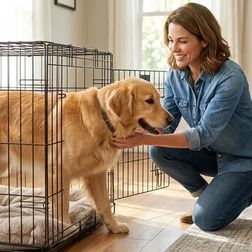
Tractor Supply And The AKC Present Tips For Crate Training I've been grooming dogs for nearly a decade, and I can tell you that the ones who come in relaxed and confident almost always have one thing in common: they're comfortable in a crate. When Tractor Supply and the AKC present tips for crate training, they're drawing on behavioral science that I've watched play out on the grooming table hundreds of times. A dog who sees their crate as a safe space handles stress better—whether that's a trip to the groomer, a thunderstorm, or recovery from surgery. This guide walks you through the complete crate training process for dogs of all ages, from puppies to adults to seniors. You'll learn how to choose the right crate size, introduce it without triggering anxiety, and troubleshoot the most common roadblocks. Expect to spend 1-2 weeks on basic acceptance and 4-6 weeks to build solid crate habits, though timelines vary wildly depending on your dog's history and temperament. This is a foundational skill that pays dividends across every aspect of dog ownership. What You'll Need Before you start applying the advice that Tractor Supply and the AKC present tips for crate training emphasiz…
Pet Care Costs Can Add Up Here Are Some Ways To Save
Pet Care Costs Can Add Up: Here Are Some Ways to Save I've been grooming dogs professionally for nearly a decade, and I can't count how many times a client has confided that they're struggling with the financial side of pet ownership. Pet care costs can add up here are some ways to save without compromising your dog's or cat's health and happiness. From my grooming table to my own household of four rescues—including a senior shepherd with medical needs—I've learned that smart spending isn't about cutting corners. It's about knowing where your money makes the biggest difference and where you can safely trim back. Let me walk you through the strategies that work in real life. Learn Basic Grooming Skills at Home Most dog owners don't need a professional groomer every six weeks if they're willing to spend 20 minutes a week on maintenance. I teach clients simple techniques like brushing between appointments, cleaning ears with a veterinary-approved solution, and trimming nails with a grinder or clipper—skills that can cut grooming costs by half or more for many breeds. Why this saves money: Professional grooming for a medium-sized dog typically runs between $50 and $90 per session d…
10 Items From The Dollar Store To Use For Your Puppy Training
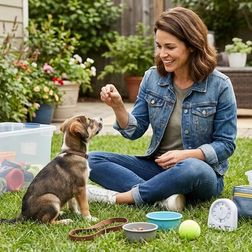
10 Items From The Dollar Store To Use For Your Puppy Training I've spent nearly a decade handling dogs of all temperaments at the grooming table, and one thing I've learned: effective puppy training doesn't require an expensive arsenal of gear. My terrier mix proved that when I brought him home five years ago—some of our best early training sessions happened with household items and dollar store finds. The 10 items from the dollar store to use for your puppy training that I'm sharing here have worked across my four rescues and countless grooming clients whose owners were looking for budget-friendly solutions. These picks span basic obedience, impulse control, enrichment, and handling preparation. Every item costs around a dollar, and most have multiple training applications. Small Plastic Containers with Lids The sit at the foundation of scent work and impulse control training for puppies 8 weeks and older. I punch a few holes in the lid, drop a high-value treat inside, and let my puppies work to figure out how to access the reward—this builds problem-solving skills and keeps mouths busy during those destructive teething phases from 3 to 6 months. Dollar store versions work p…