
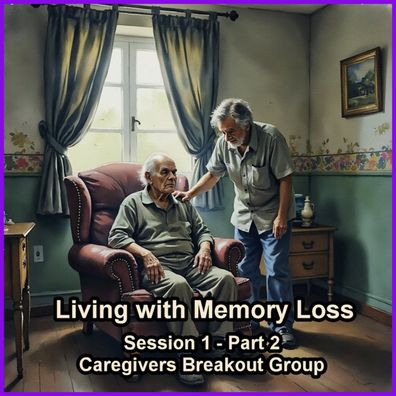
Living with Memory Loss -Session 1 - Part 2 - Caregivers Breakout Group
Notas del episodio
Memory Loss and Alzheimer’s: What’s Normal—and What Isn’t?
As we get older, most of us notice little changes in the way we remember things. You might walk into the kitchen and wonder, “What did I come in here for?” You may forget someone’s name and remember it later, misplace your glasses, or occasionally miss an appointment. Those moments can be frustrating, but they can also be part of normal aging. The important thing is that you’re still able to manage your everyday life independently.
What deserves more attention is when memory or thinking changes become frequent, noticeable, or begin interfering with daily life. Someone might repeatedly ask the same question, forget recently learned information, become confused in familiar places, struggle with tasks they’ve handled for years, have increasing difficulty finding words, or show changes in judgment and problem-solving.
And here’s something important: not every memory problem means Alzheimer’s disease. Memory and thinking can be affected by medications, sleep problems, depression, infections, vitamin deficiencies, and other medical conditions. That’s why noticing a change shouldn’t lead immediately to panic—it should lead to a conversation with a healthcare professional.
Alzheimer’s disease is not a normal part of getting older. It is a brain disease and the most common cause of dementia. If you’re concerned about yourself or someone you love, getting evaluated can help identify what may be happening and what support or treatment may be appropriate.
The goal isn’t to be frightened by every forgotten name or misplaced set of keys. It’s to recognize meaningful changes, ask questions early, and remember that you and your family don’t have to figure everything out alone.