Mysteries in the Dark

Mysteries in the Dark

por Luna Sparks & Omar Trekker
Temporada 13

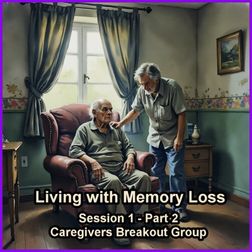
Living with Memory Loss -Session 1 - Part 2 - Caregivers Breakout Group

Memory Loss and Alzheimer’s: What’s Normal—and What Isn’t? As we get older, most of us notice little changes in the way we remember things. You might walk into the kitchen and wonder, “What did I come in here for?” You may forget someone’s name and remember it later, misplace your glasses, or occasionally miss an appointment. Those moments can be frustrating, but they can also be part of normal aging. The important thing is that you’re still able to manage your everyday life independently. What deserves more attention is when memory or thinking changes become frequent, noticeable, or begin interfering with daily life. Someone might repeatedly ask the same question, forget recently learned information, become confused in familiar places, struggle with tasks they’ve handled for years, have increasing difficulty finding words, or show changes in judgment and problem-solving. And here’s something important: not every memory problem means Alzheimer’s disease. Memory and thinking can be affected by medications, sleep problems, depression, infections, vitamin deficiencies, and other medical conditions. That’s why noticing a change shouldn’t lead immediately to panic—it should lead to a conversation with a healthcare professional. Alzheimer’s disease is not a normal part of getting older. It is a brain disease and the most common cause of dementia. If you’re concerned about yourself or someone you love, getting evaluated can help identify what may be happening and what support or treatment may be appropriate. The goal isn’t to be frightened by every forgotten name or misplaced set of keys. It’s to recognize meaningful changes, ask questions early, and remember that you and your family don’t have to figure everything out alone.

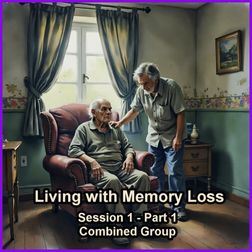
Living with Memory Loss - Session 1 - Part 1 - Total Group Session

IA
Memory Loss and Alzheimer’s: What’s Normal—and What Isn’t? As we get older, most of us notice little changes in the way we remember things. You might walk into the kitchen and wonder, “What did I come in here for?” You may forget someone’s name and remember it later, misplace your glasses, or occasionally miss an appointment. Those moments can be frustrating, but they can also be part of normal aging. The important thing is that you’re still able to manage your everyday life independently. What deserves more attention is when memory or thinking changes become frequent, noticeable, or begin interfering with daily life. Someone might repeatedly ask the same question, forget recently learned information, become confused in familiar places, struggle with tasks they’ve handled for years, have increasing difficulty finding words, or show changes in judgment and problem-solving. And here’s something important: not every memory problem means Alzheimer’s disease. Memory and thinking can be affected by medications, sleep problems, depression, infections, vitamin deficiencies, and other medical conditions. That’s why noticing a change shouldn’t lead immediately to panic—it should lead to a conversation with a healthcare professional. Alzheimer’s disease is not a normal part of getting older. It is a brain disease and the most common cause of dementia. If you’re concerned about yourself or someone you love, getting evaluated can help identify what may be happening and what support or treatment may be appropriate. The goal isn’t to be frightened by every forgotten name or misplaced set of keys. It’s to recognize meaningful changes, ask questions early, and remember that you and your family don’t have to figure everything out alone.
Angels Among Us - Unveiling Their Names and Our Guardian Guides

IA
What if someone has been with you your entire life—watching, guiding, and protecting you—and you’ve never seen them? Hey everybody, welcome to the podcast! I’m Jim, here with my wife and co-host, Linda. A homily at our granddaughter’s Grandparents Day Mass sent us home with one BIG question: Do we really have guardian angels—and if they’re invisible spiritual beings, how can they protect us in a physical world?

Alton After Dark - The Most Haunted Small Town in America

IA
Alton, Illinois, widely calls itself the most haunted small town in America due to a long history of tragic events, epidemics, and Civil War violence.

Embracing the Cross: Finding Flourishing in Our Limits

Join Jim & Linda as they discuss ... Matthew 16:21–27 - Jesus predicts his suffering, death and resurrection on the third day, then teaches the cost of discipleship: deny self and take up the cross. Jesus shows that the realities we often see as limits (suffering, illness, old age, vulnerability) are not merely defects to be erased but the very places where humanity flourishes; discipleship calls us to deny ourselves, embrace our cross, and trust Christ to bring restoration and resurrection through those limits. Key Points Gospel scene: Jesus tells the disciples he must go to Jerusalem, suffer, be killed, and be raised on the third day; Peter resists and is rebuked. Jesus confronts worldly thinking: “You are thinking not as God does, but as human beings do,” exposing how we avoid painful realities. The call to follow: Whoever wishes to come after me must deny himself, take up his cross, and follow me. Discipleship demands surrender, not self-preservation.

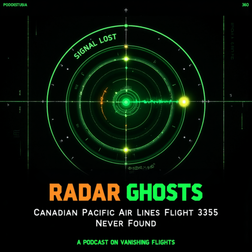
RADAR GHOSTS - Canadian Pacific Air Lines Flight 3505 Mystery

The world's largest ocean has a way of keeping its secrets. Across the endless expanse of the North Pacific, ships have vanished... submarines have disappeared... and airplanes have simply slipped into history without a trace. On July 21, 1951, one routine flight joined that haunting list. A Canadian Pacific Air Lines Douglas DC-4 departed Vancouver for Tokyo carrying thirty-seven souls, many of them United Nations personnel on an important mission. The weather was calm. The aircraft was experienced. Nothing appeared out of the ordinary. Then, somewhere between civilization and the endless horizon... the radio fell silent. More than seventy years later, the Pacific still refuses to reveal what happened aboard Canadian Pacific Air Lines Flight 3505. Tonight, we'll retrace the flight's final known moments, examine every major theory, and uncover why this forgotten disappearance remains one of aviation's most haunting unsolved mysteries. Welcome to Mysteries in the Dark.

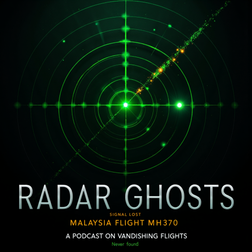
RADAR GHOSTS - Malaysia Flight MH370

A modern airliner. Two hundred thirty-nine people. One routine flight that simply disappeared. More than a decade later, investigators still don't know exactly what happened to Malaysia Airlines Flight MH370. In this episode we'll separate fact from fiction as we investigate one of the greatest unsolved mysteries in aviation history. Welcome to the investigation.

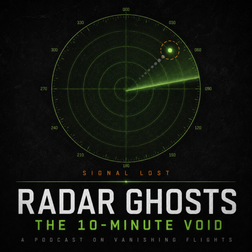
RADAR GHOSTS - Mysterious Flight Disappearences

On March 24th, 1975, a small newspaper item described a jet vanishing from radar for exactly ten minutes on approach to Miami — no wreckage, no distress call, just silence — before reappearing as if nothing had happened, its clocks now running ten minutes behind. It's the kind of story that resists being forgotten: an air traffic controller who supposedly told the pilot he simply hadn't existed, a plane full of people who felt no gap at all. But look closer, and the story starts to blur — the same premise resurfaces in 1985, then 1989, then 2026, each time with a different flight number, a different decade, a different city, always traced back to tabloids known for inventing the impossible. So what really vanished in 1975?

Mic Drop Academy - Episode 5 -Edit Like a Pro: DAW Fundamentals

Edit Like a Pro: DAW Fundamentals

Mic Drop Academy - Episode 4 - “The Microphone Is Already On. 260530JL

“MIC UP” “The Microphone Is Already On. You’re Just Going to Talk Into It.” Session 4 is where the program officially transforms from “kids talking about podcasting” into “kids nervously staring at expensive audio equipment while pretending to know what a decibel is.” For the first three sessions, students have been building confidence, developing ideas, writing scripts, and discovering their voice. But now comes the big moment: actually sitting in front of a real microphone while their brain suddenly forgets the English language the second recording starts. Welcome to the Red Light Moment. This session is the technical turning point of the program — the day students finally step into the studio and realize podcasting involves slightly more than “just talking.” Students will get hands-on experience with microphones, audio interfaces, headphones, DAWs, cables, buttons they are terrified to touch, and at least one mysterious knob nobody fully understands but everyone pretends they do. The goal of the session is twofold: Demystify professional audio equipment so students stop treating the studio like a NASA launch center. Record actual podcast intro takes that will later be edited in Session 5 — including the awkward takes, nervous takes, and “why did I suddenly sound like a robot?” takes. And yes… the bad takes stay. Especially the bad takes. Because in podcasting, bad takes are not failures — they are evidence that recording is actually happening. Every professional podcaster, voice actor, radio host, and YouTuber on Earth has accidentally coughed into a microphone, forgotten a sentence halfway through recording, or discovered too late that the microphone wasn’t plugged in.
1 de 8