
Notas del episodio
What if making your band room more accessible didn't mean creating 30 different lesson plans or adding hours of work to your already full plate?
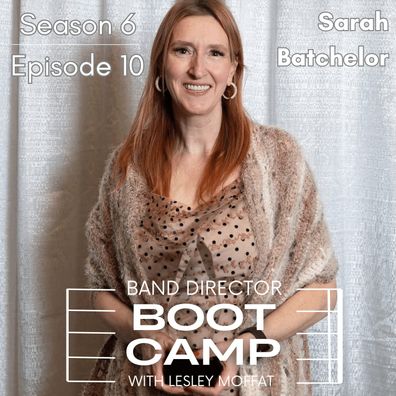
In this episode of Band Director Boot Camp, Lesley Moffat talks with neurodivergent music educator Sarah Batchelor about practical ways to support students with dyslexia, ADHD, autism, processing differences, and other learning needs while also creating systems that make teaching easier.
Sarah brings a deeply personal perspective to the conversation. As both a neurodivergent educator and the parent of neurodivergent children, she spent years developing strategies for her students and family before realizing something important: many of those same strategies could help her, too.
One idea changed the way she viewed students completely: behavior is communication.
Instead of simply reacting to a student's behavior, Sarah encourages teachers to ask what's underneath it. What barrier is the student experiencing? What are they trying to communicate? Where might they need more choice, autonomy, predictability, or support?
That shift has also changed the way she rehearses. Rather than always telling students what went wrong, she asks them to listen, diagnose problems, make decisions, and help one another. Her goal isn't simply to teach students how to play an instrument. It's to teach them how to figure out how to play an instrument.
Lesley and Sarah also talk about Universal Design and why accessibility doesn't have to mean creating something different for every student. Sometimes designing with the students who face the biggest barriers in mind creates a better learning environment for everyone.
Sarah shares practical examples you can use in your own band room, including student section leaders in beginning band, master binders for missing music, pencils attached to music stands, predictable rehearsal procedures, structured practice-room routines, and adapted music for students who need it.
She also explains how technology can help modify music for students with dyslexia, including changing colors or note-head shapes, without requiring directors to recreate every piece of music from scratch.
But perhaps the most important shift is moving away from doing everything for students.
Give them tools. Teach them processes. Let them help each other. Allow them to struggle safely. And when something is hard, don't immediately remove the challenge. Give them a framework for working through it and be there when they genuinely need support.
Because accessibility isn't about lowering expectations.
It's about removing unnecessary barriers so more students have the opportunity to discover what they're capable of doing.
And when we build those systems well, they don't just help our students.
They can make the band director's job more sustainable, too.