Band Director Boot Camp

Band Director Boot Camp

por Lesley Moffat
Temporada 6
"The Band Director Who Started It All: Lessons From My Dad"
As Lesley Moffat begins her 39th and final year as a band director, she sits down with the person who helped start the whole journey: her high school band director, Bruce Caldwell. Who also happens to be her dad. Bruce began teaching in 1964, and Lesley grew up immersed in the world of high school band. Football games, concerts, rehearsals, trips, fundraisers, and band students who felt like surrogate older siblings were simply part of family life. By the time Lesley became one of Bruce's students herself, the band room had already become the kind of place she knew she wanted to create for her own students someday. In this episode of Band Director Boot Camp, father and daughter look back across two generations of music education and discover that while the profession has changed dramatically, some of the most important parts of the job haven't changed at all. Bruce talks about beginning his career when music educators received little preparation for the administrative responsibilities of running a program. His description still feels remarkably familiar today: a band director isn't simply teaching music. In many ways, you're the CEO of a small organization, responsible for everything from instruction and performances to budgets, trips, volunteers, advocacy, and community relationships. They also talk about the importance of building a community around the program. Bruce shares how a uniform emergency unexpectedly helped launch a thriving parent booster organization and the philosophy that guided its fundraising: if you're going to have a fundraiser, it should actually be fun. The conversation becomes especially personal as they reflect on what it was like for Lesley to grow up in the band program, eventually become her father's student, and later follow him into the profession. They revisit All-State, solo and ensemble, Carnegie Hall, and the experiences that helped change the direction of Lesley's life. Bruce also shares lessons from his 20 years leading the Washington Music Educators Association after leaving the classroom, including why professional relationships matter so much for music educators who are often the only person doing their job in the building. And after decades in music education, some of his most valuable advice is surprisingly simple: Advocate for your program. Get people to help you. Protect your sanity. Don't be afraid to say no. And every time you add something, consider taking something else away. As Lesley begins the final year of the career that started in her dad's band room, this episode is both a look back and a reminder of what lasts. The technology changes. The educational initiatives change. The demands change. But creating a place where students belong, helping them discover what they're capable of, and building relationships that can influence the rest of their lives? That part never goes out of date.
"If Your Band Can't Function Without You, It's Time to Let Go"
If taking a sick day makes you nervous because you're convinced the entire band program might unravel without you, this episode is for you. Band directors are really good at taking responsibility. Sometimes, we're a little too good at it. In this episode of Band Director Boot Camp, Lesley Moffat talks with veteran band director Robert Sanchez about what he calls "white-knuckling": holding so tightly to every detail of the program that eventually the job begins controlling you instead of the other way around. Robert has spent more than 20 years building and revitalizing band programs, but some of his biggest lessons about leadership came when he was forced to step away. After breaking his foot and missing four weeks of school, Robert returned to discover something surprising: his band was better than when he left. It wasn't because they didn't need him. It was because the systems, student leadership, and culture he'd built allowed the program to continue without depending on him for every decision. That's a very different definition of successful leadership. Lesley and Robert talk about practical ways directors can begin giving students more ownership. Uniforms, social media, concert setup, equipment, organization, and countless other responsibilities don't automatically have to belong to the director. In fact, giving those jobs to students can accomplish two things at once: reduce the director's workload while helping students on the fringes of the program become important members of the community. They also dig into something many music educators struggle with: when the thing you love becomes your career, you need something else in your life that isn't your job. For Robert, martial arts, running, coaching, family, and fitness have helped him build an identity outside the band room. Those experiences have also taught him lessons about perseverance, leadership, discipline, and wellness that make him a better educator. And if stepping away from your email, delegating a responsibility, or allowing something to be less than perfect feels impossible, Robert offers a little perspective: It's just band. The email can wait until Monday. Someone else can set up the stage. A student might actually manage the uniforms better than you. And the program doesn't need to fall apart just because you aren't holding every piece of it together. Your goal isn't to make yourself indispensable. It's to build students, systems, and a culture strong enough that you don't have to white-knuckle your way through your career.
"You Are Part of the Safety Net, Not the Whole Net"
Band directors are often the people students trust when something is wrong. We notice the student who suddenly isn't acting like themselves. We hear about problems at home, relationship struggles, anxiety, and situations that can be incredibly heavy. And because we're educators, our instinct is often to jump in and fix things. But what if our job isn't to fix them? In this episode of Band Director Boot Camp, Lesley Moffat talks with speaker, author, and mental health advocate Joshua Rivedal, founder of the I'm Possible Project, about mental health, resilience, burnout, and the courage it takes to ask for help. Joshua shares his own experience with mental health struggles, losing his father to suicide, reaching a crisis point himself, and ultimately getting the support he needed. That experience led him to dedicate much of his work to helping others have conversations about mental health that can sometimes feel uncomfortable but are incredibly important. For music educators, one of the most important takeaways is recognizing the difference between supporting a student and trying to save them. As Joshua puts it, you're a piece of the safety net, not the entire safety net. Teachers can listen, validate what a student is experiencing, ask thoughtful open-ended questions, and connect them with counselors, psychologists, social workers, and other appropriate resources. Lesley and Joshua also turn the conversation toward the educator. When you're supporting dozens or even hundreds of students while carrying your own responsibilities, that emotional load adds up. Joshua shares some warning signs of burnout, including exhaustion, losing interest in things you once enjoyed, people-pleasing, putting everyone else's needs ahead of your own, and believing you're the only person who can solve every problem. The good news is that resilience isn't simply something you're born with. It can be developed. Instead of waiting until you're overwhelmed, Joshua recommends creating small routines and systems that support your wellness. Take the five-minute walk. Ask for help with something small. Practice self-compassion. Examine the beliefs that tell you that you have to do everything yourself. Band directors are already masters at creating systems for their students. Maybe it's time to give yourself that same gift. Taking care of yourself doesn't take away from your students. It helps ensure that you can continue showing up for them without losing yourself in the process.
"Teacher by Day, Human All the Time: Setting Boundaries Without the Guilt"
Teaching has a way of becoming more than a job. Before long, you're staying late, answering messages after hours, volunteering for one more committee, and giving so much of yourself to your students that there isn't much left when you get home. In this episode of Band Director Boot Camp, Lesley Moffat talks with Dr. Yvette Dixon-Ledford, author of Teacher by Day: A No-Guilt Guide to Boundaries, Balance, and Bliss, about what it takes to love teaching without allowing it to consume your entire identity. After 24 years in education, Yvette knows how easy it is to fall into the belief that being a dedicated teacher means always doing more. She shares how challenges in her personal life forced her to look closely at where she was spending her time and energy and recognize that constantly pouring into her profession was leaving other parts of her life running on empty. Lesley and Yvette talk about setting boundaries with parents, colleagues, and administrators, including why saying no doesn't make you less committed to your students. They also discuss the guilt that often comes with leaving work on time, the importance of valuing yourself outside your professional role, and how gratitude and positive affirmations can help educators reconnect with who they are beyond the classroom. One of Yvette's simplest pieces of advice may also be the hardest for many educators: make "no" your best friend. Every time you appropriately say no to another demand on your time, you're creating space to say yes to something that matters in your own life. You can be an excellent teacher without giving your job unlimited access to you. In fact, protecting the person you are outside the classroom may be one of the best things you can do for the teacher you are inside it.
"When the Bottom Falls Out: How to Pivot Without Giving Up on Music Education"
Every music educator eventually faces a moment that makes them question whether they can keep going. Whether it's burnout, a difficult administrator, losing a position, or simply feeling like you've hit a dead end, those moments can leave you wondering what's next. In this episode of Band Director Boot Camp, Lesley Moffat welcomes Dr. Suzanne Gindin, whose career has been filled with unexpected pivots, professional setbacks, and powerful reinventions. From being dismissed from a prestigious conducting studio to having successful programs eliminated, Suzanne shares how she repeatedly found a way to move forward without losing her passion for music education. One of the biggest lessons from this conversation is learning not to let someone else's opinion define your worth. Suzanne explains how shifting her perspective helped her stop comparing herself to others and start trusting her own path. She also introduces her simple but powerful 80/20 Rule, encouraging educators to let go of perfectionism and embrace progress over impossible standards. If you've ever questioned your future in music education, this episode is a reminder that setbacks don't have to become stopping points. Sometimes the career you were meant to have is waiting on the other side of a pivot.
"Burnout Isn't a Badge of Honor: Reclaiming Your Health Without Sacrificing Your Program"
What if becoming a better band director started with taking better care of yourself? In this episode of Band Director Boot Camp, Lesley Moffat welcomes Dr. Jen Rafferty, former music educator, educational psychologist, and author of The Empowered Educator. Together, they have an honest conversation about the hidden toll that music education can take on our physical and emotional well-being, and why so many dedicated teachers end up believing that burnout is simply part of the job. Jen shares her deeply personal journey through divorce, the pandemic, chronic stress, and burnout, and how those experiences led her to rethink the relationship between identity, teaching, and wellness. She explains why so many music educators tie their self-worth to their work, and how that mindset can leave us exhausted, overwhelmed, and disconnected from ourselves. More importantly, this episode offers practical strategies you can begin using immediately. Jen introduces two simple but powerful practices: moving through your day just 10% slower to increase awareness, and taking intentional breathing breaks to calm your nervous system and interrupt the cycle of chronic stress. Lesley also shares how these same wellness strategies can benefit students when incorporated into daily classroom routines. If you've been ignoring the warning signs of burnout, constantly pushing through fatigue, or telling yourself, "It is what it is," this conversation is a reminder that taking care of yourself isn't selfish. It's one of the most important things you can do for both yourself and your students. Dr. Jen Rafferty is an educator, author, and founder of Empowered Educator, an organization dedicated to elevating the teaching experience by prioritizing educator well-being.. Jen has been featured in Forbes, Authority Magazine, Medium, Thrive Global, Best Holistic Life Magazine, Wellness Voice Magazine, and was on the TEDx stage with her talk, Generational Change begins with Empowered Teachers. She is also the host of the podcast, Unlock Your Teaching Potential, which has been rated in the top 2.5% of podcasts globally. Her book, The Empowered Educator: 10 Lessons to Prevent Burnout, Reclaim Your Joy, and Unlock Your Teaching Potential will be available on August 4th through Penguin Random House. https://empowerededucator.com/book
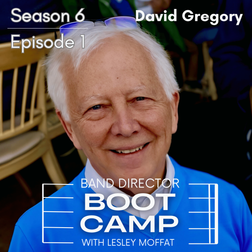
"Students as Teachers: The Life Lessons We Learn from the Kids in Our Bands"
In this episode of Band Director Boot Camp, Lesley Moffat sits down with lifelong music educator and author Dr. David Gregory for a heartfelt reminder of why this work matters. David’s book, Students as Teachers: Things They Taught Me, Life Lessons They Gave Me, grew from stories shared by former students spanning more than 50 years of his career. When he asked what they remembered most from being in band, very few mentioned scales, technique, or specific musical skills. Instead, they remembered finding a place where they belonged, being given opportunities they never thought possible, and having a teacher who listened to them and made them feel important. Through moving, funny, and sometimes surprising stories, David explores how students teach us about belonging, discovery, perseverance, equality, leadership, and the lasting power of simply showing up. He reminds us that while the mechanics of being a band director may feel impossible, we are not expected to do everything. We are called to focus on the most important things, especially the students sitting in front of us. You’ll hear about a student whose Midwest performance inspired a 42-year career in music education, another who credited band with helping him finish high school, and a bass clarinet player who discovered halfway through marching season that her feet were supposed to land with the beat. Each story reveals something deeper about the influence teachers have, often without realizing it at the time. This episode is not about adding another task to your list. It is an invitation to pause, reflect, and remember that your students notice more than you think, carry your lessons farther than you may ever see, and often teach you just as much as you teach them.
Temporada 5
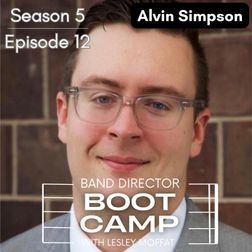
"The Secret to Better Practice: Turning Habit Building into a Game"
What if the biggest challenge in your music program isn't teaching the music, but getting students to practice consistently once they leave your classroom? In this episode of Band Director Boot Camp, Lesley Moffat sits down with educator and app developer Alvin Simpson to discuss a challenge every music teacher knows well: students who say they're practicing, but don't seem to be improving. Alvin shares how years of teaching beginning and middle school band led him to create Practice Pet, a gamified practice app designed to help students develop consistent practice habits, stay motivated, and take greater ownership of their musical growth. Together, Lesley and Alvin explore the difference between simply playing through music and truly practicing, why habit formation matters, and how teachers can encourage student independence without adding more work to their own plates. You'll also hear: Why practicing is a skill that must be taught The difference between intrinsic and extrinsic motivation How gamification can help students build lasting habits Ways parents can support practice at home, even if they aren't musicians How better practice habits can improve rehearsal efficiency Creative ways teachers are using Practice Pet in their programs Why the ultimate goal is for students to outgrow the app and become self-motivated musicians If you've ever wondered how to get students to practice more effectively, build confidence, and make faster musical progress, this conversation offers practical ideas you can implement right away.
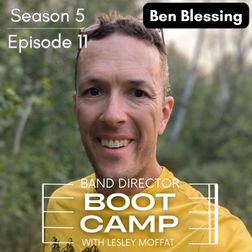
"Leaving on Time: Boundaries, Wellness, and Sustainable Performance with Ben Blessing"
There’s a moment so many music educators hit where they realize they love teaching… but the job is quietly consuming every ounce of energy they have. Staying late every night. Feeling guilty for taking care of yourself. Trying to be a great teacher, parent, spouse, human… all at the same time. Running on caffeine and adrenaline and wondering if this pace is sustainable. In this episode of the Band Director Boot Camp Podcast, Lesley Moffat talks with Ben Blessing, a 6th through 12th grade band director, former active-duty Marine musician, ultrarunner, composer, and performer with the 25th Army Band. Ben shares how lessons from military music, endurance racing, and family life have shaped the way he approaches teaching without burning out. From refusing to check school email outside contract hours to treating prep time with the same focus as class time, Ben offers practical reminders that sustainable teaching does not happen by accident. Lesley and Ben discuss how boundaries, physical wellness, mindful use of time, and family priorities can help music educators stay energized for their students and still have a life outside the band room. You’ll hear about: Why leaving at contract time can make you more productive How physical wellness supports better teaching The power of treating prep time like protected work time Why email boundaries matter How to model balance for students and your own family Ben’s work as a composer and where to find his music There’s a part in this episode where Lesley talks about ending up in the hospital because she ignored her own health for too long, a stark reminder of what can happen in our realities when we run out of steam. If this episode helps even one teacher avoid that path, it’s worth it. You do not have to earn exhaustion to prove you care. The dream isn’t just building a great music program. The dream is building a great music program AND still having a life.
"Motherhood and Music Education: Support, Visibility, and the Stories We Need"
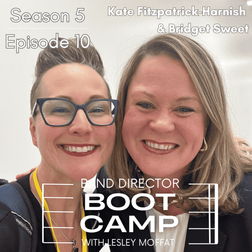
In this episode of Band Director Boot Camp, Lesley Moffat welcomes Kate Fitzpatrick Harnish and Bridget Sweet, co-authors of Motherhood in the Music Education Academy, for an honest conversation about parenting, caregiving, and the realities of building a music education career while raising children. Kate and Bridget share the personal and professional experiences that led them to write this book, including navigating demanding teaching roles, tenure-track expectations, pregnancy, miscarriage, child loss, and the isolation that can come from trying to do meaningful work in systems that were not built with mothers in mind. They talk about how silence around these issues can be harmful, and why visibility matters so much for current and future music educators. This conversation also explores the gap between being expected to care for students and not always being supported in caring for your own family. Kate and Bridget highlight the importance of finding community, asking questions, learning your rights, and not assuming institutions automatically know how to support pregnancy, parenting, or bereavement well. They also remind listeners that priorities can shift season by season, and that it is okay to define success in a way that reflects your actual life. Whether you are a mother, a parent, a caregiver, someone thinking about starting a family, or someone who wants to better support colleagues navigating this intersection, this episode offers thoughtful insight, reassurance, and a much-needed reminder that these stories deserve space in music education.
1 de 14