Health Simplified

Health Simplified

por Dr. Deep Bhattacharya
Temporada 7
Methylene Blue: Clinical Effectiveness and Prospects
Bonus
Let's explore the multifaceted applications of methylene blue (MB) in medicine. One research paper investigates MB's efficacy in conjunction with doxorubicin for treating oral squamous cell carcinoma, demonstrating enhanced apoptosis in vitro. Another systematic review examines MB's use in antimicrobial photodynamic therapy (aPDT) for infected skin wounds in animal models, revealing its effectiveness despite variability in treatment parameters. A third systematic review focuses on MB's role in anticancer photodynamic therapy across various animal cancer models, highlighting its efficacy against several cancers while noting inconsistencies across studies. A final paper details the development and in vitro testing of MB-loaded liposomes for enhanced photodynamic therapy against various cancer cell lines, showing improved cellular uptake and toxicity compared to free MB.
Temporada 6
Autophagy !!!
Bonus
The deep dive details the research of Yoshinori Ohsumi, focusing on his Nobel Prize-winning work on autophagy. Ohsumi's research, primarily conducted using yeast, uncovered the molecular mechanisms underlying autophagy, a cellular process involving the degradation and recycling of cellular components. His work identified numerous autophagy-related genes (ATG genes) and elucidated the intricate protein complexes involved in the autophagic pathway. The texts explore both the fundamental biology of autophagy and its implications for human health and disease. Finally, they also include personal anecdotes from Ohsumi, revealing his research journey and motivations.
Temporada 5
Human Metapneumovirus: A Comprehensive Review
Bonus
Explore human metapneumovirus (HMPV), a significant cause of respiratory infections. Studies examine HMPV's prevalence, genetic diversity, and evolutionary dynamics, particularly concerning the emergence of new variants with potential for immune evasion. Clinical characteristics of HMPV infections in various age groups are detailed, including symptom profiles and co-infections. Finally, research into potential treatments and vaccines is reviewed.
Temporada 4
Alternative Medicine !!! Is it really useful ?
Bonus
We examine the use and efficacy of complementary and alternative medicine (CAM). One text reviews research on CAM therapies, focusing on the need for more rigorous scientific studies to determine effectiveness. Another source presents a collection of research articles exploring various aspects of CAM, including patient experiences, practitioner perspectives, and the integration of CAM into conventional healthcare. A third source is a scientific journal article with largely unintelligible text, which seems to relate to the same topic of CAM and its evidence base.
Temporada 3
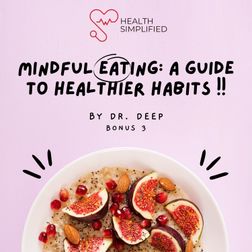
Mindful Eating: A Guide to Healthier Habits !!
Bonus
This explains the practice of mindful eating, emphasizing present moment awareness during all stages of food consumption, from purchasing to digestion. It highlights the benefits, such as improved diet, weight management, and stress reduction, resulting from increased attention to hunger and fullness cues. The text offers practical steps for implementing mindful eating, including sensory engagement and emotional awareness around food choices. Finally, it contrasts mindful and mindless eating, showing how mindful eating can lead to a healthier relationship with food and improved well-being. Reference Links:- 1- https://www.healthline.com/nutrition/mindful-eating-guide 2- https://positivepsychology.com/mindful-eating-exercises/
Temporada 1
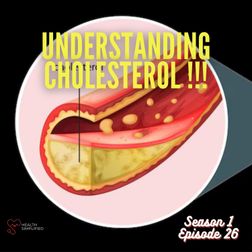
Understanding Cholesterol !!!
This Deep Dive tries to explain that cholesterol is a waxy substance found throughout the body, necessary for cell building but problematic in excess. It notes that the body produces cholesterol, but some comes from animal-based foods and tropical oils high in certain fats. The source emphasizes that high cholesterol increases the risk of cardiovascular diseases, like heart attack and stroke, by contributing to artery-narrowing atherosclerosis. Therefore, it advises individuals to check their cholesterol levels, make dietary and lifestyle changes, and seek professional help if needed to control cholesterol, especially if other risk factors are present.
Red Meat and Health !!!
A recent study suggested red and processed meat consumption might not be harmful, sparking debate within the scientific community. Harvard Health Publishing critiques this study, asserting that accumulated evidence still links high intake of these meats to increased risks of heart disease, cancer, and diabetes. While red meat provides beneficial nutrients, it is not essential and can be replaced by other sources. Harvard Health advises limiting red meat to a few servings weekly and minimizing processed meat due to additives and stronger health risk associations. Ultimately, focusing on a balanced diet with red meat as a side dish rather than a staple is recommended.
Optimal Sleep Temperature Guide
Healthline's resource provides comprehensive information on sleep health, specifically focusing on the optimal room temperature for sleep, which is generally between 60°F and 65°F. This deep dive explains the science behind this recommendation, noting how body temperature regulation is crucial for quality sleep. It also addresses variations for infants and older adults, suggesting slightly different ranges for these groups. Beyond temperature, this deep dive offers general sleep tips and touches on related topics through its extensive health condition, wellness, and news sections, demonstrating a broad scope on well-being.
Leaky Gut: Understanding Intestinal Permeability and Health
This deep dive discusses leaky gut, a condition where the intestinal lining becomes more permeable, potentially allowing harmful substances into the bloodstream. The author explains that while some intestinal permeability exists naturally, modern factors like diet and stress may exacerbate it. Increased intestinal permeability is known to be involved in certain gastrointestinal disorders, and research is exploring its possible connection to other systemic conditions. The article concludes by suggesting that a nutritious, unprocessed diet may help support a healthy gut, even though the direct cause-and-effect relationship between leaky gut and widespread diseases in humans is still under investigation.
EFFECTS OF ALCOHOL ON OUR BODY !!!
This deep dive comprehensively outlines the detrimental effects of alcohol consumption on the human body. Detailing how both short-term and long-term alcohol use can severely impact various organ systems, including the brain, heart, liver, pancreas, and digestive system, increasing the risk of numerous health issues like cardiovascular diseases, cancers, and neurological disorders. The sources emphasize that there is no safe level of alcohol intake and that the risk of harm increases with the amount and frequency of drinking. Furthermore, they address the social and economic consequences of alcohol abuse and highlight the importance of reducing or abstaining from alcohol to mitigate these risks.
1 de 4