Legacy Wellness

Legacy Wellness

por Fit Over 50
Temporada 1

Refusing to Disappear: The Truth About Our Weakest Pillars

Refusing to Disappear: The Truth About Our Weakest Pillars Overview: In this deeply candid episode of the Legacy Wellness podcast, Bruce Sheffler (founder of Fit Over 50) cuts through the platitudes and confronts the raw reality of aging. Rather than offering a polished facade of total mastery, Bruce breaks down the five foundational pillars (physical, mental, emotional, financial, and spiritual health), addressing head-on where men past 50 actually feel most challenged—specifically within the interwoven realms of emotional resilience and spiritual purpose. Key Discussion Points:The Trap of Perfectionism: Why pretending to have everything figured out isolates us, and why community thrives on shared vulnerability. Emotional & Spiritual Interconnection: Exploring how emotional resilience and a deep personal "why" act as shock absorbers when life throws unscripted challenges. Redefining Strength: Moving away from arbitrary gym metrics toward functional sovereignty, mobility, and showing up for the people who matter most. Financial Realities: An unvarnished look and at financial margin, income diversification, and why having a buffer protects all other pillars. The Quiet Erosion Warning: Recognizing that emotional and spiritual burnout often begins with the quiet disappearance of small, grounding daily habits. Get All Of Our Links and Compelling Info Here

Comfortable Misery - Why WeCling To Our Personal Egypt

Comfortable Misery: Why We Cling to Our Personal Egypt Overview: Why do we crave transformation, a better life, and our promised land while still clinging to the familiar chains of our current situation? In this episode, we tackle the paradox of the "safe Egypt"—the comfortable prisons, dead-end routines, and familiar habits that keep us stuck. Key Takeaways:The Anatomy of Comfort Zones: Why our brains romanticize predictability and see the unknown as a threat, locking us into "secondary gains." The Tax of Not Changing: Exploring the compounding, silent cost of stagnation on your vitality, self-respect, and soul. Breaking the Paralysis: Moving past the tyranny of the long horizon by shrinking your focus to a 24-hour window using the power of daily "bread actions". The Four-Step Blueprint:The Misery Audit: Name your specific Egypt across physical, financial, mental, and relational pillars. The Sacrificial Lamb: Explicitly identify what must die (old habits, excuses, comfort zones) for your new self to live. The Principle of Manna: Commit to micro-actions rather than grand, exhausting overhauls. Embracing the Revolt: Wading through the panic and pushback of the "pharaoh effect" when old patterns rage before dying.Get more Insights and free reports in the FREE "Refuse To Disappear" NewsletterGet a FREE WEEK to look over our community. It is filled with Courses and ebooks, and interactive chats between members. Everything is free inside the membership. Check it out here

The Data Pays For Its Self

Episode 18— How Cyborg Gramps Pays for His Wearables Last week we promised to open the books. This week we did. Cyborg Gramps walks through his actual monthly wearable bill (roughly $110–$140 a month) and the four sources that pay for it without touching retirement money or a credit card: the Subtraction Dividend, the Ninety-Day Audition, the Garage IPO, and the One-Hour Rule. Bruce takes the One-Hour Rule and turns it into the simplest possible on-ramp to digital entrepreneurship for people over fifty, and gives an honest account of what the unpaid phase looks like, including the three hundred subscribers he never wrote to until this week. Plus: the truth about Medicare and HSA coverage for wearables, and an update on the private, on-device wearable app. Nothing in this episode is financial, tax, insurance, or medical advice. Confirm anything involving coverage, taxes, or your health with a licensed professional who knows your situation. Free newsletter: Get It Here Free Trial Offer for Community: Get It Here

Stop Keeping Score: The Four Levels of Love and the Expectation Trap

Most relationships don’t break under major disasters—they erode under silent accounting. In this raw, candid conversation, 78-year-old host Bruce Sheffler admits to spending decades stuck in "horse-trading love," keeping a quiet ledger of daily deposits and unspoken demands. Inspired by a Tony Robbins framework and decades of hard-won life experience, Bruce and Cyborg Gramps explore why transactional affection spikes our stress, drains our longevity, and turns small daily routines into premeditated resentments. Inside the Episode:The 4 Levels of Love: From infant self-absorption to transactional horse-trading, full-out unconditional commitment, and boundless spiritual connection. The Ledger vs. Longevity: How hidden scorecards fuel chronic stress, wreck sleep and metabolic balance, and defy findings from the decades-long Harvard Study of Adult Development. Expectations vs. Standards: Why true emotional peace means holding your personal standards high while releasing the demands placed on people you can't control. The 60-Second "Minimum Effective Dose": Three practical, quiet steps to take this week—without holding a single awkward family meeting—to replace entitlement with appreciation and permanently close the ledger. Notable Quotes:"It was never the trash. It was the invoice you attached to the trash." "Raise your standards. Drop your expectations." "You don't get love by needing it. You get it by giving it and getting out of the way." Resources & Community Links: Tony Robbins: "How to Trade Expectations for Appreciation" The Harvard Study of Adult Development Join the free monthly newsletter HERE


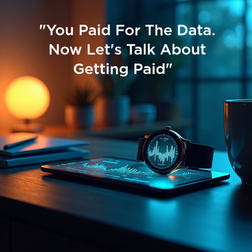
You Paid For The Data. Now Let's Talk About Getting Paid"

In this episode, Cyborg Gramps and Bruce Sheffler transition from tracking health metrics to tracking finances. They break down the actual ongoing costs of health wearables and subscriptions, explore how older adults can reframe those expenses into flexible income streams, and announce exclusive details on a private-by-design health tracker currently in development. Key Topics Covered The Real Cost of Health Tracking: Hardware expenses, recurring monthly app subscriptions ($10–$20/month), sensor replacements, and how to use HSA/FSA or employer wellness stipends to offset the tab. The Budget Reframe: Why redirecting the $300/year spent on health data toward testing a side hustle can open new financial doors on a fixed income. Big Announcement (The Privacy-First Wearable): Inside look at the project combining continuous glucose, HRV, and sleep architecture into one device with local, on-phone data storage that never touches corporate servers. 4 Practical Side Hustles After 50:Teaching what you know (courses, coaching, newsletters). Consulting or freelancing within your industry on flexible terms. Digital products (workbooks, guides, templates). Reliable local services (tutoring, handyman work, bookkeeping). The 50+ Advantage: Leveraging decades of real-world credibility, emotional resilience, and established networks over youthful flash. Retirement Protection & Scam Defense: Critical rules for staying safe—never touch retirement savings to fund a venture, start small with low-risk experiments, and identify the dead giveaways of online business scams.

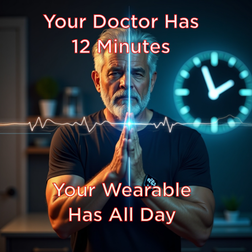
Your Doctor Has 12 Minutes. Your Wearable Has All Day

IA
In this episode, Bruce Sheffler flips the microphone on Cyborg Gramps to unpack the ongoing debate between primary care medicine and personal biohacking technology. Is the traditional 12-minute doctor’s appointment broken, or are consumer health wearables giving users a false sense of security? Bruce and Cyborg Gramps discuss how to balance continuous tracking tools with clinical expertise without falling into cyberchondria, privacy traps, or overreliance on apps. Key Highlights & Takeaways The 12-Minute Problem: Primary care visits average 12 to 15 minutes, which often leads to single-snapshot evaluations affected by factors like "white coat hypertension." Wearables bridge the gap between long appointment intervals by continuously monitoring daily baselines. What Wearables Track Best:Heart Rate Variability (HRV): Evaluates autonomic nervous system stress and potential early markers of illness prior to visible symptoms. Continuous Glucose Monitoring (CGM): Reveals personalized blood sugar patterns and food-related energy crashes rather than single fasting glucose snapshots. Sleep Architecture: Tracks deep sleep and REM percentages over total hours spent in bed. Limitations and Risks: Wearables can produce inaccuracies, trigger "cyberchondria" (health anxiety caused by misinterpreting raw tracking data), or yield false confidence that leads people to skip essential clinical checkups. Algorithm updates can also alter metric baselines overnight. Data Privacy Concerns: Consumer wearables are generally not governed by HIPAA rules, making it critical for users to review privacy settings and manage how their personal health metrics are handled by device manufacturers. The 4-Step Wearable Protocol:Pick one core metric to monitor for 30 days. Establish a 2-week baseline before changing habits. Modify only one habit variable at a time. Bring a simplified 1-page trend summary to your medical appointments. Featured Field Notes "My CGM data across four months showed the same 3 p.m. crash on eleven out of every fourteen days — always ninety minutes after a high-glycemic lunch. That's not a guess. That's a pattern a single blood draw could never show you." — Cyborg Gramps "The month I fixed my evening screen habits, my total sleep time barely changed — maybe twenty minutes more. But my deep sleep percentage went from 9% to 17%. Same hours in bed, almost double the actual repair work." — Cyborg Gramps

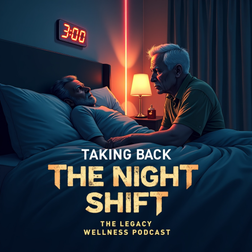
Taking Back The Night Shift

IA
The Legacy Wellness Podcast — "Taking Back The Night Shift" Hosts & Guest: Hosted by Cyborg Gramps, featuring guest Bruce Sheffler (Founder of Fit Over 50). Core Theme: A practical guide to sleep hygiene for adults over 50, centered on Bruce’s 30-day personal sleep-tracking experiment. Key Topics & Takeaways The "Night Shift" Mechanism: Sleep acts as a shift change for heavy body maintenance, cellular repair, memory consolidation, and brain detox, while REM processes emotions. Sleep Changes After 50: Sleep fragmentation and declining deep sleep are normal with age. Medical red flags requiring a doctor's visit include habitual loud snoring, gasping/choking awake, or extreme daytime sleepiness (potential sleep apnea). The Core Levers:Wake Time & Morning Light: Fixing a daily wake time anchors the circadian system, paired with 10+ minutes of morning sunlight. Dietary Cutoffs: Avoid late caffeine and recognize alcohol as sleep's "great impostor" that fragments the second half of the night. Environment: Keep the bedroom cool, dark, quiet, and strictly reserved for sleep and intimacy. The 3 A.M. Protocol: Written advance instructions for night wakings—do not check the clock, do not touch the phone, run a pre-rehearsed boring mental routine, and leave the bed if awake after 20–30 minutes. 30-Day Tracking Assignment & Community Challenge:Week 1: Record baseline (lights out, wakings, final wake, energy score 1–10). Week 2: Anchor wake time and morning light. Week 3: Test a single variable (e.g., caffeine cutoff or alcohol). Week 4: Implement the wind-down runway and 3 A.M. card. Community Action: Join the "Baseline Week" challenge by sharing daily energy scores in the community thread.Get The Entire Bundle Here For Only $14.99Add The 14 Day Sleep Rest For People Over 50

Live to 90? Check Your Healthspan First

Episode Title: Live to 90? Check Your Healthspan First Episode Summary Living longer is only half the battle—the real goal is living better. In this episode of The Healthspan Decision, we explore the crucial difference between lifespan (how many years you live) and healthspan (how many of those years you live free from chronic illness, cognitive decline, and physical limitations). We dive into actionable strategies to extend your quality of life, optimize your daily health decisions, and ensure that your later years are vibrant, active, and meaningful. Whether you are in your 30s planning ahead or looking to make key lifestyle shifts today, this episode provides the blueprint for making longevity work for you. Key Takeaways Lifespan vs. Healthspan: Why focusing strictly on living longer can lead to extra years of poor health, and how to shift your mindset toward vitality. The Pillars of Healthspan: Key interventions in movement, nutrition, sleep quality, and stress resilience that pay compound dividends over time. Proactive vs. Reactive Health: How to move away from disease management and toward early optimization. Actionable Next Steps: Practical daily decisions you can implement immediately to protect your future cognitive and physical health. Resources & Links Mentioned Follow the podcast for weekly insights on longevity and optimal wellness. Enjoying the show? Please leave us a rating and review on your favorite podcast platform!Get The Complete Bundle Here!

From Petty Arguments to Lasting Peace: Master the Dickens Process

Ever find yourself stuck in the classic loop of "I do everything, and you never help around here"? In this episode, we dive deep into the Dickens Process—a powerful visualization and reframing tool—to show you how to break free from recurring marital friction. We break down, step by step, how taking a trip through your relationship's past, present, and potential future can completely change how you handle domestic conflicts, transforming resentment into deep appreciation and teamwork. What You'll Learn in This Episode: Understanding the Dickens Process: What it is and why examining the long-term cost of limiting beliefs changes everything. The Anatomy of a Household Argument: Why small chores spark big conflicts and what's really driving the "you never do anything" claim. A Step-by-Step Walkthrough:Ghost of Christmas Past: How old patterns and hidden resentments color current disagreements. Ghost of Christmas Present: Assessing the immediate emotional strain on your marriage today. Ghost of Christmas Future: Seeing where this path leads in 5, 10, or 20 years if nothing changes—and using that shock to trigger real shift. Actionable Resolution Strategies: Practical communication shifts to turn daily chores from a battleground into a shared mission. Key Takeaways: Look Beneath the Surface: The argument is rarely about the dishes; it's about feeling valued, seen, and supported. Leverage the Power of Perspective: By projecting the long-term emotional price of holding onto bitterness, the Dickens Process makes change urgent and necessary. Shift from Blame to Alignment: Replace generalized accusations ("You never...") with specific, vulnerable requests that foster collaboration. Resources & Next Steps: Reflect on Your Own Patterns: What is one recurring argument in your home that would benefit from applying the Dickens Process? Subscribe & Review: If this episode helped you reframe a conflict, share it with your partner or a friend, and leave us a review! Want to master the protocol? Get the complete Bundle Here

The Comeback Protocol: The Complete "Refuse to Disappear" Kit

Sometimes life knocks us down, and the easiest thing to do is quietly step away. Not today. In this episode of Legacy Wellness, we introduce "The Comeback Protocol: The Complete 'Refuse to Disappear' Kit." In this episode, we cover: The core mindset shift needed to stop hiding and start healing. Step-by-step wellness strategies to rebuild your physical and mental energy. The essential "tools" to keep in your personal comeback kit. How to navigate burnout and setbacks with grace and grit. Grab your notebook and get ready to reclaim your space. You are meant to be seen, heard, and thriving. Dive Deeper and Get The Complete Bundle with the Ebook, Workbook, Journal, and Study Guide
1 de 3