IMAfiction

IMAfiction

por IMA Institute for Media Archaeology
Temporada 1
Portait #1 | Liesl Uvary
A portrait by Martin Breindl [2006]. Language: Deutsch https://ima.or.at/de/projekt/imafiction_portrait01/ Liesl Ujvary comes from a generation for whom using computers is not a given. Her approach is perhaps best described by Martin Breindl in his text “Movement in Possibility Forms, on Liesl Ujvary’s Music”: “When the author Liesl Ujvary produces music or images, she plays ‘controlled games’ by transforming the numerous (sound and image) objects she has gathered around her from one (possible) state of being to another (equally possible) state of being. She can perform these transformations because she works exclusively on the virtual machine of which she herself has become an integral part as a cyborg. Her achievement as a cyborg is that she inwardly grasps and exploits the possibilities of this human-machine union. That is to say, she can traverse the fields of possibility that this technology offers.” (Martin Breindl) This is my body. I am currently in this place. I have certain perceptions, ideas, and feelings. I am doing this and that right now. I am the cause and controller of my thoughts and actions. I talk about myself and think about myself. I have a certain [personality/character]. I am the person I was yesterday. (Liesl Ujvary) supported by Lower Austria Culture and the Federal Chancellery: Arts
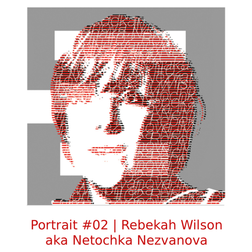
Portrait #2 | Rebekah Wilson aka Netochka Nezvanova
A portrait by Elisabeth Schimana [2006]. Language: English https://ima.or.at/de/projekt/imafiction_portrait02/ “Rebekah Wilson, aka Netochka Nezvanova, is pure fiction. For years, she named herself after a character in a Fyodor Dostoevsky novel, is a trained composer, haunts the internet, and becomes an icon in her own lifetime. Only in 2002 does she reappear as a physical person, becoming a curator at STEIM in Amsterdam. In her current rebirth phase as Rebekah Wilson, she is also finding her way back to her homeland of New Zealand, from where she left to become Netochka Nezvanova.” (Elisabeth Schimana) supported by Lower Austria Culture and the Federal Chancellery: Arts
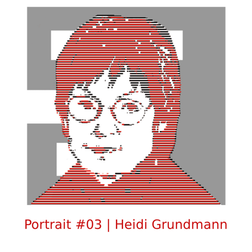
Portrait #03 | Heidi Grundmann
A Portrait by Roberto Paci Dalò [2007]. Language: English https://ima.or.at/de/projekt/imafiction_portrait03/ The portrait of Heidi Grundmann reflects our close friendship of two decades. A wonderful time of collaborations and conversations filled with wine, tears, energy, projects, sounds, struggles… . It's not exactly easy for me to delve into her story, in which she has passionately influenced and supported at least three generations of radio, telecommunications, media, and network artists. The data collected from Heidi Grundmann over 40 years of private and public life are here, quite literally, compressed into 29 dizzying minutes—29 minutes filled with touching personal memories and reflections on the situation of women in art and society. For me, this portrait is a precious document, and I am happy to have had the opportunity to create it. Roberto Paci Dalò supported by Lower Austria Culture, Federal Ministry of Education, Science and Research (bm:ukk) and ORF Kunstradio
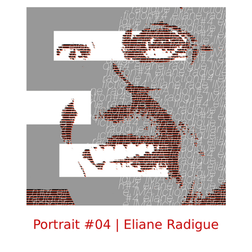
Portrait #04 | Eliane Radigue
A Portrait by IMA [2006]. Language: Français https://ima.or.at/de/projekt/imafiction_portrait04/ Eliane Radigue has been composing electronic music since the 1960s. She is considered one of the most important and innovative composers of the 21st century. As the only French composer of her generation, Radigue can be described as a pioneer of both electronic music and minimal music. “Her music is like a slow stream, moving through dense, barely perceptible shifts in sound. A timeless architecture of profound sounds that appeal not only to the mind or the ear, but to the entire body. Music that sweeps you away as soon as you immerse yourself in it. Music that possesses the enormous subtlety of the sound of the sea.” (Emmanuel Holterbach) Translation from the English by Gina Mattiello supported by Lower Austria Culture, Federal Ministry of Education, Science and Research (bm:ukk), Ars Electronica, ORF Upper Austria and the Federal Chancellery of Austria supported by Lower Austria Culture and the Federal Chancellery: Arts
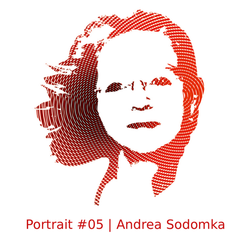
Portrait #05 | Andrea Sodomka
A portrait by Gabriele Mathes [2010]. Language: Deutsch https://ima.or.at/de/projekt/imafiction_portrait05/ “What distinguishes Andrea Sodomka for me is her ability to constantly reinvent herself, to continually break new ground and explore her own boundaries. Her oeuvre ranges from painting to radio art, from photography to sound installation, from performing in large spaces with live electronics to making inner spaces audible. Her open approach to her own authorship is rooted in the tradition of working in artist networks. “Today, it’s taken for granted by young artists that the concept of authorship is dissolving because they grew up with the internet,” says Andrea Sodomka. Andrea Sodomka and alien productions, as pioneers of networking, practiced this form of communication and collaboration, incorporating the internet, in their art projects as early as the mid-1990s. Her music and her work cannot be easily categorized into labels such as composer or visual artist. However, there is one term that can be applied to the artist Andrea Sodomka: the term of the researcher who uncompromisingly seeks the new.” Boundaries – including genre boundaries – mean only one thing to her: the desire to transgress them.” Gabriele Mathes supported by Lower Austria Culture and BM:UKK
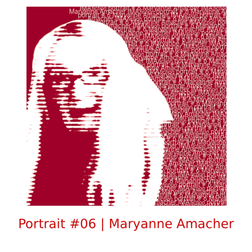
IMAfiction Portrait #06 | Maryanne Amacher
A portrait by Elisabeth Schimana & Lena Tikhonova [2013]. Language: English & Deutsch https://ima.or.at/de/projekt/imafiction_portrait06 Maryanne Amacher's work is sometimes misunderstood as installation art. For example, Kyle Gann (1995, p. 284) described her as "one of the best installation artists" in his book American Music in the Twentieth Century. Amacher's works belong to the realm of sound art, but they generally have a beginning and an end, like a piece of music. She was a composer committed to the interplay of space, time, and sound. In 1967, she began the City Links series, creating a number of works up to 1980 in which she broadcast live acoustic events from distant locations to a studio. She mixed the transmissions of sounds from eight locations in Buffalo (1967) into a 28-hour radio piece, using the source space of the sounds like a large synthesizer. Her interest focused on spatial depth and the localization of sounds. Amacher's use of the term "trio" in Intelligent Life (1979) points to a genuinely musical understanding. Jazz musician George Lewis played trombone in New York Harbor. The recording was sent to a studio where John Cage read a text, and all of this was mixed and routed to a concert at The Kitchen in New York. Three rooms, three musicians were the performers. A theoretical point of reference for her was Carl Gustav Jung's concept of synchronicity. Initially, Amacher defined synchronicity as the simultaneous hearing of spaces that are distant from each other, emphasizing the change in consciousness that occurs when one listens beyond one's walls. Since the 1980s, her multimedia works, Music for Sound Joint Rooms, expanded this concept. She painstakingly examined each location to create "structured borne sound," which reflects the specific location, in contrast to "air borne sound." Loudspeakers were mounted facing the wall to make its sonic properties audible. From a mixing console, the composer controlled tape recorders moving through spaces as overtone-rich layers of sound in polyphonic structures. Architecture was visually transformed by stage objects, flashing videos, and slide projections. Because visitors moved freely around, they appeared as animated silhouettes. Amacher spoke of perceptual geographies: "I create scenarios to enhance perceptual geographies among mind, body and environment". She was convinced that new codes for perception were needed. Fascinated by biochemical and neurophysiological research, she wanted to stimulate new neuronal processes. The volume of many of her works approached an absolute threshold of human hearing to create virtual acoustic impressions—tones not present in emitted sounds that arise through the interaction of sound waves as difference tones. Amacher attempted to make them sound as if they originated in the ear itself. She also tried to alter the lower threshold of perception through "aftersounds." The music for Merce Cunningham's ballet Torse (1976) made use of this technique: high tones no longer acoustically present continued to linger in perception for about eight seconds before a new tone was introduced, exploring afterimages to the edge of a virtual perceptual experience. Her works are temporary. Existing sound recordings offer only a faint echo of their original impact. What remains are not performable works, but documents that present philological and curatorial challenges. She, aligning with 'situational aesthetic' (Victor Burgin) and ›esthétique relationelle‹ (Bourdiaux, 1998). Especially in sound art, significant challenges arise concerning the appropriate presentation of documents left behind. supported by Lower Austria Culture, BM:UKK, maecenia, ARS electronica, singuhr-hörgalerie and The Maryanne Amacher Archive
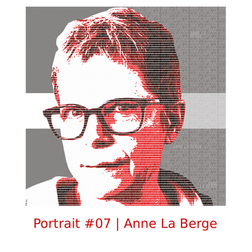
IMAfiction Portrait #07 | Anne La Berge
A Portrait by Rebekah Wilson [2015]. Language: English https://ima.or.at/de/projekt/imafiction_portrait07/ “Anne La Berge’s particular strength lies not only in her virtuoso playing or her lively interest in technology – she also clearly enjoys it. Whether she approaches the subject humorously or reflectively, one thing is certain: her sharp mind, scientifically trained by her father, doesn’t obscure the audience and their feelings, as she is never so preoccupied with herself that she can’t act in the here and now. Her music and performances are free of any cynicism or that postmodern critique that allows no joy. Her music is fascinating and infectious. As a listener, you admire her technique and want to know if her stories are true and where she draws her inspiration. As a composer-performer, you want to be on stage with her. We are fortunate to have composer-performers like Anne. I, for one, have always felt particularly at ease on stage when Anne was there. Her music and her personality are a virtually inexhaustible source of energy, and since she is constantly on the go and throughout the world "As the world performs and teaches, I'm sure that many, many others have also experienced how unwavering her joy in art is and how uncompromisingly she shares her passions." (Rebekah Wilson) supported by Lower Austria Culture, Federal Chancellery:Art, Academy of Fine Arts Vienna
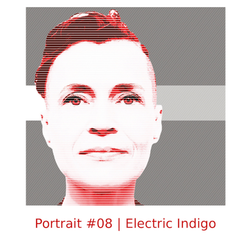
IMAfiction Portrait #08 | Electric Indigo
A portrait by Michaela Schwentner (2016). Language: Deutsch https://ima.or.at/de/projekt/imafiction_portrait08/ Her long-standing presence in DJ club scenes, conceptually experimental contexts, dancefloor-focused productions, and multimedia installation performances has repeatedly confirmed that Susanne Kirchmayr stands for an intelligent and outstanding interpretation of electronic music. By rejecting the common practice of splitting the creative self into project names and aliases, all facets of Kirchmayr's creative work form an artistic unity: Electric Indigo. Electric Indigo's versatility has led them to niche scenes and groups in Vienna and Berlin, to traditional practices of stage, film, and opera, and to paradigm-breaking performances realized with forward-looking compositional techniques as sound art. Despite all these diverse forms of expression, interests, and developments, Kirchmayr never felt the need to split herself in the process. "everything I do is equally distributed between performances, working on experimental compositions, DJing, and club music." Kirchmayr frequently employs intertextuality in her work; many of her sound art compositions and live performances are based on significant speeches or dialogue recordings. Her conceptual composition project – Barry Duffman – further develops this theme. Premiered at Wien Modern 2015, the source material for Barry Duffman consists of slick #1 pop chart hits. In her performances, Kirchmayr developed a method of deconstructing and reassembling diverse source materials. Through her conscious engagement with space, she creates acoustic, musical, linguistic, and graphic details, and explores spatiotemporal manipulations in sound design. Another significant work is Kirchmayr's granular synthesis project MORPHEME, performed at CTM Festival 2015. The basic material for MORPHEME is a nine-second recording of a sentence by Sadie Plant: “To let noise into the system is a kind of fine art in both cybernetic terms and in terms of making music, too.” Kirchmayr is constantly moving forward in her compositional process. "I'm totally counter-cyclical," she says, "I only go from hardware to software. I only use the computer and a few MIDI controllers, that's pretty much it." Kirchmayr embraces the sonic aesthetics of bass and drums; the starting point for all her musical projects. While one cannot speak of a distinct sonic signature, Kirchmayr's productions are characterized by subtle moods and textures in space and time. Kirchmayr is a veteran of the Viennese electronic music scene. Since her early days as a radio DJ in the 80s, she has explored hip hop, techno, experimental electronica, and sound art. She moved to Berlin in 1991, immersing herself in the burgeoning Berlin techno scene. Her first releases appeared in 1993 on Experimental and Disko B. In 1993, Kirchmayr founded indigo:inc recordings, while continuing to perform as a DJ in over 35 countries worldwide. Kirchmayr has long been a fixture at panels addressing composition and performance practice within the context of social issues. Kirchmayr developed the digital network and platform female:pressure in 1998. With the goal of supporting female producers, it has evolved into an important resource encompassing a global database and network for female artists in music, with members from over 65 countries. Female:pressure received an Honorary Mention at the Prix Ars Electronica 2009. Regarding her future, Kirchmayr simply states that she continues to strive to reconcile her different selves. “I’m slowly reaching the point where my two main musical interests – techno on the one hand, and music that could be described as electro-acoustic/avant-garde on the other – come together and merge into a single composition.”
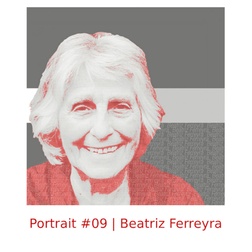
IMAfiction Portrait #09 | Beatriz Ferreyra
A portrait by Nathalie Singer & Elisabeth Schimana (2017). Language: Français How the tones come together (Sabine Sanio) Beatriz Ferreyra (1937) comes from a wealthy Argentinian family. Raised in Cordoba, her family moved to Buenos Aires when she was twelve. Nevertheless, they continued to spend every summer together with two other families and five pianos in their large house in Cordoba. Her entire family was musical, but everyone had different preferences: her father favored Wagner, Brahms, and Chopin; her mother was interested in Debussy, Stravinsky, jazz—and always brought back the latest records from visits to her family in the USA; one aunt played Brahms, another sang tangos, and Beatriz and her brother took piano lessons. It took her a long time to decide on music and a life as a composer. Searching for alternatives, she went to the USA at the age of 18, and finally, in 1961, to Europe, where she stayed with friends in Paris. Her parents refused to support her, and for a long time she took on all sorts of jobs, living in a small basement apartment. Her attempts to make a living from drawing were unsuccessful, so she spontaneously seized the opportunity to study composition with Nadja Boulanger. From her, she learned the seriousness and precision of the work. But when a composer friend, Edgardo Cantón, took her to a concert by the Groupe des Recherches Musicales, she was so captivated that she gave up her composition lessons. The music reached into infinity and opened up incredible possibilities for her. She became Cantón's assistant, learning how to edit tapes and work with filters. Shortly afterward, she participated in a course by Pierre Schaeffer and joined the team that created Schaeffer's "solfège de l'objet sonore." The road to recognition was long. During her time at the GRM, she began composing. To be independent of Schaeffer, Ferreyra left the GRM the moment she received a commission. Afterward, she did everything she could to compose: she accepted every commission and participated in every competition. Françoise Barriere and Christian Clozier, who were founding the Bourges Festival of Electronic Music, commissioned her to write a new piece after hearing her work "Medisances" (1968). She soon received a new commission every two years. One of the central aspects of electroacoustic music is the collection of sounds. Each of her compositions has its own unique sounds; she never reuses sounds from one piece for another. With a microphone, she records animals, people, or machines: her garden and household appliances serve as sources for "Les Larmes de l'inconnu." Equally important to her is the exploration of space, which she considers a central element of music: “For me, music is surrounding, music is like life.” She often compares large soundscapes to an orchestral score or a painting. The vast soundscapes in "La rivière de l'oiseaux" (1998/99) are based on grids generated from short, overlapping notes. Ferreyra uses the technique of shifting perspectives in her compositions, a technique familiar to her from Pierre Schaeffer's concept of reduced listening: one perceives sound as such, not as an effect or indication of something else. She composes intuitively; she has no rules: "It either works or it doesn't." Since "Canto del Loco" (1974), anything—image, sound, color, or form—can be the starting point for her associative composing. Following the trilogy "La rivière des oiseaux," another series of works emerged: four pieces she describes as her esoteric compositions. In "Dans un point infini" (2005), the sounds of violinist Veronika Kadlubkiewicz transport the listener to a boundless realm. "L'autre rive" (2007) originated from percussive sounds while reading the Tibetan Book of the Dead. "Un fil invisible" (2009/10) reflects her reading of C.G. Jung. "Les larmes de l'inconnu" (2011) is the final composition in this series.
IMAfiction Portrait #10 | Elisabeth Schimana
A portrait by Seppo Gründler & Johanna Moder (2018). Language: Deutsch Text by Solar Winds, Milena Meller, 2018 At the end of a railway line lies a station called Seestadt. From there, you reach Sonnenallee, which leads to the place where Elisabeth Schimana will perform her piece "In die Sonne". It's hot at the end of Sonnenallee, which opens into a large construction site. At the edge of this site stands a simple hall where the electronic music festival is taking place, and Schimana is opening it. People are lying on the ground, surrendering to the music. The piece "In die Sonne" begins very quietly. Clouds have gathered into a dark front; something is banging loudly against the wall outside. Later, Elisabeth Schimana will rave about how beautifully these disturbances blended with her composition. The sun's vibrations fill the dark space, making it vibrate more as Schimana layers in more low frequencies. Soils, Roots, Paths: In the context of her Virus series, Schimana speaks of the fertile ground on which the project was able to grow. For Virus, the listening experience of a performance of Iannis Xenakis's Terretektorh (1965/66) was a trigger. Schimana also cites her ongoing collaboration with Ö1 Kunstradio. The ideas of musique concrète, developed by Pierre Schaeffer, are also "one of the roots" of her work. Her background is reflected in her educational path: she took singing lessons and attended the course in fundamental harmonic research at the Vienna University of Music and Performing Arts, where she studied electroacoustic and experimental music. She completed studies in ethnology and musicology at the University of Vienna, as well as composition and computer music at the IEM in Graz. Important periods were her experiences in Moscow, where she immersed herself in the theremin at the Theremin Center. Her research-oriented approach is manifested in the founding of the IMA Institute for Media Archaeology in 2005, which she heads. Bodies, spaces, notations. Elisabeth Schimana is one of the pioneers of this field: with interdisciplinary projects, sound installations and radio works, projects in the techno context and live compositions, she has been exploring field after field since the 1980s. Listening to Space: “Since the beginning of my work as a composer of electronic music, I have been concerned with the placement of sounds in space." In live electronic projects, Schimana explores real architectures. In on tesar (2006–08), she performs within the specific space designed by architect Heinz Tesar. She explores the space of radio within the framework of Ö1 Kunstradio. Early on, she experimented with constellations that combine radio and the internet, for example in Die Fuge (1996). In ein dorf tut nichts (2000-01), she and Markus Seidl designed an experimental setup for the social space of a small village community. Hearing Bodies: In Obduktion (1996), Schimana works with recordings from the autopsy room. The theremin keeps its distance, forming an invisible aura around itself. The Max Brand synthesizer is a massive organism made of handcrafted connections. Elisabeth Schimana investigates its inner workings and brews organ-like masses of sound: Höllenmaschine (2009). Listening to the Score: In the large score (2001-06), Schimana, together with Seppo Gründler, develops a score whose basic structure determines work steps in which musical material is generated. Rethinking it with Virus (from 2011 onwards), she develops the concept of an auditory score that generates a non-written live composition. Edges, surfaces, stars: Elisabeth Schimana's music moves along the edges, in extremes. Working within the tension between concept and experiment, she translates scientific data into musical terms. Her work In die Sonne (2016) is inspired by research on solar vibrations. With a keen mind and persistence, Elisabeth Schimana creates music that implants itself in our ears.