Guided Practices for The Healing Circle

Guided Practices for The Healing Circle

por Dr. Ernesha Smith-West
Temporada 7

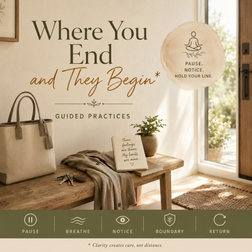
Where You End and They Begin

If you've lost track of where you end and someone else begins, this visualization is for you. We use breath and imagery to find the edges of yourself again, not to shut people out, but to know where you actually are. 📚 Healing Education Library → Series 1: Know Yourself — Session 6: "People-Pleasing Is a Trauma Response, Not a Personality" explains the roots of why the edges of self dissolve in relationships — and why this practice is rebuilding something that was never really about limits. 📁 Resource Vault → RV-02: Boundaries from Values, Not Fear — four tools to hold limits from identity instead of depletion. This is the practical guide for what this meditation visualizes. And RV-07: Over-Functioning in Love — for the boundary dissolution that shows up specifically in close relationships. 🏃 Movement Library → Embodied Movement Practices: The Embodied Movement series includes practices around personal space and physical self-definition, making this visualization real in the body, not just in the mind.
Temporada 6

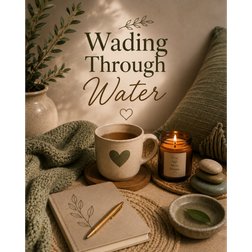
Wading Through Water

This practice uses the metaphor of wading through water slow, deliberate, meeting resistance with presence rather than force. For the emotion you can't think your way out of. For the season you have to move through rather than solve. The water doesn't stop you. You keep walking. 📚 Healing Education Library → Series 2: Feel It — Session 9: "What Happens When You Never Let Yourself Cry" explores what happens when we try to bypass the emotional water rather than wade through it. 📁 Resource Vault → RV-28: Sitting With What Can't Be Fixed — four tools for tolerating what won't be resolved quickly. The written companion for exactly the kind of season this practice is designed for. 🏃 Movement Library → Embodied Movement Practices: Slow, deliberate movement from the Embodied Movement series extends the wading metaphor into the body — motion through resistance rather than against it.

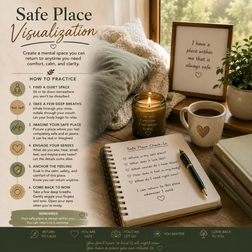
Safe Place Visualization

Before the deeper work before the grief, the anger, the hard conversation the nervous system needs somewhere safe to return to. This practice guides you through building that place internally. A resource you carry with you, not a destination you have to reach. 📚 Healing Education Library → Series 2: Feel It — Session 13: "The Nervous System 101 — Why You Can't Think Your Way to Calm" gives the neuroscience behind why an internal safe place is not a concept but an actual nervous system tool. 📁 Resource Vault → RV-22: The Freeze Response Nobody Talks About — if finding a felt sense of safety is difficult, this guide explores why the freeze response blocks it and gives tools to begin thawing gently. 🏃 Movement Library → Self-Compassion Exercises: After building the safe place internally, the Self-Compassion Exercises series helps you inhabit it physically — movement that says 'I am safe here' in the body.

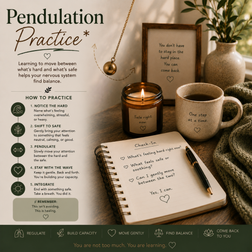
Pendulation Practice

Pendulation is a somatic therapy technique moving between a resource (something that feels stable or good) and a charge (the difficult feeling), back and forth, building tolerance gradually. This practice guides you through that rhythm so your nervous system learns to approach difficult material without flooding. 📚 Healing Education Library → Series 2: Feel It — Session 8: "Your Body Has Been Keeping Score" is the education foundation for understanding why pendulation works, the body stores experience, and the body is how we access and integrate it. 📁 Resource Vault → RV-68: The Somatic Release Worksheet gives you a written companion for body-based release work, use it alongside or after this practice to track what comes up and how it moves. 🏃 Movement Library → Somatic Exercises: The Somatic Exercises series uses physical movement as an extension of the pendulation rhythm, oscillating between activation and settling through the body.

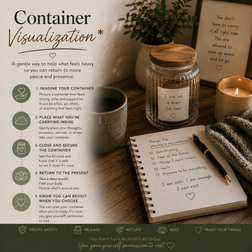
Container Visualization

This practice guides you through building an internal container — a mental structure for holding difficult emotion safely when you can't fully process it right now. You're not suppressing it. You're giving it a place to wait while you function. This is a somatic therapy technique used in trauma work. 📚 Healing Education Library → Series 2: Feel It — Session 9: "What Happens When You Never Let Yourself Cry" explores the difference between healthy containment and unhealthy suppression — the education layer for why this technique matters. 📁 Resource Vault → RV-03: The Emotions You're Not Naming gives you five tools to reconnect with your emotional experience — a natural follow-on after using this container for a period of time. 🏃 Movement Library → Somatic Exercises: Somatic Exercises series can help you return to the container and begin moving what's held there when you're ready to process rather than hold.

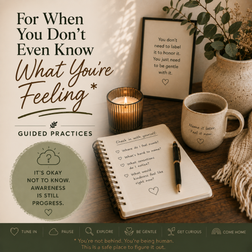
For When You Don't Even Know What You're Feeling

Sometimes the most honest answer to 'how are you feeling' is: I have no idea. This practice works with that. We skip the labels and go straight to the body, where the feeling lives before it has a name. 📚 Healing Education Library → Series 2: Feel It — Session 9: "What Happens When You Never Let Yourself Cry" — emotional fog often builds when we've been suppressing feeling for a long time. This session names that pattern clearly. 📁 Resource Vault → RV-47: When You Don't Know What You're Feeling — a structured prompt sequence designed specifically for this state. It walks you from 'I don't know' to something true, step by step. 🏃 Movement Library → Grounding Techniques or Somatic Exercises: When you can't name what you're feeling, movement sometimes clarifies what stillness can't. Try a Grounding Techniques session to land in the body first, then a Somatic session to let whatever is there begin to move.
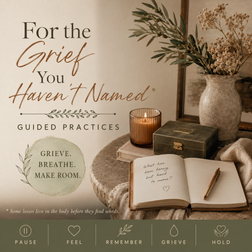
For Grief You Haven't Named

Grief doesn't only come from death. It comes from the version of your life that didn't happen, the relationship that changed, the part of you that had to be put down to keep going. This meditation creates space for that kind of loss. 📚 Healing Education Library → Series 2: Feel It — Session 12: "Grief Nobody Gave You Permission to Have" is the direct education partner to this meditation — it names the grief that doesn't have a socially recognized form and explains why unnamed grief stays stuck. 📁 Resource Vault → RV-25: The Grief You Haven't Named Yet — four tools to surface and witness the losses that never got a proper ceremony. And RV-28: Sitting With What Can't Be Fixed — for the grief that isn't solvable and needs a container rather than a resolution. 🏃 Movement Library → Embodied Movement Practices: Grief that's been named needs somewhere to go. The Embodied Movement series includes slow, intentional sequences designed to honor what the body is carrying without rushing it out.

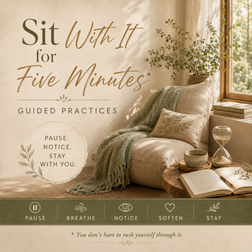
Sit With It for 5 Minutes

There's something you've been avoiding. This practice is a simple invitation to stay with it for five minutes, not solve it, not process it perfectly. Just stay. 📚 Healing Education Library → Series 2: Feel It — Session 9: "What Happens When You Never Let Yourself Cry" explores what the cost of emotional avoidance actually is — the accumulation that makes sessions like this one feel so loaded. 📁 Resource Vault → RV-03: The Emotions You're Not Naming — five tools to reconnect with your own emotional experience. If something surfaced but you can't name it yet, this guide bridges that gap. 🏃 Movement Library → Somatic Exercises: Staying with a feeling is internal work somatic movement is how you move it out. After this meditation, a Somatic Exercises session can help what you've been sitting with find an exit through the body.
Temporada 5

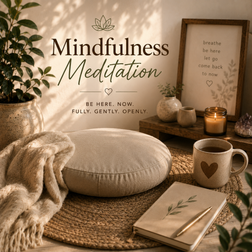
Mindfulness Meditation

A foundational mindfulness meditation breath as the anchor, present-moment as the practice, returning as the work. Not a body scan, not a visualization. Simply: be here. Notice when you leave. Come back. That's all. That's the whole thing. And it's harder and more healing than it sounds. 📚 Healing Education Library → Series 2: Feel It — Session 11: "Why You're Always On (And Can't Turn Off)" explains what mindfulness practice is actually doing in the nervous system — the education beneath the instruction. 📁 Resource Vault → RV-23: Five Tools to Regulate in Real Time — if formal mindfulness practice feels out of reach, this guide offers five shorter techniques for the real moments of your real day. 🏃 Movement Library → Mindful Stretching Practices: Mindful Stretching extends present-moment awareness from stillness into motion — the natural follow-on to a sitting mindfulness practice.

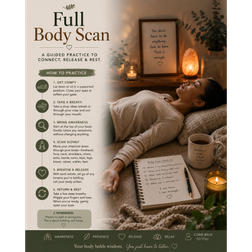
Full Body Scan

A longer, thorough body scan from crown to feet unhurried and detailed. This is the full version for when you have time and your body needs more than a five-minute check-in. Ten minutes of coming home to yourself completely. 📚 Healing Education Library → Series 2: Feel It — Session 8: "Your Body Has Been Keeping Score" is the education companion — it explains why a practice this simple carries this much healing weight. 📁 Resource Vault → RV-15: Reclaiming Your Body as Home — four somatic tools for building the ongoing relationship this practice opens up. Use after the scan to extend the awareness into real life. 🏃 Movement Library → Mindful Stretching Practices: After a full body scan, the Mindful Stretching series keeps you in your body and in motion — deepening the somatic awareness this practice creates.
3 de 6