A Convo Through History
por Tony & Watson Studios
The Indus Valley Civilization: A Tale of the Rise and Fall of a Lost Utopia
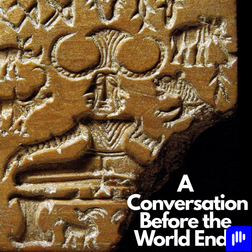
On todays’ episode on a conversation before the world ends. We will be looking at the Lost Civilization of the Indus Valley and How did this civilization emerge? Was it an indigenous development from the neighboring Baluchistan? Was it stimulated by the growth of Mesopotamia? What kind of system did it operate in where there is no palaces, royal graves, temples, rulers or priests? Why is there no evidence of warfare? Was there a religion? Was it a precursor to Hinduism? And lastly why did the Indus Valley decline after 1900 BC and why did it vanish from the historical records? Notes:Mark, Joshua J.. Indus Valley Civilization. World History Encyclopedia. Last modified October 07, 2020. https://www.worldhistory.org/Indus_Valley_Civilization/.The Indus: Lost Civilizations: Robinson, Andrew: 9781780235028: Amazon.com: Books. (2015, December 15). The Indus: Lost Civilizations: Robinson, Andrew: 9781780235028: Amazon.com: Books. https://www.amazon.com/Indus-Lost-Civilizations-Andrew-Robinson/dp/178023502XMusic:-India Theme - Ancient (Civilization 6 OST) | Vaishnava Jana ToThe instrumental version of Red Alert 3 Theme (Soviet March) by James HanniganMOHENJO DARO: A Song of Mystery? | Shail VyasInsta: @convo_btweTwitter: convo_btweFacebook: A Conversation Before the World Ends Tiktok: convo_btwe
1755 Lisbon Earthquake!! (The Apocalypse in the Age of Science and Reason)
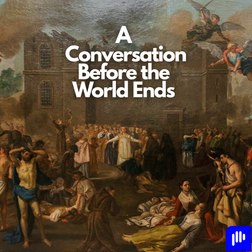
All saint’s day, November 1, morning in 1755, something occurred that changed the trajectory of not only his life but also that of the Portuguese Empire. On today’s episode of A Conversation Before the World Ends, we will be venturing back to 1755, at height of the Portuguese empire and look at the earthquake that shook the empire and the world. Our thoughts go out to all those affected by earthquakes in Syria and TurkeyLinks to Donations for Syria and Turkey:- - https://www.akut.org.tr/en/donation- https://giving.unhcr.org/en/sy/- https://www.oxfamamerica.org/explore/stories/oxfam-mounting-response-to-massive-earthquake-in-t%C3%BCrkiye-and-syria/- https://donation.ifrc.org/?campaign=3f5f91aa-e8da-e911-80e2-0050560100a8- https://ahbap.org/- https://my.care.org/site/Donation2?36068.donation=form1df_id=36068mfc_pref=Ts_src=172320TSEM00s_subsrc=FY23FEBTSEQEMRMOInsta: @convo_btweTwitter: convo_btweFacebook: A Conversation Before the World Ends Tiktok: convo_btwe
The Huns, Attila and the Fall of Rome
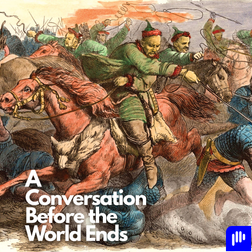
The year is 376, summer. A massive number of Goths arrived at the Danube River. The once long-standing frontier of the roman empire. The goths who were a mix or changing confederation of different tribes. For a more than a century the goths had been in some way, or another exposed to the romans, if it’s through fighting, trading and on occasions the romans would recruit the goths as soldiers to serve them in faraway places such Syria and Palestine. When the goths came to the borders of the Roman Empire, they were not coming as invaders or planning to take over but rather they came as refugees and migrants, who had run from their lives from their settlements. They were two groups. The Thervings led by Fritigern and Alavivus and another group is Greuthungi led by Alatheus and Saphrax. Numbering at about 90,000 civilians. The goths requested permission to the Eastern Roman Emperor Valens, and many did but this let to a food shortage and the Thervings began to starve with many goths resulting to sell many of their children into slavery for dog meat. This led to a rebellion by the migrant goths leading to an assault on Marcianople leading to the death of Alavivus. This kicked off a series of battles such as the battle of Adrianople where Emperor Valen falls on the battlefield that would eventually begin the downfall of Rome. But what led to the migration of the goths to the borders of Rome. Leaving behind their homes and livelihoods. What brought the goths into conflict with Rome and who were the HUNS, a group so feared that the goths would rather fight Rome than go back Music by:- -Aetas Romana composed and arranged by Adrian von ZieglerNotes:- TREE RING STUDY SUGGESTS DROUGHT ENCOURAGED ATTILA’S HUNS TO ATTACK THE ROMAN EMPIRE- https://www.heritagedaily.com/2022/12/tree-ring-study-suggests-drought-encouraged-attilas-huns-to-attack-the-roman-empire/145540-The Goths and the Huns: The Barbarian Pressure on Rome https://www.wondriumdaily.com/the-goths-and-the-huns-the-barbarian-pressure-on-rome/?utm_source=pocket_reader-Hakenbeck, S., Büntgen, U. (2022). The role of drought during the Hunnic incursions into central-east Europe in the 4th and 5th c. CE. Journal of Roman Archaeology, 1-21. doi:10.1017/S1047759422000332- Mark, J. J. (2018, April 25). Huns. World History Encyclopedia. Retrieved from https://www.worldhistory.org/Huns/Insta: @convo_btweTwitter: convo_btweFacebook: A Conversation Before the World Ends Tiktok: convo_btwe
The Third Way: New Democrats, New Labour and a New Center
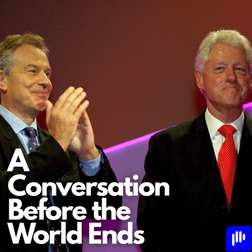
Historian Tony Judt once said in a New York Times article in 1998 that “Each age has its Cliché. Ours in the third way”. The 1990s were always at least in popular memory considered the nonpolitical decade. The Soviet Union dissolved effectively, bringing the end to the cold war. Fukuyama wrote that “not just ... the passing of a particular period of post-war history, but the end of history as such: That is, the end-point of mankinds ideological evolution and the universalization of Western liberal democracy as the final form of human government”. This was the birth of new world order as British Prime Minister Tony Blair would announce “Not old Left or new right but a new center and center-left governing philosophy for the future”. The 1990s would see Tony Blair and Bill Clinton along with other euro leaders would attend a series of international retreats. In October 1998, Anthony Giddens published his The Third Way. A 150 page manifesto which was a call for a “renewal of Social Democracy” not right or left but forward. It would usher in a new economy, new labor, new democrats, nu metal, a new middle. But what was this new vision. The third way drew skeptical appraisals from both the right and left. Who argued that it was a vague and ambiguous statement. The Economist derisively stated in 1998, “Trying to pin down an exact meaning is like wrestling an inflatable man. If you get a grip on one limb, all the hot air rushes to another.” Jeff Faux of the Economic Policy Institute likewise noted that while “Clinton and Blair are two of the most articulate politicians of the age…their definitions of the third way leave the observer without a clue as to what it means.”What is the third way? And how this new centrism ideology of the 90s change politics 30 years on. Welcome to a conversation before the worlds ends and today we will be looking at the Third Way. Background Music by Karl Casey @ White Bat AudioOutro Music provided by Free Music TunesTrack: Were Wolves - Break Stuff (Limp Bizkit Cover)Link: https://youtu.be/ng7dSG7sCYINotes:- How the Third Way Made Neoliberal Politics Seem Inevitable-https://www.thenation.com/article/politics/third-way-dlc-bill-clinton-tony-blair-1990s-politics/How the Democrats Traded the New Deal for Neoliberalism-https://jacobin.com/2022/07/democratic-party-neoliberalism-dlc-clintonA brief history of the third way-https://www.theguardian.com/politics/2003/feb/10/labour.uk1How the Democrats Learned to Stop Worrying and Love the Free Market-https://jacobin.com/2022/07/new-democrats-blue-centrist-clintonism-welfare-reformLeft Behind: The Democrats Failed Attempt to Solve Inequality-https://a.co/d/5oxMGlpInsta: @convo_btweTwitter: convo_btweFacebook: A Conversation Before the World Ends Tiktok: convo_btwe
The Late Bronze Age Collapse and The Tribe That Came From the Sea

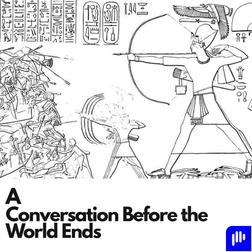
The year was 1177 BC. The 8th year of Ramses III’s reign a group of people set up camp in Canaan and would use this as a launch point for their attacks. Coming in from the land and sea. They had no uniform. Each group wears different headdresses from feathered ones to skull caps. Some wore beards and kilts, others wore garments. Armed with everything from bronze swords to wooden spears, bows and arrows. They came on boats, wagons. Sometimes alone, other times with their families.According to Ramses’ inscription, no country was able to fend off this mass warring people. Resistance was futile. The Hittites, Mycenaeans, the Canaanites, the Cypriots fell one by one. If you survived, you fled the carnage, others tried to pick up what remained from the ruined the nation; others joined the invaders. Outside of Egypt, all the other powers that would make up the bronze age would disappear, if not immediately than within the next 50 to 100 years. It was the end of the civilization. But could they have been attributed for the destruction of the bronze age? And who were these people? Were they some sort of ancient crusades. Disciplined with a goal in mind? Were they a group of loosely assembled marauders, the Vikings of the ancient world? Perhaps refugees seeking new land? Perhaps a combination of all the above. On today’s episode on A conversation Before the World Ends, we will be looking at the collapse of the Late Bronze Age and the “Perfect storm” that brewed in 1177 BC: The Year civilization came to an end. Music:-Darren Curtis - Temple of Endless Sands is under a Creative Commons (cc-by) licenseMusic promoted by BreakingCopyright: https://bit.ly/b-egyptianNotes:Eric H. Cline, 1177 B.C.: The Year Civilization Collapsed | https://amzn.to/2ClWgpORobert Drews, The End of the Bronze Age: Changes in Warfare and the Catastrophe ca. 1200 B.C. | https://amzn.to/2CkJ7NCWhat Caused the Bronze Age Collapse? | https://www.history.com/news/bronze-age-collapse-causesInsta: @convo_btweTwitter: convo_btweFacebook: A Conversation Before the World Ends Tiktok: convo_btwe
Argentina '78 (Or, Remembering the Dirtiest World Cup of All Time)
To all those that disappeared and their families. We hope youll eventually find solace and peaceThe idea of sports and politics don’t mix isn’t always enforced, it’s hard to keep them apart. From ancient times, the idea of politics and sports have always been interlinked. From ancient Greeks would take apart in games in which city states would send their best athletes to compete against one another. The Mayans held a similar practice too and this is no more evident than football, where the world cup from its inception was riddled with agendas, deals and power plays. From a petty gestures such as Uruguay’s boycott of 1934 world cup in Italy over how it felt that most of the European teams never showed up when they hosted it 4 years prior to matters of principle as when the Soviet Union refused to play Chile away during a 1973 qualification play-off at the same stadium where Pinochet had left wing prisoners executed. When the 2018 world cup was announced that it will take part in Russia, every one felt uneased by the fact it was taking place in an oppressive country that had just annexed parts of Ukraine and Georgia that also has links with putting down any criticisms and or political opponents with people harking back to when the Olympics were hosted in Berlin in 1936. If the boycotts against Russia felt half-hearted than the same cannot be said about 1978. The boycotts came in early and with convictions. It almost worked. On June 1st 1978, at the el monumental stadium in Buenos Aries, A couple hundred children moved into their positions. The children spelled out Argentina ’78 before the words Mundial FIFA. A flock of what looked more like pigeons was released into the sky and the world cup was underway. General Jorge Rafael Videla, the leader of Argentina’s ruling military Junta stood and announced to 80,000 people would be played under the sign of peace. In an hearing distance of the stadiums drums, a mile away from the campus of Navy Petty Officers School Mechanics, the Military’s makeshift torture camp was operating where any and all dissidents were taken to. The Disappeared. A term used to describe the victims of State Sponsored terrorism and while this was happening the world cup continued. The sounds of steel drums and crowds roaring heard by tortured prisoners down the street.Outro provided by Canal Encuentrohttps://www.youtube.com/@encuentro/aboutMusic: Dark Crimes by SoundridemusicCopyright: GOLOVACH, VOLODYMYRPublisher: Songtrust Blvd IPI #615755145P.R.O.: IPI# 00382646438Link to Video: https://youtu.be/BEVg8Chp9OENotes:Remembering Argentina 1978: The Dirtiest World Cup Of All Time https://www.esquire.com/uk/culture/a21454856/argentina-1978-world-cup/he dark story of the murderous dictatorship behind Argentinas 1978 World Cup winhttps://www.goal.com/en-sa/news/the-dark-story-of-the-dictatorship-behind-argentinas-1978-world-cup-win/1k53qqcgt7r8q19xcawarwgslsArgentinas 1978 World Cup win against Peru was fixed in a brutal political deal, former senator sayshttps://shortest.link/9kiuKissinger approved Argentinian dirty warhttps://www.theguardian.com/world/2003/dec/06/argentina.usaArgentina’s bittersweet winhttps://www.latimes.com/archives/la-xpm-2008-jun-28-fg-mundial28-story.htmlHenry Kissinger and football’s longest unsolved riddlehttps://www.channel4.com/news/dr-henry-kissinger-and-footballs-longest-unsolved-riddleInsta: @convo_btweTwitter: convo_btweFacebook: A Conversation Before the World Ends Tiktok: convo_btweIvan the Terrible (Russia's First Tsar)
Today, the term Terrible can refer to anything from a very lousy dinner to a catastrophic calamity that kills millions. When it was conferred on Russian tsar Ivan IV in the 16th century, it explicitly meant awe-inspiring, mighty, and formidable. However, if we look at the reign of one of the most paranoid, violent, and unpredictable individuals to control the country, then the current term of very awful isnt that far off the mark after all. So, what was it that made Ivan so Terrible?Notes: - 1- Ivan the Terrible by Isabel de Madariaga https://www.amazon.com/Ivan-Terrible-Isabel-Madariaga/dp/03001197392- Fearful Majesty: The Life and Reign of Ivan the Terrible by Benson Bobrickhttps://www.amazon.com/Fearful-Majesty-Life-Reign-Terrible/dp/18801008433- Ivan the Terrible by Robert Payne https://www.amazon.com/Ivan-Terrible-Robert-Payne/dp/0815412290Insta: @convo_btweTwitter: convo_btweFacebook: A Conversation Before the World Ends Tiktok: convo_btwe
Horror and Other Things We Were Afraid to Ask Hitchcock
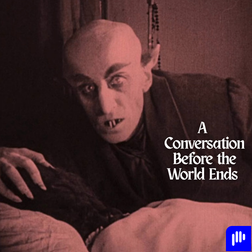
It’s no secret that we are going through a new golden age of horror films. Horror movies have for the most part been critical and financial darlings. With some ending up on the top 10 lists across respectable publications covering a plethora of different concepts and topics from cult leaders to religious hysteria, aliens killing toddlers, demons killing toddles, toddlers killing parents. But What is horror? Is it fearing things that bump in the night? Is it the mourned howls of the dead that come with the wind. These have haunted the human consciousness as far back as we developed something called consciousness. The last two episode we tackled two topics that seem to predate written history: the unwelcome return of something beyond our senses. There is a theory that I have ascribed to. That everything we have achieved and have not achieved stems from the threat of death. The terror of death. From religion to sexual desire. The urge of facing death or cheating death seems to be as primal. Does the fear of death drive us? The depiction of death in art has been around since the start of cave paintings to the movie screens. But did that constitute as horror?Horror, as a term first appears in early 14th century, which means “feeling of disgust or sordid and vulgar”. And once Gothic Romanticism appeared in the late 18th century, the word horror showed up in prose. Where the term would get more of its modern meaning. In Robert Southey’s poem To Horror where he echoes his love to the eerie, Nathan Drake used the word interchangeably with disgust.How did this word become associated with fear and how Horror movies for the most part have been shaped by our changes in society, culture, politics and technology but to understand the evolution of horror movies and monsters we are going to have to go back to the origins of the horror genre in films. on tonight’s episode we will be looking at horror films, how they highlighted and manifested our greatest fears. Notes:-How The Horror Genre Reflects Societal Fears Throughout Timehttp://scribe.usc.edu/how-the-horror-genre-reflects-societal-fears-throughout-time/HISTORICISM IN “THE SHINING” – BY FREDRIC JAMESONhttps://scrapsfromtheloft.com/movies/historicism-in-the-shining/100 Years of Horror: Culture Shock: The Influence of History on Horrorhttps://bloody-disgusting.com/editorials/20853/100-years-of-horror-culture-shock-the-influence-of-history-on-horror/Why the 1980s Is the Best Decade for Horrorhttps://www.thefilmagazine.com/why-1980s-horror-is-the-best/How Horror Reflects Societal Fearshttps://www.thereviewgeek.com/howhorrorreflectssocietalfears-article/Insta: @convo_btweTwitter: convo_btweFacebook: A Conversation Before the World Ends Tiktok: convo_btwe
It's the Devil (The Story behind the Exorcist and Exorcisms)
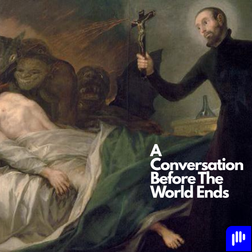
The notion of exorcisms have lingered in the zeitgeist so insistently along those religious and superstitious. The idea that a malicious spirit or demon would take control of your body, your vessel, suppressing the soul might sound outdated to some but for others the devil is real and he is everywhere. He’s influencing you to do yoga, seducing you to the dark realm through your television, speaking to you through music but how did this medieval phenomenon make a come back in the 20th and 21st century. Was it the fault of one 1973 film? Joseph Laycock, the editor of the Penguin book of Exorcism explained, in modern US, exorcism was once rare…all this changed after 1973 when the exorcist created a massive demand Further Reading:Poole W. S. (2009) Satan in America: The Devil We Know. Lanham, MD: Rowman Littlefield.Chambers, A. C. (2021). ‘Somewhere between science and superstition’: Religious outrage, horrific science, and The Exorcist (1973). History of the Human Sciences, 34(5), 32–52. https://doi.org/10.1177/09526951211004465@Salon. “Vatican Unleashes Exorcist for Campaign of Crazy | Salon.com.” Vatican Unleashes Exorcist for Campaign of Crazy, 17 Mar. 2010, www.salon.com/2010/03/17/catholic_exorcist_blames_satan.Elwes, Jay. “The Insatiable Human Appetite for Exorcism.” The Insatiable Human Appetite for Exorcism, Mar. 2010, www.prospectmagazine.co.uk/society-and-culture/the-insatiable-human-appetite-for-exorcism-laycock-review.Insta: @convo_btweTwitter: convo_btweFacebook: A Conversation Before the World Ends Tiktok: convo_btwe
If You Have Ghosts (A Collection of 3 Ghost Stories from 3 Different Countries)
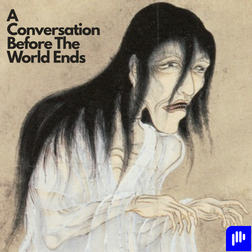
From ancient Babylon to China, Native America to Shinto Japan, Shakespeare to The Shining, ghost stories have been passed down from century to century, through oral traditions or the written word. It doesnt matter if its a vindictive king, a weeping woman, or an apartment building. These stories have influenced our contemporary imagination. The belief is so widespread that it is considered a cultural universal. Following ghosts through time and space, from dusty spirits to ghosts in machines, reveals that ghosts have a unique ability to reflect the worries of their historical moment. Paying attention to what frightens them can teach us about ourselves.Today we will look at how ghosts have persisted and evolved over time by looking at 3 different ghost stories from 3 different parts of the world and how they differed over time. Welcome to a Conversation Before the world ends and we will be looking at the History of Ghosts:Music: HORROR THEME composed and produced by Vivek AbhishekMusic link : https://youtu.be/LwjzmdiRFpcYurei composed and produced by KraosandoExtra Reading:A Japanese Ghost Story : Yotsuya Kaidanhttps://www.peak-experience-japan.com/blog/652Simpson, William K. (1972). Simpson, William Kelly (ed.). The Literature of Ancient Egypt: An Anthology of Stories, Instructions, and Poetry. translations by R.O.Charles Edwin Price (January 1994). The Infamous Bell Witch of Tennessee. Johnson City, Tennessee: The Overmountain Press. pp. 38–40. ISBN 978-1-57072-008-6.Insta: @convo_btweTwitter: convo_btweFacebook: A Conversation Before the World Ends Tiktok: convo_btwe