A Conversation Before The World Ends

A Conversation Before The World Ends

por Tony & Watson Studios
Temporada 2
Britain's Policy of Deceit in Palestine
Explícito
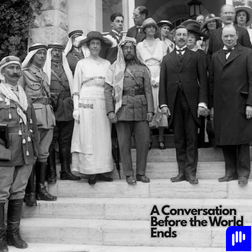
After nearly two years, A Conversation Before the World Ends returns with an examination of how the British Empire engineered permanent conflict in Palestine through systematic deception.Between 1915 and 1925, Britain made contradictory promises to Arabs, European allies, and Zionists about the future of Palestine, promises they knew could never be reconciled. This episode traces the McMahon-Hussein Correspondence, the secret Sykes-Picot Agreement, the Balfour Declaration, and the mandate system that transformed wartime lies into international law.Drawing on British government documents, internal memos, and the admissions of officials like Foreign Secretary Arthur Balfour himself, this is the story of calculated imperial betrayal and the foundations of a century of conflict.This is the first in a series of periodic episodes exploring Palestine's history. We'll return to this topic throughout the year, examining events like the King David Hotel bombing, the 1948 Nakba, and the Six-Day War alongside other historical deep-dives.
Exploring the Foundations of Zionism
Explícito
In this illuminating prelude episode, we set the stage for our deep dive into the complex tapestry of the Palestine-Israel conflict. Join us as we unravel the origins and ideological underpinnings of Zionism, the driving force behind the establishment of the state of Israel. From the early pioneers to the philosophical roots, we provide a quick but comprehensive overview, laying the groundwork for a nuanced understanding of the historical narrative. This episode serves as a gateway, offering essential insights into the genesis of Zionism and its role in shaping the intricate dynamics that continue to shape the region. Tune in to grasp the foundations that will guide our exploration through the unfolding chapters of this compelling historical saga. further readings:1) Sand, S. (2014). The invention of the land of israel - from holy land to homeland. Orca Book Services. https://www.amazon.com/Invention-Land-Israel-Holy-Homeland/dp/1781680833 2) THOMPSON, G. (2022). Legacy of empire: Britain’s support of Zionism and the creation of Israel. SAQI BOOKS. https://www.amazon.com/Legacy-Empire-Britain-Zionism-Creation/dp/0863564828 3) PAPPE, I. (2024). Ten myths about Israel. VERSO BOOKS. https://www.amazon.com/Myths-About-Israel-Ilan-Pappe/dp/1786630192 4) Laqueur, W. (1972). A history of Zionism. Amazon. https://www.amazon.com/History-Zionism-French-Revolution-Establishment/dp/0805211497 Insta: @convo_btweTwitter: convo_btweFacebook: A Conversation Before the World EndsTiktok: convo_btwe
The Third Horseman (or, The Great Famine of 1315)
Explícito
In this chilling episode, we journey back to the dawn of one of the most catastrophic centuries in European history. The year is 1315, and a famine of unprecedented scale grips the continent, marking the beginning of a century of despair. Unrelenting rains lead to failed harvests, and soon, the eerie silence of empty markets is replaced by the desperate cries of the starving. This Great Famine, a grim harbinger of the trials to come, would forever alter the course of history. As we navigate through this bleak period, we’ll also explore its far-reaching impacts, including how it sowed the seeds for stories that resonate even today, such as the haunting tale of Hansel and Gretel. Join us as we uncover the chilling realities and enduring influences of the Great Famine.”Notes:- - “The Great Famine: Northern Europe in the Early Fourteenth Century” by William Chester Jordan- “The Third Horsemen: A Story of Weather, War and the Famine History Forgot” by William RosenInsta: @convo_btweTwitter: convo_btweFacebook: A Conversation Before the World Ends Tiktok: convo_btwe
The Mystery of Gobekli Tepe or: How the World’s Oldest Temple Rewrote History
Explícito
What if I told you that there is a place in Turkey that is older than the pyramids, Stonehenge, and even civilization itself? A place that was built by hunter-gatherers who had no writing, no metal tools, and no farming. A place that was abandoned and buried for thousands of years, until it was rediscovered in the 20th century. A place that challenges everything we thought we knew about the origins of religion, art, and society.Welcome to Gobekli Tepe, the worlds first temple.In this episode, we will explore the mysteries and wonders of this ancient site, where giant stone pillars are carved with animals and humans, forming circular enclosures that may have been used for rituals and ceremonies. We will learn about the people who built it, how they did it, and why they did it. We will also discuss the latest theories and discoveries that shed light on this enigmatic sanctuary and its role in the dawn of civilization.Join us as we travel back in time to Gobekli Tepe, the lost world of the hunter-gatherers.Notes:- Kropacek, Nicholas. Lost Civilisations of Anatolia: Göbekli Tepe. World History Encyclopedia. World History Encyclopedia, 08 Dec 2020. Web. 11 Sep 2023.- Curry, Andrew. “An immense mystery older than Stonehenge.” BBC Travel, 16 Aug. 2021, https://www.bbc.com/travel/article/20210815-an-immense-mystery-older-than-stonehenge.- Schmidt, Klaus. Göbekli Tepe: A Stone Age Sanctuary in South-Eastern Anatolia. Ex Oriente e.V., 20121.- Mardon, Austin A., et al. Göbekli Tepe: A Glimpse into Humanity’s Distant Past. Golden Meteorite Press, 20211.Insta: @convo_btweTwitter: convo_btweFacebook: A Conversation Before the World Ends Tiktok: convo_btwe
History in a Glass: The Ancient Origins of Beer
Explícito
Beer is one of the oldest and most popular beverages in human history, dating back to the ancient Mesopotamians who brewed it from grains, water, and yeast. Beer was considered a divine gift, a daily necessity, and a source of joy and wisdom by various cultures, such as the Egyptians, the Greeks, the Romans, and the northern Europeans. Beer also influenced the art, literature, religion, economy, and law of these civilizations, as well as their interactions with each other. Join us as we explore the origins and evolution of beer in ancient times, and discover how this beverage shaped the lives and cultures of our ancestors. Cheers to history in a glass!Notes: - -The beer of yesteryearhttps://www.theguardian.com/lifeandstyle/wordofmouth/2010/oct/27/old-ale-beer-history-Beer in the Ancient Worldhttps://www.worldhistory.org/article/223/beer-in-the-ancient-world/#ci_related_filters=type:2page:1-The Hymn to Ninkasi, Goddess of Beerhttps://www.worldhistory.org/article/222/the-hymn-to-ninkasi-goddess-of-beer/- Mark, Joshua J.. Beer in Ancient Egypt. World History Encyclopedia. World History Encyclopedia, 16 Mar 2017. Web. 23 Aug 2023.Insta: @convo_btweTwitter: convo_btweFacebook: A Conversation Before the World Ends Tiktok: convo_btwe
Cleopatra: The Last Queen of Egypt
Explícito
Who was the real Cleopatra? Throughout history, Cleopatra has been the subject of various interpretations. She has been depicted in different forms, including as an asteroid, a video game character, and a symbol associated with Elizabeth Taylor. Shakespeare famously acknowledged Cleopatras complexity, but the true details of her appearance remain elusive. Coin portraits from her time, likely approved by Cleopatra herself, are the most reliable sources.Cleopatras legacy is often remembered for the wrong reasons. She was a capable and astute ruler, skilled in military matters and adept at governance. In an era where women rulers were not uncommon, Cleopatra stood out as the sole female leader who played a significant role in Western affairs. She possessed immense wealth and enjoyed a level of prestige unparalleled by her contemporaries. Despite her accomplishments, Cleopatra is often mischaracterized as a seductive temptress, reflecting societys tendency to diminish genuinely powerful women.Cleopatras alliances with Julius Caesar and Mark Antony shaped her reign and ignited a love affair that captivated the ancient world. Well unravel the complexities of her relationships and examine the dynamics of power and influence between her and these two powerful Roman figures. Her interactions with them would seal her fate and impact the course of history.Among historys most famous women, Cleopatra VII reigned over Egypt for twenty-two eventful years. She experienced the loss and regaining of her kingdom, the expansion and loss of her empire, and held immense power and influence. From a young age, Cleopatra captivated attention and was subject to speculation and rumors. At the height of her rule, she controlled a vast territory, making her the last significant Egyptian ruler. Cleopatras personal life also attracted attention, as she had children with married men and ultimately met a sudden and sensational demise at the age of thirty-nine.In todays episode of A Conversation Before the World Ends, we delve deep into the captivating story of Cleopatra VII, the last queen of Egypt. Join us as we uncover the secrets, the betrayals, and the triumphs of a woman who defied expectations, challenged empires, and left an indelible mark on history. Our journey takes us through the opulent courts of Alexandria, the treacherous political landscape of ancient Rome, and the scorching sands of Egypt, as we explore the life and reign of one of historys most intriguing figures.Further Reading/Notes:-  Schiff, Stacy (2011) Cleopatra: A Life. Back Bay Books - Strauss, Barry (2022) The War That Made the Roman Empire: Antony, Cleopatra and Octavian at Actium. Simon Schuster-Tyldesley, Joyce (2010) Cleopatra, Last Queen of Egypt. Profile BooksInsta: @convo_btweTwitter: convo_btweFacebook: A Conversation Before the World Ends Tiktok: convo_btwe
Iraq War Part 4: How To Start A War (2000-2003)
Explícito
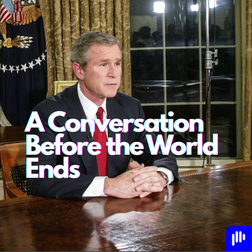
In this gripping episode, we delve into a pivotal moment in modern history—the entry of America into Iraq. Join us as we explore the circumstances, motivations, and repercussions surrounding the controversial decision that shaped the geopolitical landscape for years to come.We begin by setting the stage, providing a comprehensive overview of the factors that led to Americas decision to invade Iraq in 2003. From the aftermath of the 9/11 terrorist attacks to the perceived threat of weapons of mass destruction, we dissect the events and political climate that culminated in this momentous military campaign.Furthermore, we address the controversies surrounding the intelligence failures regarding weapons of mass destruction, the lack of a coherent post-invasion plan, and the subsequent sectarian violence that engulfed Iraq. We also examine the impact of the war on the global stage, including strained international relations and the rise of new extremist groups.Finally, we reflect on the lasting legacy of Americas entry into Iraq. We explore the long-term consequences, such as the destabilization of the region, the refugee crisis, and the shift in power dynamics that still reverberate today. Join us as we delve deep into this crucial chapter in American and global history, unearthing the complexities, controversies, and lasting effects of Americas entry into Iraq.Insta: @convo_btweTwitter: convo_btweFacebook: A Conversation Before the World Ends Tiktok: convo_btwe
Iraq War Part 3: Desert Storm and the Shackles of Sanctions (1988-2001)
Explícito
In this compelling episode, we delve into the dramatic events surrounding the Desert Storm military campaign and the subsequent imposition of sanctions on Iraq. Join us as we explore the far-reaching consequences of these interconnected events and shed light on the complex dynamics that unfolded during this critical period.We start by setting the stage with the build-up to Desert Storm, examining the geopolitical tensions, territorial disputes, and power struggles that ultimately led to the military intervention. We dive into the military strategies, key players involved, and the impact of the campaign on the region.Following Desert Storm, we shift our focus to the punitive measures imposed on Iraq through international sanctions. We examine the motivations behind the sanctions, the goals they aimed to achieve, and the controversies surrounding their implementation. We explore the economic, social, and humanitarian ramifications faced by the Iraqi people as a result of these measures.Moreover, we investigate the geopolitical implications of these events, delving into the strained relationships between Iraq and the international community. We analyze how the sanctions affected Iraqs regional standing, its relationship with neighboring countries, and the broader dynamics in the Middle East.As we reflect on the lasting impact of Desert Storm and the sanctions on Iraq, we also address the controversies and debates that have arisen in the aftermath. We examine differing viewpoints on the effectiveness, ethics, and unintended consequences of these interventions, inviting listeners to critically engage with this complex chapter of history.Join us on this enlightening journey as we unravel the intertwined narratives of Desert Storm and the subsequent sanctions on Iraq, exploring their profound implications on the region, its people, and the broader global order.Insta: @convo_btweTwitter: convo_btweFacebook: A Conversation Before the World Ends Tiktok: convo_btwe
Iraq war Part 2: Saddam Hussein and the Iran-Iraq war (1963-1988)
Explícito
So where did we leave of We really had the Ts crossed on what was happening, says James Critchfield, the head of the agency in the Middle East which organized it. We regarded it as a great victory. When we left Iraq it was during the February Coup which was organized by the Ba’ath party in 1963 and this would be the last time an Iraqi would lost their grip on the country without a full on foreign invasion. Iraqis always suspected that the Coup of 63 was engineered by the CIA in much the same way they had restored the Shah into power in 1953. The only difference was the Iraq coup was a lot bloodier which ended with their President General Abdel-Karim Qasim being tied to a chair and shot dead. Now the CIA didn’t really end there, they also played a role in preparing a shitlist of those who should be eliminated after the coup to solidify the Ba’athist regime. As the CIA lists reached Baghdad the result was a massacre of extraordinary ferocity. Pregnant women and old men were killed, some tortured to death in front of their children. It was the height of the Cold War. The CIA had just tried and failed to orchestrate the overthrow of Fidel Castro in Cuba by a rebel invasion force. America was increasing its involvement in Vietnam, where it similarly backed the elimination of 20,000 communists and anti-government sympathizers by assassination squads under the CIAs Phoenix program. A similar CIA- backed purge was about to be carried out in Indonesia.The foreign base for the Iraqi coup was Kuwait, something Saddam Hussein may have remembered when he invaded the emirate in 1990. King Hussein of Jordan, who had close relations with the CIA, says that during the planning phase of the coup many meetings were held between the Baath party and American intelligence - the most critical ones in Kuwait. King Hussein of Jordan would tell Egyptian writer Mohammad Heikal that on the day of the coup, a secret radio broadcast was made from Kuwait “that relayed the name and addressed of the communists to those that carried out the coup. Iraq would drop the claim that Kuwait was there’s for the time being. On Tonight’s episode of a conversation before the world ends we are venturing part to Iraq but this time under the control of the Ba’ath party and most notably Saddam Hussein. We will learn about his upbringing, the party that took him in, His purge to supremacy and the conflicts that would make him Super Villain No. 1 and the role that the US played in all that. Insta: @convo_btweTwitter: convo_btweFacebook: A Conversation Before the World Ends Tiktok: convo_btwe
Iraq War Part 1: Once Upon a Time in Iraq (1920s-1963)
Explícito
On march 20th 2003. The most powerful military in the world announced that will go into Iraq to get rid of a bad guy and this would be the beginning of a new new  world order. The Bush administration made it abundantly clear that this was the idea. Ofc the invasion fell to shambles and the war in Iraq became the biggest stain on Bush’s legacy at least until he left. It became the 21st century Vietnam. Pulling human lives, neighboring countries and trillions upon trillions of dollars into this black hole changing the trajectory of not only both countries but also the Middle east and the entire world forever On today’s episode of A Conversation Before The World ends the first of a series where we will be venturing to Iraq and not just talk about the war on Iraq but the events that took place in Iraq in the last century. From the post-ottoman-to the rise of Saddam-to the first and Second Gulf war and try to understand how and why did this war take place and could it have been avoided.Notes:https://www.theatlantic.com/magazine/archive/1958/12/the-lesson-of-iraq/306494/?utm_source=copy-linkutm_medium=socialutm_campaign=sharehttps://www.smithsonianmag.com/history/iraqs-unruly-century-82706606/?utm_source=pocket_saveshttps://countrystudies.us/iraq/18.htm?utm_source=pocket_savesUnholy Babylon : the secret history of Saddams war by Darwish, Adel; Alexander, Gregory “Our last occupation,” Jonathan Glancey, The Guardian, 2003.Insta: @convo_btweTwitter: convo_btweFacebook: A Conversation Before the World Ends Tiktok: convo_btwe
1 de 3