Campus Podcast @ Metro State University

Campus Podcast @ Metro State University

por Mr. Lucky — Educator, MAPL, M.S. Urban Education Student
Temporada 2

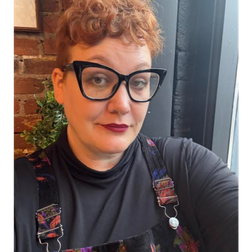
Ms. Graham: Personal Power to Keep Going

Contact Ms. Grahm at atouchofloveevents.net and/or email her at info@atouchoflovevents.net To be a guest on the podcast call 773-809-8594 At just 13, she pushed through struggles, built positive connections, graduated from college, and now owns her own decorating business — a testament to her strength, vision, and unstoppable spirit. For a copy of my book visit: https://www.barnesandnoble.com/w/relationships-the-power-of-illusion-mr-lucky/1149325667?ean=9781663277930

Stepanie Talks About Haute Dish-Campus Events

Contact Stephanie at hautedich@metrostate.edu To be a guest on this podcast and share what you are doing call 773-809-8594 Mr. Lucky's Book: https://www.barnesandnoble.com/w/relationships-the-power-of-illusion-lucky/1149325667?ean=9781663277930 Haute Dish is Metro State University’s official literary anthology, showcasing student writing and art, published twice a year and soon expanding into a full professionally published anthology. It features poetry, fiction, memoir, visual art, and digital storytelling created exclusively by the Metro State community. 📚 What Haute Dish Is Metro State University’s literary anthology—a play on the Minnesota term “hot dish.” A curated collection of poetry, short fiction, memoir, photography, illustrations, and digital storytelling. All work is created by students, faculty, staff, and alumni of Metro State (St. Paul, MN). Outside submissions aren’t accepted. Historically released as a softcover magazine twice per year (Fall & Spring). Beginning Fall 2025, Haute Dish will publish its first professionally printed anthology, available through major booksellers and libraries. 🎨 What You Can Submit According to current guidelines: Poetry — up to 40 lines Fiction — up to 2,000–3,000 words (varies by issue) Memoir / Creative Nonfiction — up to 2,000–3,000 words Visual Art — photography, studio art, mixed media Digital storytelling videos — up to 5 minutes Up to 4 submissions per issue depending on genre. Work must be unpublished, anonymous (no name on manuscript), and polished. 📝 Editorial Process A team of student selection editors reviews all submissions. Pieces are evaluated anonymously for quality, fit, and theme. Editors vote, and the highest‑rated pieces are published. Students can apply to become editors; training is provided. 🌟 Current Theme: Voices of Resilience The upcoming anthology focuses on stories of persistence, identity, and overcoming challenges—reflecting the lived experiences of Metro State’s diverse student body. 📬 Who Can Submit Current students (undergrad & grad) Faculty & staff Alumni (must include graduation year in bio) Must use a Metro State email when submitting. 📖 Why It Matters Haute Dish is one of Metro State’s most visible creative platforms—an opportunity to: Build a publication record Share your voice with the campus community Participate in a professional editorial process Contribute to a long‑running artistic tradition

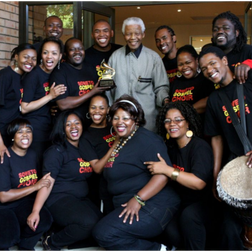
Soweto African Choir/Nelson Mandela

Lesson Plan: African Gospel Music & the Power of Hope Thesis Statement African gospel music is a spiritual, cultural, and historical force that blends faith, resistance, and community strength; by studying its roots and messages, students discover how music becomes a source of hope, identity, and personal empowerment. Learning Objectives (Student‑Friendly) Students will explain how African gospel music emerged from struggle, faith, and community traditions.Example: A student explains how gospel music carried messages of hope during apartheid or colonial oppression. Students will identify how African gospel music encourages resilience, unity, and personal confidence.Example: A student identifies lyrics or rhythms that uplift, motivate, or build collective strength. Learning Outcomes (With Examples) Students describe at least two historical influences that shaped African gospel music.Example: A student writes that African rhythms, call‑and‑response, and church traditions shaped the sound. Students reflect on how gospel music can inspire courage or emotional healing in their own lives.Example: A student explains how a Soweto Gospel Choir performance makes them feel stronger or more hopeful. 5E Learning Model Engage Play a short clip of the Soweto Gospel Choir. Students write one sentence describing how the music makes them feel — energized, peaceful, hopeful, or powerful. Explore Students rotate through short stations: History of African gospel Instruments and rhythms Apartheid and liberation music Modern gospel groups (e.g., Soweto Gospel Choir) Students jot down patterns they notice. Explain Teacher connects student observations to key concepts: African musical traditions Gospel as resistance Music as emotional and spiritual survival Students discuss why gospel music remains powerful today. Elaborate Students choose one African gospel song and analyze: What message it sends How the harmonies or rhythms create emotion How the song encourages strength or unity Students share insights in small groups. Evaluate Students complete a short reflection: “How can African gospel music help people feel empowered, connected, or hopeful today?” See my book at https://www..barnesandnoble.com/w/relationships-the-power-of-illusion-mr-lucky/1149325667?ean=9781663277930 Comments and/or to be a guest on this podcast call (do not text) 773-809-8594.

Undoing Racism to Personal Power

Challengng Teacher's Low Expectations Short Lesson Plan — Undoing Racism to Personal Power Thesis Statement Race is a social construct designed to assign superiority to whiteness and inferiority to Black and Brown people; by understanding how these roles are created, taught, and enforced, students can step outside assigned identities and reclaim personal power. Learning Objectives (with Examples) Students will explain how the race construct and linguistic racism shape beliefs about superiority and inferiority. Example: A student explains how calling Black English “improper” and white speech “professional” reinforces racial hierarchy. Students will identify examples of internalized racial roles and describe what it means to step outside those roles. Example: A student identifies doubting their intelligence in white spaces as internalized inferiority and describes speaking confidently as stepping outside that role. Learning Outcomes (with Examples) Students articulate at least two ways society teaches Black/Brown inferiority and white superiority. Example: A student writes: “People assume white leadership is more legitimate” and “Black students are labeled ‘aggressive’ for the same behavior white students show.” Students describe one personal or observed example of stepping outside an assigned racial role. Example: A student shares how they challenged a teacher’s low expectation by advocating for placement in an advanced class. 5E Learning Model Engage Students respond to a scenario: a Black student choosing a white dentist because “they’re probably better.” Students journal where this belief comes from. Explore Groups examine examples of internalized inferiority, superiority, and linguistic racism (e.g., assuming white programs are “more legitimate,” calling Black communication “unprofessional”). Explain Teacher defines the race construct, linguistic racism, and assigned roles. Students connect definitions to the examples they explored. Elaborate Students discuss what happens when people step outside assigned roles—Black/Brown students reclaiming voice, white students releasing superiority, classrooms shifting toward shared power. Evaluate Students write a short reflection naming one assigned racial role they’ve seen and one way stepping outside that role creates personal or collective power. Comments: 773-809-8594

A Rabbit Better Than an “N” Word: Fragile People Avoid Listening

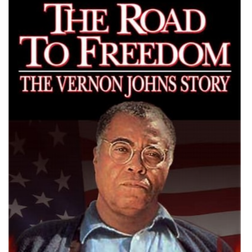
Vernon Johns Clip: https://youtu.be/VLrxjIk3JQ0?si=CTiMwLmRIVg2Lmve James Brown-Say It Loud: https://youtu.be/4hj1iWqoYEc?si=yKzC5ildXt5l0eeq Short Lesson Plan: Vernon Johns and the Rabbit Speech Thesis Statement Vernon Johns’s fearless ministry, intellectual brilliance, and uncompromising moral clarity made him a foundational architect of the modern civil rights movement, and his “rabbit speech” challenged Black communities to confront injustice with courage, self‑respect, and collective responsibility. Learning Objectives Students will identify Vernon Johns’s role as a precursor to the modern civil rights movement and explain how his leadership shaped later activism. Students will analyze the meaning of the “rabbit speech” as a metaphor for agency, responsibility, and resistance to injustice. Learning Outcomes (with examples) Students will summarize how Vernon Johns influenced the civil rights movement.Example: A student explains that Johns’s bold sermons at Dexter Avenue Baptist Church prepared the congregation for the activism later led by Dr. King. Students will interpret the central message of the rabbit speech and apply it to a modern context.Example: A student writes that the speech teaches communities not to accept injustice passively and connects it to a current issue where people must claim their own agency. Students will analyze a key scene from the film and connect it to Johns’s real‑life message.Example: A student identifies a moment where James Earl Jones portrays Johns confronting injustice and explains how the scene reflects the themes of courage and responsibility. Core Content (Short Version) Vernon Johns was a brilliant theologian, farmer‑scholar, and early civil rights leader. His “rabbit speech” used a simple story to expose complacency and challenge people to stop accepting mistreatment. The film The Vernon Johns Story (1994) dramatizes his ministry, his confrontations with segregation, and his role as the bridge between early resistance and the modern civil rights movement. The message: If you want justice, you must stop buying back what was taken from you — claim your dignity, your rights, and your power. Instructional Activity Students will watch selected scenes or the full film The Vernon Johns Story starring James Earl Jones to deepen understanding of: Johns’s leadership style His moral courage The social climate of Montgomery before the bus boycott How the rabbit speech reflects broader themes of agency and resistance Students will take brief notes on: A scene that shows Johns’s courage A moment that connects to the rabbit speech A moment that reveals community resistance or complacency Formative Assessment Tool Quick Reflection Card (3–4 sentences): Students respond to two prompts: What is the main message of Vernon Johns’s rabbit speech? Note: This checks comprehension, interpretation, and application in under five minutes.

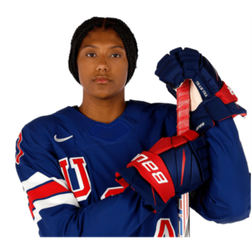
Laila Edwards: BLACK USA HOCKEY PLAYER

Laila Edwards: Black USA Hockey Player Laila Edwards was born January 25, 2004, in Cleveland Heights, Ohio, into a busy, competitive, faith‑filled household. Her parents, Charone Gray‑Edwards and Robert Edwards, raised five children who turned their home into a training ground—rollerblades on the floors, sticks in the hallway, pucks off the walls. Laila, the youngest, was often thrown in goal, then grew into a towering 6'1" skater with reach, power, and vision that could not be ignored. She started on the ice as a figure skater around age three, then shifted to hockey a few years later. Very early, she stepped into a world where almost no one looked like her. Hockey was—and still is—overwhelmingly white. Laila played boys’ hockey with the Cleveland Jr. Lumberjacks and Cleveland Barons, then with the Pittsburgh Penguins Elite girls’ program. She learned to be the only Black girl on the ice, the one who stood out before she even touched the puck. At 13, she made a sacrifice that revealed her calling: she left home to attend Bishop Kearney High School in Rochester, New York, a national girls’ hockey powerhouse. Away from her family, she sharpened her game and her resolve. Over four seasons, she piled up goals and assists, becoming one of the most dominant prep players in the country. She even skipped her high school graduation to represent the United States at the IIHF U18 Women’s World Championship—choosing purpose over ceremony. Laila committed to the University of Wisconsin, one of the top women’s hockey programs in the nation. There, she became a national champion and a star, using her size and skill to control games at both ends of the ice. She could play forward or defense, score or shut down, whatever the team needed. Her game was powerful, but her demeanor was calm, humble, and steady. In 2023, she made history: Laila Edwards became the first Black woman to play for the U.S. Women’s National Team. On a roster that had never before included a Black woman, she stepped onto the ice carrying not just her own dreams, but the weight of representation. She later became the first Black woman to score for Team USA at a major international tournament, proving she was not there as a symbol—she was there as a force. At the 2026 Winter Olympics, she stepped fully into destiny. Wearing USA colors on the biggest stage in the world, she helped lead her team to gold, becoming the first Black woman to win an Olympic gold medal in hockey for the United States. For Black children watching—especially Black girls—her presence shattered the old picture of who belongs in hockey. Laila has spoken about how she once searched for a role model who looked like her and couldn’t find one. Now, she is that image for others. Her journey—from a little Black girl in Cleveland Heights to an Olympic champion and national‑team trailblazer—feels less like an accident and more like an assignment. That’s why you can look at her life and say: she is America's Black Hockey Player—called, prepared, and positioned to open doors that were never meant to stay closed. See my book at www.weusoursluckybooks.com

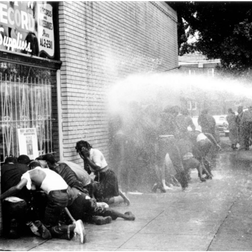
The Church and The Civil Rights Movement

Lesson Plan: The Black church was the spiritual, cultural, and strategic center of the Underground Railroad and later the civil rights movement. Through coded music, secret gatherings, and community networks, it sustained Black resistance—and its legacy raises the question of whether the Black church still holds that meaning today. Learning Objectives Students will analyze how the Black church shaped the Underground Railroad as a liberation network. Example: A student explains how church gatherings provided cover for planning escape routes. Example: A student identifies how spirituals communicated coded instructions. Students will evaluate how the Black church’s traditions reappeared during the civil rights era. Example: A student connects spirituals like “Wade in the Water” to gospel songs used in 1960s marches. Example: A student explains why churches were bombed—they were centers of strength and strategy. Learning Outcomes Students will explain how enslaved people used church networks, music, and community to escape. Example: A student describes how the North Star, coded songs, and church elders guided escape attempts. Students will connect the Underground Railroad to the civil rights movement and reflect on the church’s meaning today. Example: A student writes that the same churches targeted by slave patrols were later bombed in Birmingham because they were hubs of resistance. Core Content The Black church was the heartbeat of the Underground Railroad. It offered secrecy, spiritual courage, coded communication, and trusted leadership. Spirituals like “Steal Away” and “Wade in the Water” carried double meanings—worship on the surface, escape instructions underneath. These same traditions reappeared during the civil rights era. From the four little girls killed in the Birmingham church bombing, to segregated water fountains, to crosses burned in front of sanctuaries, the Black church remained a target because it remained a threat. It was where Dr. King, Medgar Evers, Jesse Jackson, and local organizers met to plan, regroup, and resist without developing a mindset of hate. Mr. Lucky's Question in 2026: Does the Black church still hold that meaning? Underground Railroad Activity Students work in groups to simulate planning an escape using: A coded spiritual A simple map with church‑based safe houses A risk card (patrols, weather, betrayal) Students must decide: When to leave Which church network to trust How to avoid detection Groups either reach freedom or face obstacles that force reflection. Formative Assessment Students write a brief reflection answering: How did the Black church shape your group’s escape strategy? How did music, faith, and community support resistance? Does the Black church still hold the same meaning today? Mr. Lucky, MAPL Licensed Social Studies Teacher Contact; blackfreedomofspeech@gmail.com See my book: https://www.barnesandnoble.com/w/relationships-the-power-of-illusion-lucky/1149325667?ean=9781663277930
Temporada 1

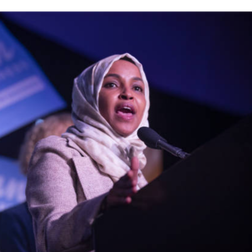
Trump: Somali Students Refuse Disrespect

Send this Podcast to Other Students-Keep this Podcast Moving. Thene: Title VI Title VI of the Civil Rights Act of 1964 protects students from discrimination based on race, color, or national origin in any school, college, or program that receives federal funding. It requires schools to provide a learning environment free from harassment, bias, and unequal treatment, and it prohibits retaliation when students speak up. SPEAK UP Lesson Plan: Somali Students — Knowing Your Rights on Campus Learning Objectives Students will identify two key civil rights protections that apply to them on Minnesota college campuses.Example: A student explains how Title VI protects them from discrimination based on national origin. Students will recognize appropriate steps to take when experiencing harassment or bias.Example: A student lists who they can report to (equity office, advisor, civil rights advocate) and what documentation to collect. Learning Outcomes Students can explain their rights using accurate language.Example: A student states, “I have the right to a learning environment free from harassment under the Minnesota Human Rights Act.” Students can apply their rights to a real scenario.Example: Given a case where a professor makes biased comments, the student identifies the correct reporting pathway and support options. Short 5E Learning Model Engage Show a brief scenario where a Somali student faces unfair treatment on campus. Ask: “What rights do you think apply here?” Explore Students review a short list of protections (Title VI, Minnesota Human Rights Act, anti‑retaliation rules). Explain Instructor clarifies each right and demonstrates how students can respond to discrimination or harassment. Elaborate Students work in pairs to apply the rights to a new scenario involving faculty bias, peer harassment, or unequal treatment. Evaluate Students summarize one right they learned and one action they can take if that right is violated. Formative Assessment Quick Rights Check (3 minutes): Students complete a short exit slip answering: Name one civil right you have on campus. Describe one step you can take if that right is violated. For a copy of my book visit: https://www.barnesandnoble.com/w/relationships-the-power-of-illusion-mr-lucky/1149325667?ean=9781663277930 Contact: radiotalklr@gmail.com

NSLS: Prestige Sold, Truth Told

To be a guest on the podcast call 773-809-8594 For a copy my book visit https://www.barnesandnoble.com/w/relationships-the-power-of-illusion-lucky/1149325667?ean=9781663277930 Here are 7 strong, practical questions every student should ask before joining NSLS or any honor society, based on the most common concerns raised by students, advisors, and especially Reddit communities that frequently discuss legitimacy, value, and cost. ⭐ 7 Questions Students Should Ask Before Joining 1. Is this honor society accredited by the Association of College Honor Societies (ACHS)? This is the single most important legitimacy check. Students on Reddit often cite this as their #1 red flag. 2. What do students at my own campus say about the chapter’s activity level? Chapter quality varies dramatically. Some are active; others barely function. Reddit threads repeatedly warn that your experience depends almost entirely on your local chapter. 3. What am I actually getting for the membership fee, and is it worth $95 to me personally? Ask yourself whether you will use the leadership modules, events, networking, or scholarships — because many Reddit users say the value is low if you don’t actively participate. 4. Are the leadership trainings interactive or mostly pre‑recorded videos? A major Reddit complaint is that the “leadership program” is mostly video‑based, not hands‑on. Decide whether that format works for your learning style. 5. Will this membership meaningfully strengthen my résumé for my field? Some employers care; some don’t. Reddit users often say NSLS doesn’t add much unless you lack other leadership experiences. 6. How competitive are the scholarships, and what are the odds of actually receiving one? NSLS advertises scholarships, but Reddit reports that they are highly competitive and not a guaranteed benefit. 7. Are there any additional costs, upsells, or optional paid programs after joining? Many Reddit posts mention unexpected upsells for “advanced” leadership programs. Ask upfront so you’re not surprised later. Comments: radiotalklr@gmail.com
Permit To Carry Basic Gun Training Workshops

Contact: radiotalklr@gmail.com Classes For Men and Women After watching the videos, email me for my next class at: radiotalklr@gmail.com Mr. Lucky-Student Lucky and Others: Philando Castile- Police Shotting https://www.pbs.org/video/almanac-nekima-levy-pounds-john-choi-police-perspective/ !8 Year Olds-Permit to Carry https//kstp.com/kstp-news/top-news/backlash-for-gun-instructor-refusing-to-train-those-18-20-years-old-following-scotus-decision/
11 de 12