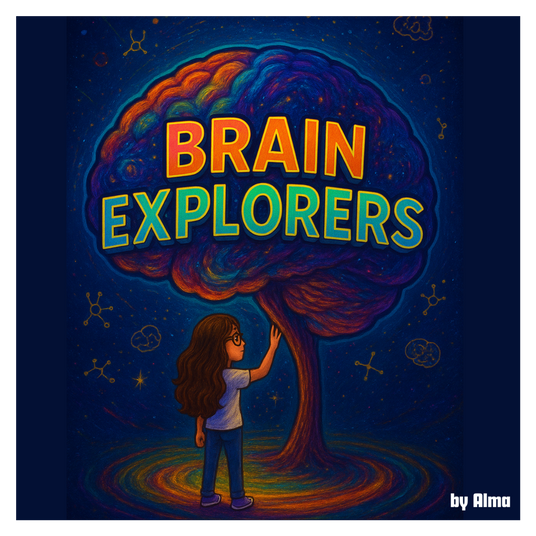
Brain Explorers

Brain Explorers

por Alma Radulescu
Temporada 1

Are monkeys smarter, dumber, or just like us?

In this episode of Brain Explorers, we explore whether monkeys are as smart as humans. Monkeys are incredibly clever in their own way—they use tools, learn from each other, communicate with sounds and gestures, and remember important details like food locations. However, humans excel at abstract thinking, creating languages, and solving complex problems, which sets us apart. Being "smart" depends on what skills are needed for survival, so monkeys aren’t dumber—they’re just experts at being monkeys! We also share fun facts, like how some monkeys can count and even be left- or right-handed. Tune in to learn more about the amazing abilities of our primate cousins!
Does the brain feel pain?

In this episode of Brain Explorers, we dive into the fascinating question: Can the brain feel pain? Pain is our body’s warning system, but surprisingly, the brain itself doesn’t feel pain because it has no pain receptors. While the brain processes pain signals from other parts of the body, it remains pain-free—even during brain surgery! We also explore common questions, like why headaches hurt (hint: it’s from muscles and nerves around the brain) and why the brain doesn’t have pain receptors (so it can focus on controlling the body). Plus, we share a fun fact: the brain uses 20% of the body’s energy daily, even though it’s only 2% of our weight! Tune in to learn more about your amazing, pain-free brain!

An interview with Jean Muller, pianist and piano teacher

In this episode of Brain Explorers, I'm interviewing my piano teacher, Mr. Jean Muller, to delve into the powerful connections between music and the brain. Mr. Muller, an experienced pianist and teacher, shares his journey into music and discusses how playing the piano impacts brain development, creativity, and memory. We explore how learning an instrument enhances cognitive skills, boosts creativity, and improves memory, especially when coordinating with others in an orchestra. He also shares inspiring teaching moments and offers advice for those curious about learning music. This insightful episode highlights the profound role music plays in shaping our minds.

What happens to our brain when we die

Hey there, Brain Explorers! In this episode, we’re exploring what happens to the brain when it stops working. Imagine your brain like a superhero in charge of everything you do—thinking, moving, and feeling! But just like a video game, when the power goes out, everything stops. We also talk about how scientists think the brain slowly winds down, kind of like turning off the lights one by one. And while some things are still a mystery, we know that the brain works hard to the very end, and we can always keep happy memories of people and pets in our hearts. So, join us as we learn more about how our amazing brain works! Keep exploring, and remember, it’s always okay to ask questions. See you next time, Brain Explorers!

How your brain feels when you learn about it

In this episode, we explore what happens inside your brain when you learn something new—especially about the brain itself! We discover how different parts of your brain, like the prefrontal cortex and hippocampus, work together, and how learning makes your brain stronger, just like exercising muscles. Plus, when you understand something new, your brain celebrates by releasing dopamine, making you feel happy and proud. So, keep learning, Brain Explorers—every time you do, you're giving your brain new superpowers!

Why do we feel sad sometimes

In this episode, we explore the feeling of sadness and why it happens. Sometimes it's obvious, other times it's a bit of a mystery! We’ll learn how our brain plays a part in these feelings and some fun ways to feel better when we’re down. Join us for a journey inside our amazing minds!

Things that our brain does not like

In this episode of Brain Explorers, we learn how certain things like lack of sleep, stress, junk food, boredom, and too much screen time can be tough on our brains. But by understanding this, we can take steps to help our brains feel better and work smarter. The key is to get enough sleep, eat healthy, take breaks from screens, and relax when stressed. By treating our brains well, they’ll function at their best! Tune in next time for more exciting brain adventures, and keep exploring!

Things that make your brain super happy

Hey, Brain Explorers! In this episode, I take you on a fun journey to discover what makes our brains happy. We explore how dopamine is released when we do things we enjoy, like eating ice cream or playing games. Moving our bodies helps release endorphins, making us feel even better, while spending time with people we care about boosts our happiness through oxytocin. And finally, learning new things keeps our brains excited and growing. I remind you that a happy brain is a healthy brain, so let's keep exploring every day!

What does a neurosurgeon do?

In this episode of Brain Explorers, we explore the exciting world of neurosurgeons! These brain superheroes specialize in operating on the brain, spine, and nerves, helping people with injuries, tumors, or nerve problems. We learn about their daily routine, from meeting patients and studying X-rays to performing delicate surgeries that can take hours. Becoming a neurosurgeon requires years of study, problem-solving skills, and constant learning. They play a crucial role in keeping our nervous system healthy and helping people recover from serious conditions. Plus, we share a fun fact: even when you're sleeping, your brain is still hard at work!

What’s your primary brain side

Hey junior explorers, welcome back to Brain Explorers! Today, we're discovering if you’re more of a left-brain or right-brain person. Left-brain people are great at math and organizing, while right-brain explorers love music and creativity. But guess what? We all use both sides to do cool things every day! So, let's have fun figuring out how awesome your brain is!
5 de 6