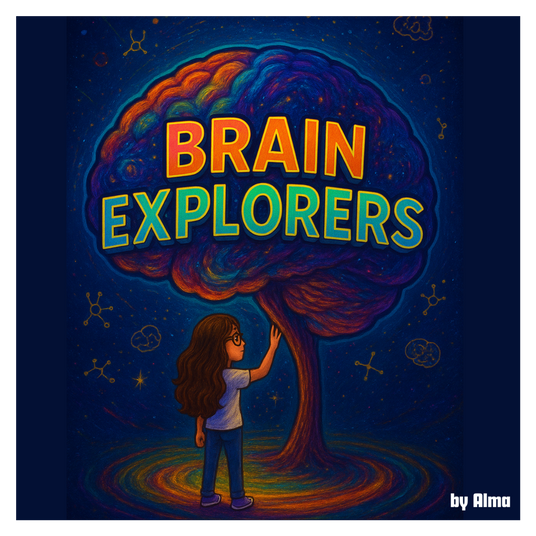
Brain Explorers

Brain Explorers

por Alma Radulescu
Temporada 1

Brain Awareness Week - Can the brain be hacked? The science of neurohacking

Today, we’re diving into a topic so mind-blowing, it feels like it’s straight out of a sci-fi movie… 🚀 Can the brain be hacked? What if you could boost your memory, supercharge your focus, or even control devices—just by thinking? Neurohacking isn’t just a wild idea—it’s happening right now! From brain-computer interfaces to unlocking your mind’s hidden potential, we’re about to explore how science is blurring the line between human and machine. So, buckle up, because today, we’re pushing the limits of what the brain can do! Let’s dive in! 🌀🔬

Brain Awareness Week - The hidden power of the subconscious mind

In today's special episode that marks Brain Awareness Week globally, we're talking about the magic power of our subconscious. Right now, you’re listening to my voice, thinking thoughts, and experiencing the world around you. But have you ever wondered—how does your brain create YOU? What is consciousness, and why do we have it? Scientists still don’t have all the answers, but today, we’ll explore the biggest mystery of the human mind!

The science of "déjà vu" or a glitch in the brain?

Have you ever experienced a moment that feels strangely familiar, like you’ve lived it before? Is "déjà vu" just a brain glitch, or is there a deeper scientific explanation behind it? In this episode of Brain Explorers, we dive into the neuroscience of déjà vu, exploring how memory, perception, and the brain’s predictive mechanisms create this eerie sensation. Tune in to uncover the fascinating theories behind this mind-bending phenomenon!

The secret language of neurons or how the brain talks to itself

In this episode, we're covering the secret language of our brain. Yes, that's right. Tune in to learn how is the brain talking to itself.

Are humans the smartest beings on Earth?

Are humans the smartest beings on Earth? 🤔 Join Brain Explorers as we dive into what intelligence really means—exploring human creativity, problem-solving, and communication, alongside the incredible skills of animals like dolphins, chimps, and octopuses! Plus, we’ll take a peek at AI and robots to see how they stack up. Get ready for a fun and mind-expanding adventure! 🚀🎙️ #BrainExplorers #StayCurious

Who is the smartest person on earth and what does their brain have in common with ours?

This episode of Brain Explorers dives into the question of who the smartest person on Earth is and what their brain has in common with yours. While intelligence comes in many forms, Albert Einstein is often considered a genius because of his deep thinking and curiosity. However, your brain shares many of the same abilities—like learning, imagination, and curiosity—which means you, too, have the potential to think in amazing ways and explore new ideas!
How did our brain form?

In this episode of Brain Explorers, we take you on a journey through time to explore how the brain evolved. Over millions of years, nerve cells evolved to help creatures respond faster, and eventually, some animals formed simple brains. As time went on, brains got bigger and more complex, especially in mammals. The human brain, now capable of thinking and problem-solving, is the result of this incredible evolution. Tune in to find some more!

An interview with Maestro Christopher Schumann (Part II)

In part two of our conversation with Maestro Christopher Schumann, we dive deeper into his world, discussing preparation, emotional depth, and the transformative power of music. Hear his thoughts on engaging audiences and inspiring the next generation of musicians. Don’t miss this insightful and inspiring conclusion to our discussion!

An interview with Maestro Christopher Schumann (Part I)

In this episode of Brain Explorers, we sit down with the renowned conductor, Maestro Christopher Schumann, to explore the fascinating intersection of music, leadership, and the brain. Discover what inspired him to pursue conducting, how he collaborates with musicians from diverse backgrounds, and the mental skills required to lead an orchestra. Join us as we uncover the unique challenges of this incredible form of art.

Is screen time good or bad for our brain?

In this episode of Brain Explorers, we discuss the effects of screen time on our brains and bodies. Screens can be great for learning, staying connected, and having fun, but too much screen time can lead to tired eyes, less physical activity, and trouble sleeping due to blue light. The key is balance! Enjoy screens in moderation, take breaks, and set boundaries, like avoiding screens before bed. Remember, mixing screen time with other activities like playing outside or being creative keeps your brain and body happy and healthy. Tune in to learn tips for finding the perfect balance in your screen time!
4 de 6