Biblical Deep Dive and Debate

Biblical Deep Dive and Debate

por the Spirit of the Lord
Temporada 1

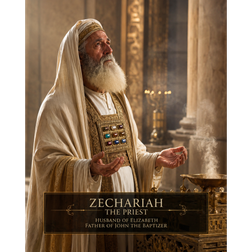
Why God Silenced the Priest Zechariah
IA
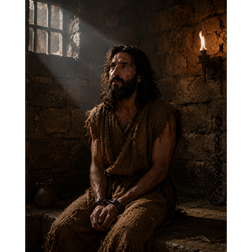
The provided text examines the biblical narrative of Zechariah, the father of John the Baptist, highlighting his pivotal role as a bridge between the Old and New Testaments. Despite being a devout priest, Zechariah’s journey is marked by human frailty, specifically his initial doubt regarding God’s promise of a son in his old age. His subsequent period of divine silence serves as a spiritual discipline that transforms his skepticism into profound faith and prophetic worship. The source emphasizes that his personal story of overcoming barrenness and disappointment reflects the larger theme of God’s covenant faithfulness to Israel. Ultimately, Zechariah’s obedience in naming his son John signifies a surrender to God’s redemptive timeline and the arrival of the Messiah. Through this lens, the text presents Zechariah as a model for waiting on God, the sanctity of speech, and the transition from traditional religious structures to a new era of grace.

The Prophet Who Lived to be Eclipsed

IA
John the Baptizer’s life can be summed up in his own words: “He must increase, but I must decrease.” That sentence is not only the key to understanding John. It is also one of the deepest principles of Christian discipleship. A life rightly ordered before God is one in which self becomes smaller, Christ becomes greater, and everything—gift, influence, voice, work, and witness—is placed in service to the coming King.

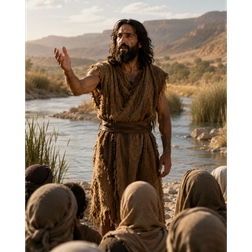
The Voice of the Wilderness: John the Baptizer
IA
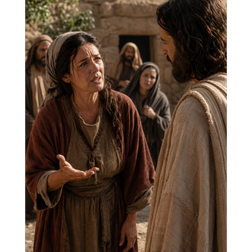
The provided text offers a comprehensive biography of John the Baptist, portraying him as a pivotal prophetic bridge who prepared the way for Jesus Christ. It explores his miraculous origins, his ascetic lifestyle in the wilderness, and his unwavering message of repentance and moral renewal. The narrative emphasizes his extraordinary humility, highlighting his commitment to elevating Christ’s ministry above his own fame. Beyond his historical role, the text examines his courageous confrontation of corruption and his eventual martyrdom under Herod Antipas. Ultimately, the source presents John as a model of discipleship and vocation, defined by his mission to decrease so that the divine could increase.

Martha of Bethany and the Smart Phone
IA
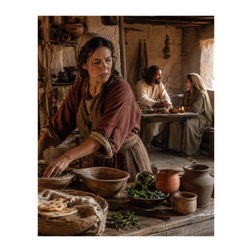
This text provides a comprehensive biographical study of Martha, a prominent biblical figure from Bethany known for her close friendship with Jesus. It examines her character by highlighting her extraordinary hospitality and deep faith in the Messiah, while also addressing her tendencies toward distraction and worry. Through the narrative of her interactions with her sister Mary and the resurrection of her brother Lazarus, the source explores the tension between practical service and spiritual presence. Ultimately, the passage offers modern applications, encouraging readers to prioritize time with God over trivial anxieties and busywork. The overview concludes that despite her flaws, Martha’s life serves as a powerful testament to divine grace and the importance of trusting in God's timing.

Your Smart Phone, is Martha's Kitchen
IA
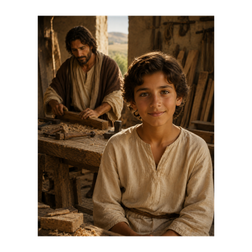
This character study explores the biblical figure Martha of Bethany, highlighting her unique role as a close friend and hostess to Jesus. The text examines her primary struggle with distraction, noting how her focus on domestic hospitality often caused her to overlook the spiritual value of presence. Despite being labeled as stressed and bossy during her service, she is also celebrated for her diligent work ethic and profound spiritual conviction. Her narrative serves as a cautionary lesson against allowing life's trivial anxieties to overshadow devotional time with God. Ultimately, the source emphasizes Martha’s unwavering faith in Christ as the Messiah, particularly through her witness of her brother Lazarus being raised from the dead. These reflections encourage modern readers to prioritize spiritual connection over the constant busyness of the world.

Joseph: The Faithful Guardian of the Messiah?
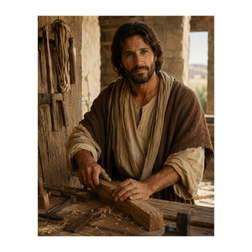
IA
This character study examines the life and legacy of Joseph, the earthly guardian of Jesus Christ, detailing his ancestry, vocation, and essential role in biblical history. As a righteous carpenter from the line of David, Joseph is portrayed as an obedient and humble man who prioritized divine instruction over social reputation. The text highlights his protective nature during the flight to Egypt and his commitment to raising Jesus within the Jewish law. Furthermore, the source offers practical life lessons derived from Joseph’s experiences, such as the value of self-control, the dignity of adoption, and the importance of silent service. Ultimately, the overview presents Joseph as a faithful servant whose quiet strength facilitated the fulfillment of ancient prophecies.

The Silent Strength of Joseph

IA
The provided text examines the life of Joseph, the earthly father of Jesus, as a profound model of quiet faithfulness and moral integrity. While the Bible records no spoken words from him, the source highlights his righteousness and mercy through his compassionate response to Mary’s pregnancy and his immediate obedience to divine guidance. By exploring his role as a humble craftsman, the text emphasizes that true greatness is found in fulfilling one's responsibilities away from the public spotlight. Joseph’s story serves as a contemporary guide for leadership, showing how to protect family, embrace hard work, and act with courage despite uncertainty. Ultimately, the source portrays him as an example of how an ordinary life dedicated to God can have an extraordinary impact on history.

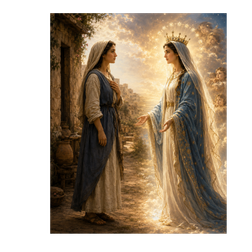
Mary: Normal Woman, or Spiritual Mediator
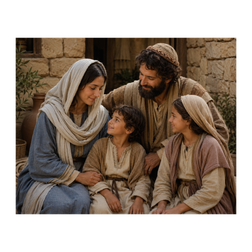
IA
The provided text examines the biblical and theological identity of Mary, the mother of Jesus, by synthesizing scriptural accounts with centuries of religious tradition. While the New Testament offers limited biographical data, the sources highlight how different authors like Luke, Matthew, and John portray her as a model of faith, social justice, and steadfastness. The overview expands beyond scripture to explain the doctrinal differences between Catholic, Orthodox, and Protestant perspectives regarding her perpetual virginity and sinlessness. Additionally, it incorporates modern scholarly and feminist critiques that seek to recover Mary’s historical reality as a marginalized Jewish woman rather than a purely symbolic figure. Ultimately, the text presents Mary as a pivotal participant in Christian history whose life offers practical lessons for contemporary discipleship and leadership.

The Radical Resilience of the Historical Mary

IA
Mary, the mother of Jesus, is one of the most important and most carefully framed figures in the New Testament, even though the canonical data about her are comparatively sparse. Historically and theologically, Mary stands at the intersection of Christology, ecclesiology, discipleship, gender, and devotion. Catholic and Orthodox traditions honor her as Theotokos, “Mother of God,” For modern readers, Mary’s life yields concrete lessons rather than abstract admiration alone. Mary should first be read as a first-century Jewish woman of Nazareth, not as a later icon abstracted from history. The Magnificat connects humility to public justice. Mary speaks as one whom God has “looked upon” in lowliness, but the song immediately widens into social reversal: the proud are scattered, rulers cast down, the lowly lifted, the hungry filled, and the rich sent away empty. Finally, Mary’s motherhood is real, but the New Testament does not let it be merely biological. Luke 8 and Luke 11 redefine blessedness around hearing and doing God’s word, and Acts 1 shows Mary within the praying church, not above it. That offers a particularly important modern lesson: motherhood can be honored without imprisoning women inside a single role. Parents may see in Mary a model of nurture and release. Non-parents may see in her a model of generative care, mentoring, and communal prayer. Feminist scholarship is right to insist that Mary should not be reduced either to passive domesticity or to disembodied symbolism.
2 de 2