Biblical Deep Dive and Debate

Biblical Deep Dive and Debate

por the Spirit of the Lord
Temporada 2

Mordecai and the Mechanics of Invisible Providence
IA
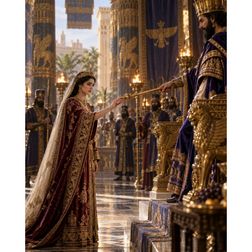
Mordecai stands as a pivotal figure in the biblical book of Esther, transitioning from an ordinary Jewish exile and loyal guardian into a powerful leader second only to the Persian king. His journey highlights the unseen power of providence, showing how seemingly minor acts of devotion—like raising his orphaned cousin or exposing an assassination plot—ultimately safeguard his entire community from genocide. Despite facing severe dangers and unrewarded service, he displays unwavering moral courage, famously challenging Esther to risk her life for her people. Ultimately, the narratives illustrate that true greatness is measured not by political title or personal ego, but by using one's influence and position to protect the vulnerable and secure the welfare of others.

Divine Providence, or Human Agency

IA
1 Thessalonians 4:11-12 – And to make it your ambition to lead a quiet life: You should mind your own business and work with your hands, just as we told you, so that your daily life may win the respect of outsiders and so that you will not be dependent on anybody. Boldness should be combined with prudence – In Esther we see a healthy combination of bold steps taken with prudence. She was bold, but first she fasted and thought carefully how to proceed with maximum care. A prudent person need not discard courage. And a courageous person need not throw caution to the wind. Reflect: In what area of your life can you combine boldness with prudence? God works both through miracles and normal means – Some stories in the Bible are miraculous, clearly showing God’s power and might. Others are more mundane, recording the details of everyday life. And others still are miraculous in the way that God brings about great things through the mundane. Do not make the mistake of believing that because you do not see a miracle, God is not at work. Miracles are the exception and not the rule, and that is why they are called miracles. Far more often God works through the laws and people He has put into place.

Quiet Providence in the Persian Court

IA
Name: Hadassah and then Esther Meaning of name: Hadassah means “myrtle” and Esther means “star.” Ancestry and family life: Esther was an orphan from the tribe of Benjamin. Her father and mother were not alive. So Mordecai, her cousin, became her guardian. This was 50-60 years after many of the Jews had returned to Judah under Zerubabbel in 538 BC. But it was before the second return under Ezra in 457 B.C. Mordecai’s great-grandfather was one of the original Jews who were deported to Babylon four generations before. After Babylon fell to the Persians these Jews moved to various parts of the kingdom. Going farther back, Mordecai was descended from the family of Kish, a family name that can be traced all the way back to Saul’s father. It is unknown if Mordecai had a family of his own, but he did adopt Esther, his cousin, as his own daughter when her parents died and left her an orphan. Thus Esther’s family was living as part of the Jewish diaspora. They had made new homes and new lives away from Judah. Notably, her family had chosen not to return when others did. It could indicate some level of success or contentment for her family in Persia.
Temporada 1

Supreme Lordship or Subversive Humility
IA
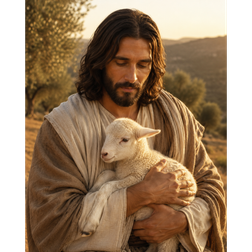
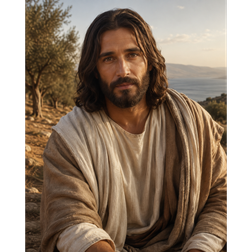
The story of Jesus is the story of God’s love moving toward the world. It begins in humility, moves through compassion and truth, descends into suffering and death, and rises in victory. It is at once historical, personal, cosmic, and eternal. For the believer, Jesus is Savior, Lord, Shepherd, King, High Priest, Brother, Friend, and God with us. For the searching person, He is the one worth examining more deeply than anyone else. For the broken, He is mercy. For the proud, He is warning. For the guilty, He is forgiveness. For the dead, He is resurrection. No single essay can exhaust who Jesus is. The Gospel of John ends by saying that if everything Jesus did were written down, the world itself could not contain the books. That is poetic, but it makes a serious point. Jesus cannot be reduced to a few ideas. He must be encountered. The final question is not only, “What can be said about Jesus?” The final question is the one Jesus Himself asked: “Who do you say that I am?” In the Christian confession, the answer is clear: Jesus is the Christ, the Son of the living God, the Lamb of God who takes away the sin of the world, the risen Lord, and the resurrection and the life.

The Inverted Power of Jesus

IA
This text explores the centrality of Jesus in Christianity, examining his identity as both a fully human historical figure and the divine Son of God. It details his earthly ministry, focusing on his miraculous healings, parables, and a radical message of love and repentance that challenged the authorities of his time. The narrative emphasizes that his sacrificial death and bodily resurrection serve as the foundation of the faith, providing a path for salvation and reconciliation with God. Furthermore, the source highlights his role as the fulfillment of ancient prophecies and the eternal Word who remains a living authority for believers today. Ultimately, the text presents Jesus as a figure who demands a personal response, inviting individuals to consider his unique claims to lordship.

Why Jesus waited for Lazarus to die

IA
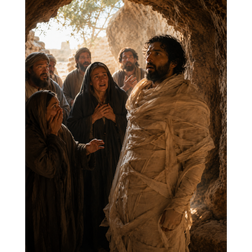
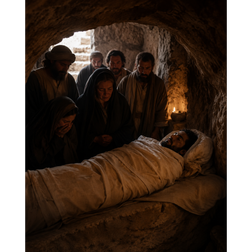
Lazarus of Bethany, then, is a silent but profound witness. He is the loved friend, the dead brother, the man in the tomb, the one called by name, the restored guest at the table, and the living evidence of Jesus’ power. His story brings together tears and glory, delay and purpose, death and life, friendship and revelation. Perhaps the most powerful image is Jesus standing before the tomb and calling, “Lazarus, come out.” That command is personal. Jesus calls him by name. Death may have claimed him, the mourners may have buried him, the stone may have sealed him in, and decay may have begun. But when Jesus speaks, death must release what it holds. That is the hope at the center of Lazarus’s story. The voice of Christ is stronger than the silence of the grave. The love of Christ reaches into places beyond human help. The glory of God can appear where all seems lost. The one who weeps with the grieving is also the one who raises the dead. Lazarus teaches us that the final word does not belong to sickness, delay, grief, tombs, stones, or burial cloths. The final word belongs to Jesus, who says, “I am the resurrection and the life.”

Raising Lazarus triggered the Crucifixion
IA
The provided text recounts the biblical narrative of Lazarus of Bethany, focusing on his unique status as a close friend of Jesus who was famously raised from the dead. This account emphasizes that although Jesus loved the family deeply, he intentionally delayed his arrival to allow for a more profound demonstration of divine glory over the finality of death. Through the distinct emotional and theological responses of sisters Mary and Martha, the story highlights Jesus as both a compassionate savior who shares in human grief and the authoritative resurrection and the life. Ultimately, the miracle serves as a climactic sign in the Gospels that reveals Christ’s power while simultaneously accelerating the plot to execute him. Beyond the miracle itself, the text explores themes of faithful suffering, the necessity of spiritual fellowship, and the importance of a life that serves as a silent witness to transformation.

Elizabeth's Hidden Faithfulness

IA
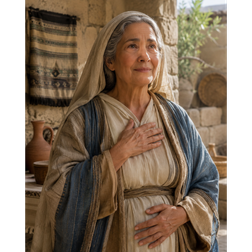
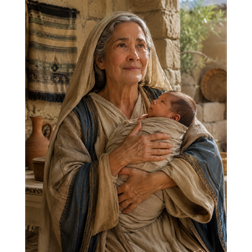
Elizabeth, wife of Zechariah and mother of John the Baptist, stands as a witness to the mercy of God. Her story encourages every person who has waited, every person who has felt ashamed, every person who has wondered whether God still sees, and every person who needs courage to bless what God is doing in someone else. Her life began, in the Gospel narrative, under the shadow of barrenness. But it ends in joy, prophecy, obedience, and fulfillment. She is remembered not because she sought greatness, but because she faithfully received the grace of God and helped prepare the way for the coming of Christ.

How Elizabeth overcame a Lifetime of Shame
IA
The provided text explores the extraordinary spiritual legacy of Elizabeth, the mother of John the Baptist, highlighting her transition from a life of shameful barrenness to one of divine favor. Despite her advanced age and years of social reproach, she remained steadfastly righteous, illustrating that godliness does not always prevent earthly suffering. The source emphasizes her pivotal role as a spiritual mentor to Mary, as her humility allowed her to celebrate the Messiah’s arrival without envy. Through her prophetic discernment and courageous obedience in naming her son, Elizabeth becomes a model of patient faithfulness and generational wisdom. Ultimately, the narrative portrays her as a luminous figure whose private devotion and surrendered motherhood helped set the stage for the New Testament's arrival. Her story serves as a profound reminder that God values hidden integrity and can overturn long-standing sorrow with miraculous redemption.

Was Zechariah's Silence Judgment or Mercy?

IA
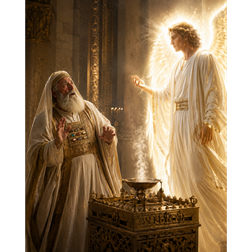
Zechariah is a man of the threshold. He stands between silence and song, barrenness and birth, old covenant expectation and new covenant fulfillment, temple incense and wilderness prophecy, personal longing and cosmic redemption. His story begins with fear and doubt, but it ends with praise and prophetic clarity. He is remembered as the father of John the Baptizer, but he is also a witness in his own right. He shows us that faithful people can struggle, that God can discipline without rejecting, that obedience can restore what unbelief silenced, and that the promises of God often arrive in ways that are both deeply personal and far larger than we imagined. Zechariah’s life invites us to wait faithfully, listen humbly, obey specifically, speak reverently, and trust that God remembers His covenant. His story says that heaven may seem silent for a long time, but God has not forgotten. At the appointed time, the word of the Lord comes. The barren womb bears life. The silent mouth sings praise. The promised child is born. And through it all, the sunrise from on high draws near.
1 de 2