Erna Podcast: Unfiltered Conversations

Erna Podcast: Unfiltered Conversations

por Erna JUlien

Health and Relationships: Why Emotional Fitness is Just as Important as Physical Fitness

Emotional fitness is as crucial as physical fitness for a healthy life and fulfilling relationships. Emotional distress can negatively impact physical health, leading to unhealthy choices like overeating, skipping workouts, and lethargy. Conversely, healthy, loving relationships contribute to better mental and physical health outcomes, including lowered stress levels and increased life expectancy. Toxic relationships can harm both emotional and physical well-being due to stress, potential emotional abuse, and constant conflict. Signs of a healthy relationship that positively impacts health and well-being include open communication, mutual respect, shared decision-making, and a balance of individual and shared time. To achieve emotional fitness and healthy relationships: Prioritize self-care and emotional regulation strategies like mindfulness, stress reduction techniques, and healthy communication skills. Engage in joint wellness activities that promote both emotional and physical fitness, such as yoga, hiking, or meal prepping together.

Why You Shouldn’t Marry for Money: And Other Relationship Red Flags You Can’t Ignore!

This podcast episode, "Why You Shouldn’t Marry for Money: And Other Relationship Red Flags You Can’t Ignore!" explores the common mistake of marrying for money. The episode begins by welcoming listeners back to the podcast and introducing the topic. The first part of the episode discusses the myth of financial stability in marriage and the emotional and mental toll marrying for money can take. The second part examines age gaps in relationships, exploring the psychological reasons why some people marry older partners, and using research to discuss common issues that arise from these relationships. The episode concludes with a request for donations to support the podcast.

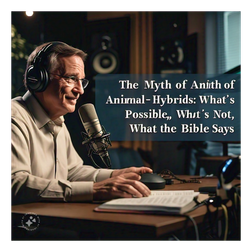
The Myth of Animal-Human Hybrids: What’s Possible, What’s Not, and What the Bible Says

Impossibility of Animal-Human Hybrids and Biblical Condemnation The idea of animal-human hybrids is scientifically impossible due to genetic incompatibility between humans and animals. Humans possess 46 chromosomes while animals have varying numbers, making reproduction impossible. Even closely related species like lions and tigers or horses and donkeys have limited compatibility, resulting in offspring like ligers and mules, which are often sterile. The genetic disparity between humans and animals makes the creation of a hybrid creature through sexual relations unfounded. The Bible strongly condemns sexual acts between humans and animals, referring to it as bestiality, a sin and perversion. Several verses in the Bible explicitly forbid this practice. Leviticus 18:23 states that lying with an animal makes a person unclean and is considered a perversion. Exodus 22:19 decrees the death penalty for those who engage in bestiality. Deuteronomy 27:21 pronounces a curse upon anyone who lies with an animal. These biblical teachings emphasize the sanctity of human relationships and dignity by setting clear boundaries for acceptable behavior. Humans are created in God's image, holding a unique and sacred place in creation, while also being tasked with caring for animals. Bestiality violates these distinct roles and blurs the lines between the holy and the profane. Beyond religious contexts, bestiality is considered immoral because it exploits animals who cannot consent. It degrades both the human and animal involved, reducing the animal to an object for sexual gratification. From an ethical standpoint, bestiality is a form of animal abuse, signifying a lack of respect for life and the natural order. It raises concerns about human morality and the treatment of vulnerable beings. Engaging in such acts reflects deeper issues related to boundaries, power, and respect. Societal norms, religious teachings, and human rights emphasize the need to treat all life, human or animal, with dignity and care.

Why Some People Don’t Believe in God—A Deeper Exploration of Faith, Doubt, and the Search for Meaning podcast

Reasons for Disbelief in God The sources explore a variety of reasons why some individuals do not believe in God. These reasons include: The Problem of Suffering and Evil: This philosophical problem questions how a benevolent and all-powerful God could allow suffering to exist in the world. Witnessing or experiencing tragedies such as war, poverty, natural disasters, and diseases can lead some individuals to question the existence of a loving and protective God. The Rise of Science and Rationalism: Advancements in scientific fields like biology, astronomy, and physics have provided alternative explanations for phenomena previously attributed to God. For instance, theories like the Big Bang and evolution offer explanations for the origins of the universe that do not require a divine being. While science does not inherently disprove the existence of God, some individuals prioritize rationalism and empirical evidence over faith, leading them to question the existence of a deity. Personal Trauma and Disillusionment: For some, disbelief in God stems from personal experiences of trauma or betrayal. Individuals who have experienced significant loss, abuse, or hypocrisy within religious institutions may feel abandoned by God or disillusioned with faith. These experiences can make it difficult for them to maintain belief in a higher power. The Influence of Secularism and Modern Society: In many Western societies, secularism has become increasingly prevalent, with religion being relegated to the private sphere. Younger generations growing up in secular environments may not find belief in God as relevant or central to their lives. Additionally, the emphasis on individualism and personal autonomy in modern society can lead some to view belief in a higher power as a surrender of their freedom. Intellectual and Philosophical Debate: Intellectuals and philosophers have engaged in ongoing debates about the existence of God. Thinkers like Friedrich Nietzsche have argued against the existence of God, while others like Søren Kierkegaard have emphasized the leap of faith required for belief. Atheist critiques often center on the perceived incompatibility of an omnipotent God with free will, human nature, and morality. The Mystery of Existence: Some individuals, known as agnostics, acknowledge the vastness and unknowability of the universe, and therefore do not claim to know whether a higher power exists. They accept the possibility that the answers to life's ultimate questions may remain beyond human comprehension. The sources emphasize that the decision to believe or disbelieve in God is a deeply personal one, shaped by individual experiences, education, culture, and internal struggles. Regardless of one's stance on the matter, the ongoing pursuit of meaning and understanding is deemed essential.


What If Adam Didn’t Eat the Apple? A Peek into a Different Eden podcast

If Adam hadn't eaten the apple, the story, and perhaps all of humanity, could have unfolded very differently. The sources explore several possibilities: God could have banished Eve and created a new companion for Adam. This raises questions about whether the new companion would be another woman or something else entirely, and whether they would also have free will and potentially repeat Eve’s mistake. Adam might have remained single in Eden. This begs the question of whether he would have found contentment in solitude or eventually yearned for companionship. God might have given Adam and Eve a second chance. It’s unclear whether they would have learned from their mistakes or if history would have repeated itself. The sources also raise profound theological questions: Would the concept of free will have been affected if Adam had stayed obedient?. Would sin, death, and the need for salvation through Jesus have entered the world?. Would humanity as we know it even exist?. Would Jesus have still come to Earth?. Ultimately, the sources invite us to contemplate the immense power of choices and the profound impact they can have, not only on individual lives but on the course of history.

The Book of Job Podcast for anyone

An Overview of The Book of Job: Perfect for a Podcast The Book of Job is a compelling and thought-provoking story that explores the themes of suffering, faith, and God's justice. Its engaging narrative and poetic language would make it a great subject for a podcast. Here's a breakdown of the key elements and plot points that could be covered in a podcast about the Book of Job: Introduction of Job: Job, a man living in the land of Uz, is described as "perfect and upright, and one that feared God, and eschewed evil". He is immensely wealthy, with a large family and many possessions. The Challenge: In a heavenly assembly, Satan challenges God, claiming that Job's piety is solely due to the blessings he has received. Satan suggests that if Job were to suffer, he would surely curse God. Job's Losses: God allows Satan to test Job, but forbids him from harming Job physically. Job suffers a series of devastating losses, including his livestock, servants, and all ten of his children. Despite these tragedies, Job remains faithful to God, saying, "The LORD gave, and the LORD hath taken away; blessed be the name of the LORD". Further Testing: Satan again appears before God and argues that if Job were to experience physical suffering, he would finally break. God permits Satan to afflict Job with painful boils, but again forbids him from taking Job's life. Job's Anguish: Job's suffering is immense, and he questions why God has allowed such hardship to befall him. Job's wife urges him to "curse God, and die," but Job refuses, maintaining his integrity. The Friends' Arguments: Three friends, Eliphaz, Bildad, and Zophar, come to comfort Job. However, they soon begin to argue that Job's suffering must be a result of his own sin. They offer various theological explanations for Job's plight, asserting that God punishes the wicked and rewards the righteous. Job's Defense: Job vehemently denies the accusations of his friends, maintaining that he is innocent and that his suffering is unjust. He expresses his deep longing to speak directly to God and plead his case. Job even goes so far as to question God's justice and wisdom. Elihu's Intervention: A younger man named Elihu enters the debate, criticizing both Job and his friends. Elihu argues that God is sovereign and just, but that his ways are often beyond human comprehension. God's Response: Finally, God speaks to Job out of a whirlwind, challenging Job's limited understanding of creation and divine power. God does not offer a specific explanation for Job's suffering, but instead reveals his vast wisdom and power, inviting Job to trust in his ultimate justice. Job's Humility: Faced with the awesome power and majesty of God, Job recognizes his own limitations and repents of his questioning. He acknowledges God's ability to do "every thing" and accepts that some things are simply beyond human understanding. Restoration: God rebukes Job's friends for their misguided accusations and instructs them to offer sacrifices and ask for Job's forgiveness. Job prays for his friends, and God restores Job's fortunes, giving him twice as much as he had before. Job lives a long and prosperous life, blessed with a new family and surrounded by loved ones. The Book of Job raises profound questions about the nature of suffering and the relationship between humanity and the divine. By exploring these themes in a podcast format, listeners could gain a deeper understanding of this powerful and enduring story. The podcast could also feature discussions and interpretations from different perspectives, enriching the listening experience.

Marry for Love Not Louboutins The Perils of Gold Digging

The episode "Marry for Love, Not Louboutins: The Perils of Gold Digging" explores the downsides of prioritizing wealth over love in a marriage. The episode highlights the potential for unhappiness when material possessions are prioritized over genuine affection. It uses humor to illustrate the awkward and unfulfilling situations that can arise when one partner is solely focused on financial gain. One example is the scenario where a spouse showers their partner with expensive gifts, but fails to provide emotional support or genuine companionship. Another example involves a partner who marries into wealth but finds themselves forced to feign interest in activities they find unappealing, such as yacht maintenance.

Diamonds Aren't Forever: Why Money Won’t Save Your Marriage

The source suggests that marrying for wealth can lead to unique and potentially humorous problems. Some of these problems may include: Family drama Mismatched lifestyles Being more in love with material possessions than with one's partner The source also suggests using AI to predict the "future of love" if people continue to marry for money.

When Your ‘Other Half’ is Your Parent’s Age: Daddy Issues Gone Wild!

The provided source discusses relationships with significant age gaps and the humorous situations that can arise. For example, it suggests using AI to generate funny scenarios like accidentally calling an older partner "Dad" or "Mom." This lighthearted approach aims to explore the awkwardness that can accompany such relationships.

The Sugar Dilemma: When Age Gaps Cause More Drama than Romance: PODCAST

The source provided discusses the comedic potential of age gaps in "sugar daddy/mommy" relationships. Specifically, the source suggests focusing on scenarios where a partner reminisces about outdated technology, such as cassette tapes, as a way to highlight the age difference in a humorous way.
9 de 12