Erna Podcast: Unfiltered Conversations

Erna Podcast: Unfiltered Conversations

por Erna JUlien

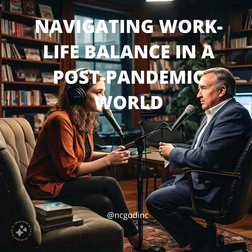
Navigating Work-Life Balance in a Post-Pandemic World

This topic overview discusses the challenges of maintaining work-life balance as remote work becomes more common and shares strategies for achieving a healthy balance. The key points discussed include personal stories from remote workers, expert tips on productivity and self-care, and the future of work in a hybrid environment.

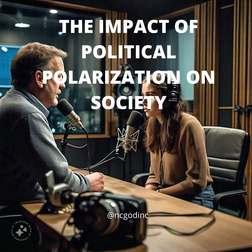
The Impact of Political Polarization on Society

The sources discuss how political polarization impacts society, including the role of media in shaping political beliefs and the need for solutions that promote dialogue and understanding across the political divide. Additionally, the sources indicate that individual stories from people on both sides of the political divide are important to consider.

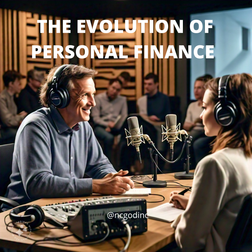
The Evolution of Personal Finance

The sources discuss how financial literacy and personal finance practices are changing in the digital age, especially with the rise of fintech apps. The sources mention budgeting tools and apps that help users manage their money. They also highlight investment trends among younger generations. The sources note that they include interviews with financial advisors.

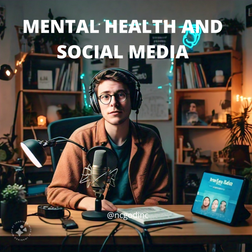
Mental Health and Social Media

The sources provided offer a potential outline for exploring the relationship between mental health and social media, especially among young people. The outline suggests incorporating statistics about social media's impact on mental well-being. It highlights the importance of discussing strategies for mindful social media use. Interviews with mental health professionals are also suggested as a valuable resource for the discussion.

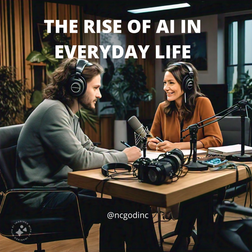
The Rise of AI in Everyday Life

The sources provide an overview of the increasing presence of artificial intelligence (AI) in daily life. AI is becoming integrated into various aspects of our lives, including virtual assistants and smart home devices. It is important to consider the potential benefits and drawbacks of this integration. The sources suggest exploring how AI is impacting work, education, and personal relationships. Additionally, it is crucial to analyze the future implications of AI in society.

Mind Over Matter: The Power of Positive Thinking

The sources provide an outline for a podcast episode titled "Mind Over Matter: The Power of Positive Thinking." The Science Behind Positive Thinking The first segment of the podcast explores the science behind positive thinking. Psychological Studies: This section will discuss the research of Martin Seligman, a pioneer in the field of positive psychology. His work shows that optimism is connected to improved physical health outcomes, such as a reduced risk of cardiovascular disease. Neuroscience Insights: Research in neuroscience shows that positive thoughts can release dopamine and serotonin. These neurotransmitters improve mood and cognitive function. Real-Life Applications: This section will highlight the use of positive thinking in fields like sports psychology. Athletes use visualization and positive affirmations to enhance their performance. Real-Life Transformations This segment will feature a guest who has experienced a significant life transformation through adopting positive thinking. Guest Interview: The guest will share their journey, including challenges they faced and the strategies they used to cultivate positivity. Listener Stories: Listeners will be encouraged to share their personal experiences with positive thinking, making the content more relatable. Practical Strategies for Cultivating Positivity The third segment will provide practical strategies for fostering a positive mindset: Gratitude Journaling: Writing down things you are grateful for can shift your focus and enhance well-being. Studies show a connection between gratitude and happiness. Daily Affirmations: Self-affirmations can boost self-esteem and resilience against negative thoughts. Mindfulness and Meditation: These practices can help to center thoughts and create a positive mindset. The segment will mention resources for guided meditations. Positive Social Circles: Surrounding yourself with positive and supportive people is important. Social interactions can impact mental health and motivation. Addressing Skepticism This segment will address common criticisms of positive thinking. Engaging the Audience: It will discuss the misconception that positive thinking means ignoring problems or engaging in "toxic positivity." Counterarguments: The segment will emphasize that positive thinking involves acknowledging challenges while maintaining a constructive outlook. This approach can lead to better coping strategies. Conclusion and Call to Action The podcast will conclude by summarizing the benefits of positive thinking for both mental and physical health. Listeners will be encouraged to incorporate positive thinking strategies into their daily routines. The podcast will also include a call to action, encouraging listeners to donate to mental health initiatives.

The Truth About Happiness: Can Money Really Buy It?

Money and Happiness: A Complex Relationship The sources explore the multifaceted relationship between money and happiness, ultimately suggesting that while money can contribute to happiness, it's not the sole determinant. Studies from Princeton University show that increased income leads to increased happiness, but only up to a certain point. After an annual income of around $75,000, additional money doesn't significantly boost happiness levels. However, this threshold may need to be reevaluated considering the impact of rising living costs in the current economic climate. The sources explain that this phenomenon might be due to the "hedonic treadmill," where individuals quickly adapt to new financial circumstances. The initial joy of a raise or lottery win fades as it becomes the new norm. Beyond the Financial: The sources emphasize that experiential spending tends to bring more lasting happiness than material possessions. Vacations and shared experiences create memories and foster connections, leading to more enduring joy than acquiring the latest gadgets. Cultivating emotional wealth through strong relationships, personal growth, and meaningful work can significantly impact happiness. The sources suggest that individuals who prioritize these aspects often experience greater fulfillment than those solely focused on financial success. The Potential Pitfalls of Wealth: While money provides security by covering basic needs, exceeding that threshold doesn't necessarily equate to greater happiness. The sources suggest that excess wealth can lead to stress related to managing finances, tax burdens, and the fear of loss. Social comparison also plays a role in financial happiness. Individuals who constantly compare their wealth to those with more may struggle to find contentment, even if they are financially well-off. Real-Life Examples: The sources present stories of lottery winners who experienced negative consequences after sudden wealth, highlighting the challenges of managing large sums of money and the potential for family tension, poor financial decisions, and a loss of purpose. Conversely, examples of individuals who embraced minimalism and downsized their lives demonstrate that finding happiness through simplicity and prioritizing experiences over material possessions can be a fulfilling path. Using Money as a Tool for Happiness: The sources suggest that money can be a tool for happiness when used wisely. Contributing to charities, helping others, and investing in personal growth can enhance well-being. The concept of financial freedom, having enough to live comfortably and pursue passions, is contrasted with the relentless pursuit of wealth accumulation. The sources encourage reflection on whether the ultimate goal is to become a millionaire or to live a meaningful life with sufficient resources. In conclusion, the sources argue that while money can alleviate financial worries and provide opportunities, true happiness stems from meaningful experiences, strong relationships, personal growth, and a sense of purpose. Money can be a tool to support these pursuits, but it shouldn't be mistaken as the ultimate source of happiness.

Can We Live Forever_ Exploring the Science and Ethics of Human Longevity

Exploring the Potential and Challenges of Human Longevity The quest for immortality has captivated humanity for centuries, and recent progress in biotechnology and genetic engineering has brought us closer to understanding the science of aging. However, the potential for significantly extending human lifespan raises profound ethical questions about the implications of living forever. Current research on animals like mice and worms has demonstrated the possibility of extending lifespan through genetic manipulation and calorie restriction. Emerging technologies like CRISPR offer the potential to repair genes associated with aging. Companies like Google's Calico are heavily investing in developing artificial organs, stem cell therapies, and anti-aging drugs to slow or reverse aging. While these advancements offer tantalizing possibilities, the prospect of immortality raises concerns about overpopulation and the strain on resources if natural death becomes a choice rather than an inevitability. This leads to a crucial debate: is the goal of longevity to simply add years to life, or to enhance the quality of those years? Some argue that living forever could lead to stagnation, loss of purpose, or new societal divisions based on access to life-extending technologies. A significant concern is the potential for immortality to become a privilege accessible only to the wealthy, further exacerbating the gap between the rich and poor. This raises complex social and political questions about equitable access to life-extending technologies. Beyond the societal implications, the psychological impact of living forever is a crucial consideration. Philosophers and psychologists question whether immortality would diminish the meaning of life or trigger existential crises. Would the value of relationships and achievements change if life stretched indefinitely? Different religious perspectives on eternal life add another layer of complexity to the discussion. Religions like Christianity, Islam, and Judaism often emphasize the afterlife rather than eternal life on Earth. This raises the question of how these belief systems would reconcile with scientific pursuits of immortality. The potential tension between extending physical life and spiritual beliefs about the soul's nature presents another area of exploration. Some religious communities might view life extension as interfering with a divine plan, while others might see it as fulfilling human potential. In conclusion, the sources present a multifaceted view of human longevity, highlighting both the scientific advancements driving this field and the ethical and societal challenges it presents. The question of whether we can live forever is increasingly being answered by science, but the question of whether we should remains a complex and evolving discussion.

The AI Revolution: Will Machines Replace Us, or Help Us Evolve?

Will AI Replace or Evolve Us? The sources offer a nuanced perspective on the impact of AI, suggesting that the reality may lie somewhere between replacement and evolution. AI is poised to reshape the workforce, automating certain jobs while creating new opportunities in other areas.This shift may require widespread reskilling, as individuals adapt to roles that demand creativity, problem-solving, and emotional intelligence. While fears of mass unemployment are valid, the sources present examples of companies successfully integrating AI without displacing their workforce. The sources suggest that AI's role in creative fields is more likely to be as a tool for augmentation rather than a replacement for human artists.The debate on AI's capacity for true creativity remains open, with some arguing that AI merely mimics patterns while others see potential for genuine artistic expression. The question of whether AI can replicate the emotional depth of human creativity is also a significant point of discussion. The emergence of AI companions presents another fascinating dimension to the AI revolution. While AI can provide companionship and emotional support, the sources caution against overreliance and potential ethical concerns regarding emotional dependence. This development highlights the need for careful consideration of the boundaries between human-AI relationships. Ultimately, the sources emphasize that AI is not a binary force of replacement or evolution but rather a catalyst for transformation. It has the potential to reshape our work, our creativity, and even our relationships, demanding a thoughtful and balanced approach to its integration into our lives.

Digital Detox: Can Unplugging Save Our Mental Health?

Digital Detox and Mental Health The sources suggest that unplugging from digital devices can have a positive impact on mental health. Here's why: Constant connectivity, fueled by social media and notifications, creates a cycle of dopamine hits that can lead to addictive behaviors. Tech companies design apps to keep users engaged, often at the expense of their well-being. Excessive screen time can harm relationships by reducing the quality of face-to-face interactions. High levels of social media use are linked to increased rates of anxiety and depression. This can be attributed to the constant scrolling and comparison culture that permeates these platforms. Screen time, particularly the blue light emitted from devices, negatively affects sleep cycles. This disruption of the body's natural sleep-wake rhythm can further exacerbate mental health issues. Conversely, better sleep, often achieved through reduced screen time, leads to improved mental clarity. Taking digital breaks, even small ones, can have a positive impact on focus, creativity, and overall mental health. Research indicates that these breaks help rewire the brain to better manage stress. People who have successfully implemented digital detoxes report improvements in their lives. These experiences, from influencers to everyday individuals, suggest that stepping away from screens can lead to a greater sense of well-being. The sources emphasize that a digital detox is not about completely abandoning technology. Instead, it's about using it mindfully and establishing healthy habits. This can involve setting boundaries, such as phone-free hours or deleting certain apps, and engaging in activities that don't involve screens.
8 de 12