WHAT'S UP ZAMBIA

WHAT'S UP ZAMBIA

di Sound Composed
Stagione 3
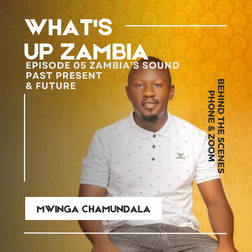
WHAT'S UP ZAMBIA SO3EO5 ZAMBIA'S SOUND PAST PRESENT AND FUTURE
An overview in early 2022 which Zambians are able to use to compare to the 2024 realities. Season 3 is focused on providing what was discussed with creatives, platform owners, art organisations, community organisers and IP rights owners or managers of those who create. All use the phone or/and Zoom. This episode looks at what engineer/producer Mwinga Chamundala sees and hears within his work as well as sound experiences. He speaks of the difficulties with microphones, audio interfaces, general sound equipment and sound treatment. Mwinga discusses how listeners noticed the lower quality in comparison to their peers from other environments. He provides insight into courses he has taken and his thoughts in comparison to what is available as online knowledge share. Provding a timeline of evolution and how little knowledge was handed down by earlier musicians and producers. He outlines where he feels changes were made. He begins with a general overview of production and what happens with music making and distribution then goes on to go in depth over sound knowledge. He discusses how IP is not really taught within some of the music courses and discusses one of the newest offerings from a musican led music school which he believes has made a difference even if the equipment and in depth sound study is lacking. Robyn from Sound Composed combines past, present and future to define how musicians in the early 90s were limited in access to musical instruments and the amount of control that venue owners and those who owned equipment had and why she took a plan to an MP that only came to light years later. Robyn outlines what she feels the error was when the first instrument duty tax was removed and how it inadvertently rewarded those who continued to take advantage of musicians and their inability to afford instruments. The missing era is lightly touched on which alters the current perception when genres like hip hop, dance, rnb and others have an entry point much earlier than what is written in Zambia's music history. This aspect will be covered in detail in the last episode of the season where guests will be invited who experienced the missing era and were part of youth aspirational break away from the restrictions where DJs, musicians and producers began to look at more global feels for young audiences growing up in the early rap and hip hop era. Currently Zambia tends to credit the era with one music form when in reality, the most recorded form is the only one spoken about. In reality several genres were present with the unavailability of good studios taking most live which kick started live music changes with some of today's young bands still playing live remixing developed in the era without knowing the origin. Mwinga aka Dizzy earned the nickname Sound Ninja from Robyn because of his continual passion for sound and his attendance of all workshops with David Asomaning of DM Sound Design UK. Mwinga was able to get that one on one session where David offered to mix one of his productions in order to walk him through mixing and mastering.
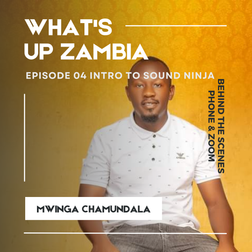
WHAT'S UP ZAMBIA SO3EO4 INTRODUCING A SOUND NINJA
The introduction to Mwinga Chamandula is a 15 minute journey as he breaks down a timeline where his entry into music comes at a time when digital recordings are standard, even if equipment is hard to get your hands on. Recorded 2 years ago during an IP research project funded by British Council, Robyn of Sound Composed takes a back seat in the first part and listen to him outline his journey. His attendance of the workshops with UK's David Asomaning of DM Sound Design led to further sessions where he was able to work on one of his songs with David to perfect his mixing and mastering skills. Mwinga went on to compose, engineer and produce a song that became the origin of one of the biggest songs to come out of Zambia, garner millions of hits online and up the sound quality level of Zambian production to a new generation of warmth. He is now determined to continue to improve his skills, continue to excel and learn everything he can about intellectual property so he is ready for all challenges ahead. Mwinga became a producer while still at school in his teens. This is a two parter so that anyone can listen to the journey that leads to the environment he has had to negotiate when his mission is simply to excel in sound and be able to work with anyone anywhere. He gives an honest look at the musical environment that was his entry point, outlines what was available and talks about the relations who helped give his start. There are three women who provided him with support when he needed it most. His mother, aunt and his first gospel album production brought a lady who opened the door for his sound life to go up a notch. In the second part, Mwinga delves deeper into Zambia, its music environment, sound quality and mindsets as well as has encouraging words for some who have worked to pave paths and criticism for those whom he feels could have handed down better legacies. The insight into the workings of the music industry are balanced against his attention to detail and thoughts about mixing, mastering and identifying the best ways to improve. In the intro Mwinga often has his three year old son drop in, so expect the little mumbles of a kid who loves to sit and play in the studio, has his own little Yamaha keyboard and chips in enthusiastically with glee as we go along! The future is here.
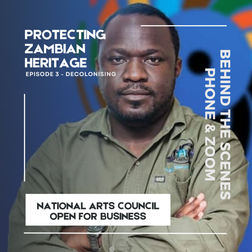
WHAT'S UP ZAMBIA SO3EO3 DECOLONISING IP WITH M A CHIPINDI
Season 3 is kicking off with the additions of the research Decolonising Intellectual Property & Sound Rights. This had a focus on women in music and intellectual property for creatives in Zambia. Sound rights in Zambia have been problematic since its independence in 1964 and no master rights holder has ever received royalties in the territory as they are not collected. This means broadcasters and other users do not pay which impacts synchronisation licenses as well as all royalties associated with sound recordings. This has unfairly impacted owners of sound rights whether they are producers, artist owner or lable owned. In this episode we begin by discussing sound recordings made in Zambia. Historically it was broadcasters and ethnomusicologists operating in the territory who held sound rights which mostly focused on cultural practitioners. Some remain in archives of broadcasters, media houses and private libraries. The vast majority, however, lie outside Zambia, in neighbours like Zimbabwe and in repositories such as International Library for African Music set up from the works of Hugh Tracey. Over 35, 000 recordings and several rare cultural instruments are housed at the associated university that worked with the Tracey family. This episode began with a look at how Zambia itself is represented online. The resources about the music and sound history are so scanty that Wikipedia page on Zambian music history appears at the top and core of all searches. We examined what is on the page and it provided a picture that through research young people have been able to study and recognise the damage caused by not carrying own narrative and beginning to occupy the spaces that count. Should the world be seeing a viewpoint that does not reflect the realities? How does the musical history begin to hold authenticated knowledge that can be shared. Even local books on music history are inaccurate. Could this be an area where young creatives should be engaged in beginning to build a picture that is authenticated and representative? The episode touches on National Arts Council Director Maanka Adrian Chipindi's view. His thoughts on how Zambia's music and cultural history are represented. He is quite thorough in expressing knowledge of local cultural practitioners, ethnomusicological works and right down to a fun conversation as Robyn of Sound Composed begins to touch on the future project to come of African Audio and the viLimba Research intentions to find solutions that support a digital ecosystem and immersive bridge where cultural repositories and soundmarks help focus on saving the cultural assets, heritage assets and kick start products on a different infrastructure with IP and cultural knowledge at the core. Hear what National Arts Council Director has to say about traditional knowledge laws, problematic wording and the importance of changing the narrative, making IP work for young Zambians and the legacy. This recording was made early in 2022 and is still relevant today for its importance in outlining the journey ahead.
Stagione 2
BEHIND THE SCENES WITH CHOKLET (ROY KAZEMBE)
The creative musical cartoonist with the satirical flex, is back again in this taster where the questions are silent and he makes statements based on what he is hearing about the research and discussions had on creativity, heritage and a new peaceful and creatively rich way forward as we mine creativity.Roy Kazembe has often taken time from his busy schedule to chat, share and help visualise Zambian potential. The Luanshya link takes a musical back seat and his description of colonial imagery, history and a peaceful creative feature give us a front seat as we hear him express narratives that all can relate to in his unique descriptive way.The full audio will be available as the research comes to an end and the whole audio spectrum is set free and shared bringing to life the many voices that have spoken, shared and show the talent, skills and visions of the musical and sound creatives who have more than one creative gift alongside the IP explorers who are confident things can change for the better.
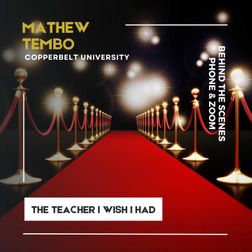
MATHEW TEMBO - THE TEACHER I WISH I HAD
Copperbelt University dips in for a bite size bonus. We had a long chat and are due another but this is a taster. Listen to a Zambian musician turned educator say it like it really is. A direct and fun bit of storytelling outlining truths about remote, rural and urban realities, academics, creatives and the decision makers missing the mark when it comes to education, linguistics, arts and a whole new way of thinking. In eight minutes he breaks down the reason why decolonising and a cultural rich resource needs to transition to a new generation. We had so much fun my inner child came out to play. Expect to hear the full conversation for real, with no messing with audio real soon. Mathew is also a composer and amazing kalimba player. Cue the patent.
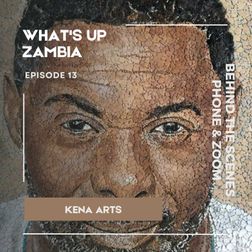
KENA ARTS - THE CULTURE OF APPRECIATION
RACP from Sound Composed speaks to an egg shell mosaic artist about his work. Listen to an artist build an audio visualisation of how he creates, what the challenges are and why he chose to work with egg shells. In this visual arts exploration the questions cover a range of topics based around how supported visual arts are in Zambia and the feelings around the appreciation of arts. There is an additional extra audio where he calls RACP to comment on questions over WhatsApp. The Artist's Viewpoint is well worth a listen as you hear him express his views in real time with complete honesty in an unexpected moment captured.
Stagione 1
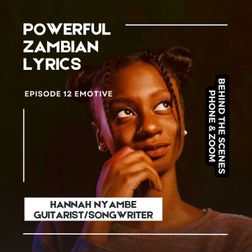
POWERFUL ZAMBIAN LYRICIST
Powerful acoustic compositions birthed as singer songwriter Hannah Nyambe strums her guitar begin their life at home. Hannah speaks to Robyn of Sound Composed about her music, family life and the openness of an artist writing from the heart and soul. One unafraid to be different. They discuss within this episode and the bonus episode coming next the issue of navigating mental health and writing through challenges. Drawn to sadness and emotive works, music can communicate messages that can help people know they are not alone and there is someone out there who gets it. Tackling storytelling as the IP of a lyricist, the joys of writing acoustic version and the exploration beyond comfort zones that comes with preferring acoustic but testing out productions for the market. Through live performance Hannah is able to look at her arrangements and unafraid to acknowledge that some may find the sadness and topics controversial but knowing there is a space for everyone to tell stories that reflect their own emotions and the empathy that artists can truly express in telling stories about what life as a journey brings. This is a relaxed session where the softly spoken singer opens up about her world. Robyn lays out more on supporting behind the scenes on this session recorded earlier in the year.
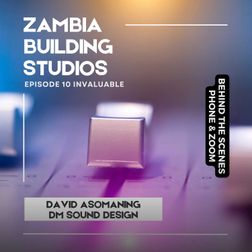
HOW TO BUILD OR IMPROVE ZAMBIAN RECORDING STUDIOS (DM SOUND DESIGN UK)
THE LAST EPISODE And... the final episode on sound is here! Nothing is left out including the long farewell. This is simply invaluable for anyone who wants to improve the space they work in or wants to plan properly for a studio build. Avoid making those basic errors that prove costly in the long run and listen in. Do not be shy to get in touch. CLICK HERE TO GO TO VIDEOS Once again, David breaks it down in detail and helps those who want to set up know what to take in to account as well as those who are striving to improve the current space used. David is available whether it is education, training, advice or consulation for a pro build, happy to hear from anyone anywhere who needs that guidance. Robyn is focused on setting up virtual and on the ground potential so hope to get David on the ground in Zambia with the environmentally sound training and helping set up so courses on the future virtual sound training platform provide options for him to extend his immense knowledge to the virtual realm. Open to audio projects and nothing but love for Zed here so reach out. Websites David Robyn CLICK HERE TO GO TO VIDEOS
SOUND COMPOSED - KNOWLEDGE SHARE (DM SOUND DESIGN UK)
INVALUABLE 1 OF 2 The last two episodes do not hold back on knowledge share without using a lot of terminology. As composers, producers, sound designers and audio professionals both David Asomaning working as an educator and Robyn Phiri working on virtual instrument designs share their experience with film, music, sound and give a rounded view of sound experiences that may help those wishing to improve mixes, masters (and in the next episode facilities). Throughout the series Robyn of Sound Composed records via Zoom, edits and allows her music blends to provide the soundtrack to the series. This episode begins with the same melodic vibe as the rest of the sound series but she has added an ending from her Crossing Borders trailer options for a fun ending - the full version came from imagining a car reaching the Zambezi, looking over at the Mosi-o-Tunya waterfall and deciding it might be worth revving it up and jumping across the border. A fun one for a future animation perhaps! From mixing and mastering to studio build, this is the one for sound pros, future studio builds and anyone who wants to improve their sound, mixes, masters, productions and working spaces. Questions and comments come in from Zambian sound pros and studio builders with the general consensus at the conclusion being more of this please! The session details will be available on the website along with more information of upcoming sessions. The sound page should be up soon where you will be able to watch the videos from David and see clips of the projects that they have worked on together. For more details on David please visit his site. Sound Composed is able to fully endorse David Asomaning and DM Sound Design for all things audio, training and consultancy. Robyn from Sound Composed is happy to have David onboard as she completes research for British Council Southern African Arts and looks forward to virtual sound training provisions that will help young Zambians find local bases where they can set up camp and learn environmental sound recordings, underwater recordings, virtual sound and cultural recordings in safe spaces with women only classes as well as special arrangements for those with linguistic requirements. The options for visual learners will be open once template setters have completed upcoming initiatives. Please stay in touch and thank you for listening in. For those outside Zambia, the door is always open. Walk through! CLICK HERE TO GO TO VIDEOS
SOUND BASICS ZAMBIA (DM Sound Design UK)
SOUND BASICS Continuing from where they left off. Robyn from Sound Composed and David Asomaning continuing to talk about sound in relation to music and beyond. The episode picks up discussing the broadcast standard 48khz 24 bits and why different outputs are required, why Robyn likes to begin work at 96khz then output at 48:24. David explains in detail how it all came about and how his system is set to deliver at 48:24 in order to get the best quality to clients. As both pros output to film, broadcast and other platforms. Zambian pro Edwin calls in to ask for clarification about why the two are talking about 48 rather than 44.1khz. He also explains how many young Zambians may have the ability to provide improved sound services for locals but may not know the science behind the art and how some of the information may go over their heads. David reiterates how that is the reason for this kind of open knowledge share which can help anyone pick up information and both David and Robyn go on to outline the reason they work at higher quality output for their deliverables. David provides additional details to explain how due to bandwidth different online platforms Zambians may deal with like Spotify as an example may have specifications that require 44.1 and their own system them compresses it in to whatever format they use. David talks provides tips about mixing and mastering and avoiding trying to get loudness without peaking and clipping. He offers to demonstrate on a future session for knowledge share. Edwin states that has been a big challenge in Zambia and how knowledge of cutting out unneeded frequencies will be helpful. Robyn explains working from 96khz down to her deliverables at 48khz and then discusses why as an engineer she priotises the ears above all else. She provides an explanation about her preference for good engineers when working on collaborative productions. Everyone deserves a shot to try and see whether they have the ears to be engineers and not necessarily believe that they cannot take on audio works. The two explain their works together in film on scores and sound design where David dubbed them with the nickname the 'Dynamic Duo'. The next episode will dive deeper in to film scores, sound design, mixing and mastering. Not to be missed by pros and future pros alike. CLICK HERE TO GO TO VIDEOS
1 di 3