The CeMi Podcast

The CeMi Podcast

di Centre for the Cellular Microenvironment
Stagione 2
2026 New Year Special (with Prof. Matthew Dalby and Prof. Stuart Reid)
Bonus
What makes a good research centre? Join us for a chat with two of the CeMi directors about the highlights of 2025 and their hopes for 2026, as we discuss how to make the research centre spanning two universities a place of collaboration, partnerships, collegiality and live music. Wishing everyone a great year ahead! Stay tuned for an exciting new CeMi Podcast format coming in 2026!
Stagione 1
Curiosity as a driving force (with Prof. David Weitz)
What makes the ideal researcher? In this episode Lorna chats to Professor David Weitz, Mallinckrodt Professor of Physics & Applied Physics at Harvard University, encompassing discussions of research (on soft condensed matter, non-equilibrium thermodynamics and microfluidics), the struggle for funding in today's political climate, and the trials of running a spinout. Enjoy!
How to get funding as an ECR (with Dr Oana Dobre)?
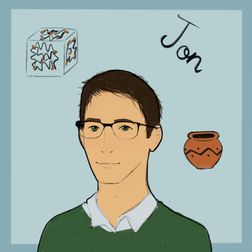
In this episode, we are joined by Dr Oana Dobre, a Lecturer in Biomedical engineering at the University of Glasgow. What is it like to be an early-career researcher today, and what are the challenges of securing funding in a competitive academic landscape? A really helpful discussion with Oana that shares personal experience that could relate to anyone starting out in research. Her honest and encouraging perspective offers practical advice and motivation for those working to navigate the early stages of their academic career. A must-listen for aspiring researchers — we hope you enjoy the conversation!
Using clay as a delivery vehicle in regenerative medicine (with Prof Jon Dawson)
Could nanoclay gels be the future for delivering growth factors in spinal fusion surgery? This week we chat to Jon Dawson, Prof Fellow of Regenerative Medicine at the University of Southampton, about his work on developing clay nanoparticles. Alongside explaining why clay holds so much potential in the field of tissue regeneration, Jon discusses his background, the challenges of being involved in a spinout to bring this technology to patients, and the best way to communicate scientific ideas to different audiences. Hope you enjoy!
A peek inside the Witte group (with Lorna, George and Amy)

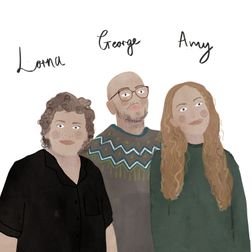
How can an English degree lead to a PhD in Biomedical Engineering? Why is it important to consider inclusivity and diversity in science? And just what is Tu-do-esday [sic]? In this episode, Emily chats to Lorna Merrett, George Dunn and Amy Carnegie, students at CeMi undertaking projects with Dr Kimia Witte. Along the way they discuss their backgrounds and experience in the PhD so far, what started the passion for science, as well as the benefits of actively fostering a multidisciplinary approach to research. As always, hope you enjoy and feel free to get in touch with us (about future episodes or guest suggestions) at cemipod@gmail.com. Happy Easter!
Making progress in mechanobiology (with Prof Viola Vogel)
What were the key breakthroughs in the field of mechanobiology? How do proteins act as mechanical switches? And what can be done to translate more research from the lab to the clinic? In this episode, Emily and Eonan chat with Viola Vogel, a Professor of the Department of Health Sciences and Technology at the ETH Zürich, whose pioneering work in the field of mechanobiology has been key to show that proteins act as mechano-chemical switches and that this can be exploited in the treatment of various diseases. Along the way they chat about commercialisation, public engagement and some hopes for the future of the field of mechanobiology. As always, hope you enjoy the episode and we would love to hear your ideas and feedback for future episode!
Monkey business (with Dr Kimia Witte)
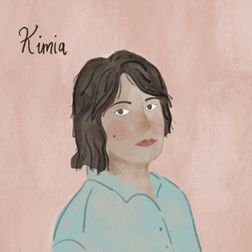
In this episode, Emily enters an interesting discussion on the use of animals in research with Dr Kimia Witte. At a young age Kimia was fascinated by nature and observing animals which fueled their curiosity to stay in science and find ways to minimise the use of animals in research and everyday life. Hope you enjoy the episode and, as always, let us know your suggestions for future episodes!
Engaging with life outside the lab (featuring ThermoFisher's Paul Wildoer)
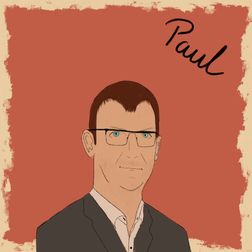
How can research be communicated to the wider public? And why should scientists consider a career in marketing? In this episode, Julia and Finlay chat about important aspects of scientific life outside of the day to day labwork starting with a discussion of the recent Public and Patient Involvement and Engagement day hosted by lifETIME CDT. They then hear hear from Paul Wildoer, a Vice President of Commercial Operations at Thermo Fisher Scientific, who offers advice for anyone with a PhD who is considering a career outside of academia. Hope you enjoy the episode and, as always, let us know your suggestions for future episodes!
On placement from Valencia (with Estela and Irene)

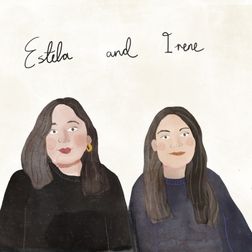
Join us as we chat to two final year PhD students, Estela Sánchez González and Irene Monleón Guinot, about their 3-month placements at CeMi, Estela has a Master's degree in Biomedical R&D and is undergoing a PhD at the Polytechnic University of Valencia (UPV) where she is exploring the design of 3D hydrogels as liver in vitro models for drug screening. Irene studied Biotechnology at UPV, completed a Master's degree in Regenerative Biomedicine at the University of Granada, and is currently undergoing a PhD focused on developing an in vitro model of lung cancer at the University of Valencia. Art by Chloe Rodgers CeMi website: https://glasgow.thecemi.org/
Making science funny with Dr. Zara Gladman
In this episode of The CeMi Podcast, we welcome Dr Zara Gladman, a marine biologist turned comedian and writer. Zara shares her unique journey from studying the impact of invasive crayfish on Scotland's waterways to becoming a viral sensation in the comedy world. We delve into how her scientific background influences her comedic approach, her role as the Public & Community Engagement Manager at the University of Glasgow, and her insights on using humour in science communication.
1 di 2