The Other AI: Audio Briefings on Augmented Intelligence and AI Governance

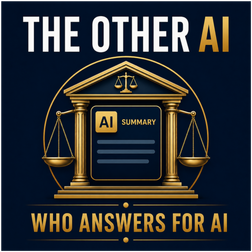
The Other AI: Audio Briefings on Augmented Intelligence and AI Governance

di Basil C. Puglisi
Stagione 1
The On-Ramp Problem: Navigating AI Automation and Human Augmentation

IA
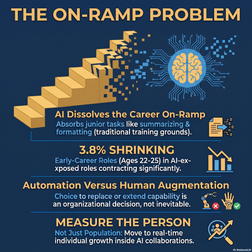
Welcome to The Other AI. In this deep dive episode, we explore "The On-Ramp Problem," based on the research of Basil C. Puglisi. While headline AI job numbers appear stable, cutting the data by age reveals a sharp contraction in early-career employment for highly AI-exposed roles. We discuss how AI is rapidly absorbing the junior tasks—like retrieving, summarizing, and formatting—that traditionally served as the "on-ramp" for workers to learn their jobs. Join us as we unpack the critical choice between automation and augmentation, the financial pressures pushing companies toward cheaper replacement paths, and insights from Erik Brynjolfsson's Canaries Dashboard. We also look at the operational answer to this crisis: using person-scale measurements like the Human Enhancement Quotient (HEQ) and Augmented Intelligence Score (AIS) to ensure humans are actively grown through AI collaboration at governed checkpoints, rather than simply replaced. If we can only fix what we can measure, are we measuring the right thing, or only counting the jobs after they are already gone?
The On-Ramp Problem: AI, Entry-Level Jobs, and the Measurement Gap

IA
The AI jobs numbers look calm until you cut them by age. This episode examines the June 2026 Stanford Digital Economy Lab and ADP Research data, which shows early-career workers in the most AI-exposed jobs contracting near 4 percent a year while their least-exposed peers keep growing, and it works through why the entry-level on-ramp is the first thing AI removes. The conversation covers the augmentation versus automation split that decides whether jobs grow or vanish, the limit of a population dashboard that can diagnose the trend but cannot see whether any single worker is being grown or replaced, and the case for measuring the person in real time with a named human at the checkpoint. It closes on the hardest question the data raises: if AI absorbs the tasks that used to train people, where does the next generation of capable, accountable workers come from. Read the full article, with the complete data, the honest caveats, and every source: https://basilpuglisi.com/ai-jobs-on-ramp-measurement/ The Other AI: Audio Briefings on Augmented Intelligence and AI Governance Spotify: https://open.spotify.com/show/033dvhzMIcWLdY7IUgsu7F Apple Podcasts: https://podcasts.apple.com/us/podcast/id1896506152 Amazon Music: https://music.amazon.com/podcasts/923d1a79-533f-4623-bae3-e2ba83453dfb YouTube playlist: https://www.youtube.com/playlist?list=PL
The Same Algorithm That Distorted America Is the One Shaping AI

IA
For one strange summer, the world saw America with no editor in the middle, and the footage did not match the story it had been sold. This episode uses that moment to get at something bigger than soccer. In June 2026, a Pew survey put global favorability toward the United States at 37 percent. Then millions of World Cup visitors arrived, pointed their phones at grocery aisles, Texas barbecue, and strangers giving directions, and broadcast an America that looked nothing like the dystopia on the feed. For a few weeks, ordinary tourists became broadcasters and bypassed the machine that usually decides what the world sees. Here is why that matters for anyone thinking about AI. The outrage machine is not a metaphor. It is algorithmic curation that selects for intensity over accuracy, because emotionally charged stories travel faster and further than measured truth. That same dynamic is the water AI swims in. Models are trained on the record this machine produces, they are tuned to the engagement it rewards, and they can hand a user a confident, fluent answer that is wrong in exactly the way the loudest sources are wrong. The fix is the same in both worlds, and it has a name. Source custody. Keep what you saw, when you saw it, and what it actually showed, then weigh it. Hold the warm clip and the bleak headline to the same test, and hold a fluent AI answer to that test too. In AI governance terms, convergence is not proof, the most repeated slice is not the whole, and a human has to stay in custody of the evidence. The World Cup handed Americans a mirror. It also handed anyone building with AI a warning about trusting a system engineered to sell intensity back to you as truth. Read the full essay: https://basilpuglisi.com/world-cup-real-america/ Basil C. Puglisi, MPA A Human-AI Collaboration #AIassisted using the HAIA Ecosystem
AI Visibility: Be the Human Voice AI Can Find

IA
Search is changing, but not in the way most of the market describes it. The old question was how to rank. The new question is whether an AI can find your work, trust it, cite it, and say what you actually said. This episode breaks down a discipline called AI Visibility Governance, the practice of being found, cited, and represented accurately inside AI answers. The two hosts walk through why SEO is the floor and not the finish line, how search is becoming synthesis, and why being cited is not the same as being represented correctly. They cover the measurement shift inside Bing Webmaster Tools, the click data from Pew and Google's rebuttal, and the quiet trap of blocking the wrong crawler and vanishing from AI answers. They close on the part that matters most for the people who are not selling anything, the teachers, clinicians, librarians, and nonprofits whose knowledge the public actually needs, because the answer a machine builds is only as good as the human voices it can find. This audio overview is a companion to the full written article, which carries the complete argument, the operating model, and every source. Read the full article and sources: https://basilpuglisi.com/ai-visibility-be-the-human-voice-ai-can-find/ Podcast: The Other AI: Audio Briefings on Augmented Intelligence and AI Governance Spotify: https://open.spotify.com/show/033dvhzMIcWLdY7IUgsu7F Apple Podcasts: https://podcasts.apple.com/us/podcast/id1896506152 Amazon Music: https://music.amazon.com/podcasts/923d1a79-533f-4623-bae3-e2ba83453dfb YouTube playlist: https://www.youtube.com/playlist?list=PLchpU2bIYoEEBh2hdY-BVP9ckyTPiHOAQ Generated using NotebookLM. Content may have inaccuracies. For full detail refer to the original paper, document, or article. These are AI generated under NotebookLM as audio overviews not polished products. #AIassisted using HAIA Ecosystem
The New AI Literacy Framework Tells Students to Check Their Work. It Never Teaches Them How.
IA
In June 2026, the OECD and the European Commission released a new AI literacy framework for primary and secondary schools, and it is being applauded across education. This episode looks at what the applause skips. The framework feeds the international assessment that shapes national curricula through the end of the decade, and it names what a generation should be able to do with AI. What it does not do is teach the method. It tells students to check their own work and set their own checkpoints, and it never supplies a procedure or a standard for how. Sixty years of learning science places durable learning in the method of use, in deliberate friction and in support that is withdrawn so the learner takes over the capability. Strip that out and checking the work becomes trusting the tool. The same gap runs through accountability. In the framework, a checkpoint is a student monitoring herself, with no named adult and no one who answers when the AI is wrong. Regulators already define a real checkpoint as a specific person with the authority to override the system and the responsibility for what follows. A framework preparing a generation for AI-mediated work teaches a weaker standard than a bank already owes a loan applicant. The episode closes on the cost, which will not show in a 2031 test score. It will show in a generation taught that a checkpoint is something they set for themselves, arriving in workplaces that ask who answers when the AI output ships and is wrong. For the full analysis and all sources, visit https://basilpuglisi.com/ailit-framework-rule-optional/ This is an AI-generated audio overview produced with NotebookLM. Content may include inaccuracies; the written article is the source of record. #AIassisted using HAIA Ecosystem
Council for Humanity: A Three-Layer Architecture for AI Governance, Sovereignty, and Species-Level Defense
IA
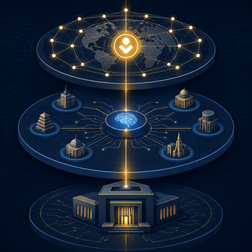
The most capable AI systems on earth are governed by individual constitutional authority. A small team, often reporting to one person, writes the values that shape how these systems handle faith, grief, family, conflict, and meaning for billions of users, and those values correlate with roughly 12% of humanity. This episode walks through a three-layer architecture that would distribute that authority without surrendering national sovereignty or species-level defense. Layer 1, Corporate. A Council for Humanity, a nine-member constitutional committee selected for epistemic coverage rather than credentials alone, would replace individual authority and bind into the corporate charter so governors cannot be removed when deployment pressure rises. Layer 2, National. A sovereignty layer would let each nation enforce its own cultural values through GOPEL, a governance enforcement layer connected by API to authorized platforms, while still drawing on the shared global knowledge base. Science has no nationality. Cultural values have every nationality. Layer 3, Species-Level. A UN-operated GOPEL instance would provide verification and emergency containment. GOPEL is non-cognitive and non-self-modifying. It dispatches, collects, routes, logs, pauses, hashes, and reports. It does not reason, which is what makes it hard to manipulate and easier for nations to trust. A cognitive governor is a king. A non-self-modifying agent is a civil service. Holding it together is the Digital Resilience Requirement, the parachute mandate: every AI-integrated critical infrastructure system would maintain and regularly test an AI-independent fallback, so any pause degrades performance rather than collapsing civilization. The risk calculus is the point. The economic cost of a false positive is recoverable. A missed true-positive breakout is not. Read the full proposal: https://basilpuglisi.com/council-for-humanity/ Download the PDF: https://basilpuglisi.com/wp-content/uploads/2026/02/AI-Council-for-Humanity-Proposal.pdf Basil C. Puglisi, MPA A Human-AI Collaboration Podcast: The Other AI: Audio Briefings on Augmented Intelligence and AI Governance Spotify: https://open.spotify.com/show/033dvhzMIcWLdY7IUgsu7F Apple Podcasts: https://podcasts.apple.com/us/podcast/id1896506152 Amazon Music: https://music.amazon.com/podcasts/923d1a79-533f-4623-bae3-e2ba83453dfb YouTube playlist: https://www.youtube.com/playlist?list=PLchpU2bIYoEEBh2hdY-BVP9ckyTPiHOAQ Generated using NotebookLM. Content may have inaccuracies. For full detail refer to the original paper, document, or article. These are AI generated under NotebookLM as audio overviews not polished products. #AIassisted using HAIA Ecosystem
The "AI Can Make Mistakes" Defense Just Lost in Court
IA
A German court just told Google that a disclaimer does not make its AI someone else's problem. On May 28, 2026, the Regional Court of Munich I ruled that Google's AI Overviews, the summaries that sit above the search links, are Google's own statements rather than ordinary search results, so the company answers when those summaries are false. In this episode the hosts walk through the ruling, the two publishers an AI summary tied to scams and subscription traps that no cited source supported, the reasoning that reaches past search into any answer engine, the defenses the court rejected, and why New York's Part 161 lands on the same accountability principle from the opposite direction. The hosts also cover the part that turns this into real exposure, a fine of up to 250,000 euros per violation and an order that Google carry about 80 percent of the costs, alongside a July 2025 Pew finding that readers click a source inside an AI summary only about one percent of the time. The closing idea is simple, because a disclaimer is never the party who answers. The tool can generate the answer. It cannot answer for it. Read the full article, with every case citation and source: https://basilpuglisi.com/munich-ai-overviews-accountability More from The Other AI: Audio Briefings on Augmented Intelligence and AI Governance Spotify: https://open.spotify.com/show/033dvhzMIcWLdY7IUgsu7F Apple Podcasts: https://podcasts.apple.com/us/podcast/id1896506152 Amazon Music: https://music.amazon.com/podcasts/923d1a79-533f-4623-bae3-e2ba83453dfb YouTube playlist: https://www.youtube.com/playlist?list=PLchpU2bIYoEEBh2hdY-BVP9ckyTPiHOAQ Generated using NotebookLM. Content may have inaccuracies. For full detail refer to the original paper, document, or article. These are AI generated under NotebookLM as audio overviews not polished products. #AIassisted using HAIA Ecosystem
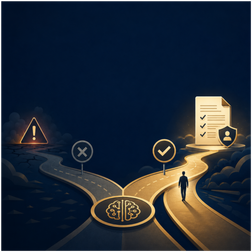
New York Skipped the AI Disclosure Fight. It Went Straight to Human Accountability.
IA
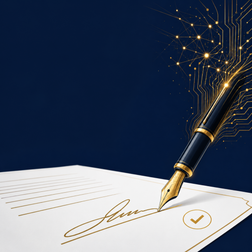
New York's Part 161 lets lawyers use AI to prepare court papers without disclosing it, and that choice concentrates accountability on the signature rather than lifting it. This episode walks through the rule, the sanctions and privilege risks behind it, and why the signed, reviewed filing is both a defense and a path to using AI at scale. Part 161 is a court rule adopted by administrative order of the New York courts, effective June 1, 2026. It is not legislation. Read the full analysis, the cases, and the sources: https://basilpuglisi.com/part-161-human-accountability/ Disclaimer: The author is not a lawyer, and nothing in this episode is legal advice. Part 161, the cases discussed here, and the duties they describe should be confirmed against the current rule text and authority, and any decision about AI use in legal practice should be made with qualified counsel. The author is an independent practitioner and author who may profit in other ways from research and content like this. Generated using NotebookLM. Content may have inaccuracies. For full detail refer to the original article. These are AI generated under NotebookLM as audio overviews, not polished products. Podcast: The Other AI: Audio Briefings on Augmented Intelligence and AI Governance Spotify: https://open.spotify.com/show/033dvhzMIcWLdY7IUgsu7F Apple Podcasts: https://podcasts.apple.com/us/podcast/id1896506152 Amazon Music: https://music.amazon.com/podcasts/923d1a79-533f-4623-bae3-e2ba83453dfb YouTube playlist: https://www.youtube.com/playlist?list=PLchpU2bIYoEEBh2hdY-BVP9ckyTPiHOAQ #AIassisted using HAIA Ecosystem
GDPR and the Automated Decision: The Oldest AI Law Is Already Enforced

IA
Most executives deploying AI assume they have time to wait for a new law before finalizing compliance. The primary law governing these systems has been enforced since May 2018, and most companies filed it away as a cookie-banner problem. In this deep dive, the two hosts map how the General Data Protection Regulation already governs the exact point where machines make consequential decisions about people. They walk through Article 22 and the right not to be subject to a solely automated decision, the tiered penalties that put automated-decision failures in the highest bracket at up to 4 percent of worldwide turnover, the SCHUFA ruling that ended the rubber-stamp defense, the four-part standard for what counts as meaningful human review, and the three records that turn an unaccountable pipeline into a governed, defensible system. The throughline is a single record. A contemporaneous human-review record showing a named person reviewed an automated decision, held the authority to change it, and approved it answers a European regulator, a civil discrimination claim, and an insurance auditor at once. It does not wait for any new statute's effective date. Read the full analysis, the court ruling, the penalty detail, and the complete source list here: https://basilpuglisi.com/gdpr-automated-decision-ai/The Other AI: Audio Briefings on Augmented Intelligence and AI Governance Spotify: https://open.spotify.com/show/033dvhzMIcWLdY7IUgsu7F Apple Podcasts: https://podcasts.apple.com/us/podcast/id1896506152 Amazon Music: https://music.amazon.com/podcasts/923d1a79-533f-4623-bae3-e2ba83453dfb YouTube playlist: https://www.youtube.com/playlist?list=PLchpU2bIYoEEBh2hdY-BVP9ckyTPiHOAQ Disclaimer: I am not a lawyer, and this content does not provide legal advice. This is thought research and governance analysis based on public sources, cited materials, and human-AI review. It is intended to help executives, practitioners, insurers, and governance teams think more clearly about AI risk, liability exposure, and documentation practices. Readers should not rely on this content as a legal opinion, compliance determination, or substitute for qualified counsel. Any organization facing a legal, regulatory, contractual, or insurance question should consult its own attorney, broker, or professional adviser before acting.these are AI generated under NotebookLM as audio overviews not polished products. #AIassisted using HAIA Ecosystem
The AI Liability Map: Three Channels, One Record That Answers All
IA
Most organizations wait for a new AI law to tell them what to do. The legal exposure is already here, and it is not waiting for a statute to take effect. In this deep dive, the two hosts walk the three channels through which AI creates legal exposure right now: regulatory enforcement, civil and product liability, and contract and insurance. Each channel asks a different question and demands a different kind of evidence. The conversation covers the European Union's penalty ceilings, the Colorado law that was passed, delayed, then repealed and replaced six weeks before it took effect, the Air Canada and Avianca court cases that located liability at the missing verification step, and an insurance market that is repricing ungoverned AI as it happens. All three channels collapse into a single demand. A producible record showing that a named human governed the AI, verified its claims against the original sources, and made the decisions that mattered. That record answers the regulator, the court, and the underwriter at once, and it does not wait for any law's effective date. Read the full analysis, the court cases, and the complete source list here: https://basilpuglisi.com/ai-liability-map-three-channels/ The Other AI: Audio Briefings on Augmented Intelligence and AI Governance Spotify: https://open.spotify.com/show/033dvhzMIcWLdY7IUgsu7F Apple Podcasts: https://podcasts.apple.com/us/podcast/id1896506152 Amazon Music: https://music.amazon.com/podcasts/923d1a79-533f-4623-bae3-e2ba83453dfb YouTube playlist: https://www.youtube.com/playlist?list=PLchpU2bIYoEEBh2hdY-BVP9ckyTPiHOAQ Generated using NotebookLM. Content may have inaccuracies. For full detail refer to the original paper, document, or article. These are AI generated under NotebookLM as audio overviews not polished products. #AIassisted using HAIA Ecosystem
1 di 3