The Naval Aviation Ready Room Podcast with Legends and Leaders

The Naval Aviation Ready Room Podcast with Legends and Leaders

di The Naval Aviation Museum
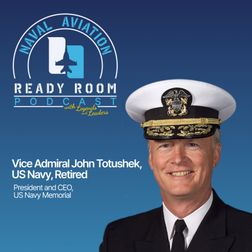
Inside the Pentagon on 9/11: Vice Admiral John Totushek
In this deeply moving and insightful episode of The Ready Room Podcast with Legends and Leaders, host Tim sits down with Vice Admiral John Totushek, a veteran naval aviator whose career spans from the flight decks of Vietnam-era aircraft carriers to the top echelons of Pentagon leadership. Beginning his career flying the iconic F-4 Phantom and serving as a Carrier Landing Signal Officer (LSO), Totushek built a reputation for tactical precision and instruction. After transitioning to the private sector and continuing his service in the Naval Reserve flying adversary missions in the A-4 Skyhawk he was tapped to return to active duty and eventually serve as the 10th Chief of Naval Reserve. On September 11, 2001, Vice Adm. Totushek was sitting at his desk on the fourth deck of the Pentagon’s E-Ring when American Airlines Flight 77 struck less than 100 feet away. In this episode, he recounts the harrowing moments following the concussion, guiding survivors through black smoke, and steadying panicked crowds using his "admiral's voice." In the immediate aftermath, Totushek faced the monumental task of reshaping and mobilizing the Naval Reserve to support a nation suddenly at war. Overseeing the call-up of over 10,000 reservists, he reflects on the pre-9/11 structural reforms that made rapid deployment possible, the power of decentralized leadership, and the unique skills reservists bring to active duty. Rich with military history, executive wisdom, and personal reflection, this conversation is an essential masterclass in crisis leadership. What You'll Learn: How naval aviation training and LSO instruction prepare leaders for high-stakes decision-making Firsthand account of surviving the 9/11 attack inside the Pentagon's E-Ring The critical leadership steps required to steady a crowd and navigate immediate crisis How pre-crisis organizational restructuring enabled the rapid mobilization of over 10,000 reservists The unique value and civilian skill sets Navy Reservists bring to active-duty operations Insights on setting the tone as an executive leader to empower team success Historical stories from the Navy Memorial, including the recovery of sailors from the USS Monitor If you enjoyed this episode, please subscribe, rate, and review us on Apple Podcasts, Spotify, and YouTube Episode Resources: National Naval Aviation Museum Website US Navy Website Vice Admiral John Totushek on LinkedIn Tim Kinsella on LinkedIn
9/11's Hidden Story: How One Schedule Change Saved This Pilot's Life | Capt Steve Schreiber
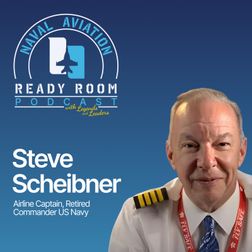
In this powerful and deeply personal episode of The Naval Aviation Ready Room Podcast with Legends and Leaders, host Ryan Keys welcomes Captain Steve Scheibner, a veteran naval aviator, commercial airline captain, and leadership mentor whose career and life were forever altered by a fateful twist of history. Beginning his career as a U.S. Navy P-3 Orion pilot, Scheibner played a vital role in Cold War anti-submarine warfare, where decentralized command and trust were essential to mission success. Transitioning into commercial aviation with American Airlines, he expanded his skills and perspectives as a professional aviator. On September 11, 2001, a last-minute scheduling change kept Scheibner from being in the cockpit of American Airlines Flight 11, the first plane hijacked that morning. That near miss reframed his life’s purpose, compelling him to integrate leadership, faith, and mentorship into every aspect of his journey. He went on to design Navy core values training that impacted over 10,000 service members, founded a thriving church in Maine, and built programs that bridge the gap between military discipline and personal character development. Today, Scheibner is known to many as “Captain Steve” through his popular aviation YouTube channel with more than 800,000 followers. His unique blend of operational expertise, theological insight, and leadership training makes him a sought-after speaker and mentor. Whether conducting Cold War missions, guiding airline crews, or inspiring audiences worldwide, Scheibner exemplifies purposeful living rooted in core values, resilience, and service. His story demonstrates how moments of fate can fuel a lifelong mission to lead with integrity and make every day count—lessons as relevant in the ready room as they are in civilian life. What You’ll Learn: How naval aviation’s decentralized command structure builds trust and empowers leaders The role of the P-3 community in Cold War anti-submarine warfare How balancing military and civilian careers sharpens adaptability and focus Why pivotal, life-changing events reshape personal and professional priorities The importance of leadership training that integrates both career and character development How sharing and processing traumatic experiences fosters growth and healing Why naval aviation leadership principles apply far beyond the ready room How core values sustain purpose in both military and civilian life The role of adaptability in seizing unexpected career opportunities How to make every day count by carrying lessons of fate, faith, and service into leadership If you enjoyed this episode, make sure to subscribe, rate, and review it on Apple Podcasts, Spotify, and YouTube Podcasts. Instructions on how to do so are here. Highlights and YouTube Chapters: [00:00] Welcome to the Naval Aviation Ready Room Podcast [02:56] Finding Your Path: From College Graduate to Naval Aviator [06:46] Doers vs Thinkers: The Psychology of Naval Aviation [09:08] Cold War Chronicles: Tracking Soviet Submarines [13:17] Teaching the Next Generation: From P-3s to Flight Instruction [21:53] Developing Naval Leadership: The Core Values Course [30:33] Flight 11: A Life-Changing Near Miss on 9/11 [42:57] Trust and Leadership: The Power of Decentralized Command [45:42] Looking Ahead: From Triple Seven Captain to Aviation Influencer [48:44] Final Thoughts: Leadership Beyond the Cockpit
Kenneth Whiting: The Silent Architect of U.S. Naval Aviation
Long before aircraft carriers dominated the world's oceans, a visionary officer named Kenneth Whiting was busy writing the playbook for naval warfare. From escaping a submerged submarine via a torpedo tube to prove it could be done, to becoming the last naval officer personally taught to fly by Orville Wright, Whiting's entire career was built on quiet, calculated audacity. Host Captain Tim "Lucky" Kinsella retraces Whiting's remarkable life: leading the First Aeronautic Detachment to France in 1917 as the first U.S. combat unit ashore in WWI, single-handedly committing the Navy to a massive European airbase strategy without approval from Washington, and taking acting command of the USS Langley (CV-1) the Navy's first aircraft carrier. Learn how Whiting personally invented essential carrier flight deck operations including pilot ready rooms, flight debrief films, color coded deck jerseys, and the role of the Landing Signals Officer (LSO) and how his legacy lives on at NAS Whiting Field. What You'll Learn The First Submarine Escape: How Whiting used himself as a guinea pig in 1909, squeezing through an 18-inch torpedo tube to invent submarine escape procedures. Orville Wright’s Last Naval Student: Whiting's direct connection to early aviation history and his transformation into Naval Aviator #16. The Unauthorized WWI Diplomat: How a 35-year-old lieutenant sat down with the French High Command and committed the U.S. to a massive European air base program without authority. Birth of the Covered Wagon: How an ugly coal ship, the USS Jupiter, survived German U-boats to become the USS Langley (CV-1), with Whiting as its functional first commander. The Innovations of Flight Deck Operations: How Whiting invented the LSO position using white sailor hats, introduced color-coded jerseys, created the first ready rooms, and pioneered flight camera debriefs. A Lasting Legacy: Why NAS Whiting Field remains one of the busiest air facilities in the world and how Whiting's doctrines shaped WWII leadership. Episode Resources: US Navy Website Naval Aviation Museum Foundation Website Tim "Lucky" Kinsella on LinkedIn
47 Sailors Lost: The Hidden Truth Behind the USS Iowa Disaster
On April 19, 1989, 260 nautical miles northeast of Puerto Rico, a catastrophic explosion ripped through Turret 2 of the battleship USS Iowa during a gunnery exercise. Instantly taking the lives of 47 sailors, it remains the U.S. Navy’s worst peacetime loss of life on a warship since WWII. Instead of uncovering systemic operational failures, an initial Navy JAGMAN investigation blamed 24-year-old Gunner’s Mate Second Class Clayton Hartwig, falsely alleging he deliberately set off the blast in a suicidal rage. Host Captain Tim "Lucky" Kinsella unpacks the technical, human, and institutional failures behind the tragedy from 45-year-old WWII era gunpowder and unauthorized gunnery experiments to a complete breakdown in the chain of command. Kinsella reveals how an independent forensic investigation led by Sandia National Laboratories dismantled the Navy’s narrative, proving that real powder bags could detonate spontaneously from an accidental overrun, ultimately forcing the Chief of Naval Operations to issue a historical public apology to Hartwig's family. What You'll Learn The Anatomy of a Naval Rifle: The complex, manual process of loading 2,700-pound shells and 660 pounds of WWII-era silk powder bags into a 16-inch gun barrel. The Swiss Cheese Model of Disaster: How unapproved supercharged powder experiments, severe personnel qualification gaps, misfire procedures, and deferred maintenance set the stage for tragedy. Heroism in the Inferno: How 11 sailors survived at the bottom of the turret and how damage control parties fought the blaze to prevent a ship-wide magazine explosion. The Flawed Investigation: Why an informal JAGMAN report combined with leaks and bad psychological profiling led the Navy to falsely accuse Clayton Hartwig. Sandia's Scientific Breakthrough: How independent drop testing on live powder bags disproved the Navy's wooden-pellet testing and exposed a 1-in-6 accidental ignition risk from overramming. Lessons in Command Leadership: Why institutional momentum can lead to false conclusions and the critical importance of speaking up when safety standards fail. Episode Resources: US Navy Website Naval Aviation Museum Foundation Website Tim "Lucky" Kinsella on LinkedIn
The Battle of Midway Lost Air Group: Heroism, Mutiny and Cover up | Footnotes of History
On June 4, 1942, fifteen obsolete Douglas Devastators of Torpedo Squadron 8 flew low and alone toward the pride of the Imperial Japanese Navy. Their leader, Lieutenant Commander John Charles Waldron, had done the unthinkable an hour earlier: he broke formation and defied his air group commander, convinced the official strike course was dangerously wrong. Waldron was right. Torpedo 8 found the enemy, but without fighter cover or dive bomber support, 29 of the 30 airmen were killed. Yet their sacrifice bought the crucial minutes needed for American dive bombers to strike and alter the course of World War II. Meanwhile, the remaining 59 aircraft of the USS Hornet Air Group led by Commander Stanhope Cotton Ring and backed by Captain Mark Mitcher flew on a course that led to empty ocean, running out of fuel and ditching without ever sighting the enemy. Host Captain Tim "Lucky" Kinsella breaks down the command clash between Ring, Mitcher, and Waldron, the tactical brilliance buried in tragedy, and the decades-long detective work that exposed how the official Navy after-action report was altered to paper over a catastrophic decision. What You'll Learn The Command Triangle: The deep friction between the elite, formal Commander Stanhope Cotton Ring, Captain Mark Mitcher, and the visionary, relentless Lieutenant Commander John Charles Waldron. The Mutiny over the Pacific: Why Waldron broke formation and led Torpedo 8 on his own heading, risking a court-martial to find the Japanese fleet. The Sacrifice of Torpedo 8: How 15 obsolete Devastators absorbed the full fury of Japanese Zeros, keeping enemy carriers maneuvering and clearing the skies for the decisive dive bomber attack. The Flight to Nowhere: How 59 aircraft flew into a blank ocean, leading to dry fuel tanks, ditched fighters, and the solitary return of Commander Ring. Unraveling the 40-Year Cover-Up: How an independent investigation by a veteran lawyer exposed discrepancies in the Hornet's official action report, revealing a modified course and erased squadron records. Episode Resources: US Navy Website Naval Aviation Museum Foundation Website Tim "Lucky" Kinsella on LinkedIn
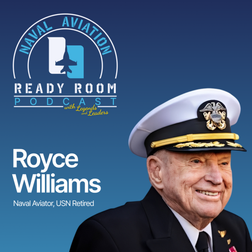
1 vs 7 Soviet MiGs: How Royce Williams Survived the Longest Dogfight in History
Airmanship under intense stress is often defined by quick instincts and decades of muscle memory, but what happens when you are vastly outnumbered, outgunned, and ordered to keep your greatest achievement classified for half a century? In this episode of The Naval Aviation Ready Room Podcast, Tim Kinsella welcomes retired Navy Captain Royce Williams, whose military career spanned World War II, Korea, and Vietnam over 220 combat missions. Royce breaks down his early flying days, bird hunting in South Dakota, and his transition into jet aviation during the early days of carrier operations. The core of the conversation explores the legendary November 18, 1952 dogfight off the coast of Vladivostok. Operating near the Yalu River, Royce was separated from his division and ambushed by seven Soviet MiGs. He dissects the 35-minute duel, the longest recorded dogfight in jet history, detailing how he maneuvered inside the faster MiGs, managed critical ammo, porpoised a heavily damaged Panther back to the USS Oriskany, and kept the engagement top-secret for over 50 years. What You'll Learn: The Anatomy of a 1-vs-7 Dogfight: How speed differentials and turn-radius physics allowed an outgunned F9F Panther to outmaneuver faster Soviet MiG-15s. Survival Flight Mechanics: Proposing techniques used to fly an airframe with severed rudder cables and lost hydraulic controls. Classified Cold War Operations: How early NSA signals intelligence recorded the battle and why the engagement was kept secret for decades. Emergencies Beyond the Manual: Firsthand accounts of surviving double-engine afterburner fires in an F-4 Phantom and high-altitude hypoxia free-falls. Presidential Interrogations: The humorous story of meeting President Eisenhower in Korea over bourbon. Chapters: 00:00:00 - Casual Beginnings: Golf handicaps, caddying for Bob Hope, and pre-show banter 00:02:34 - Introducing a Legend: Tim Kinsella introduces Capt. Royce Williams and the 1952 MiG encounter 00:08:53 - Prairie Roots & Bird Hunting: Growing up in South Dakota and how hunting pheasants taught visual gun lead 00:12:05 - First Flights & Barnstormers: Riding in a Ford Tri-Motor at age four and selling biplane rides at county fairs 00:21:04 - The Corsair Nose & Cold Winters: Flying the iconic F4U Corsair and earning degrees at Minnesota and Monterey 00:27:12 - Task Force Operations off Vladivostok: Striking targets along the Yalu River with Carrier Air Group assets 00:37:47 - The 35-Minute Bar Fight: Managing threats from "the perch" and capitalizing on enemy flight errors 00:45:41 - Return to Carrier: Dodging friendly fleet fire, maintaining 170-knot stall speed, and catching the #3 wire 00:50:45 - Debrief Under Secrecy: Intelligence delays, 263 shrapnel holes, and orders to keep
Footnotes of History Greatest Hits of 2026: Stories of Valor, Accountability and Aviation Pioneers
This "Greatest Hits of 2026" compilation episode of Footnotes of History highlights defining moments of valor, absolute accountability, and relentless perseverance across naval history. Host Captain Tim Kinsella walks listeners through three astonishing stories where extraordinary human characters met the ultimate test. First, dive into the story of Helicopter Attack Squadron (Light) 3 (HAL-3) the "Seawolves" the most decorated squadron in naval aviation history. Operating at tree-top level in the dark over the Mekong Delta, these all volunteer crews built a culture of utter equality and three minute scramble times to save Navy SEALs, PBR crews, and ambushed ground troops. Next, examine the tragedy at Honda Point in 1923, where seven U.S. Navy destroyers ran aground in dense fog in the Navy's worst peacetime disaster. Discover how Captain Edward H. Watson set a timeless standard for military leadership by stepping onto the witness stand to accept 100% responsibility for the catastrophic event. Finally, journey back to 1919 aboard the NC-4 flying boat as Lieutenant Commander Albert C. Read and his crew braved freezing spray, bone-rattling open-cockpit engines, and night maritime spins to complete the world's first transatlantic flight paving the way from wood and linen biplanes to the moon landings just fifty years later. What You'll Learn: Tactical Courage Under Fire: How HAL-3 Seawolves operated at 80-to-100-foot altitudes, flying in total darkness with 3-minute scramble times to support Riverines and Navy SEALs. The Power of Service Culture: Why an all-volunteer ethos and the total elimination of officer-enlisted separation built an unbreakable bond under extreme combat conditions. Extreme Command Accountability: How Captain Edward H. Watson demonstrated ultimate leadership by taking full, sole culpability for the 1923 Honda Point destroyer disaster. Heroism in Crisis: The harrowing rescue efforts during the Honda Point grounding, including junior officers and local California ranchers improvising breaches buoys to save hundreds of lives. Early Aviation Grit & Seamanship: How the crew of the NC-4 navigated severe fog, cold, open-air cockpits, and near-fatal aircraft spins to achieve the first successful transatlantic flight in 1919. The Evolution of Naval Power: How pioneering early naval aviation set the foundation for space exploration and modern special operations air support. Watch the Full Episodes on Youtube • https://youtu.be/9CZXwi9gTyM • https://youtu.be/Gk-B_nQqybo • https://youtu.be/iDS5RjUt3e0
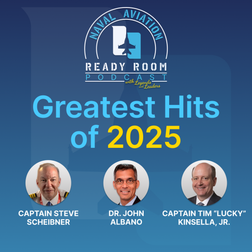
Greatest Hits of 2025: Stories of Courage, Leadership, and Resilience
This "Greatest Hits of 2025" compilation episode of The Naval Aviation Ready Room Podcast with Legends and Leaders, highlights defining moments of duty, crisis, and resilience across naval aviation, brings together three remarkable perspectives that showcase what it means to lead, serve, and find purpose under extraordinary circumstances. Listeners hear from Captain Steve Scheibner, an American Airlines pilot bumped at the last minute from flying Flight 11 on September 11, 2001, as he reflects on living on borrowed time and the obligation to lead a purposeful life. Dr. John Albano shares his unique journey as an Army flight surgeon liaison within the Navy program, emphasizing how shared operational mindsets and joint relationships enhance warrior care and preventive medicine. Finally, Captain Tim Kinsella walks through the harrowing morning of the 2019 NAS Pensacola active shooter attack, detailing the critical 45 seconds that slowed down time, the weight of command decisions, and the unforgettable words from a fellow Marine that gave him strength through the crisis. What You’ll Learn: How surviving a near-miss on September 11 creates a lifelong obligation to live every day with divine purpose. The operational synergy between Army and Navy flight surgery programs and why relationships drive joint military success. Why slowing down during an emergency ("no fast hands in the cockpit") is vital for clear crisis leadership. How taking 45 seconds to deliberate can keep a commander from becoming a distraction to emergency first responders. The psychological impact of evaluating POW resilience and preparing modern warriors for high-stress environments. How authentic trust between commanders and subordinates provides strength during catastrophic events. Featured Voices: Captain Steve Scheibner - Former Navy P-3 Orion pilot and veteran American Airlines Boeing 777 captain with over 12,000 flight hours. On September 11, 2001, he was scheduled as First Officer on American Airlines Flight 11 before another pilot picked up the trip at the last minute. Steve shares his profound realization of survival, the empty space where normal feelings reside, and how living on "borrowed time" fueled his passion for faith, family, and purpose. Dr. John Albano - Retired Army Colonel, flight surgeon, and medical researcher with over 25 years of clinical, academic, and executive medicine experience. Dr. Albano discusses his transition from Army aviation at "Mother Rucker" into aerospace medicine, serving as an Army liaison to the Navy residency program, and how joint service mindsets and Mitchell Center POW research shape operational medicine. Captain Tim "Lucky" Kinsella - Retired US Navy Captain and former Commanding Officer of Naval Air Station Pensacola. Captain Kinsella recounts his real-time decision-making during the December 6, 2019 active shooter attack at NAS Pensacola. From taking 45 seconds to shave with a safety razor to regain composure to receiving unwavering support from his security team, he offers a masterclass in deliberate crisis leadership. Listen to Full Episode here: Youtube: https://youtu.be/EKnAS-uOjMg https://youtu.be/YVpyadXRk7Y https://youtu.be/SeRQMFmeH0c https://youtu.be/Q-7rHrSP-yM
Three Sheets to the Wind: The Nautical Phrases We Still Use Today
Every single day, we speak a language forged on the high seas without even realizing it. When you describe a chaotic day at the office, where your inbox is chock-a-block, your boss is a loose cannon, and a colleague leaves you high and dry, you aren't using modern slang. You are speaking the raw, precise vocabulary of the wooden ship. For over three centuries, the English-speaking world floated, and life aboard a square-rigger demanded an exact, dense working language where a misspoken word in a dark storm could mean immediate disaster. Host Captain Tim "Lucky" Kinsella guides listeners through the compelling origins of nautical idioms, diving into the rigging setups behind three sheets to the wind and by and large, and unpacking the literal origins of the bitter end. He also opens up the "Myth Locker" to directly dismantle popular but fictional etymologies like P.O.S.H. and freezing the balls off a brass monkey. Finally, the episode charts how 20th-century aviation adopted the sea's old clothes, translating naval terms into the sky to give us modern phrases like pushing the envelope and wingman. What You’ll Learn The Intensely Verbal World of Sail: Why an 18th-century square-rigger carrying miles of line forced sailors to develop a hyper-precise, vivid vocabulary to survive. The Anatomy of Technical Rigging Idioms: The true mechanical adjustments that turned technical sailing terms into phrases for drunkenness (three sheets to the wind) and generalities (by and large). Gossip, Fat, and Old Rope: The real history behind workplace mainstays like scuttlebutt, slush funds, and the junk piling up in your garage. Debunking the Myth Locker: Why common, tidy stories for phrases like posh and square meals are entirely fictional. How Flight Stole from the Sea: The fascinating linguistic leap from wooden hulls to jet cockpits, tracing how naval aviation bridged two worlds. Episode Resources: US Navy Website Naval Aviation Museum Foundation Website Tim “Lucky” Kinsella on LinkedIn
Flying the Ice Shelf: LC-130 Ski Operations in Antarctica
Aviation leadership is often measured by adherence to strict checklists, but what happens when you operate in environments where standard navigation fails, satellite communication doesn't exist, and the runway beneath you is a flexing sheet of ice? In this episode, Ryan Keys welcomes retired Navy Captain Chris Callahan, whose military and commercial career spans global logistics, combat operations, and some of the most remote assignments on Earth. Chris details his legacy as a multi-generational aviator before diving deep into the harrowing realities of flying for Antarctic Development Squadron Six (VXE-6). He breaks down the anatomy of a historic 3,800-mile medical evacuation completed entirely via dead reckoning, and explains the high-stakes calculations required to break an aircraft free from wet snow without the aid of JADO rocket bottles. The conversation takes listeners from the frozen interior of the South Pole to the Mediterranean, where Chris transitioned to electronic reconnaissance (VQ-2) flying signals intelligence missions during Desert Storm. Finally, Chris shares a look at the cultural transition into commercial airlines, his time commanding logistics squadrons, and the humorous, late-night mission where he broke back onto base to save a priceless, decaying 1950s logbook from destruction. What You’ll Learn: The Reality of Antarctic Aviation: Inside the intense mechanics of landing heavy aircraft on flexing ice runways and using ski-drag passes to scout hidden crevasse bridges before touchdown. Dynamic Emergency Risk Mitigation: How the loss of JADO propulsion bottles forced crews to reinvent takeoff protocols in wet snow, operating on the razor's edge of minimum control speed. The VQ Reconnaissance Mission: The logistical realities of shifting from tactical transport to flying long intelligence-gathering tracks while managing dense commercial air traffic. The Evolution of the Cockpit: How the design philosophy shifted from early Boeing airframes to highly collaborative, pilot-centric engineering in modern wide-bodies like the Boeing 777. Preserving Fleet Legacy: Why safeguarding raw historical records matters, and the incredible firsthand accounts preserved from the earliest days of South Pole exploration. If you enjoyed this episode, make sure to subscribe, rate, and review it on Apple Podcasts, Spotify, and YouTube Podcasts. Instructions on how to do so are here.
1 di 5