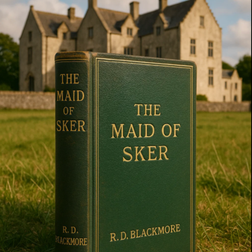
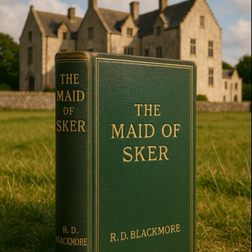
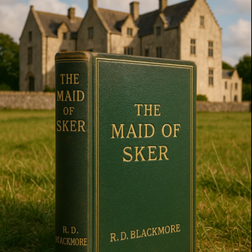
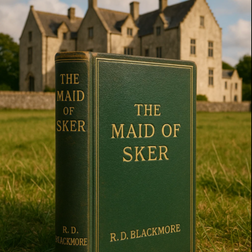
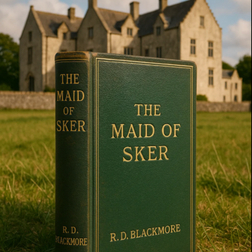
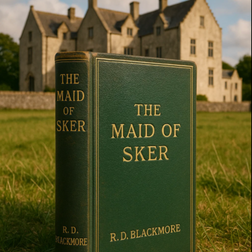
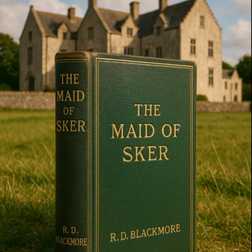
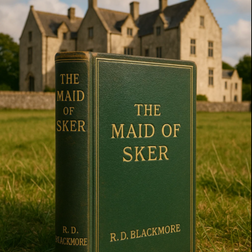
The Maid of Sker by R.D. Blackmore (Unabridged)

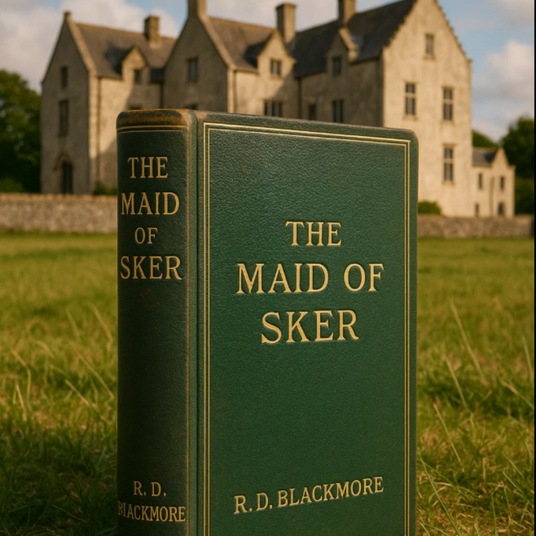
The Maid of Sker by R.D. Blackmore (Unabridged)

di The Welsh Mafia
Stagione 1
Chapter Thirty One - Two Lovers
While keeping watch nearby, Davy accidentally overhears a private and heartfelt exchange between Drake Bamfylde and young Isabella. Their conversation, full of honesty and affection, contrasts sharply with the deceit and manipulation that have surrounded Davy in recent chapters. In their words, he glimpses a purer, simpler kind of love — one untouched by greed or ambition. Yet, as an uninvited listener, Davy must face the awkward knowledge that sometimes truth is found by chance, not invitation. This chapter offers a rare moment of emotional calm amid the intrigue of The Maid of Sker. Blackmore captures the innocence of young love with the same care he gives his depictions of duty and conflict. The scene also deepens the human texture of the novel’s Devon setting — the hedgerows, the quiet fields, and the shaded paths becoming witnesses to both secrecy and sincerity. For listeners, it’s a reminder that even in a story of smuggling, betrayal, and harsh seafaring life, tenderness still finds a voice.
Chapter Thirty - On Duty
Confined to his duties aboard a ship docked off Barnstaple, Davy finds himself torn between obedience and conscience.When Parson Chowne directs him to row upriver and make certain “observations,” Davy’s sense of purpose begins to waver. His motivations are clouded — part curiosity, part obligation, part unease — as he realises the errand may not be as innocent as it seems.This chapter marks a turning point in Davy’s moral journey. His “duty” to Parson Chowne sets up a growing conflict between personal integrity and obedience to authority — a common theme in Victorian storytelling. The setting along the River Taw, where land and sea meet, mirrors Davy’s own uncertainty between right and wrong. Blackmore’s portrayal of conflicting loyalties here reflects both his deep moralism and his sharp awareness of human frailty. Pronunciation is always a challenge when working with the cadence and emphasis of local dialects and accents - whilst ‘Laleston’ is a struggle for those who are not local, it is the word ‘dingy’ which may ring out here since it is pronounced as written not ‘dinghy’ as now written and pronounced in and around Porthcawl.
Chapter Twenty Nine - A Visit To A Parson
This chapter brings an uneasy meeting with Parson Chowne, whose reputation already casts a long shadow. What begins as a polite visit soon reveals tension beneath the surface — courtesy masking calculation, and hospitality edged with menace. Blackmore’s writing here is rich in atmosphere, blending Devon’s rural calm with the disquiet that follows when power and morality collide. Encounters like this one reflect Blackmore’s fascination with the moral authority of the clergy and the misuse of influence in small communities. In creating Parson Chowne, he drew from local tales of domineering country parsons who ruled their parishes through fear as much as faith — a theme that resonates far beyond its Victorian setting. In this chapter, Blackmore uses the term “naked people” in a way that reflects the language and social attitudes of the 19th century rather than our own. The phrase does not refer to nudity in a literal sense, but to individuals seen as uncivilised or lacking refinement according to Victorian standards. Such expressions were common in literature of the period and often carried undertones of class or racial prejudice that are unacceptable today. The unabridged reading preserves this language for historical accuracy, allowing modern listeners to understand how everyday speech once reflected the biases of its time. We include it here with the clear understanding that these views are not endorsed, but are part of the cultural record from which we can learn. For listeners in Porthcawl, Kenfig, and North Devon, this episode continues the thread of local realism mixed with moral drama — where the church door may open not only to faith, but also to fear.
Chapter Twenty Eight - Something About Him
In this quietly revealing chapter, set in a noisy pub on fair day in Barnstaple, Blackmore invites us to look more closely at one of his most unsettling figures — Parson Chowne. There is, as the title suggests, something about him that commands attention and unease in equal measure. Through rumour, reaction, and reflection, we begin to sense the darker undercurrents of power, charisma, and fear that surround this man. Through the character of Parson Chowne, Blackmore explores the darker side of religious authority. Victorian readers would have recognised his type — a clergyman whose social standing gave him power, but whose conduct betrayed the values he was meant to uphold. Blackmore often used such figures to criticise hypocrisy and moral corruption within institutions that claimed moral superiority. In The Maid of Sker, Parson Chowne’s presence acts as both warning and commentary, showing how influence, when unchecked by conscience, can warp an entire community. For listeners from Porthcawl, Kenfig, and North Devon, this episode offers a glimpse into the moral tensions of the age — when outward respectability could mask something far more complex beneath the surface.
Chapter Twenty Seven - A Fine Spectacle
The scene shifts from coast and countryside to the bustle of a Barnstaple town fair, where Boutport Street and Bear Street are alive with noise, colour, and spectacle. Amidst the crowds, we meet two striking figures for the first time — Parson Chowne and Parson Jack Rambone. Blackmore draws inspiration here from the notorious Reverend John Froude (often written Founde), one of Devon’s infamous “Hunting Parsons”, clergymen remembered as much for their unruly behaviour and mischief as for their ministry. The “Hunting Parsons” were clergymen in 18th and early 19th-century Devon who gained notoriety for their rowdy lifestyles. Rather than setting a pious example, some became infamous for drinking, gambling, womanising, and even leading hunting parties across parish boundaries. The most notorious was Rev. John Froude of Knowstone and East Anstey, remembered for spreading mayhem in his community and inspiring local legends. Blackmore’s characters Parson Chowne and Parson Jack Rambone reflect this reputation — blending historical memory with fiction to create vivid, larger-than-life figures who bring both menace and energy to the novel.This chapter blends lively fairground atmosphere with sharp character study, marking a turning point in the novel’s cast of personalities. For listeners from South Wales and North Devon, it’s a reminder that Blackmore rooted his fiction in the real quirks, legends, and reputations of the communities he knew.
Chapter Twenty Six - Braunton Burrows
The story crosses the Bristol Channel to the windswept Braunton Burrows of North Devon, a vast expanse of shifting dunes and wild nature. The area has many parallels with Kenfig holding its own stories of a town buried under the sand. In this chapter, the landscape becomes almost a character in itself — a place of danger, concealment, and testing for those who venture there. Blackmore’s eye for detail brings the setting alive, contrasting with the familiar South Wales coast we have come to know. The mention of Braunton Burrows highlights the strong historical links between South Wales and North Devon. For centuries, small sailing vessels crossed the Bristol Channel carrying limestone from Glamorgan’s quarries to North Devon, where it was burned in limekilns for agriculture and building. In return, cargoes such as farm produce and migrant workers often made the return trip. These coastal trades, worked by local crews under the stern “stone captains,” bound communities on both sides of the water together — a connection reflected in Blackmore’s choice of setting for this part of the story. For listeners from Porthcawl, Kenfig, and Newton, the chapter reminds us of the close ties once shared across the water — with ships, trade, and stories flowing between Glamorgan and North Devon.
Chapter Twenty Five - A Long Goodbye
Partings are rarely simple in Blackmore’s world, and this chapter lingers on the emotions stirred by a farewell that stretches longer than expected. Words left unsaid, glances held too long, and the weight of uncertainty give this goodbye its poignancy. In this chapter, David Llewellyn faces the harsh truth that fishing alone can no longer sustain him, and so he must sign up to go back to sea. His story reflects the real struggles of many South Wales men whose livelihoods depended on shifting tides and uncertain catches. Some became sailors under the stern stone captains, who commanded vessels trading limestone between the South Wales coast and North Devon. Blackmore also roots the tale in a very specific local setting — the Welcome to Town Inn, not the recently demolished Bridgend pub of the same name, but a long-forgotten inn that once stood near The Globe on Newton Nottage Road in Newton, Porthcawl. Such details bring the novel closer to the lived history of the region. For listeners in Porthcawl, Kenfig, and the surrounding coast, this chapter will strike a familiar chord — echoing the bittersweet leave-takings that are part of life in every close-knit community. Whether at the quayside, on the sandhills, or at the threshold of a home, goodbyes carry both sorrow and hope for return.
Chapter Twenty Four - Sound Investments
Blackmore shifts from beaches and chance encounters to the weightier world of money and property. In this chapter, characters look to secure their future through “sound investments” — but the choices they make reveal as much about ambition and social standing as they do about financial sense. It’s a reminder of how fortunes in the 19th century were built not only on trade and inheritance but also on careful dealings and, at times, risky ventures. In Victorian Glamorgan, land ownership and careful investment were central to status and security. Families who held property near Kenfig, Porthcawl, and along the coast not only secured their livelihoods but also shaped their standing within the community. Blackmore’s focus on “sound investments” reflects this reality, where wealth was often measured in acres as much as in coins. For listeners in Porthcawl, Kenfig, and the wider South Wales coast, this chapter touches on themes that would have felt familiar to local families — the balance between land, wealth, and reputation in a community where status mattered as much as security.
Chapter Twenty Three - In Good Society
Colonel Lougher and Lady Bluett take a September afternoon coach ride to Sker beach, expecting peace, quiet, and the gentle warmth of late sunshine. But Blackmore has other plans: their outing brings unexpected company, turning a genteel visit into something far less predictable. This chapter shines with contrasts — the elegance of high society against the rugged sands of the South Wales coast, and the surprise of chance meetings that can change the tone of an afternoon. Colonel Lougher and Lady Bluett are based on historic South Wales families with deep roots in Glamorgan. The Loughers were prominent landowners, while the Bluetts held estates near the coast. Blackmore’s inclusion of these figures reflects the local social hierarchy of the 19th century and adds a touch of historical authenticity to the seaside setting of Sker beach. For listeners in Cornelly, Pyle, Kenfig Hill, Porthcawl, and the surrounding coast, the chapter paints a familiar picture of the late summer light on Sker beach. On Sundays, street by street, groups of families would put children in prams and push-chairs, dogs on leads, buckets, spades and old inner tubes, bottles of squash and pop and sandwiches in Tupperware boxes and make their way to Sker, Pink Bay and Rest Bay. Mams would talk, Dads would smoke and kids would play…..and then they’d all stop to pick Dewberries and Blackberries from the dunes and Lock’s Common to be made into pies for Sunday tea - ready for school and work on Monday.
Chapter Twenty Two - Another Disappointment
Hopes rise, only to be dashed again. Sir Philip and Anthony Stew return from Porthcawl and there a hints of things to come but no resolutions readily to hand. In this chapter, Blackmore reminds us that fortune rarely favours his characters for long. Promises prove empty, expectations crumble, and the sting of disappointment leaves its mark. Yet within the frustration, we glimpse the persistence of those determined to keep going despite setbacks. This chapter’s theme of disappointment mirrors the ebb and flow of coastal life in South Wales — where storms could undo a day’s labour and fortunes turned quickly. It’s a reminder of the resilience of communities who, like Blackmore’s characters, endured setbacks yet carried on. More Dickens than a Ruth Jones’ page-turner or the historical drama’s of Netflix, the slow-moving narrative reflects the ‘serialisation’ form in which it was presented to its readers. Hopefully, the immersive audio format will help in ‘placing’ and ‘maintaining’ events that are slowly unfolding. For listeners in Porthcawl, Kenfig, and the surrounding coast and countryside, this chapter reflects the ebb and flow of life itself — where every gain seems tempered by fresh trial, and endurance becomes its own quiet victory.
1 di 4