The Hotel Business

The Hotel Business

di Ludan Zhang
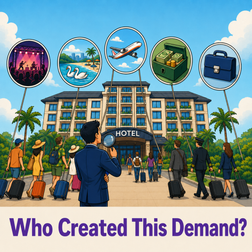
Who Controls Demand?
Episode Description A hotel can be full, rates can rise, and the business can still be more fragile than it looks. In this episode of The Hotel Business, Ludan starts with Taylor Swift’s Singapore concerts and asks a sharper question: when demand suddenly appears, who really created it? Some demand is created by the market, not by the hotel. The episode moves from major events and destination buzz to source-market shifts, internal KPIs, owner cash pressure, and stable accounts such as airline crew, corporate clients, long-stay guests, and recurring events. The key is to understand what each demand source actually does inside the revenue structure. Does it support rate, fill low season, buy suites, drive F&B, or simply add volume? And if that demand disappears, can the hotel replace it? Strong business means knowing which revenue can repeat—and which dependency can turn into risk. Timeline 00:00 Opening: who really created the demand? 03:15 Destination demand: turning Weihai’s winter traffic into hotel choice 05:44 Source markets: what different guests actually contribute to revenue 08:31 Internal pressure: how KPIs can push hotels toward the wrong demand 10:30 Owner cash pressure and the long-term cost of discounting 13:13 Stable accounts: when reliable demand becomes dependency 15:44 Market luck versus real hotel capability Written Version If you prefer to read, search for Ludan Zhang on LinkedIn. I share selected written versions and practical notes there.

You Don’t Need to Code to Start Building Tools
Episode Description Many hotel professionals still think coding, automation, and building internal tools belong to technical teams. AI has changed the starting point. You no longer need to be a programmer to turn a repetitive workflow into something useful. In this episode of The Hotel Business, Ludan explains how non-technical hotel professionals can use AI and AI coding tools to reduce repetitive work, define clearer requirements, and build small practical tools. The biggest skill is not coding. It is describing the problem clearly enough that AI can execute it. The episode also looks at how tools such as Cursor, Codex, and Claude Code can play different roles, why computer-use testing matters, and why “AI says it is done” is never the same as proper acceptance testing. From market monitoring to project spaces, the message stays consistent: AI can create leverage, but business judgment must stay with you. Timeline 00:00 Opening: why business people no longer need to start with coding 01:47 From repetitive hotel work to small practical tools 03:14 Why clear requirements matter more than vague AI requests 05:15 Different AI tools for different jobs 07:39 Why AI output still needs testing and acceptance checks 10:54 Scheduled tasks, deep research, and AI for hotel monitoring 13:55 Project spaces, context management, and keeping AI useful 17:18 Closing question: which repetitive task should become a tool? Written Version If you prefer to read, search for Ludan Zhang on LinkedIn. I share selected written versions and practical notes there.
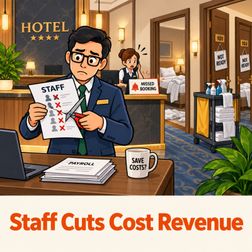
Is 24-Hour Check-Out a Revenue Leak?
Episode Description What happens when a hotel lets guests stay for a full 24 hours without charging a separate late check-out fee? In this episode of The Hotel Business, Ludan shares her stay at Wink in Ho Chi Minh City and looks at the commercial logic behind its 24-hour stay promise. For guests, the benefit is obvious: more control, less friction, and no need to negotiate late check-out. For hotel owners, the question is harder. Is the hotel giving away time, or has that time already been priced into the room rate? This episode looks at why guests value certainty, why Wink can make 24-hour stay a brand rule, which hotels may be suitable for this model, and what operators must control before copying it. The real issue is simple: flexibility only works when pricing, inventory, and operations can support it. Timeline 00:00 Opening: the hotel that sells a full 24 hours 02:36 Core answer: 24-hour stay is an inventory problem 04:54 Why guests value fairness and certainty 08:52 Why Wink can make 24-hour stay a brand rule 10:24 Pricing logic: the time value can sit inside the room rate 13:52 Which hotels fit this model, including airport hotels 15:04 Five controls before copying the model 17:39 Final takeaway: flexibility must be priced and controlled Written Version If you prefer to read, search for Ludan Zhang on LinkedIn. I share selected written versions and practical notes there.

Can Hotel Skills Work Outside Hotels?
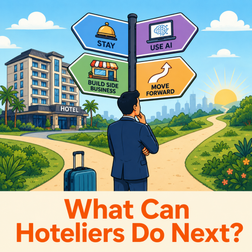
Episode Description Career safety no longer comes from one country, one company, or one hotel brand. In this episode of The Hotel Business, Ludan looks at why many hotel professionals feel stuck, underpaid, burned out, or unsure whether they should leave hospitality. The episode is not about giving a simple “stay or go” answer. It asks a more useful question: what skills have you actually built in hotels, and can those skills still create value somewhere else? Ludan discusses transferable hotel skills, adjacent career paths, side businesses, student internship choices, and how AI can help hotel professionals upgrade repetitive work. A hotel job may end, but the capability you built does not have to end with it. If your current hotel job ended tomorrow, which part of your experience would still be valuable outside that property? Timeline 00:00 Opening: big companies and overseas jobs are not automatic safety 02:52 Do you actually like hotel work? 04:24 Income problem, role change, and adjacent industries 05:46 Side businesses as a low-risk way to test your skills 07:14 Translating hotel experience into language the market understands 08:30 Roles that compound versus roles that repeat 09:45 Using AI to upgrade your current work 12:18 Toxic workplace, wrong industry, and student internship choices 15:01 Closing: what still creates value outside one property Written Version If you prefer to read, search for Ludan Zhang on LinkedIn. I share selected written versions and practical notes there.
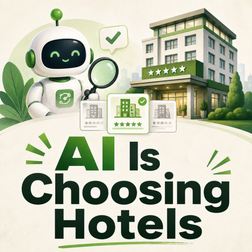
AI Is Choosing Hotels
Episode Description Guests are no longer just scrolling through booking platforms. They can ask AI to compare prices, calculate the real trip cost, read recent reviews, break down packages, and recommend a hotel based on personal travel preferences. For guests, this means fewer blind spots before booking. For hotels, it creates a new kind of pressure: AI may become a hotel filter before the guest ever clicks. In this episode of The Hotel Business, Ludan looks at how AI booking changes hotel discovery, comparison, and recommendation. The episode explains why vague selling points, unclear prices, inconsistent channel information, and weak review patterns may become more visible when AI compares hotels for guests. The core question for hotel owners is simple: if AI compares your hotel tomorrow, will it find enough clear evidence to recommend you? Timeline 00:00 Opening: guests start asking AI before booking 03:00 Guest-side use case: comparing cost, platforms, reviews, and packages 06:15 Personal preference: why the right hotel is the one that fits this trip 08:06 Why AI may become a new hotel filter 09:20 Hotel checklist: evidence-based selling points, explainable pricing, and consistent information 14:25 Reviews: how repeated keywords can shape AI’s summary 16:10 Why marketing and revenue management must work from the same logic 20:12 Closing question: would AI recommend your hotel? Written Version If you prefer to read, search for Ludan Zhang on LinkedIn. I share selected written versions and practical notes there.

Why Good Marketing Is Not Enough?
Episode Description Many hotels can get attention. The harder question is whether that attention turns into trust. In this episode of The Hotel Business, Ludan starts with a Thailand travel purchase: viral “must-buy” products that did not deliver enough value to create repeat purchase. From there, the episode moves into hotel marketing, repeat guests, and word of mouth. The core idea is simple: marketing is a promise, repeat business is validation, and word of mouth is trust spreading beyond the first guest. We look at why Soneva is strong at creating reasons for guests to return, and why Atlantis Sanya is easy for guests to talk about and share. For hotel owners, the practical question is not only how many bookings a campaign brings. It is whether those guests have a reason to return, talk about the hotel, and choose it again without being bought back through ads or discounts. Traffic alone is not a business asset. Trust is. Timeline 00:00 Opening: Thailand “must-buy” products and the trust problem 02:39 Marketing is a promise: why expectations can damage trust 04:49 Repeat business is validation: why buying traffic again is not a brand 06:04 Soneva: designing a real reason for guests to return 09:17 Word of mouth: why earned trust beats polished advertising 10:54 Atlantis Sanya: how memory points make a hotel easy to share 12:34 Turning traffic into trust: questions hotel owners should ask 14:26 Closing: are you building trust or renting traffic? Written Version If you prefer to read, search for Ludan Zhang on LinkedIn. I share selected written versions and practical notes there.

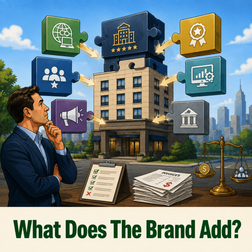
When Hotel Brands Price Real Estate
Episode Description When hotel assets are being repriced, a strong brand can become a pricing tool. In this episode, Ludan looks at Aman Residences and why this model matters beyond luxury real estate. As some property and hotel assets face pressure, Aman shows a different logic: using service, privacy, scarcity, and long-term management to help residences command a premium. The episode explains why branded residences are not simply apartments next to a hotel, why location matters, how rental programs may work, and why the revenue does not always sit neatly inside a hotel P&L. Most importantly, it asks what ordinary hotels can learn from Aman without copying the luxury surface. Can hotel services move beyond the guest room? The real lesson is to build trusted services that create longer customer relationships. Timeline 00:00 Opening: real estate pressure and the Aman contrast 02:40 What Aman sells beyond accommodation 05:40 Why premium pricing needs trust 08:50 Aman’s location strategy 12:20 When a hotel brand becomes a real estate value engine 15:55 Revenue boundaries and brand risk 20:50 Practical takeaways for ordinary hotels 25:58 Closing question: value outside the guest room Written Version If you prefer to read, search for Ludan Zhang on LinkedIn. I share selected written versions and practical notes there.
Where Did the Money Go?
Episode Description Many hotels see weaker business and immediately blame the property next door. But the guest may not have booked another hotel at all. In this episode of The Hotel Business, Ludan starts with 7-Eleven’s store closures in North America and uses it as a warning for hotels: when an old advantage gets split apart by new formats, customer spending can move somewhere else. We look at scene leakage, why family demand may move to camping, why long-stay demand may move to serviced apartments, and why local short-break demand may move to leisure venues. The episode also explains why a low-volume OTA lead-in rate can damage the whole pricing structure, and why franchising may bring system power but not automatically property-level profit. Timeline 00:00 Opening: 7-Eleven and shifting convenience 02:17 Three losses: booking, scene, and profit 04:04 Why cheaper rates cannot fix scene leakage 06:22 How to build a scene leakage table 08:37 Changed hotels, or changed formats? 11:19 Why the OTA lead-in rate can break pricing structure 14:54 How hotels can borrow demand scenes 17:04 Franchising: system power versus property profit Written Version If you prefer to read, search for Ludan Zhang on LinkedIn. I share selected written versions and practical notes there.

Peak Season Is Not a Safety Net
Episode Description Peak season used to feel like a safety net. But for many hotels, that assumption is becoming dangerous. In this episode of The Hotel Business, Ludan starts with a real Labour Day observation from Phuket: a Patong hotel that reported around 60% occupancy during a period many operators would expect to sell strongly. The episode looks at why this is not just a Phuket story. Flights, airfares, fuel prices, exchange rates, safety concerns, booking windows, and new supply can all reshape demand before guests ever reach your booking engine. It also explains why a simple rate cut may not solve the problem when guests are worried about access, total trip cost, cancellation risk, or value. Demand has not disappeared; it has been redistributed. For hotels preparing summer strategy, the real question is: are you still waiting for last year’s guests? Timeline 00:00 Opening: peak season is no longer a safety net 00:25 Phuket Labour Day: why 60% occupancy matters 01:23 Chinese New Year signal: guests are spending differently 02:28 External risk: flights as the entrance to hotel demand 03:43 Fuel prices, total trip cost, and the rate-cut trap 06:02 Rising supply: hotels competing with villas, apartments, and rentals 07:19 Redistributed demand: rail, self-drive, and short-haul trips 08:43 Summer strategy and the harder questions hotels should ask Written Version If you prefer to read, search for Ludan Zhang on LinkedIn. I share selected written versions and practical notes there.

Full House, Empty Revenue
A full hotel does not always mean full revenue. In this episode of The Hotel Business, I share a real holiday stay at an island resort in Indonesia during Chinese New Year. The hotel was almost full, the lobby was busy, and families were everywhere. But inside the guest journey, several revenue opportunities were quietly missed. We talk about why free room upgrades can weaken room-type value, why a closed resort environment needs stronger retail design, what hotels can learn from Atour’s sleep-product retail logic, and why restricting outside food delivery does not automatically improve F&B revenue. The main question is simple: once the guest is already inside the hotel, does the hotel know how to convert that demand into better revenue? Timeline: 00:00 Opening: why full hotels can still leak revenue 00:43 The Indonesia resort stay and the revenue conversion question 01:50 Room upgrades: when premium inventory becomes a free gift 03:08 Why room types should be treated as revenue products 04:22 Resort retail: guest needs after arrival 06:00 Atour example: turning hotel experience into retail 07:33 F&B restrictions: blocking choice does not create value 10:00 Revenue design across the whole guest journey 11:49 Takeaway: full occupancy is only the starting point If you prefer to read, search for Ludan Zhang on LinkedIn. I share selected written versions and practical notes there.
1 di 2