The Eyes on Washington Podcast

The Eyes on Washington Podcast

di Holland & Knight
Impacts of the One Big Beautiful Bill Act on the Agriculture and Food Industry
Public Policy & Regulation attorney Liz Craddock, Senior Public Affairs Advisor Isabel Lane and Senior Policy Advisor Peter Tabor break down the impacts of the new One Big Beautiful Bill Act on the food and agriculture industries in this episode of "The Eyes on Washington" podcast series. They highlight how the legislation affects renewable energy and biofuels, including a rollback of several clean energy tax credits established under the Inflation Reduction Act (IRA). The conversation also covers changes to the Supplemental Nutrition Assistance Program (SNAP), updates on the Make America Healthy Again movement (MAHA), immigration issues within the agriculture sector, the Farm Bill and the shifting trade and tariff landscape.
Hot Topics in FDA Regulation: GLP-1s, LDTs, AI and More
In this episode of Holland & Knight's "The Eyes on Washington" podcast series, attorneys Rachel Gartner, Sara Klock, John Vaughan and Michael Werner discuss the evolving landscape of U.S. Food and Drug Administration (FDA) regulation throughout the early months of the Trump Administration. Key topics include the significant organizational changes at the FDA, ongoing legal battles over compounded GLP-1 drugs and their market access, regulatory uncertainties surrounding laboratory-developed tests (LDTs) and anticipated reforms in food ingredient safety and cosmetic product oversight. The conversation also explores the administration's shifting approach to the regulation of artificial intelligence (AI) in healthcare, predicting a lighter federal touch with increased state-level involvement and industry self-regulation. Additionally, the episode touches on the status of cannabis regulation and the fluid nature of enforcement and policy amid changes in the federal government, offering listeners valuable insights into navigating the current FDA regulatory environment.
First 60 Days of the Trump Administration: Food and Agriculture Policy
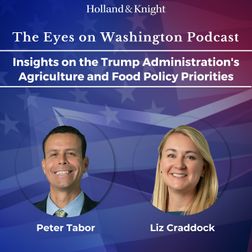
In this episode of Holland & Knight's "The Eyes on Washington" podcast series, Agriculture & Food Policy Team Leaders Peter Tabor and Liz Craddock provide a comprehensive overview of food and agriculture policy updates from the first 60 days of the Trump Administration. Mr. Tabor talks about the new Secretary of Agriculture, Brooke Rollins, examining her background and readiness to implement President Donald Trump's agenda on issues such as trade. He also analyzes the status of paused funds from the Inflation Reduction Act, as well as updated dietary guidelines that are ready for review. Other topics include the impact of federal government workforce reduction initiatives on the U.S. Department of Agriculture and Forest Service and the evolving landscape of tariffs. Meanwhile, Ms. Craddock explores the 119th Congress and its agriculture policy agenda. She provides insights into fiscal year (FY) 25 spending and compares it to previous years. As Ms. Craddock explains, with a number of provisions in the Tax Cuts and Jobs Act (TCJA) poised to expire, Congress is focusing on extending the legislation through budget reconciliation. Additionally, she discusses tax reform, which would be part of TCJA extensions, and the current conversations surrounding the Farm Bill.
Insights on the Trump Administration's Agriculture and Food Policy Priorities
This post-election conversation in Holland & Knight's "The Eyes on Washington" podcast series looks at the interconnectedness of trade, immigration and agricultural policies, emphasizing the need for comprehensive solutions to address these critical issues. Agriculture & Food Policy Team Leaders Peter Tabor and Liz Craddock address significant updates in U.S. agriculture policy, examining the stalled Farm Bill and the repercussions of recent hurricanes on farmers. Mr. Tabor talks about the importance of updating reference prices, which have not been revised since the 2014 Farm Bill, while Ms. Craddock notes the bipartisan support for increasing exports and discusses the implications of current tariffs on agricultural trade. They also touch on immigration policies, highlighting how the labor shortage in the agricultural sector exacerbates challenges faced by farmers, especially during the planting and harvesting seasons. They also delve into the influence of the upcoming Trump Administration on agricultural leadership, particularly focusing on Robert F. Kennedy Jr.'s potential role in shaping policies related to pesticides and climate-related funding.
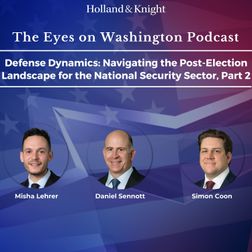
Defense Dynamics: Navigating the Post-Election Landscape for the National Security Sector, Part 2
In the second part of "Defense Dynamics: Navigating the Post-Election Landscape for the National Security Sector," hosts Misha Lehrer, Dan Sennott, and Simon Coon discuss the anticipated changes in U.S. defense policy following the 2024 elections, where Donald Trump is set for a second presidency alongside a Republican-controlled Congress. The conversation explores potential shifts in defense spending, the emphasis on military modernization, and how domestic policies may intersect with defense initiatives. The hosts analyze implications for the Department of Defense's budget, including expectations for a larger budget focused on strategic priorities, competition with China, and the impact of a "Trump 2.0" administration. They consider how the defense industrial base will adapt to new strategies and funding directives, along with the bipartisan initiatives surrounding artificial intelligence in military applications. This episode provides insights into how the upcoming administration could reshape national security policy and what stakeholders in the defense sector should prepare for moving forward.
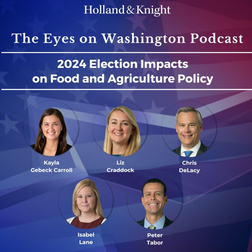
2024 Election Impacts on Food and Agriculture Policy
In this special Eyes on Washington miniseries, Public Policy & Regulation Group members Peter Tabor, Liz Craddock, Kayla Gebeck Carroll, Isabel Lane and Chris DeLacy explore the potential effects of the upcoming November elections on food and agriculture policy. The episode takes a deep dive into important issues to consider and plan for ahead of the next Congress. Topics covered include: the current state of the White House and a congressional overview how a second Trump Administration or first Harris Administration will impact the U.S. Department of Agriculture (USDA) and the Senate energy and sustainability related to agriculture policy an update on the highly anticipated Farm Bill
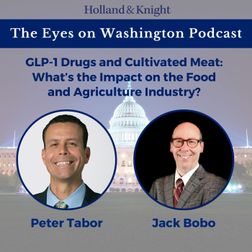
GLP-1 Drugs and Cultivated Meat: What’s the Impact on the Food and Agriculture Industry?
In this episode of "The Eyes on Washington Podcast," Senior Policy Advisor Peter Tabor discusses the impact of GLP-1 drugs and cultivated meat on the food and agriculture industry with Jack Bobo, director of the Food Systems Institute at the University of Nottingham. They delve into GLP-1 drugs, which help manage diabetes and also aid in weight loss, exploring current marketplace trends surrounding the medication's use. Additionally, Mr. Tabor and Mr. Bobo examine cultivated meat, discussing its nature, the issues it aims to address, public perception, challenges and the potential future of the product.
Defense Dynamics: Navigating the Post-Election Landscape for the National Security Sector
In this special Eyes on Washington miniseries, Public Policy & Regulation Group members Misha Lehrer, Daniel Sennott and Simon Coon explore the potential effects of the upcoming November elections on defense policy, funding and national security. The three examine how a second Trump Administration or a Harris Administration could impact defense spending, strategy and priorities. They also discuss the role of Congress in advancing or challenging defense initiatives, including oversight, investigations and the passage of the National Defense Authorization Act (NDAA). Furthermore, they emphasize the bipartisan focus on innovation, modernization and competition, particularly with China, and advise industry leaders to stay vigilant for potential shifts and opportunities in the defense sector.
Legislative Implications of Loper Bright and Corner Post Decisions
In this episode of "The Eyes on Washington Podcast," Public Policy & Regulation attorneys Rich Gold and Dimitrios Karakitsos sit down with Arjun Mody, Staff Director to the Senate Republican Conference, to cover the legislative aspects of the Loper Bright and Corner Post decisions. The speakers break down how these decisions are going to impact Congress and in particular the Senate and what they mean for advocates before Congress as well as congressional staff and agencies providing technical assistance in the legislative process moving forward.
Election Roundup: How a Trump Administration Could Shape the Oil and Gas Landscape
In this special Eyes on Washington mini-series, energy attorneys Elizabeth Craddock and Jim Noe provide insights on the potential trajectory of a second Trump Administration in relation to oil and gas policies. Ms. Craddock and Mr. Noe discuss the continuation of Trump's energy policies in a possible second term, anticipating a focus on expanding domestic energy production and potentially reversing environmental regulations implemented by the Biden Administration. The conversation delves into potential challenges and uncertainties, such as dealing with tariffs and difficulties of repealing certain policies. This podcast was taped in late August and some issues have updates since then but on a whole the podcast lays out relevant issues for next Administration.
1 di 7