EduAudio

EduAudio

di Vishw-Aawaz
Stagione 6
INDIAN POLITY: SOURCES OF CONSTITUTION OF INDIA
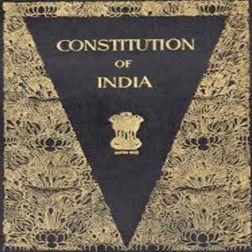
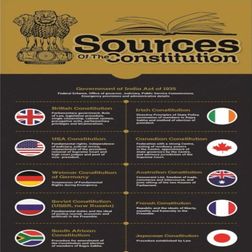
There are various sources of Indian constitution for some features of it are borrowed. There was no hesitation to learn from the experiences of other nations, hence, the Indian Constitution has various features that are borrowed from other nations.
INDIAN POLITY: ENACTMENT AND ADOPTION OF THE CONSTITUTION
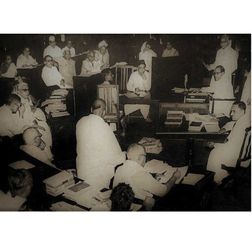
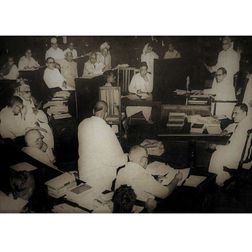
The Republic is governed in terms of the Constitution of India which was adopted by the Constituent Assembly on 26th November, 1949 and came into force on 26th January, 1950.
INDIAN POLITY: HISTORICAL BACKGROUND OF CONSTITUENT ASSEMBLY
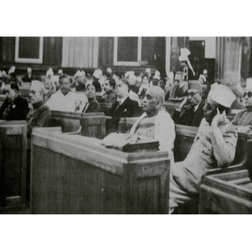
The Constituent Assembly met for the first time on 9 December 1946, reassembling on 14 August 1947 as a sovereign body and successor to the British parliament's authority in India. As a result of the partition, under the Mountbatten plan, a separate Constituent Assembly of Pakistan was established on 3 June 1947.
INDIAN POLITY: INTERIM GOVERNMENT AND POST-INDEPENDENCE INDIA
The Interim Government was formed as a provisional government between an imperial structure and a democratic structure. It lasted till 15th August 1947 when India became independent and was partitioned into India and Pakistan. This Interim Government was formed from the Constituent Assembly which was elected in August 1946.
INDIAN POLITY: OTHER IMPORTANT COMMISSIONS, ANNOUNCEMENTS, ACTS
Committees and commissions are formed for studying a problem or issue and then making recommendations to resolve the issue. The government can either accept or reject the findings/recommendations of the committee.
INDIAN POLITY: GOVERNMENT OF INDIA ACT
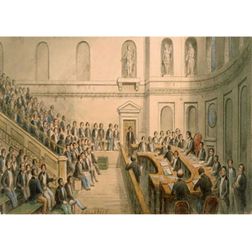
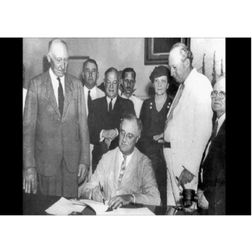
The act provided for the establishment of Reserve Bank of India. The Act also provided for the establishment of federal, provincial and joint Public Service Commissions. The Act was a milestone in the development of a responsible constitutional government in India.
INDIAN POLITY: CHARTER ACTS
The Charter act of 1813 ended the monopoly of the East India Company in India, however the company's monopoly in trade with China and trade in tea with India was kept intact. Thus, trade with India for all commodities except Tea was thrown open to all British subjects. Following chapter talks about the charter acts, it's features and it's impact.
INDIAN POLITY: HISTORICAL BACKGROUND
Before 1947, India was divided into two main entities – The British India which consisted of 11 provinces and the Princely states ruled by Indian princes under subsidiary alliance policy. The two entities merged together to form the Indian Union, but many of the legacy systems in British India is followed even now. The historical underpinnings and evolution of the India Constitution can be traced to many regulations and acts passed before Indian Independence.
Stagione 5
THE REPUBLICS OF THE 6TH CENTURY: IRANIAN AND PERSIAN INVASION
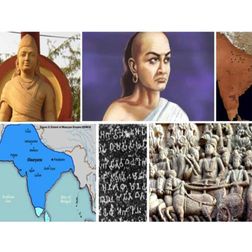
The Iranians invaded India in the 6th century B.C, when King Darius I ruled over Iran. He invaded India and occupied the territories in the North-Western Frontier Province, Sind and Punjab in 516 B.C. These parts remained with the Iranian Empire till Alexander’s invasion of India.
THE REPUBLICS OF THE 6TH CENTURY: THE PRE-MAURYAN SOCIAL AND ECONOMIC TIMES
The Pre-Mauryan age had a number of governmental upheavals, which resulted in economic developments. It was the period when 'janapadas' grew in size and became involved in territorial expansion, resulting in the development of 'Mahajanapadas.' In the sixth century BC, the usage of iron provided material benefits in eastern Uttar Pradesh and Bihar.
1 di 3