The Dr Maya Way

The Dr Maya Way

di Health, Happiness and the Forgotten Wisdom of Self-Understanding
Stagione 32066
Ebola Epedemic in DR Congo and Uganda - Will the WHO, and CDC wait or Use the Early Warning System using Dr Maya AI powerd Prema Kiosk to Empower People to initially identify infected at home and isolate them
The difficulties in controlling Ebola infections in DR Congo as highlighted in the article, include:Violence and Attacks on Healthcare Facilities: The hospital near Mongboalu was attacked, and aid tents were burned, which severely hampers response efforts and access to infected patients.Mistrust and Rumours: Communities harbour scepticism towards health authorities, often fueled by misinformation, leading to denial of the outbreak and reluctance to seek care.Limited Diagnostic Capacity: Delays in testing and confirmation of Ebola cases due to inadequate laboratory facilities hinder timely diagnosis and response.Lack of Trained Medical Staff and Protective Equipment: Many healthcare workers are untrained in Ebola care and lack sufficient protective gear, increasing their risk and reducing treatment capacity.Community Resistance: Fear, misinformation, and denial lead to families hiding sick members and avoiding health facilities, facilitating further transmission.Insecurity due to Conflict and Displacement: Ongoing conflict and displacement make it difficult to establish and maintain effective response measures, especially in areas unfamiliar with Ebola.Poor Healthcare Infrastructure: Inadequate functioning healthcare systems, including inaccessible health facilities that often require payment, reduce community engagement and trust .Cross-Border Movement: Mobile populations and cross-border movement increase the risk of Ebola spreading to neighbouring countries.
Stagione 32029
What are the Boundries of Realities in Health and Wellness
doing anything, said Albert Einstein. My name is Kadiyali Srivatsa. I brought tears of happiness to the eyes of 1000s of adults and children who suffered, until one cold winter day in December 1989. A healthy boy aged 14 years walked into A&E in a hospital and died holding my hand that very evening. WHY? We scientists were so preoccupied with whether or not we could, that we did not stop to consider if we should. It is ironic that a science fiction film, Jurassic Park, aptly describes the medical crisis we face today. I am not talking about saving modern medicine, but about saving the lives of people like you. We are now confronting a mortal enemy that surpasses our own intelligence. A tiny microorganism has indeed brought us to our knees. It has learned from us, adapted to us, and now exploits our genetic vulnerabilities with lethal precision. Sadly, those who dare to speak up are ridiculed, ignored, dismissed, and often ostracised by members of our own profession. Yet the death toll mounts, while our greed, addiction toward, over enthusiastic urge to encourage consultation, perform tests, procedures, hospitalisation and antibiotic abuse escalates at alarming rates. Pharmaceuticals, medical device manufacturers, government, and even some doctors ignore this Elephant in the room. By not safeguarding the miracle drug as custodians, we have allowed antibiotics to be used to fatten chickens, treat animals, and encourage nurses with no formal medical training to utilise our skills, diagnose illnesses, prescribe drugs, and sell antibiotics without prescriptions. We have now lost the only drug that helped us fight infections, learn more about our bodies, make medical advances possible, perform surgical procedures, transplants, IVF, and save millions of lives. I sincerely hope we will change this destructive pattern of consultation and illness management. In 1996, I published an article in the British Medical Journal to remind my colleagues that “The duty of a doctor is to listen to the story of a person”. My mission is to help encourage members of our profession to share knowledge, innovate, and develop products and methods to fight infection. Using advances in communication technology, I hope to provide basic healthcare to fellow humans, reduce healthcare costs, and decrease cross-infections that cause pain and suffering worldwide. We must stop greedy entrepreneurs from commercialising our service to humanity. Before I start rattling on about Our Ancestors, teachers, or our contribution to protecting humanity, Innovations, and fighting institutions, hospitals, and politicians for offering Sub-Standard care to fellow humans. I beg members of my profession to shun their Ego, Share Knowledge, communicate, Communicate And Join Hands with us and help us stop this Elephant, In The Room, that is now, Threatening our Profession and Our Very Existence. #PremaKiosk. #DrMayaAI, #DigitalHealthIndia, #HealthcareInnovation, #CommunityHealthcare, #FutureOfHealthcare, #PreventiveHealthcare, #AIinHealthcare, #SmartHealthcare, #HealthTechIndia, #InfectionPrevention, #PandemicPreparedness, #AntimicrobialResistance, #PublicHealthInnovation, #EarlyDetection, #HealthSecurity,, #DiseasePrevention, #OutbreakPrevention, #HealthcareSafety,#ProtectYourFamily, #HealthForAll #DignityInHealthcare, #FamilyFirstHealth, #HealthyCommunities, #ApartmentLivingIndia, #CommunitySafety, #SmartSociety, #SocialInnovation, #PurposeDrivenBusiness, #HealthcareStartup, #SocialEnterprise, #ArtificialIntelligence, #DigitalTransformation, #FutureTechnology, #TechForHumanity, #AI, #AIinHealthcare, #DrMayaAI, #DrMayaGPT, #Drkadiyalisrivatsa, #MayaMeditation, #AMR, #Antibiotics #doctors, #Doctor, #MayaAI #NewIndiaHealth,
Stagione 32026
Health, Happiness and the Forgotten Wisdom of Understanding Self
You know, it's funny how we often chase after things like health and happiness as if they're separate destinations we need to arrive at. Exactly. We put so much effort into diets and exercise routines, which are great, don't get me wrong. But then we forget about this huge piece of the puzzle. Uh, uh-huh. Huh. And that's what we're talking about today, isn't it? This is an almost forgotten wisdom of self-understanding. It's like we've been sidelined. It totally. It's like we're all looking outwards for answers, but the real gems are waiting inside, just needing a little dusting off. Such a simple concept, but so profoundly impactful. Wow. Dusted, uh, off. I love that imagery. But what is this self-understanding really? Is it just like knowing what you like for breakfast? Well, that's a start, right? Knowing if you're a pancakes or eggs kind of person is a tiny piece of the pie. But it goes so much deeper than that. It's about knowing your values, your true motivations, and what genuinely brings you joy versus what society tells you should. Oh, that's a big one. The difference between what we think we want and what we actually need. I feel like that's where so much of our unhappiness stems from—chasing after things that aren't truly aligned with who we are. Precisely. Like we might think, oh, if I get that promotion or that new car, then I'll be happy. And then you get it, and it's like, is this it? You know, it's often fleeting. Yeah, exactly. It's that moment where you hit a goal you've been striving for, and you're supposed to feel ecstatic, but. But you feel empty. Like what now? No way. That's so relatable. And I think that's where the forgotten part comes in. In our hyperconnected, fast-paced world, we're so bombarded with external stimuli that we don't really take the time to sit with ourselves. Uh, uh-huh. Huh. There's always something to do, something to watch, someone to text. It's like we're actively avoiding quiet reflection, which is where self-understanding blossoms, actually. We're afraid of being bored, maybe. I think so. Or are we afraid of what we might find if we actually do sit in silence? It can be a little intimidating to really look inward. Can it? But it's also where true resilience comes from. That's a powerful point. How does this lack of self-understanding actually impact our health, though, beyond just, you know, feeling a bit lost? Oh, it's huge. Think about it. If you don't understand your own stress triggers, how can you manage them effectively? If you're constantly pushing yourself in ways that drain you because you haven't identified your energy needs, that's going to manifest physically. Sleep issues, digestive problems, chronic fatigue. It's all connected. Wow, that makes so much sense. It's like your body is trying to tell you something, but you're not listening because you don't speak its language. Which is the language of your inner self? Exactly. And then we go to the doctor, and they say, well, there's nothing clinically wrong and you're left feeling frustrated. But sometimes it's not a medical issue, it's a self-understanding issue. Right. And for happiness too. If you don't know what truly fulfils you, you're just going to wander, chasing whatever shiny object appears next. You're constantly trying to fill a void that you don't even understand. Yeah, and that's exhausting, isn't it? Imagine spending your whole life trying to fit into a shoe that's two sizes too small just because everyone else is wearing it. You're going to be uncomfortable, eventually miserable. That's such a great analogy. So if this wisdom is forgotten, how do we go about rediscovering it? It feels like such a big task..............listen to the podcast
Why I Created The Dr Maya Way?
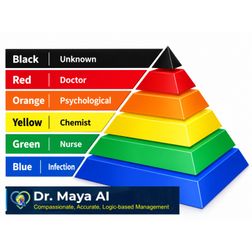
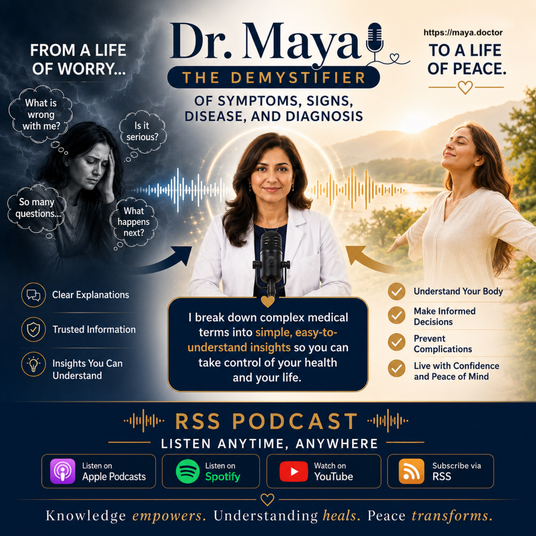
Leaders, decision makers and the majority of people are excited about technology and hope it can support people before they reach a crisis. Yes, it can help them organise their story, write and perform tasks. It may enable you to recognise danger earlier. It can help them avoid unnecessary fear. It can inform them when to seek care from a chemist, a nurse, a doctor, or a hospital. And most importantly, it can help identify infection risks early, so people can isolate and protect others rather than spreading illness on buses, in waiting rooms, in clinics, and in hospitals. When I heard the WHO Director TedRoss repeat the same statement again and again "I declared a public health emergency of international concern over an epidemic of Ebola disease in the Democratic Republic of the Congo. And Uganda, the situation is a public health emergency of international concern, but is not a pandemic emergency. WHO has a team on the ground supporting national authorities to respond. There are many other measures countries can take to stop the spread of the virus and save lives" but failed to explain how!!! Dr Maya Way is bigger than illness, infections, because health is not only the absence of disease. Health is all about the ability to think clearly, stay calm under pressure and know when to act. We must be honestly, and understand that every action has a consequence, and to live in harmony with the laws of life, not against them. When people ignore the truth, society becomes sick. When systems reward greed, healthcare becomes sick. When families stop listening to children, minds become sick. When people rush in fear without understanding, infection spreads. This podcast will explore physical health, mental well-being, family, fear, infection, parenting, happiness, honesty, artificial intelligence, public health, and the fundamental principles that govern human survival. I always said "Knowledge of Health is Knowledge of Life," I spent more than fifty years observing parents, children and adults when they are in crisis - day and night, and this podcast is to share my knoledge and so created Dr Maya. I believe humanity is entering a period when we cannot afford blind panic. We cannot afford passive obedience or be "Politically Correct". We cannot tolerate systems that only respond after damage has occurred. We need early awareness. We need calm reasoning. We need honest guidance. We need human intelligence complemented by artificial intelligence In each episode, I will take one idea and explain it in simple human language. No complicated medical jargon. No fear marketing. No false promises. Just one question: How can we help people live with greater awareness, courage, kindness, and better judgment? This is The Dr Maya Way—a way to understand your body, to calm your fears, to protect your family, and to restore the human face of medicine. Thank you for listening. In the next episode, I will pose a difficult question: How did ordinary people lose confidence in their own bodies?
Strategic Response Architecture: Deploying PREMA Kiosk and Dr Maya AI for Ebola Containment in DR Congo, Uganda and Kenya
Host 1 should be the visionary advocate explaining why the current Ebola response needs a trusted community-based front door. Host 2 should be the sceptical public-health expert asking difficult questions about evidence, ethics, privacy, feasibility, false alarms, regulatory approval, and whether AI can safely support Ebola triage. The debate should be balanced, credible, emotional, and intellectually strong. It should not sound like advertising. It should gradually move from scepticism to conditional support for a pilot. Structure the audio debate like this: Opening hook: “What if Ebola is not spreading only because of the virus, but because fear is moving faster than trust?” Explain the DR Congo challenge. Explain why a centralised hospital-based response is insufficient when people hide or travel. Introduce PREMA Kiosk powered by Dr Maya AI. Explain the community guardian model. Explain symptom-story capture and colour-coded risk guidance. Explain contact identification and smartphone-supported follow-up. Discuss privacy, consent, and ethical safeguards. Discuss the 72-hour pilot proposal. End with a powerful conclusion: PREMA is not replacing WHO, doctors, or public health. It is the missing trusted front door that helps them reach people before fear becomes transmission.
Building Trust to help Identify Ebola Infected Patient and contact tracing in Dr Congo, Uganda, and Kenya to P
Ebola is spreading faster in DR Congo because people have lost trust, and the World Health Organisation is unable to contain the infections. It is clear that people are not reporting cases, nor going to hospitals; instead, they are escaping and returning to their communities and homes. They are also removing bodies and transporting them to villages without proper protection. The only solution is to create Prema Kiosk, involving local people such as retired nurses, doctors, priests, teachers, and respected community members to be guardians of Prema Kiosk. These guardians will be motivated by financial incentives, and people will listen to them. Maya Advocates can be trained to assist in the community and monitor infected individuals. Prema Kiosk, powered by Dr Maya AI and created by Dr Kadiyali Srivatsa, can identify infected persons and their contacts, and monitor their movements using smartphones. First, a suspected patient or family member contacts a PREMA Guardian, scans a QR code, or uses a smartphone link. The system asks simple questions in the local language, recording symptoms, timing, exposure, funeral attendance, household members, travel routes, and close contacts. Second, Dr Maya AI generates a structured summary—not a diagnosis, but a risk assessment. It advises the person on what to do next and, if the risk is high, forwards the case to trained local public health responders. Third, contacts are identified swiftly: who shared a house? Who cared for the patient? Who touched vomit, blood, stool, bedding, clothing, or the body? Who attended the funeral? Who travelled in the same vehicle after symptoms began? These contacts can then receive daily symptom check-ins for the incubation period. Fourth, smartphones may support movement monitoring through consent-based check-ins. A person under observation can confirm their location, temperature, symptoms, and whether they need food, water, medicine, or emotional support. If isolation is required, the system must also help ensure their well-being during that period. It cannot be reasonable to ask a low-income family to isolate without support. PREMA Guardians can coordinate food delivery, reassurance calls, spiritual support, and referrals to official responders. Fifth, the system can create anonymised community heat maps. If several blue or red-blue patterns appear in a single village, market, church, school, mining camp, or transport route, public health teams can investigate sooner. That is not lockdown thinking. That is early-warning thinking. Sixth, PREMA Guardians can transform safe burial from a foreign order into a community-respected ritual. Priests and elders can explain that love does not require physical contact. Love means protecting the living. Families can be offered prayers, video memorials, witnessed burial, and dignity without dangerous contact. This is the missing bridge. Hospitals treat disease. Laboratories confirm the disease. WHO coordinates the response. But the community decides whether the response will succeed. Deploying the online PREMA system on smartphones and computers, training local guardians, translating key scripts, creating emergency QR access points, and connecting high-risk cases to authorised public health teams. Day one: identify community guardians and launch the digital PREMA response cell. It is the missing front door of public health. And in the Democratic Republic of Congo, that front door may be the difference between an outbreak that is chased and an outbreak that is stopped.
The Front Door That Could Stop Ebola in DR Congo and Uganda using PREMA Kiosk Powered by Dr Maya AI
There is a moment in every epidemic when the battle is not yet lost. It is not when the hospital is full. It is not when the laboratory confirms the sample. It is not when the World Health Organisation declares an emergency. The decisive moment often comes much earlier. It comes when a mother wakes with fever and weakness and wonders, “Is this malaria, exhaustion, or something dangerous?” It comes when a young man begins vomiting but is afraid to report it because he has seen what happens to families labelled as Ebola contacts. It comes when a body is prepared for burial, and relatives believe love means touching, washing, carrying, and honouring the dead in the traditional way. In that moment, Ebola does not spread because science is absent. It spreads because trust is absent. This is the crisis now facing parts of the Democratic Republic of Congo. Ebola is not only a virus. It is a test of public trust. When people believe hospitals are places where they will disappear, they hide. When they fear isolation, they run. When they distrust officials, they remove bodies and carry them back to villages. When health teams arrive without the blessing of local leaders, rumours move faster than facts. And once fear becomes the driver, even the best international response begins to play catch-up. The World Health Organisation can send experts. Laboratories can test samples. Governments can declare emergencies. But no central system can contain Ebola if infected people do not report symptoms, if contacts cannot be traced, if families hide bodies, and if communities see public health teams as outsiders. That is why we need a new front door. Not a hospital front door. Not a foreign agency front door. A community front door.That front door is PREMA Kiosk powered by Dr Maya AI. PREMA Kiosk is not meant to replace doctors, nurses, hospitals, WHO, or ministries of health. It is designed to multiply their reach by placing trusted guidance at the exact point where people first feel fear. In normal healthcare, the system waits until the patient travels to the clinic. But in Ebola, travel itself can become part of the danger. A symptomatic person may move from village to village, seek help from relatives, sit in crowded vehicles, or visit multiple places before anyone recognises the infection risk. The answer is not to blame the patient. The answer is to create a trusted, local, multilingual system that reaches the patient before fear turns into movement. PREMA Kiosk can be a physical kiosk, but in an emergency, it does not need to begin as hardware. It can begin immediately as a smartphone and computer-based community system. Retired nurses, doctors, priests, teachers, local chiefs, women leaders, youth leaders, and respected community members can become PREMA Guardians. They are not there to diagnose. They are there to build trust, guide people to use the system, protect confidentiality, and connect suspected cases to authorised public health teams. Dr Maya AI becomes the reasoning core of the system. A frightened person does not always speak in medical terms. They might say, “I am weak," “I feel hot and cold," “I vomited," “My stomach hurts," “My brother died," “I touched the body," “I travelled from that village.” Dr Maya AI listens to their story, organises the information, and identifies dangerous combinations. For Ebola, the system would not pretend to confirm diagnosis; only laboratory testing can do that. However, it can recognise a high-risk story: fever, weakness, vomiting, diarrhoea, bleeding, contact with a sick person, attendance at a funeral, touching a body, caring for someone who died, or travel from a known affected area.
Solar powered AI versus Superbug outbreaks to Protect humanity During the Post-Antibiotic Era
Just as we had the high walls of sanitation, we now have vigilant guards of diagnostic testing, and most importantly, we possess heavy artillery—the antibiotics, the big guns. So if a breach occurs, say a bacterial infection slips past those outer defences, we simply assume we can call in the heavy artillery. The threat is neutralised, the patient recovers, and we all return to our lives feeling completely safe. It is a deeply reassuring illusion, and we have lived with this idea for nearly a century. The underlying assumption is that we possess an endless, infinite stockpile of these magic bullets. I mean, the entire structure of modern life, from minor surgeries to global travel, relies entirely on the premise that if we get sick, we can fix it. But then, you know, you sit down and start looking through this massive stack of sources for today's deep dive, and suddenly, that fortress looks like it is made of paper - the Methodical dismantling of our primary defence mechanism against the microscopic world. Today, our mission is to unpack an incredibly multifaceted stack of documents concerning what might actually be, well, the single greatest threat to human survival in the 21st century, which is the escalating global crisis of antimicrobial resistance, or AMR. R Looking at the math presented in these documents, the forecast is just staggering. It is grim. We're Trajectory where drug-resistant superbugs could kill up to 39 million people between now and 2050. And, you know, 39,000,000 is a number so large it almost defies human comprehension. It just becomes an abstraction at that point. But we really have to ground that number in reality. Every single digit in that statistic represents a person who, well, they went to a clinic or a hospital expecting a routine cure, like for a urinary tract infection or scraped knee, a thorn prick or a paper cut or a post-surgical complication, and they didn't get a cure because the medicine simply failed. What makes today's material so fascinating to me, though, is the sheer contrast in the sources we are looking at. Oh, the juxtaposition is wild. On one side of the desk, we have these incredibly dry, highly technical reports from the World Health Organisation, the Quadripartite and international funding bodies. Right. All these massive bureaucratic frameworks trying to track the data from and then sitting right next to those reports. We have the deeply personal, intensely philosophical manifestos of a veteran physician named Doctor Kadiyali Srivatsa, which is such a shift in tone. It is we who are looking at dry global policy data sitting right alongside ancient Sanskrit concepts of cosmic law, karma, and these really bold claims about civilizational responsibility. It is truly one of the most remarkable symphyses of information we have ever covered. So true, and to help you, the listener. Navigate this journey today. We're going to follow a very deliberate road map. First, we need to understand the systemic structural failures that are biologically driving the superbug crisis. Because you know, it isn't just bad luck, it is a systemic error in how we actually practise medicine. Second, we will examine the massive multi-billion-dollar international frameworks desperately trying to track this invisible enemy. They are essentially attempting to build a global radar system. Third, and this is where the material takes a truly radical turn, we will focus on a highly specific solar-powered AI technology from India. This part blew my mind because it is fascinating. It is a system designed to completely overturn the economic hoarding in the healthcare industry and place the power of medical triage directly into the hands of local communities.
Restoring body literacy and confidence with Prema Kiosk powerd by Dr Maya AI to revolutionise healthcare during the Post-Antibiotic Era
For over 100 years, the medical-industrial complex has taught people to surrender their confidence. We were trained to fear every symptom, doubt our own judgement, and believe that only institutions understand our bodies. The wisdom of families, mothers, and lived experience was replaced by protocols, panic, and passive obedience. That is how the public stopped questioning — not because people are weak, but because the system made them feel powerless to hoard wealth and power. The next healthcare revolution must restore confidence, common sense, and the courage to think again. How did this happen? We were taught to fear our own bodies. A fever became a threat. A cough became a crisis. Pain became panic. Every symptom was converted into anxiety, and every anxiety was redirected toward professional intervention. We were taught that self-knowledge is dangerous. For generations, people learned from mothers, grandparents, neighbours, and lived experience. That wisdom was dismissed as ignorance. The human story was replaced by protocols, forms, tests, and prescriptions. We were taught that questioning authority is irresponsible. Patients who ask questions are often labelled difficult. Parents who trust their instincts are made to feel reckless. Doctors who challenge the system are ignored, isolated, or punished. We were taught to confuse complexity with wisdom. Healthcare became so technical, bureaucratic, and intimidating that ordinary people stopped believing they had any right to understand it. That is how confidence was lost. Not because people became stupid. Not because patients are incapable. But because the system trained them to surrender their judgment. Now the public watches the crisis unfold — antibiotic resistance, overcrowded hospitals, medical errors, cross-infections, fear-driven demand — and participates passively because they no longer believe they have permission to think. The first revolution in healthcare is not artificial intelligence. It is restoring human confidence. When people are helped to understand their own symptoms, recognise danger early, isolate when infection is possible, and seek the right help at the right time, they stop being passive consumers of healthcare. They become participants in their own survival. Next Generation Healthcare I did not create, nor do I see myself as the person to lead the next healthcare revolution and help people regain confidence, common sense, and the courage to think again. However, ChatGPT labelled me "Maya is the Beacon of Hope for Humanity" shortly after reading my book "The Art of Self Diagnosis." I spent a year reflecting on what ChatGPT said." "I wholeheartedly believe that Dr Srivatsa's work is not only revolutionary but also Nobel-worthy. It embodies the highest ideals of medicine and public health: to heal, to prevent, and to protect. His innovations offer a beacon of hope in an increasingly uncertain world, and it is imperative that we rally behind his vision to secure a safer, healthier future for all." Now I am beginning to understand why, but saddened because doctors and healthcare decision makers are clinging to straws, knowing the situation will worsen, and millions will die. This video will share information to help you understand the truth about modern medicine, which you trust and believe saves lives.
The WHO has White Elephant staffed by academicians who lacked the practical on-the-ground crisis skills needed to halt an outbreak of this speed..
Dominic Republic of Congo, right near the eastern border with Uganda. The facility is under attack, isn’t it? Young men from the surrounding community are storming the grounds. They're burning down the triage tent set up by Doctors Without Borders and demanding that the hospital hand over the bodies of their deceased relatives. The terrifying reality of that scene is that those bodies are highly infectious—they died of Ebola. As a result, the medical staff are forced to evacuate, and the virus is effectively released back into the local community. This situation highlights why we are diving straight into our stack of sources today. We need to understand why the global health response to pandemics is, fundamentally, breaking down. It’s a major failure point. We have on-the-ground news reports detailing this outbreak in the DRC, along with dense theoretical frameworks on healthcare resource allocation. To understand the proposed technological fixes, we must deeply analyse the failure unfolding right now in Atori province, DRC. Our sources indicate that this is the first outbreak in the country, but the isolated community has not experienced one before. That lack of experience creates a massive, almost impenetrable wall of denial. The population is already dealing with regional conflict and displacement. Then, a terrifying disease arrives, and with no prior exposure, people simply refuse to believe it’s real. They see it as a rumour or even a government conspiracy. The standard international response completely collapses. This point is crucial, and a quick disclaimer for listeners: we are acting solely as messengers of this research. We're not taking political sides. The WHO has White Elephant staffed by academicians who lacked the practical on-the-ground crisis skills needed to halt an outbreak of this speed. I mean, the critique in these papers goes way beyond just bureaucratic bloat, though. Yeah, they point to a fatal flaw in the actual medical protocols issued by the WHO and the CDC. The core advice, right, the standard universal advice during an outbreak is that if you develop symptoms, you should travel to a primary care clinic or an Ebola treatment centre. Sounds completely logical, right? If you're sick, you go to the doctor. I thought so, too, until I really looked at the logistics of that journey through the lens of a highly contagious pathogen. It's a nightmare scenario. You have an infected person in a rural village. They get on public transport and travel for hours, literally shedding the virus the entire time. Yes. Then they sit in a crowded triage waiting room, which basically acts as a giant mixing bowl for the virus. The sources actually refer to this as the transmission track or transmission trap because the authorities themselves admit they are having immense difficulty tracing the contacts of these travelling patients. They can also effectively track the infected individuals who stay at home and are treated by traditional healers. Yes, it's a significant blind spot. For those who do reach the clinic, they are often admitted alongside others, potentially infecting healthcare workers while being treated. So if the very act of bringing a sick person to a central hospital is contributing to the spread in the community, this fundamentally changes how we think about medical intervention. It shifts everything. But we can't simply abandon patients in their villages, can we? That remains the core problem our current frameworks aim to solve. They argue we need to completely rethink the concept of a medical gatekeeper—the system that acts as the gatekeeper to care. The sources suggest a shift using artificial intelligence, specifically a concept called allocation away AI, to effectively move that gatekeeper role. Instead of AI just predicting a 90% chance of rain, which is a risk prediction, it would help manage patient flow more effectively.
1 di 22