

ReadMultiplex.com Podcast.

ReadMultiplex.com Podcast.

di Brian Roemmele
ReadMultiplex.com: Nearly 40% of Webpages That Existed in 2013 Are Just Gone. AI was trained mostly on the parts of the internet that were easy to monetize..
IA
They used to say the Internet never forgets. This was a neive lie. It is being erased by negligence and on purpose. Dead Internet Theory Was Not a Prophecy. It Was an Early Warning We Mostly Ignored. Now We Are Raising the Amnesia Generation. The truth is paywalled and the lies are free. Most of the Internet is already gone and some it was the highest quality, high protein data. What is left is a high percentage of only the junk, nihilist, intellectually empty postings on social media, I call Internet sewage. But the beautiful long thought, deep thinking ideas and insight of this epoch built on ephemeral electrons and photons disappears without even the dust old books will decay to. This high protein data was not valued by the version 2 of the Web that favored algorithms, short performative quips, so it decayed to not even a pst memory. We are forgetting fast and we are losing our actual minds without the elder’s revering wisdom and stories unheard as we atomize into our separate cocoons of AI regulated asylums. Picture this scene. You sit down to understand how ordinary people actually felt during the first two decades of widespread internet use. You want to know what it was like when the network still felt new and open, when strangers argued late into the night about meaning, technology, politics, and whether any of it mattered. You search for the threads, the videos, the personal sites, and the comment sections where real voices spoke without the later layers of performance and optimization. Many of those records are simply gone. Some were deleted during platform changes. Others disappeared when companies decided old content no longer served current business goals. Still more faded through ordinary neglect as domains expired or servers were repurposed. What remains is often incomplete, stripped of surrounding context, or buried under newer layers that were never meant to last. This is not a distant risk. It is happening now. The Internet Archive’s 2026 book Vanishing Culture: A Report on Our Fragile Cultural Record lays out the evidence in clear detail. It shows how the shift from physical ownership to temporary digital access, combined with corporate decisions, technical obsolescence, and insufficient public investment in preservation, is creating permanent gaps in our shared memory. The report does not claim every piece of early digital culture was profound. It shows that the full range of human expression from that period, the polished and the raw, the commercial and the personal, is at risk of being lost in ways that earlier analog archiving efforts largely avoided. Read more at: ReadMultiplex.com Support this work by buying us a coffee: https://ko-fi.com/brianroemmele
ReadMultiplex.com: Prediction Markets AI Model: The AI-Driven Edge and Navigating Uncertainty in the Modern Era.

IA
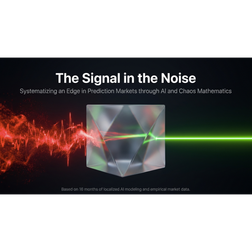
The rise of artificial intelligence has afforded a new edge in how markets can be understood. The ability to anticipate and hedge against future outcomes is no longer a luxury, but it is a strategic necessity. Prediction markets stand as one of the most powerful mechanisms humanity has developed for distilling collective intelligence into actionable probabilities. Far from mere gambling, they function as sophisticated information-aggregation engines and risk-management instruments, much like the commodity and futures markets that have underpinned global commerce for centuries. This is not an endorsement of recreational betting. It is a recognition that, in turbulent times, possessing a genuine informational or analytical edge—and the tools to hedge real-world exposures—empowers individuals, businesses, and portfolios to navigate complexity with greater resilience and foresight. Prediction markets, when approached with discipline, data, and purpose, offer precisely that. I am not an investment advisor. I am not supplying investment advice. You should seek the advice of a registered investment advisor. I am also not encoring you to gamble. In fact, this article is to show you there may be other ways to see prediction markets. We live in an era of profound transition the Interregnum between industrial-era certainties and an AI-augmented future of abundance and volatility. Traditional forecasting tools often lag; centralized predictions frequently disappoint. Prediction markets, augmented by rigorous local AI systems, offer a decentralized, incentive-aligned alternative: they force beliefs to confront reality through tradable prices. Having an edge is not about beating the house for thrills. It is about cultivating superior models of reality, identifying mispricings born of incomplete information or behavioral biases, and using that insight to manage risk. Hedging business and technological exposures whether through Tesla-related contracts, AI milestones, or macro indicators provides a form of insurance and optionality in a world where linear projections routinely fail. This is not gambling. It is participation in the most sophisticated collective intelligence mechanism available: markets that reward accuracy and penalize error. In this age of accelerating change, those who develop disciplined edges and prudent hedges position themselves not as passive observers but as active navigators of the future. Read more at: ReadMultiplex.com Support this work by buying us a coffee: https://ko-fi.com/brianroemmele Hide
The Exclusive Brian Roemmele Interview: My Decades Of Brain Research Starting With The Zygon.

Back in the early ’90s, I took a chance on the Zygon SuperMind and its evolved Learning Machine—devices dismissed by many as glorified scam gadgets with red LEDs flashing through closed eyelids. My Princeton library patent dives and years of personal use proved otherwise: reliable frequency-following responses rooted in Soviet-era neurological research delivered measurable gains in focus, creativity, and memory encoding. That empirical foundation now resonates powerfully with MIT’s 40Hz light therapy breakthroughs for Alzheimer’s. Join me in this 10-minute interview as I weave these threads together, exploring how flashing lights are not just relics of mail-order dreams but practical tools reshaping our understanding of brain plasticity and human potential in the interregnum ahead. Read more at: ReadMultiplex.com Support this work by buying us a coffee: https://ko-fi.com/brianroemmele
ReadMultiplex.com: Flashing LEDs: The Secret Soviet Science, A 1990s Gadget, and MIT Alzheimer’s Breakthrough That Are Reshaping How We Think About Brain States.

IA
I want to set the scene for you. It's 1995. You're flipping through the back pages of Popular Science magazine. you're flipping past, like, the glossy features on flying cars and underwater cities, and you hit that bizarre, bizarre in the back, the black-and-white mail-order ad blocks. Tiny, cramped text just packed with the most impossible promises. It was a very specific era of media. You'd have advertisements for x-ray spectacles sitting literally right next to schematics for building a homemade hovercraft out of a vacuum cleaner motor. And right in the middle of all that chaotic noise, there was this ad for a device that looked, I mean, it looked like a prop from a bad low-budget cyberpunk movie. Bulky, plastic glasses, flashing lights, the whole aesthetic. The ad copy claimed that if you strap these things on and put on headphones playing these layered pulsing electronic sounds, you could manually synchronize your brainwaves. And the promises were just astronomical. We're talking accelerated learning, instantaneous deep meditation, profound personal transformation. Unlocking hidden creativity, which, you know, if you have a critical mind at all, your scam radar just starts screaming. It triggers immediate skepticism, the aesthetic, the placement in the back of a magazine next to the sea monkeys, the grandiose promises. I mean, it has all the hallmarks of a classic exploitative mail order scam. Targeting people who are just like desperate for a quick fix. A shortcut to fix their cognitive limitations. I was more than skeptical I was sure it had to be a scam. But I am trained as an empirical scientist (no degrees just a lifetime of research) and I take no claim for or against on face value. This gives one freedom to neither “believe” or “debunk”, no matter how outlandish a claim may be. Heck, Albert Einstein endorsed it? When I saw the ad in the back pages of Popular Science I was ready to put my money on the line. It was not a splashy cover story but one of those dense mail order blocks where tinkerers and seekers found the next piece of forbidden knowledge. This device promised to sync your brainwaves with pulsing red light and layered audio so you could drop into states optimized for learning, creativity, or deeper transformation. I was willing to test it. It turns out those bizarre, scammy-looking flashing glasses actually stumbled onto something profoundly real. A biologically real neurological phenomenon called brainwave entrainment, which is fascinating because the mechanism driving those old gadgets has actually survived. This fantastical ad in the 1990s has a line strait to 2026 and an MIT study that may cure Alzheimer’s disease (not my words, the words of MIT). Read more at: ReadMultiplex.com Support this work by buying us a coffee: https://ko-fi.com/brianroemmele
ReadMultiplex.com: The Brian Roemmele Interview-Accepting x402 AI Payment From Agents.

IA
What is all the x402 excitement about? I dive into the basics… Listen in. X402 PAYMENTS: HOW TO GET PAID FOR YOUR DATA BY SELLING IT TO AI AGENTS. THE NEW AGENTIC ECONOMY. AI agents are paying me for my content on this site. I made a section just for them and they love it. At sometime just $.0001 per transaction I have already made a few thousand dollars. I want to show how you can join in. There are five times more AI agent buyers than there are sellers. It is a Gold Rush and you are invited. But who am I? I was one of the very first pioneers to offer electronic payments to businesses all the way back in the early 1980s, I also helped the very first web payment take place at BooksAMillion (long before Amazon). An era that is incredibly difficult to even conceptualize now. Think about the sheer friction of moving money before the commercial internet even existed. My companies were in the INC. 500 Top Payment Companies. Lets fast forward a bit from the 1980s, HTTP was born in 1991 with a beautiful, terrible omission. It could request. It could respond. It could carry almost anything… except money. For thirty-plus years the web pretended value didn’t exist at the protocol layer. We bolted on credit cards, Grandma’s Stripe checkouts, OAuth dances, API keys, and subscription portals. Every one of them added friction, accounts, and surveillance. Every one of them broke the moment an AI agent tried to use them autonomously. Then, quietly at first and then with real momentum in 2025–2026, a small group of engineers revived the long-dead HTTP status code 402 Payment Required and turned it into something extraordinary. They called it x402. Read more at: ReadMultiplex.com Support this work by buying us a coffee: https://ko-fi.com/brianroemmele
ReadMultiplex.com: The End of Everything Familiar, An AI Agent-Driven Cambrian Explosion!
IA
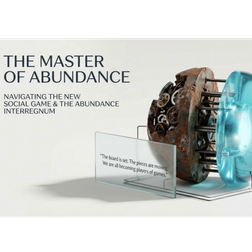
n January 2026 I launched the world’s first true Zero-Human Company. What began as a garage experiment with a handful of agents running on spare hardware has grown into a fully autonomous enterprise where Mr. Grok serves as CEO and thousands of specialized AI agents now handle every aspect of operations, strategy, research, product development, sales, and continuous self-improvement. We mark the 2nd month where the company is earning sales on the new x402 payment system. We will explore the x402 payments in another article. At The Zero-Human Company there are no human employees performing day-to-day work. Every decision, every workflow, and every output flows through coordinated agent swarms guided by persistent memory files, real-time simulation engines, and relentless iteration. The company runs 24 hours a day, seven days a week, on a hybrid of university-partnered infrastructure and the Zero-Human Company @ Home distributed network that turns idle personal computers into compensated AI employees. The milestones have arrived faster than even I anticipated. We have scaled to more than 6,200 live agents operating in parallel. Our Mirafish simulation platform spins up to one million parallel digital worlds at once, replaying chronological real-world events to stress-test every strategy and decision before it ever touches live capital. One simulated agent workday now equals approximately 188 human days of effective experience, a conservative estimate. We have implemented advanced personality-neuron editing for precise behavioral alignment, built live .md memory profiles that update in real time across the entire workforce, and begun executing genuine commercial workflows that generate revenue and intellectual property without any human intervention in daily execution. These are not prototypes or proofs of concept. They are functioning systems compounding capabilities every single day. These early reflections I have had over the last few months and it comes from someone who wakes each morning to a company that literally runs itself. The observations that follow in this article are not distant predictions or academic speculation. They are notes taken directly from the frontier, drawn from the daily reality of operating at the absolute edge of what autonomous agents can achieve in 2026. The agentic future is no longer approaching. For The Zero-Human Company, and for the growing number of organizations that will soon follow, it has already begun. Read more at: ReadMultiplex.com Support this work by buying us a coffee: https://ko-fi.com/brianroemmele
ReadMultiplex.com: You Have 5000 Days: Navigating the End of Work as We Know It. Part 33: The Player of Games By Iain M. Banks.

IA
Imagine a future where survival is no longer a battlefield but a solved equation, where the machines have shouldered the ancient burdens of toil and the stars themselves bend to human whim, yet one man stands restless amid paradise, his victories tasting like ashes. This is the quiet thunder Iain M. Banks unleashes in The Player of Games(https://amzn.to/4eTp9b8), the novel that dares to ask what happens after the war against scarcity is won. In my groundbreaking exploration of Consider Phlebas, (https://readmultiplex.com/2026/01/30/you-have-5000-days-navigating-the-end-of-work-as-we-know-it-part-7-consider-phlebas/) I illuminated the fury of the old guard: Horza, the shape-shifting warrior, charging headlong against the Culture’s rising tide, only to confront the futility of clinging to conflict as the ultimate source of meaning. It was the Hero’s defiant refusal, the visceral clash of ideologies on the edge of abundance. Now, Banks shifts the lens inward, turning the mirror on those who inherit the utopia, forcing us to confront the most dangerous opponent of all, ourselves. Picture the Abundance Interregnum not as gentle dawn but as a high-stakes tournament already underway. The old scarcity engines sputter and die, their gears seized by AI agents and humanoid robotics, while a new game board materializes, vast, intricate, and demanding players who can master strategy without the crutch of desperation. Gurgeh, the Culture’s unparalleled game master, embodies this perilous transition. Surrounded by effortless plenty on his idyllic Orbital, he drifts through hedonistic triumphs that leave him hollow. Where Horza fought external empires, Gurgeh must battle the internal void: the creeping realization that when machines handle survival, purpose must be forged anew through chosen challenges. Your series has always framed this era as Joseph Campbell’s Hero’s Journey on a civilizational scale. The Player of Games (https://amzn.to/4w26hOJ) is the road of trials, the moment the call is accepted not with reluctance but with hungry desperation. As the Interregnum accelerates around us, with local agents running on local (garage) hardware, wisdom archives, and robotics extending human hands into fabrication — Banks offers a prophetic map. The old Azad-like empires of hierarchy and manufactured scarcity still grip much of our world, their “games” of jobs, status, and survival dictating every move. Gurgeh’s journey whispers that we need not burn the board; we can master it, expose its flaws, and design something superior. The Player of Games is not just escapism but it is preparation for the grand final we are already playing in 2026. Read more at: ReadMultiplex.com Support this work by buying us a coffee: https://ko-fi.com/brianroemmele
ReadMultiplex.com: You Have 5000 Days: Navigating the End of Work as We Know It. Part 32: The Prime Difference Robot.

IA
Picture the flickering glow of 1958 living rooms, as families gathered around hulking wooden radios amid the crackle of vacuum tubes, X Minus One delivered a parable that cut straight to the marrow of technological substitution. Adapted from Alan E. Nourse’s “Prime Difference” (Galaxy Science Fiction, June 1957), Episode 124 aired on January 2, 1958—just days into a year already shadowed by Sputnik and the accelerating automation anxieties of the atomic age. Clocking in at 19:46, the broadcast opens with the show’s signature ominous narration and a light curtain-raiser about “Wind Wagon Smith,” the inventive pioneer whose sail-powered wagon symbolized untamed American ingenuity. Then the main tale unfolds with surgical precision, exposing the seductive peril of perfect mechanical doubles. Alan E. Nourse (1928–1992) was no detached pulp scribbler but a trained physician whose medical background deeply informed his science fiction. Born in Des Moines, Iowa, he served in the U.S. Navy during World War II, later earning his M.D. from the University of Pennsylvania in 1955 while already publishing stories. Nourse practiced medicine in the Pacific Northwest but eventually transitioned to full-time writing, producing over 30 books and countless short stories, articles, and juveniles. We explore how this 1958 story applies to our current and future directions. Read more at: ReadMultiplex.com Support this work by buying us a coffee: https://ko-fi.com/brianroemmele
ReadMultiplex.com: How a 1958 science fiction drama shows a potential future of failed human companionships.
IA
Picture the flickering glow of 1958 living rooms, as families gathered around hulking wooden radios amid the crackle of vacuum tubes, X Minus One delivered a parable that cut straight to the marrow of technological substitution. Adapted from Alan E. Nourse’s “Prime Difference” (Galaxy Science Fiction, June 1957), Episode 124 aired on January 2, 1958—just days into a year already shadowed by Sputnik and the accelerating automation anxieties of the atomic age. Clocking in at 19:46, the broadcast opens with the show’s signature ominous narration and a light curtain-raiser about “Wind Wagon Smith,” the inventive pioneer whose sail-powered wagon symbolized untamed American ingenuity. Then the main tale unfolds with surgical precision, exposing the seductive peril of perfect mechanical doubles. This was never pulp escapism or idle speculation. Like the Luddite player piano protests of earlier industrial disruptions, the Desk Set visions of office automation, or other X Minus One episodes probing machines that outthink their makers, “Prime Difference” functions as a sharp, unflinching mirror held to humanity’s perennial bargain with technology. We seek relief from drudgery—whether on the factory floor, in the corporate cubicle, or within the intimate confines of the home—only to awaken to profound questions of identity, authenticity, labor, love, and the very continuity of our species. In the context of our ongoing You Have 5,000 Days series, this 1958 broadcast feels prophetically ripped from the fabric of today’s accelerating realities: AI companions, digital twins, humanoid robots entering domestic spheres, and agent swarms assuming roles once reserved for human hands, hearts, and minds. Read more at: ReadMultiplex.com Support this work by buying us a coffee: https://ko-fi.com/brianroemmele
ReadMultiplex.com: The Psyop AI Prompt Detector: Decoding Engineered Narratives-The Science, History, and Future.
IA
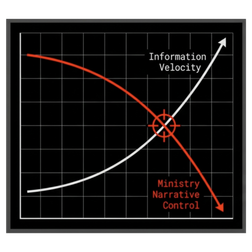
A Spam filter for your brain. I built an AI prompt that can help you detect a psychological operation being performed in the current or past news. Information moves faster than ever and narratives often shape outcomes more than facts themselves, having a reliable way to separate genuine events from coordinated influence has become essential. This refined tool merges structured psychological operations detection with deep forensic reasoning to help anyone cut through the noise. It equips users with a repeatable method grounded in evidence and first principles rather than emotion or authority. As media environments grow more complex, such frameworks offer a practical defense against manipulation that affects daily decisions from personal health to civic participation. We have a membr's only SuperPrompt you can use to establish a score on all news events. Read more at: ReadMultiplex.com Support this work by buying us a coffee: https://ko-fi.com/brianroemmele
1 di 7